Airline pricing is notoriously unpredictable, but experts share strategies to help travelers avoid overpaying.Show Caption
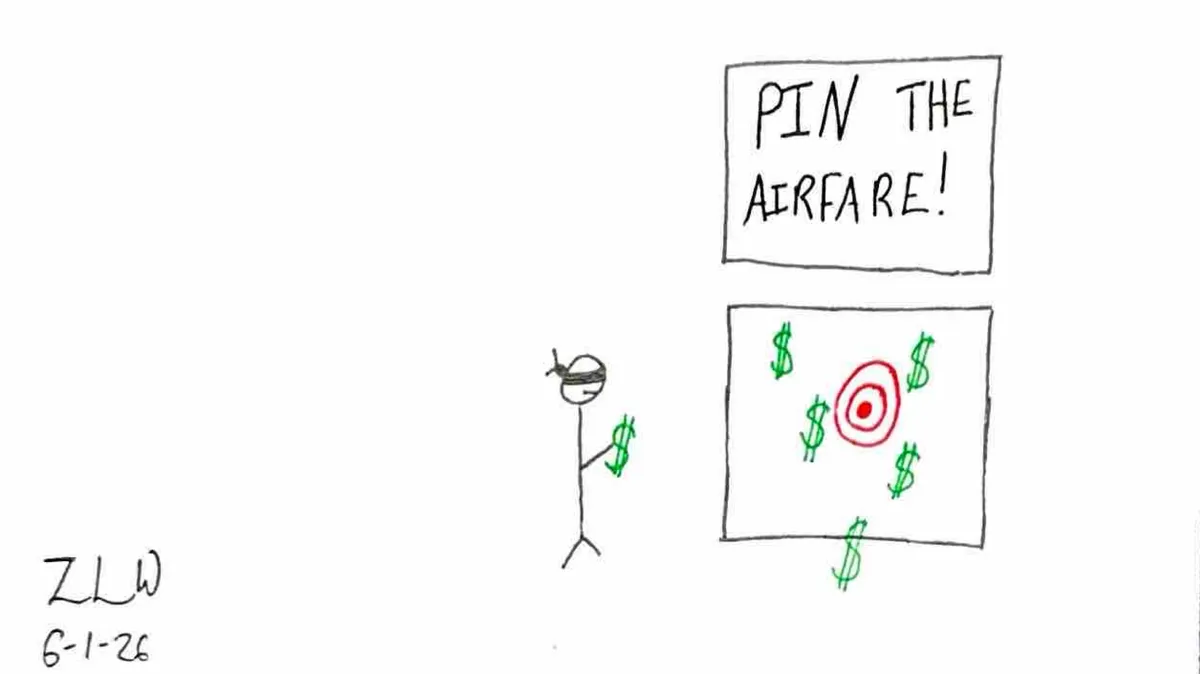
Airline pricing is intentionally complex, with numerous factors influencing the final cost.Travel experts suggest booking a flight that fits your schedule and budget, rather than waiting for the absolute lowest price.Using online tools and being flexible with travel dates and airports can help you find better deals.Cruising Altitude is a weekly column about air travel. Have a suggestion for a future topic? Fill out the form or email me at the address at the bottom of this page.There is no surefire way to know if you’re getting a good deal on airfare. I proved that to myself once again recently when I booked an international trip, only for the ticket price to drop by hundreds of dollars a few days later. It goes to show that even aviation experts can’t always parse airline pricing. It’s annoying and frustrating to know I overspent, but it helps to know I’m not alone. “I remember speaking with the head of pricing for one of the major airlines and asking him about this,” Henry Harteveldt, president of Atmosphere Research, a travel industry analytics firm, told me. “He said, ‘Henry, even I couldn’t find the lowest fare from A to B short of going to an analyst and telling him to open inventory.’” If even the head of revenue management at a major airline can’t figure out the best price, what hope do the rest of us have? I can’t give you a definite solution to this intractable problem in modern aviation, but I can help you learn from my mistakes. Here’s the expert advice I should have followed before booking that nonrefundable international ticket. How do airlines set prices? Airline pricing is intentionally opaque. Carriers have many fare buckets and factors like flight timing, how far in advance you’re booking, major events at your destination and others can all play a role. “It’s not hyperbolic to say on an aircraft with 100 seats there could easily, easily be 75 different fares,” William J. McGee, senior fellow for aviation and travel at the American Economic Liberties Project, previously told me. That’s part of why it’s so difficult to shop for airfares and know when you should purchase: It’s like trying to hit a moving target with a blindfold on. How can you tell if you’re getting a good deal on airfare? In the end, gut instinct is as much a factor as any other tool. “If you find a fare on an airline that you like or can at least tolerate and the schedule works for you, book it,” Harteveldt said. That’s cold comfort to saps like me though, who think they found something acceptable only for the bottom to drop out days later. Melanie Fish, a travel expert at Expedia, told me that there are some strategies travelers can use to at least get a sense of what’s available. “Getting a good airfare is not just about when you book, it’s how you shop,” she said. On top of that, Fish added, it’s important to remember that the cheapest airfare isn’t automatically the best deal. “When we’re talking about good airfares, the goal isn’t the cheapest at any cost, it’s what’s the best value for the trip you actually want to take,” Fish said. Harteveldt added that using online booking tools like Google Flights, Expedia, Kayak, Skyscanner or others can help travelers get a sense of availability, but that doing research beyond the list price is important. “Airfare comparison engines are certainly very helpful for understanding which airlines may operate in a market and what the airfares are. However, sometimes they may not provide enough context on what the restrictions are,” he said. It’s important to check on the actual airline’s websites to see the full terms and conditions for every ticket. You don’t want to get stuck with a ticket that’s less flexible than you expected. Are there better days or times to book or fly? It varies, but Fish said there are some broad trends that can be helpful in guiding your airfare searches. “There are some patterns that were revealed in Expedia’s annual Air Hacks report … It found that Fridays are the cheapest day to fly internationally and Sunday is the most expensive,” she said. “For U.S. domestic trips, Tuesday is the cheapest day to fly and the most expensive is on a Sunday.” Still, Fish pointed out, those are just average trends. They’re not true for every flight, so it’s important to do your research. Fish and Harteveldt also said that flexibility is key. “The hack or the pro move that you should know whenever you’re booking an airfare and wherever you’re booking an airfare is use flexible dates to widen that deal pool,” Fish said. “Be open to non-traditional airlines and non-traditional routings,” Harteveldt added. “Even if you live in a hub airport, it may be worth it to see if there are lower fares available from another nearby gateway or city.” Can you get a refund if the price drops after you buy a plane ticket? Sometimes, but it depends on the specific airline you’re flying on and its policies. Many U.S. airlines, for example, don’t charge change or cancellation fees, meaning you can cancel your ticket if the price drops, receive a credit from the airline at no charge, rebook at the lower price and hold the credit balance in reserve for future travel. Unfortunately for me and my big trip, I’m flying on an airline that’s based abroad and doesn’t offer that flexibility. Some places also offer protection for airfares. Expedia, for example, offers price drop protection for a fee on certain airfare bookings. Google Flights also offers Price guarantee on some bookings. Both services will refund the difference if the price of of flights drops after booking. For Fish, shopping for airfares can be boiled down to what she calls “the three Ds” - discover, decide, defend. She defines those as doing your research on available airfares, using tracking tools before you book to monitor the price and try to get the best deal, and then using price drop protection or similar tools for extra peace of mind. “I know I can buy that flight today and if the price goes down, I’m not going to lose out,” she said. But ultimately, if you book an airfare, the best thing you can do for yourself is to not look at prices afterwards, and just start looking forward to the trip instead. Zach Wichter is a travel reporter and writes the Cruising Altitude column for USA TODAY. He is based in New York and you can reach him at zwichter@usatoday.com.