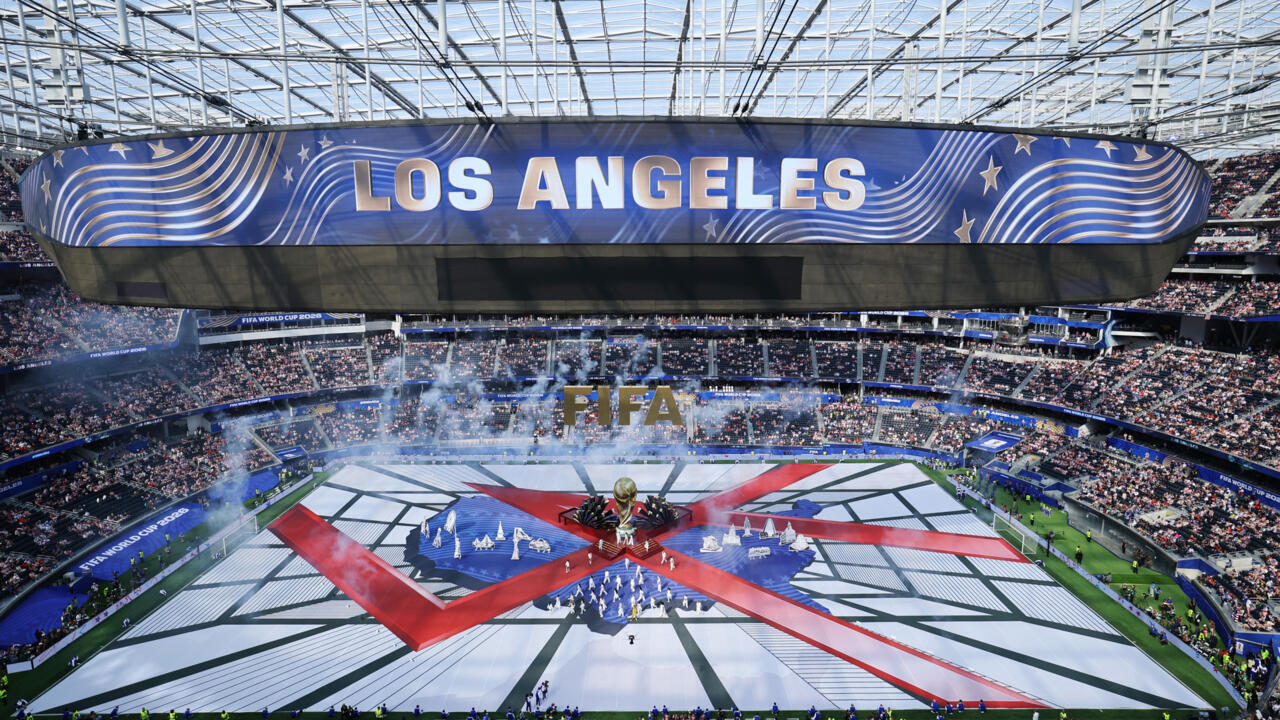
Get free access to the most comprehensive World Cup coverage in The Athletic app.The decision by the states of Missouri, Georgia and Florida to waive taxes on World Cup ticket sales will mean at least $57.8 million in lost revenue for American taxpayers, according to analysis by The Athletic.In early 2022, cities across the United States, Canada and Mexico battled to secure match-hosting rights from FIFA for the 2026 World Cup in those countries, and states made a series of commitments and concessions to entice world soccer’s governing body.Kansas City, Atlanta and Miami were among those in contention to stage games and each of Missouri, Georgia and Florida introduced exemptions on taxes ordinarily applied to ticket sales for matches at their Arrowhead (Kansas City), Mercedes-Benz (Atlanta) and Hard Rock (Miami) stadiums. Each state signed legislation which approved the tax waiver in early 2022, giving up both state and local taxes from games.As part of the legislative process, agencies within the respective state governments made assessments as to the likely economic impact of waiving the taxes.In the case of Florida, its assessment estimated $7.4 million in waived tax revenue, but The Athletic’s projected revenue calculates $14.9m, more than double the state’s own analysis.For Missouri, its workings would equate to a maximum of $7.2 million in waived tax revenue, but The Athletic’s projection calculates $15.7m, once again more than doubling the forecast impact.For Georgia, The Athletic calculated a total for tax revenue waived of $27.2 million, while the state’s own methodology returned a figure of $25.6m.A spokesperson for Missouri governor Mike Kehoe said that “bid packet requirements included passing legislation to exempt match tickets from sales tax”.Not all states took these steps.While the U.S. taxpayer has collectively committed sums into the billions to help fund co-hosting this World Cup, spokespeople for the states of Pennsylvania, Washington, New Jersey and Texas all said they had not waived taxes on admission tickets, while a spokesperson for California’s Department of Tax and Fee Administration said sales tax does not apply to admission tickets in that state. Massachusetts keeps sporting tickets tax-exempt.The states assessed here are far from the first to enter into tax waivers for sporting events. Big events such as a World Cup ordinarily attract visitors; ones who spend plenty while in town for games — on hotel rooms, in restaurants and bars, and at other local attractions — and may also be more likely to return on future trips. A world-level event allows visibility for non-attendees too, heightening the chance they’ll pay a visit one day.The tournament kicking off this Thursday, like plenty before it, has been accompanied by confident projections of the economic good it will do for its host cities. As ever, they are both bombastic and impossible to confirm or dismiss with any great accuracy. Yet our findings show that, whatever the eventual benefit may prove to be, the costs of inducement are notably higher than state officials initially projected.For Missouri, Florida and Georgia, The Athletic calculates a total of at least $57.8 million (£43.2m) because our methodology relies on presumptions which do not include hospitality pricing, which would almost certainly raise the figure considerably.Our methodology must also be applied with certain caveats.This is firstly because FIFA does not clearly disclose the percentage of hospitality tickets within its venues. FIFA’s 2026 World Cup budget expects $3.1 billion to flow from ticketing and hospitality and, while the split of the two types of sales has not been provided, it is a safe bet that a substantial proportion will flow from the more expensive, corporate offering.At the previous World Cup, hosted by Qatar in 2022, 26 per cent of combined ticketing and hospitality revenues owed to the latter. At last year’s Club World Cup, held in the United States and indicative of corporate appetite there, that figure was 36 per cent.Per filings from TKO Group, at the end of March this year, On Location, a TKO subsidiary overseeing hospitality sales on FIFA’s behalf, held $937 million in restricted cash related to this World Cup. Hospitality sales for Qatar 2022 only totalled $243m, and the 2026 figure will only have grown between April and the tournament’s kick-off tomorrow.It is also impossible to make a perfect calculation, because FIFA has various categories within its ticketing framework. These were initially Category 1, Category 2 and Category 3. But since its first ticket drop in October, FIFA introduced a Category 4 ticket price of $60, which amounts to only 1.6 per cent of tickets available for each match. In more recent drops, FIFA has also introduced Category 1 front-row seating at some games, further muddying the waters.The use of dynamic pricing has also created a movable feast for ticket prices, while it also appears that FIFA has intentionally held back some match tickets to drive up demand ahead of the tournament.As such, we sought to simplify the calculations, which is why it should be considered an estimate. We decided to take an average of all of FIFA’s price drops for Category 1, Category 2 and Category 3 between the first batch of sales going on sale in October and a recent drop in the middle of April, working on the presumption that this would account for the majority of tickets sold.We then applied the assumption that each of those three categories would comprise one-third of the capacity of each venue considered. That is inexact, given FIFA hasn’t detailed how many tickets fall into each category for each game, but has been deemed prudent given it is almost certainly an underestimate; the presence of hospitality offerings means the overall ticket take per match, and thus the amount of sales tax waived, is likely to be higher than anything we have projected here.In addition, we have also worked on the presumption that games will be sold out, as has been repeatedly promised by FIFA president Gianni Infantino.This is what we found…Kansas City, Missouri Missouri agreed to waive both state and local taxes on tickets sold for World Cup games at Kansas City’s Arrowhead Stadium, which together amount to 8.85 per cent of the total revenues.In 2022, the committee on legislative research in Missouri’s oversight division supplied a fiscal note which included an analysis by state officials.This analysis made several assumptions, some of which were flawed (though entirely reasonably). There is no way, for example, that the officials who prepared the fiscal note could have been expected to forecast how many games would be played at Arrowhead Stadium because, at that stage, no matches had yet been allocated to any cities. They also could not anticipate just how much more expensive the World Cup tickets would turn out to be than both at previous tournaments and in the projections presented in the bid book by the ‘United’ committee which represented the United States, Canada and Mexico.Missouri presumed that tickets for the World Cup games would range from $105 to $210 for group-stage fixtures and $455 to $1,100 for the final. The state made both a low- and a high-range estimate based on these prices.In the fiscal analysis, the report says these were prices for the 2022 World Cup in Qatar, but they were in fact the price brackets for the previous World Cup in Russia four years earlier.By applying 2018 World Cup ticket prices, the fiscal analysis significantly underestimated the amount of tax revenues that could be left on the table, both in state and local taxes.Missouri’s calculations also presumed Arrowhead would be packed to its capacity when staging NFL games; meaning 76,416 tickets would be sold for each match there. However, due to FIFA and soccer-related stadium adjustments, FIFA’s website now says the likely capacity will be 67,513, although FIFA says this is still to be finalized ahead of the first fixture there on June 16.Consistent with Missouri’s approach, The Athletic first calculated a projected revenue waiver by using Russia 2018 price points: Category 1 to hit the high range and Category 3 to hit the low range.We did this for the World Cup games that were awarded to Kansas City: four group-stage games, one round-of-32 tie and one quarterfinal. By using the 2018 prices and adjusting the workings for a stadium capacity of 67,513, this produces a range of tax waived from $3.56 million on the low end to $7.2m on the high end.However, the discrepancy between prices from Russia 2018 and this World Cup is huge, which explains why there is a chasm between Missouri’s workings and the reality.Category 1 quarterfinal seats in 2018 were $365 and Category 3 ones $175, compared to $1,360 for Category 1 in 2026 and $605 for Category 3 for the quarterfinal scheduled for Arrowhead on July 11, according to ticket prices released in mid-April.In The Athletic’s analysis, we used an average of actual FIFA price points across Categories 1, 2 and 3 between October and mid-April, and presumed a sell-out of 67,513, which produces a tax-waived figure of $15.7 million — more than twice the estimate that would have been made based on Russia’s 2018 prices.To reiterate, our estimate also likely significantly undervalues the true tax waived, because our calculations do not include hospitality sales or tickets to be resold via FIFA’s own resale marketplace, in which it takes 15 per cent cuts from both the buyer and reseller.In Missouri, we can also see the breakdown in how state taxes are spent.By using the percentages allocated to areas of spending, the lost revenue equates to $5.3 million from Missouri’s General Revenue fund, $1.78m which would have been dedicated to education spending, $221,339 for conservation and $177, 072 for public park, soil and water purposes.On a local level, the lost tax projected in our calculations sees Kansas City waive $5.75 million, Jackson County $2.21m and Kansas City Zoological District $221,339.The overall costs to accommodate this World Cup in Kansas City have been large.With around 2.2 million residents, the metropolitan area of Kansas City is the smallest of the tournament’s 11 U.S. host cities. In addition to this waived tax revenue, Kansas City’s World Cup host committee told The Athletic it has received $42.5 million from the State of Missouri, $28m from the neighboring State of Kansas, $14.8m from Kansas City, Missouri (there is also a Kansas City in the state of Kansas), and a further $1.5m from other public sources, meaning an $86.8m public investment overall.There is also $59.52million in federal security assistance, as well as $13.3m in federal grants towards transportation and private donations, which the host committee, a non-profit overseeing transportation, logistics and Fan Fest during the World Cup, would not disclose. Not to mention the $25.8m ‘World Cup jail’…. A spokesperson for Missouri governor Kehoe said the fiscal note was developed “with information available at the time” and that Missouri “looks forward to the Kansas City region serving as a home away from home as the base camp for four teams, welcoming visitors from across the world for six matches, and showcasing all that the state and America’s heartland have to offer during the World Cup”.Miami, Florida In early 2022, Florida expanded existing legislation which already waived sales taxes on one-off events such as all-star games for MLB, MLS, NBA and the NHL, as well as for admissions to an NFL championship game or that league’s all-star Pro Bowl.This expansion came into effect from July 1 that year, waiving sales taxes for tickets to all World Cup games, as well as Formula 1 grands prix and Daytona 500 NASCAR races.Back in early 2022, the list of North American cities in contention to stage World Cup games this summer included several who did not make the final cut when FIFA eventually selected its 16 venues across Canada, Mexico and the United States. At that time, Florida had two venues in contention: Hard Rock Stadium in Miami Gardens, just north of Miami itself, but also Camping World Stadium in Orlando. Only Hard Rock Stadium made the eventual list.Florida’s Office of Economic and Demographic Research provided, in the February, a fiscal analysis of the potential tax revenue that would be waived as a result of one of its cities being granted hosting rights for this World Cup.Once again, it made some assumptions. Firstly, it presumed usual capacities, meaning it worked based on 65,236 capacities for a sold-out Hard Rock. Secondly, it used one fixed price as being representative of all tickets sold for the entirety of games at the venue during the World Cup. The selected price point was $210, which is the same price as a Category 1 group-stage ticket at that 2018 World Cup in Russia.In doing so, Florida’s own analysis did factor in that ticket prices could scale up or down according to categories of seating within a stadium, or that prices would differ according to the phase of the competition the match was in. For example, a quarterfinal ticket will always cost more than a group-stage one at a World Cup, but Florida’s analysis treated every game as an average.As such, a U.S. state again severely underestimated just how high and variable FIFA’s pricing would be in the tournament. In doing so, Florida’s fiscal analysis significantly underestimated the amount of money left on the table.Our methodology for Hard Rock Stadium is identical to the method we used for Arrowhead Stadium, once again taking an average of actual FIFA ticket drops for selected games in the venue between October and mid-April, with equal shares between Category 1, Category 2 and Category 3.We applied these workings to the total of seven matches being played in Miami: four in the group stage, a round-of-32 tie, a quarterfinal and the third-place play-off between the beaten semifinalists. We therefore calculated an estimate of total tax waived to be $14.9 million.The calculation was arrived at following Florida’s own guidance of a usual six per cent sales tax that would be applied to an estimated $247.7 million in ticketing revenue. This is also adjusted for an actual FIFA capacity at Hard Rock of 64,091, and, again, presumes the games there will be sold out.In Florida’s original assessment, it was estimated that a venue would receive nine games but forecast only $7.4 million in tax revenue waived. This means our calculation is over twice the estimate foreseen by the state — a scenario in which Miami would even have had two extra matches.Once again, we should also emphasize that our estimate is likely to be a conservative estimate that significantly undervalues the true tax waived, because our calculations do not include hospitality sales or tickets which will be resold via FIFA’s own resale marketplace.To exacerbate the matter further, the calculation made by Florida did not include the one per cent discretionary surcharge which would ordinarily be applied by Miami-Dade County for games at Hard Rock Stadium. Taken across the seven matches, this would add an additional $2.4 million in waived revenue, bringing the waived tax revenue total to $17.3m.Atlanta, Georgia Much like Missouri and Florida, Georgia agreed to waive both state and local sales taxes on tickets sold for World Cup games in Atlanta’s Mercedes-Benz Stadium. The Georgia Department of Audits and Accounts provided a fiscal analysis, which was a joint product with the Governor’s Office of Planning and Budget. When legislation will impact tax revenues, economists from Georgia State University’s Fiscal Research Center conduct the analysis for review by the two agencies.Atlanta’s methodology appeared closer to today’s reality than that of either Missouri or Florida. This is because its analysis made an assessment of prices in accordance with the ‘United’ bid book submitted to FIFA during the 2026 World Cup host bidding process, which also included hospitality prices.But, once again, some presumptions were made by the auditors. Firstly, the analysis presumed a 75,000 capacity, when in reality, adjustments made to the stadium for the tournament have reduced that to 67,382, as per FIFA. It was also unknown how many games would be awarded to Atlanta. In Georgia’s assessment, they calculated both a minimum and maximum scenario for sacrificed tax revenue, based on the number of matches played there. The combined state and local tax is usually 8.9 per cent. In the minimum version, the auditor suggested Atlanta could receive three group-stage fixtures and a round-of-32 tie. This would have produced a figure of $8.2 million in lost tax revenue.In its maximum scenario, the auditor presumed Atlanta would host the opening game of the tournament, two other group-phase matches, a round-of-32 tie, one in the round of 16, a quarterfinal and the final, bringing its total number of matches to seven. Under this projection, the maximum state sales tax revenue lost was $25.6 million.Atlanta’s World Cup stadium has been decked out with FIFA signage (Kevin C. Cox / Getty Images)For our own calculations, we once again used the actual FIFA price points in ticket drops between October and mid-April across Category 1, Category 2 and Category 3 for the eight games Atlanta ultimately received (five in the group stage, a round-of-32 tie, a round-of-16 fixture and a semifinal).By applying the combined 8.9 per cent state and local tax, we therefore calculated a total tax waived estimate of $27.2 million, from total projected revenue of $305.9m. This is also adjusted for a reduced capacity of 67,382.That is $1.6million higher than the maximum estimate foreseen by the state of Georgia, a scenario in which Atlanta would have had both the tournament’s final and opening ceremony, and included hospitality tickets.It should be remembered, therefore, that our estimate is once again likely to be smaller than the reality, because our calculations do not include hospitality sales or tickets which will be resold via FIFA’s own resale marketplace.A spokesperson for the Georgia Department of Audits and Accounts declined to comment, adding only that the fiscal note they prepared in 2022 “appears to have provided a reasonable range given the information available”.A spokesperson for the Governor of Georgia’s office said: “As with any economic development incentive, the cost in revenue that is not collected by the state is often far outweighed by the benefits Georgians reap. In this instance, the unprecedented stream of visitors that will stay in Georgia lodging, eat at Georgia restaurants, visit Georgia attractions, and purchase merchandise from Georgia establishments will lead to an economic impact like many of these businesses have rarely seen, with one report estimating an economic impact of $503.2 million.”
Revealed: Three U.S. states waived at least $57.8m in taxes to host World Cup games
Missouri, Georgia and Florida agreed to waive taxes on World Cup ticket sales. They have lost out on more money than they estimated.
3,056 words~14 min read