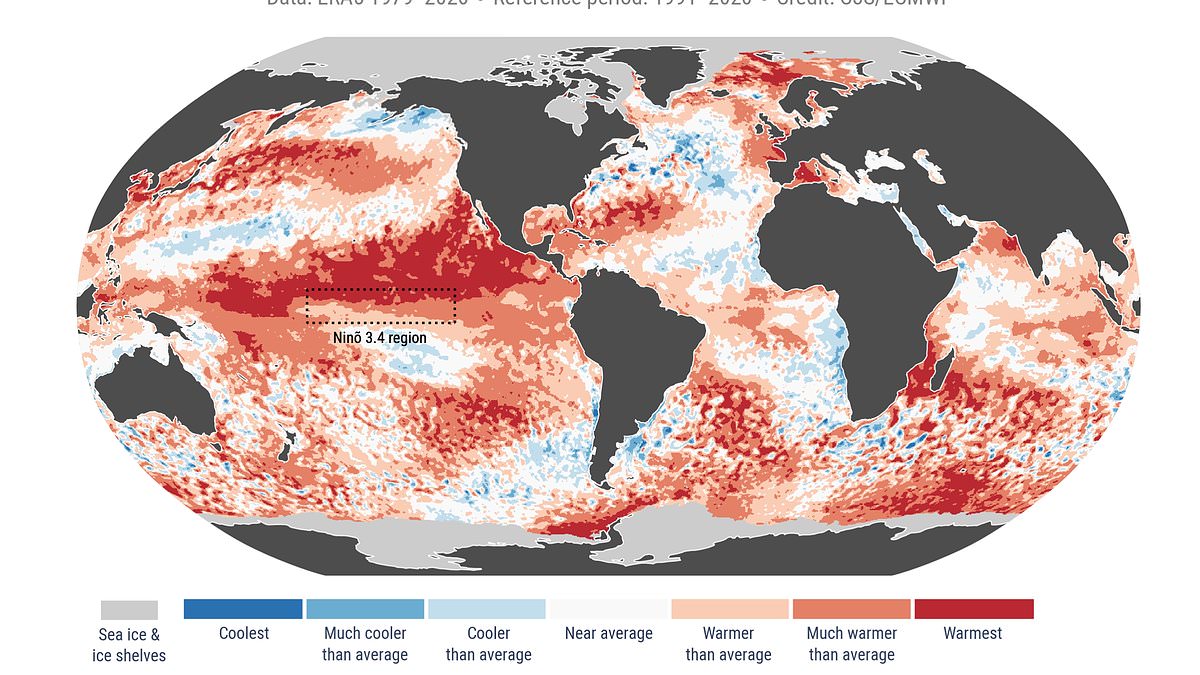
The world has just experienced the second-hottest May since records began, as climate change and the developing El Niño weather pattern combined to push up average land and sea temperatures, the European Union’s Copernicus Climate Change Service (C3S) said Wednesday.
The hottest May on record was in 2024, in records going back to 1940. The average global temperature last month was 1.42 degrees Celsius above the 19th-century pre-industrial average.
Western Europe experienced one of the most severe heatwaves ever recorded so early in the year, with C3S saying the extreme heat was in line with scientists’ expectations of how climate change will affect the world’s fastest-warming continent.
Parts of the Pacific Ocean recorded exceptionally high temperatures as the region transitions toward El Niño conditions. The weather pattern, which naturally occurs every two to seven years when weakening trade winds allow warmer waters to spread across the eastern Pacific, is expected to form in the coming months and fuel further extreme weather around the world.
El Niño events are typically associated with higher global temperatures and disrupted rainfall patterns, bringing drought to some regions and heavy rain to others.