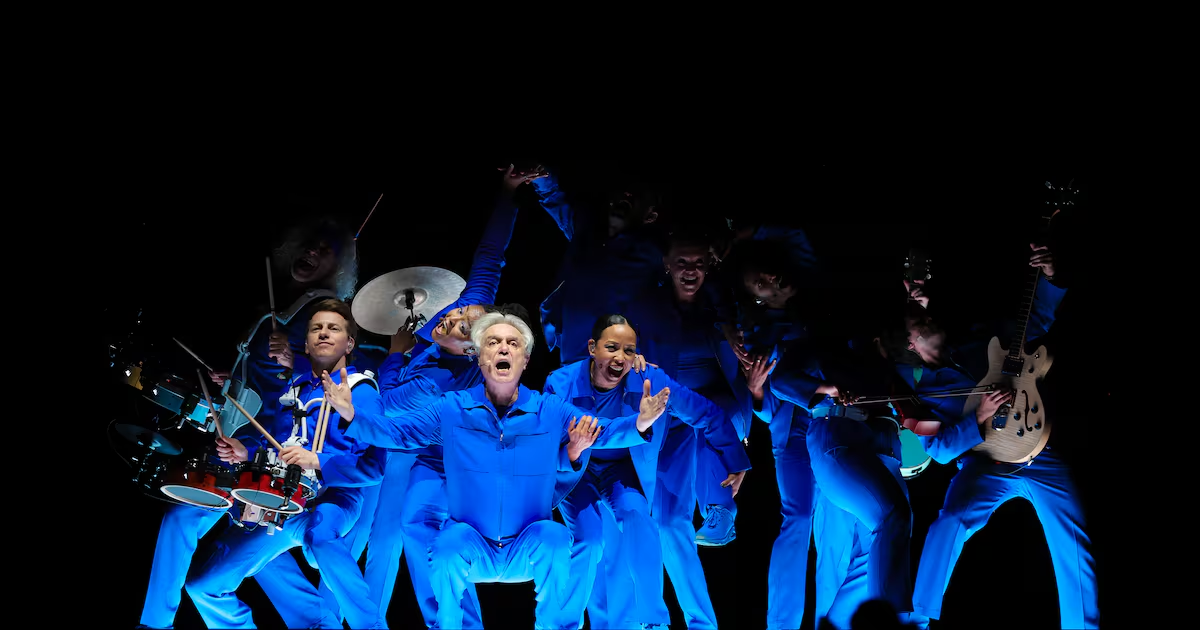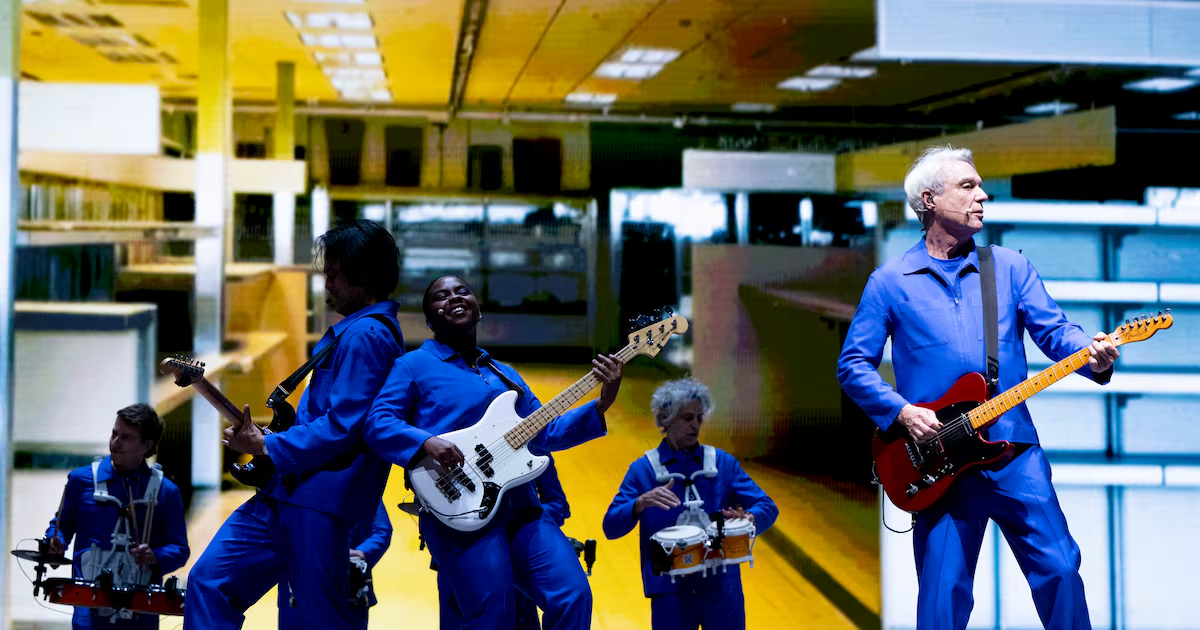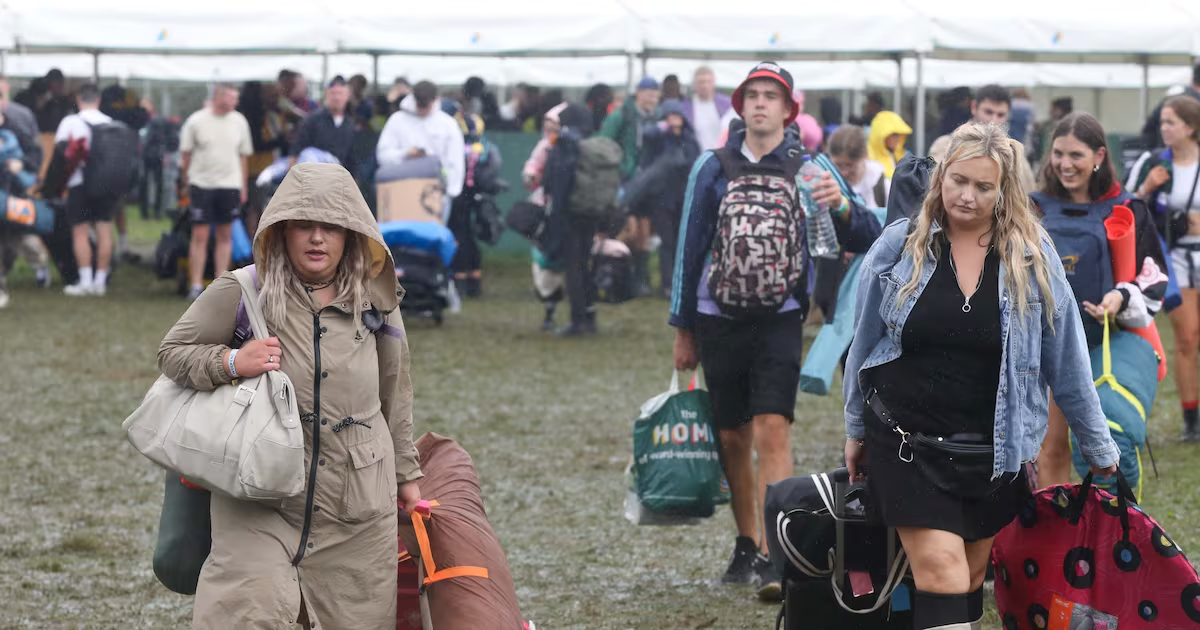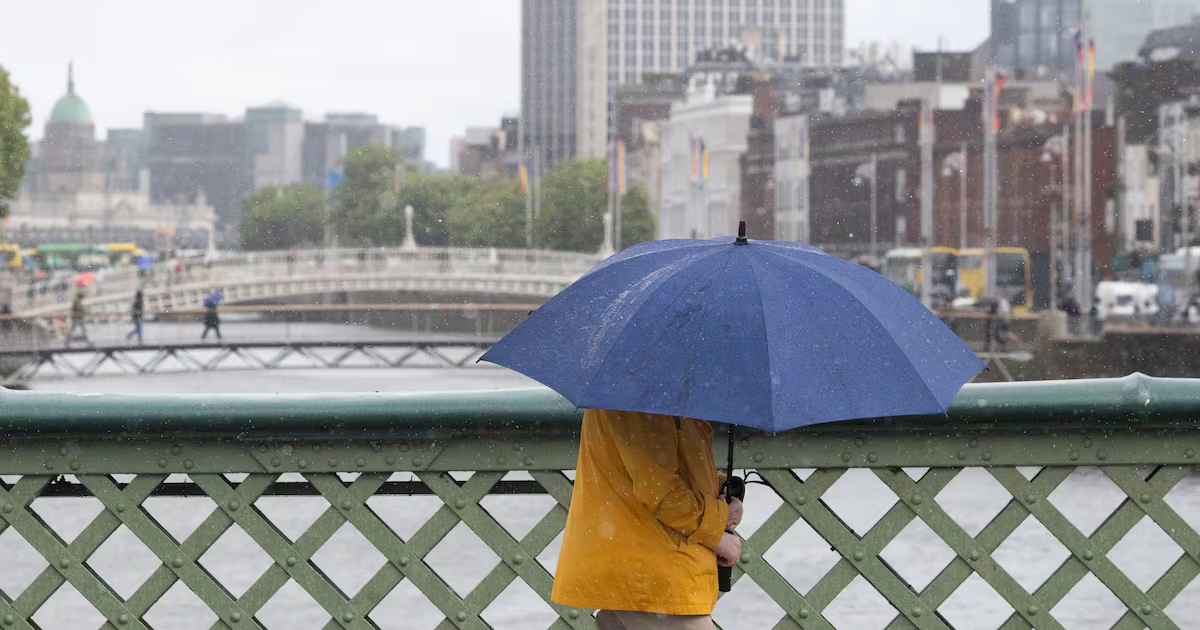
The Church of St Thomas and St George, from the altar of which I preached (after a fashion) at the weekend, is modelled on a Venetian original but owes its existence to the Civil War.During the Battle of Dublin in 1922, a previous St Thomas’s, on Marlborough Street, became part of the front line. Although occupied by anti-Treaty forces, it was destroyed by fire from neighbouring buildings rather than any intent.Britain’s minister for the colonies, Winston Churchill, was moved to assure parliament there was no sectarian motive for the Anglican church’s demise, and that firemen had done everything possible to save it.A decade later, a new St Thomas’s, inspired by Palladio’s Redentore in Venice, rose on what is now Cathal Brugha Street, just around the corner from the Gresham Hotel.It was the first and last Anglican church built in the inner city since independence. And although classic in design, it boasted modern comforts. The parish yearbook noted that “advantage has been taken of the Shannon Scheme to light and heat the Church”.***The electrics were tested last weekend when the building witnessed the first shots to be fired in this year’s Bloomsday Festival.That event will not be officially launched until Thursday, but preliminary skirmishes are already breaking out all over the city. And on Saturday night, St Thomas’s and St George’s hosted a concert by the band Hibsen of their songs inspired by James Joyce’s Dubliners.The church’s proximity to the Joyce Centre, a biscuit tin’s throw away (two references to Ulysses there, for anyone paying attention), is reinforced by its doubly sainted name. Since the 1960s, the parish of St Thomas has been merged with that of St George, whose church-bells Leopold Bloom hears on June 16th, 1904 (he’d struggle to hear them now – they’re in Dundrum).But as revealed on Saturday, the church’s venerable circuits were stretched by the demands of two lead singers, a six-piece band and a journalist doing narrative links. Twice, fuses tripped during rehearsals, so for the actual performance, roadies sacrificed some amps and hoped for the best.The sound system held up well for 12 of the 15 songs (performed in the same order as Joyce’s stories).That meant we got through Ivy Day in the Committee Room, which I introduced with a related anecdote about Charles Stewart Parnell and his many superstitions. If he noticed there were 13 people at a meeting, for example, he always asked one to leave or get a 14th to join them.It would not have surprised Parnell, therefore, that the fuses tripped again on the 13th song. We had to do the last part of the show without amplification, including the bit where I read the famous closing passage from The Dead – about snow being general all over Ireland.Happily, the building has beautiful natural acoustics. So, Shannon Scheme bedamned, Joyce’s words and the lovely song inspired by them resonated around the near-century-old walls to even more haunting effect than usual.***Snow was not general in Ireland last weekend, although unseasonably treacherous weather was. On a flying visit to the Borris Festival of Ideas in Carlow on Friday night, eating chips from one of the food vans, I had to huddle under a tree as wind and rain blew in from the direction of February.Back in Dublin the next day, my regular Saturday 10-miler was interrupted by a biblical deluge that sent other runners scampering for cover. I ploughed on, thinking I couldn’t get any wetter.But I was like a human Titanic by mile nine, as all my supposedly watertight bulkhead compartments gradually flooded. On a street in the Liberties, a woman smoking in a doorway was visibly shocked at the image of human misery that shuffled past.“Ah ye poor thing, you’re soaked!” she said, as if the urge to go running in such weather was an affliction I couldn’t help. She may have been right there.***I had just dried out from that by the time of the David Byrne concert on Sunday evening in St Anne’s Park.Lacking proper raingear (because I’m Irish and that would be defeatist), I smuggled in a sawn-off umbrella in my back pocket, guessing correctly that the security guy would not pat me down there. But once the band came on, the umbrella had to be capsized.The rest of the night was summed up in Byrne’s show-stopping song Once in a Lifetime, with its subtheme of water flowing underground. Water does indeed flow underground in St Anne’s, via the culverted Naniken river. But it was flowing everywhere else too by the end.The concert finished with the ironic encore: Burning Down the House. It was not a night to worry the fire brigade. Even so, as I noticed for the first time, that song also includes the lyrics: “All wet/Hey, you might need a raincoat.” Squelching homewards again, I could hardly disagree.
An Irish Diary: David Byrne soaked up the atmosphere while the rest of us absorbed the flood
Snow was not general in Ireland at the weekend, but unseasonably treacherous weather was
804 words~4 min read