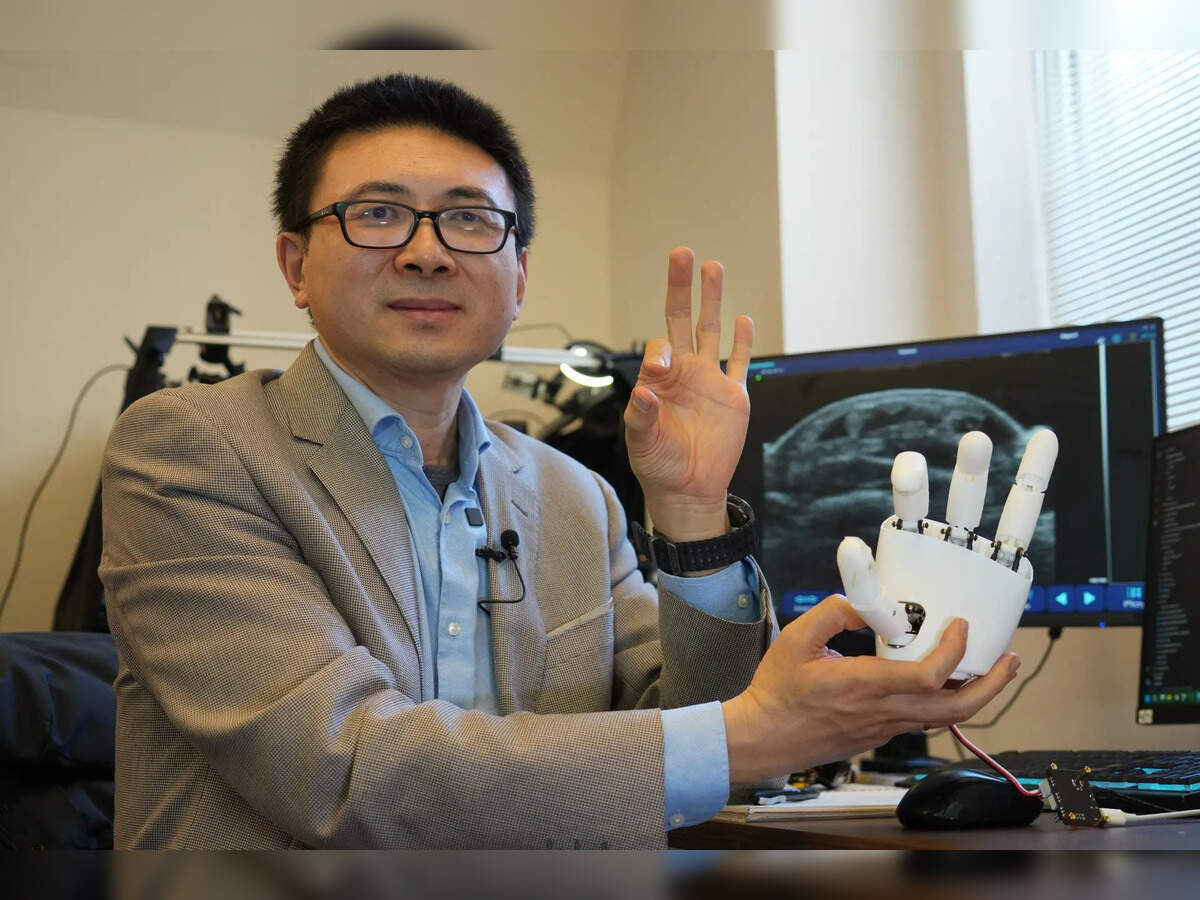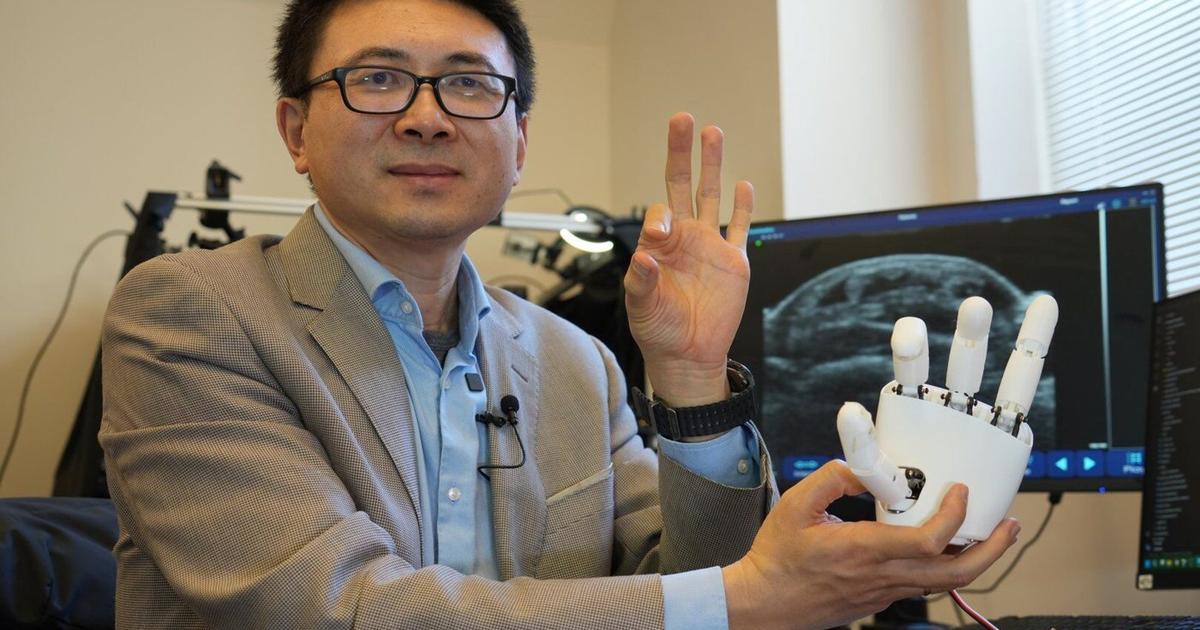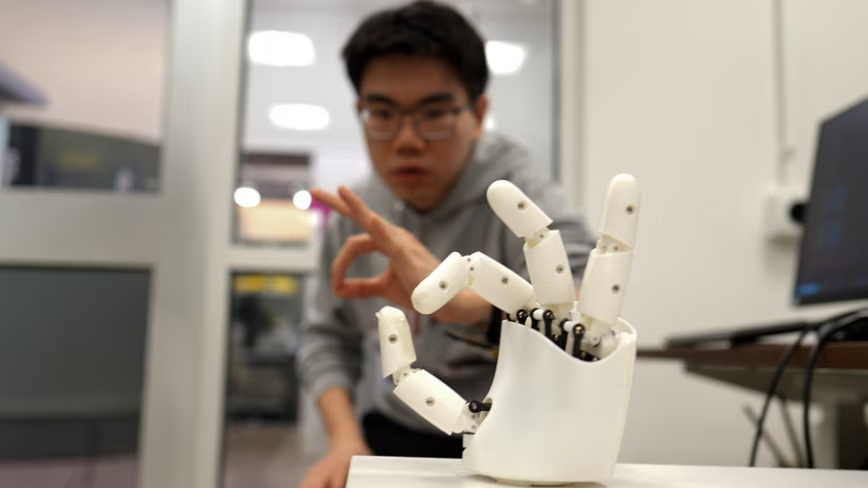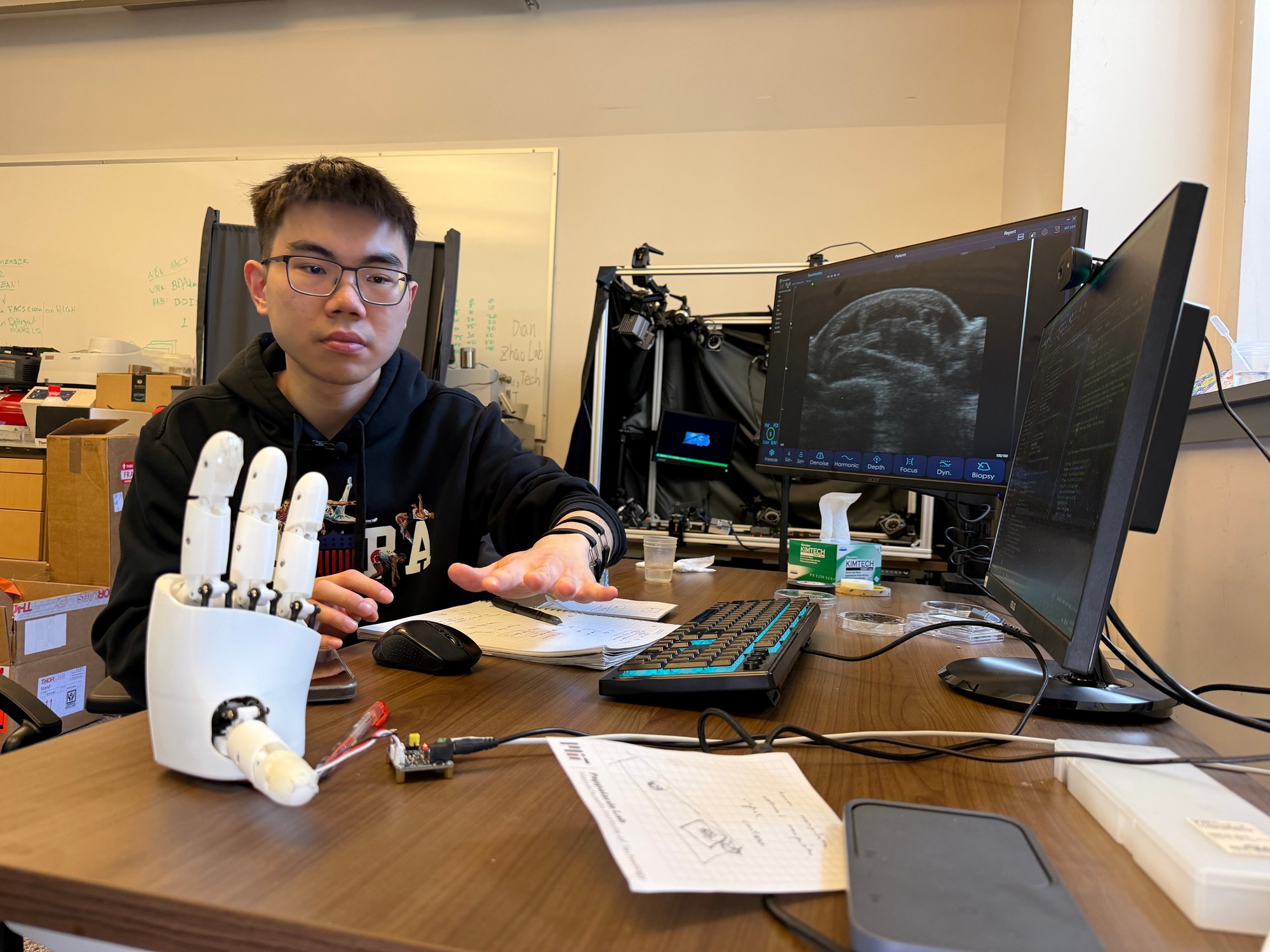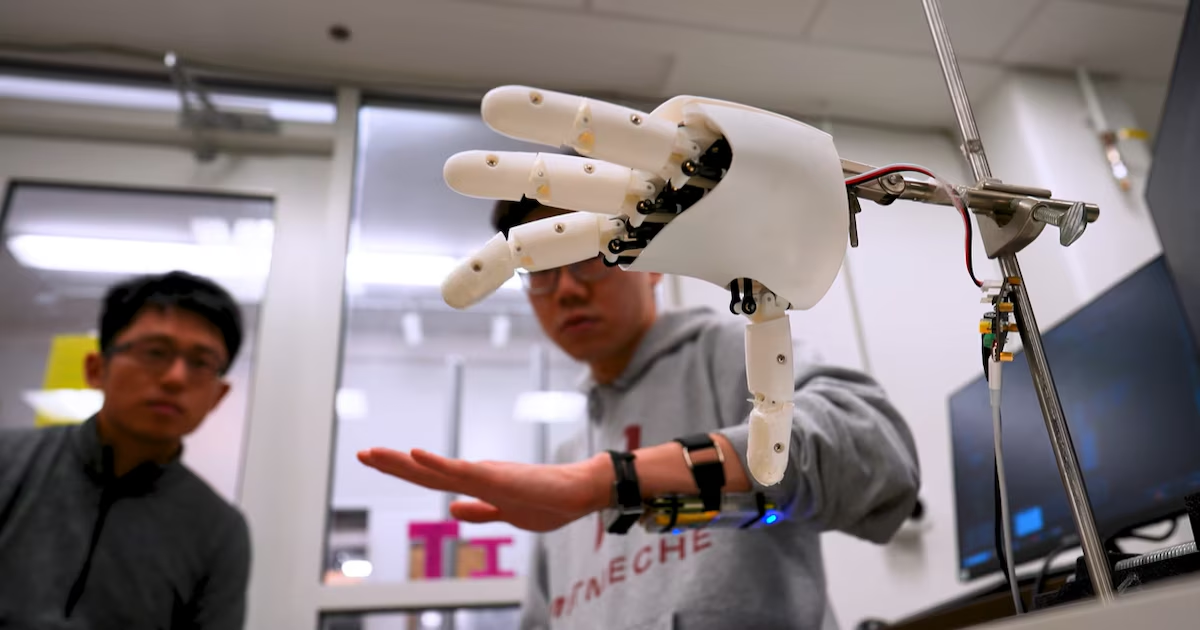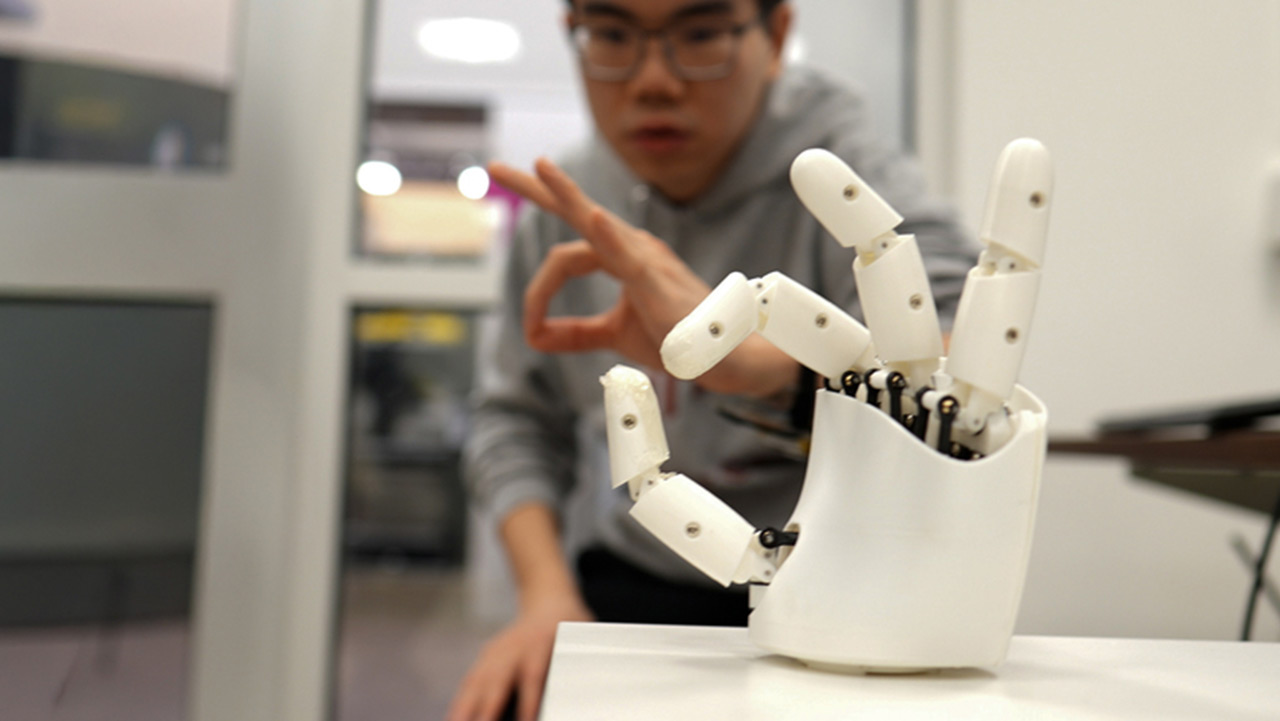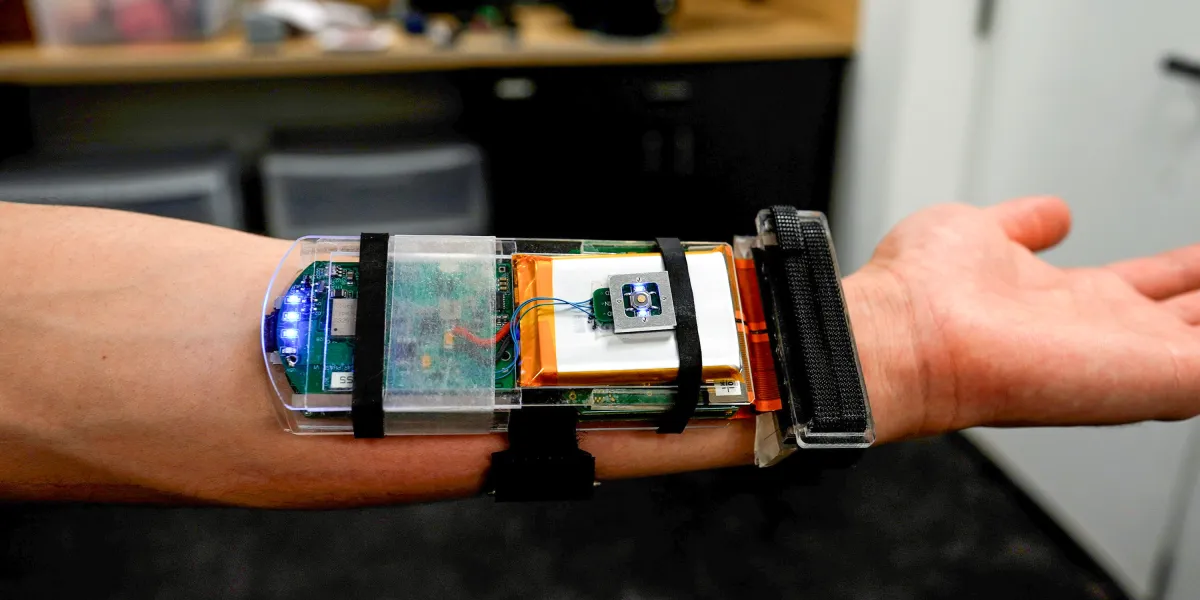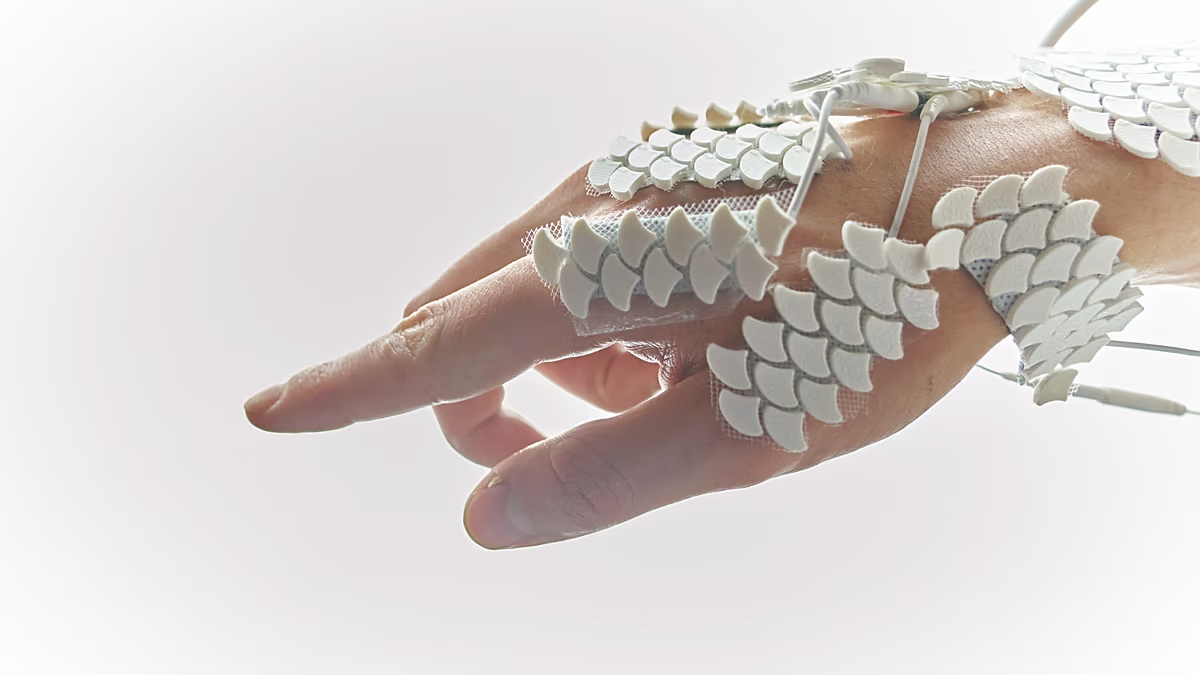
Humanoid robots struggling with tasks like grasping a cup have a new teacher — a person wearing an ultrasound wristband that captures the movement of muscles, tendons and ligaments beneath the skin.
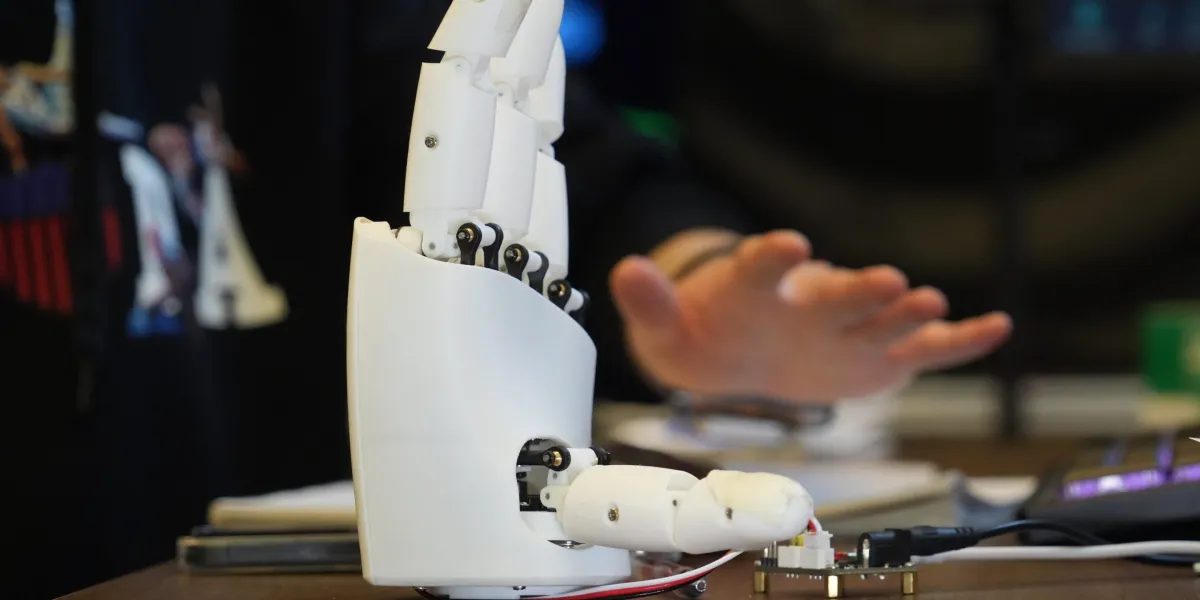
Researchers at the Massachusetts Institute of Technology developed the tool to collect data of human hand motion that could eventually help robots achieve the dexterity that has been difficult for machines to master.
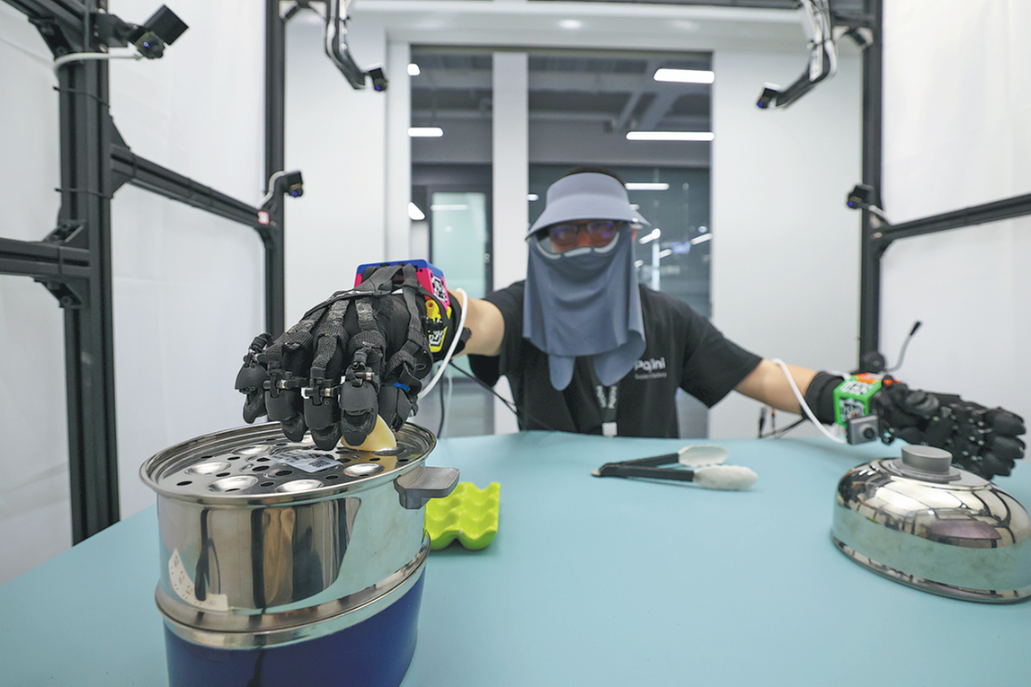
“Imagine people doing housework,” said Xuanhe Zhao, an MIT professor of mechanical engineering. “We can use the data obtained by our system to train a robot to do exactly (that) housework with this dexterous hand motion.”
As much of the tech world is still captivated with artificial intelligence assistants that are taking on computer-based tasks, Zhao is among the scientists trying to imbue AI with more sensory data from the physical world.
Beyond housework, the technology could help with other tasks that require flexing fingers and hands, such as surgery.