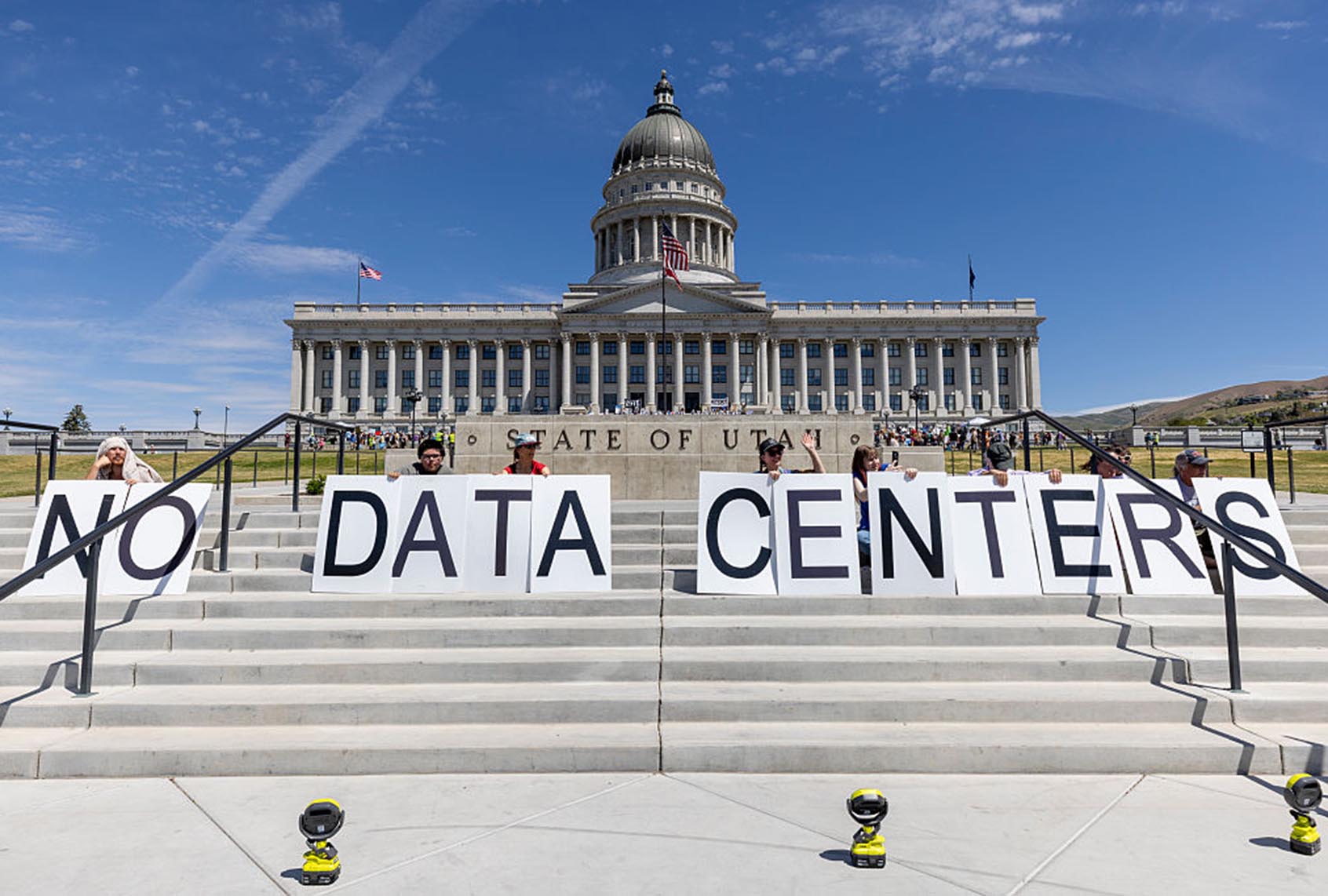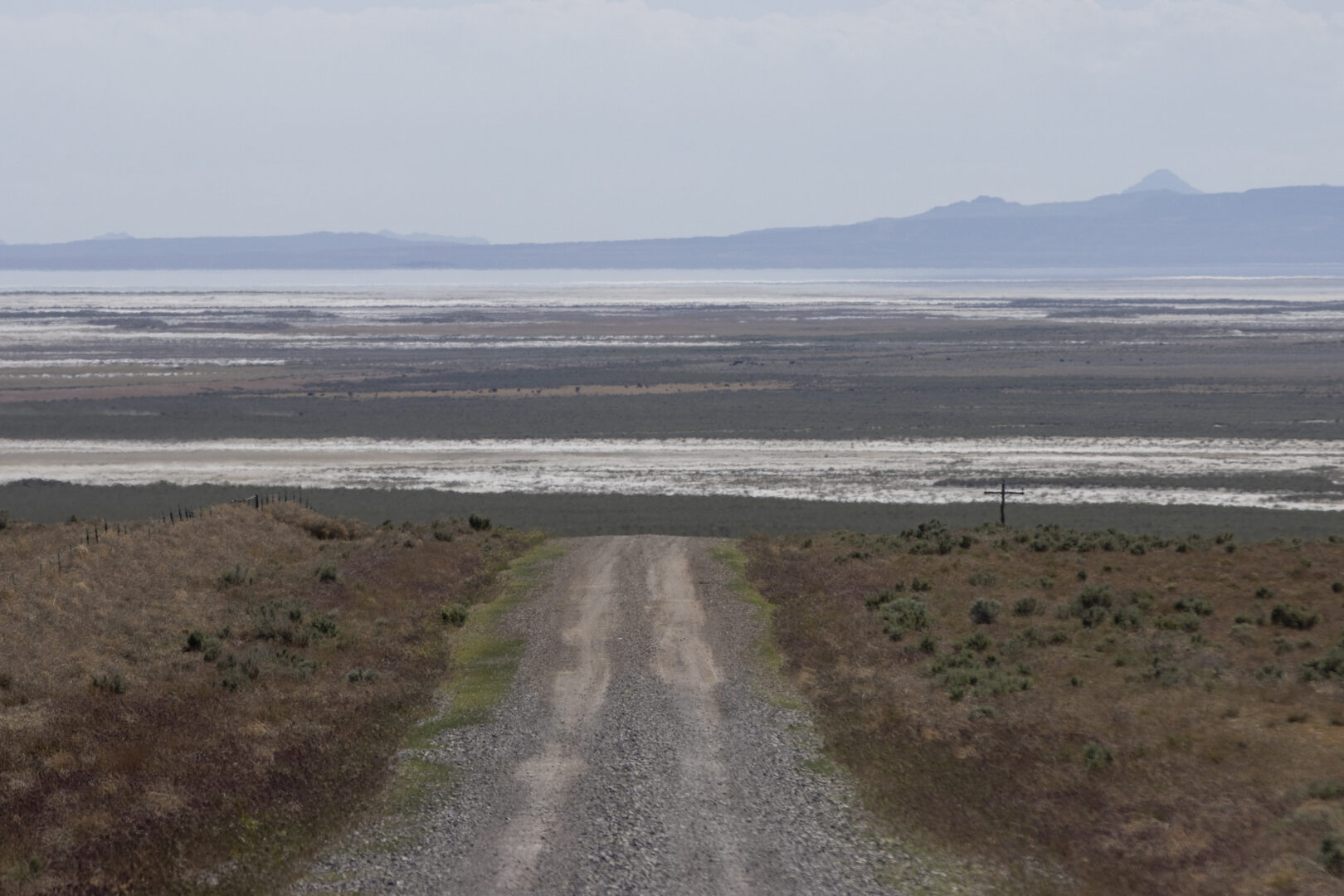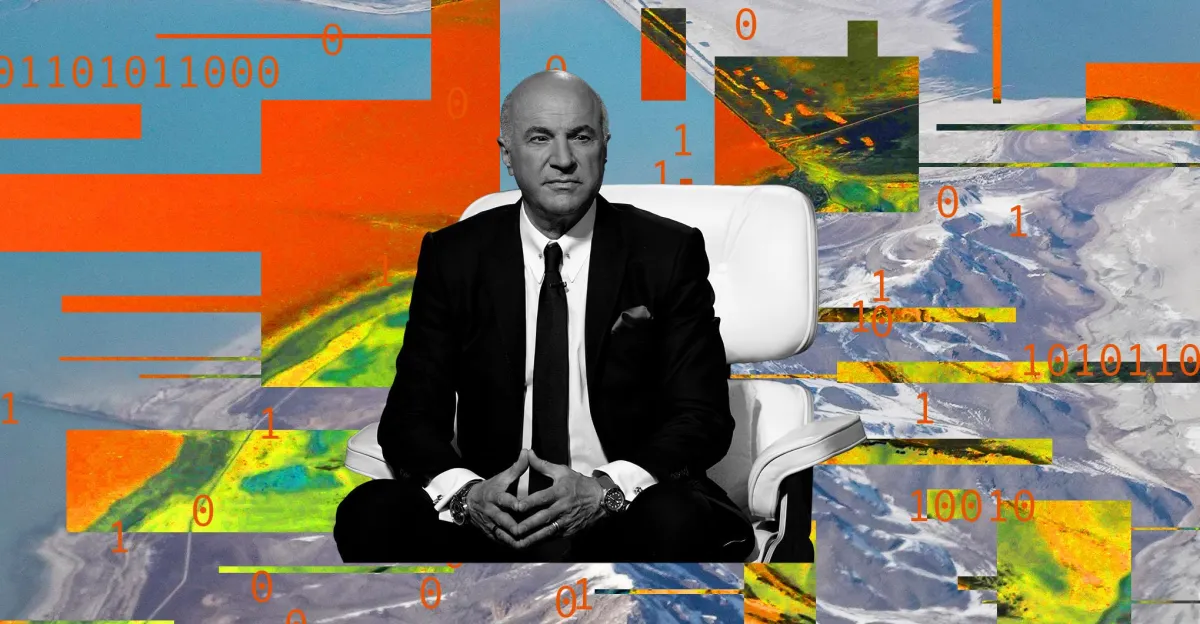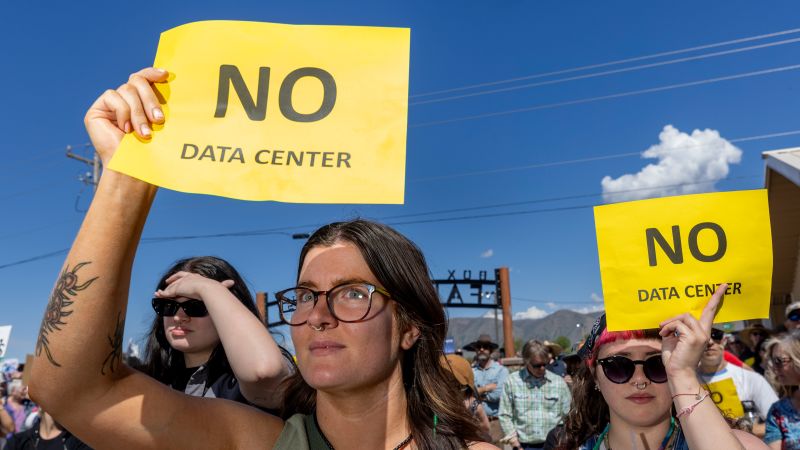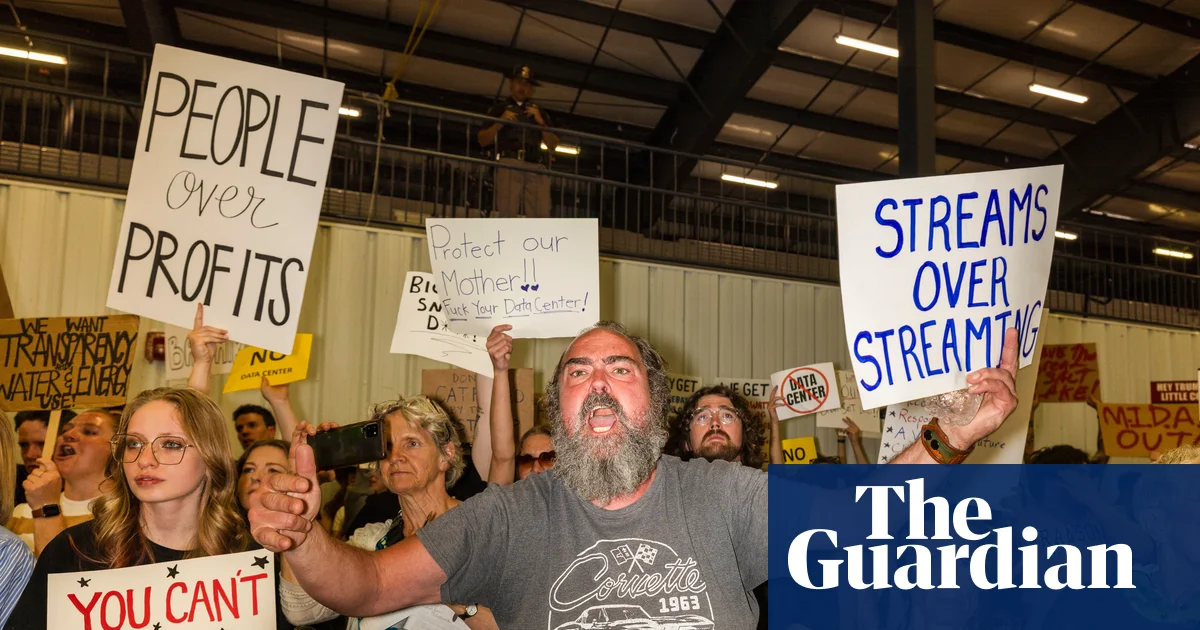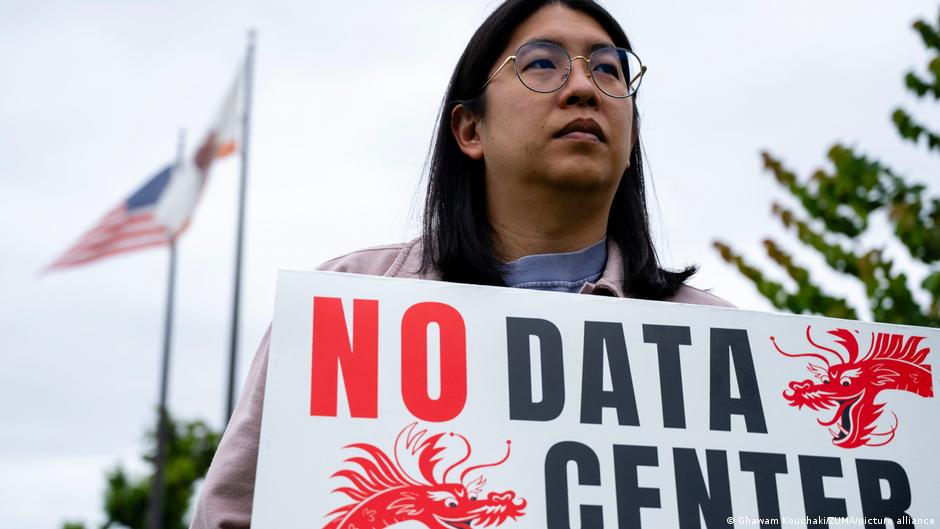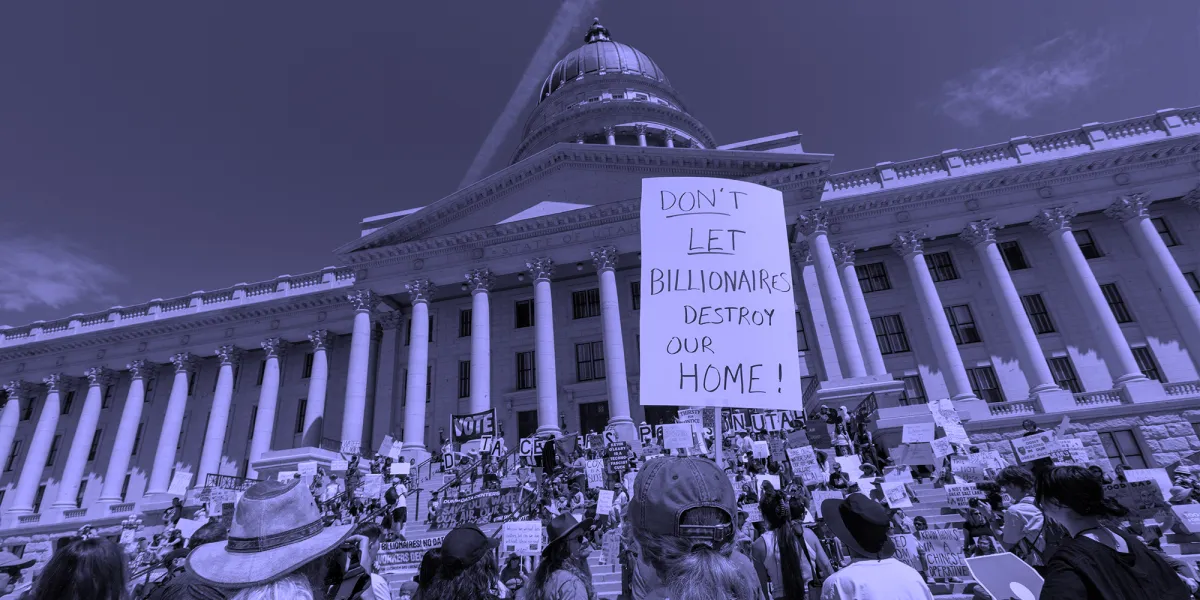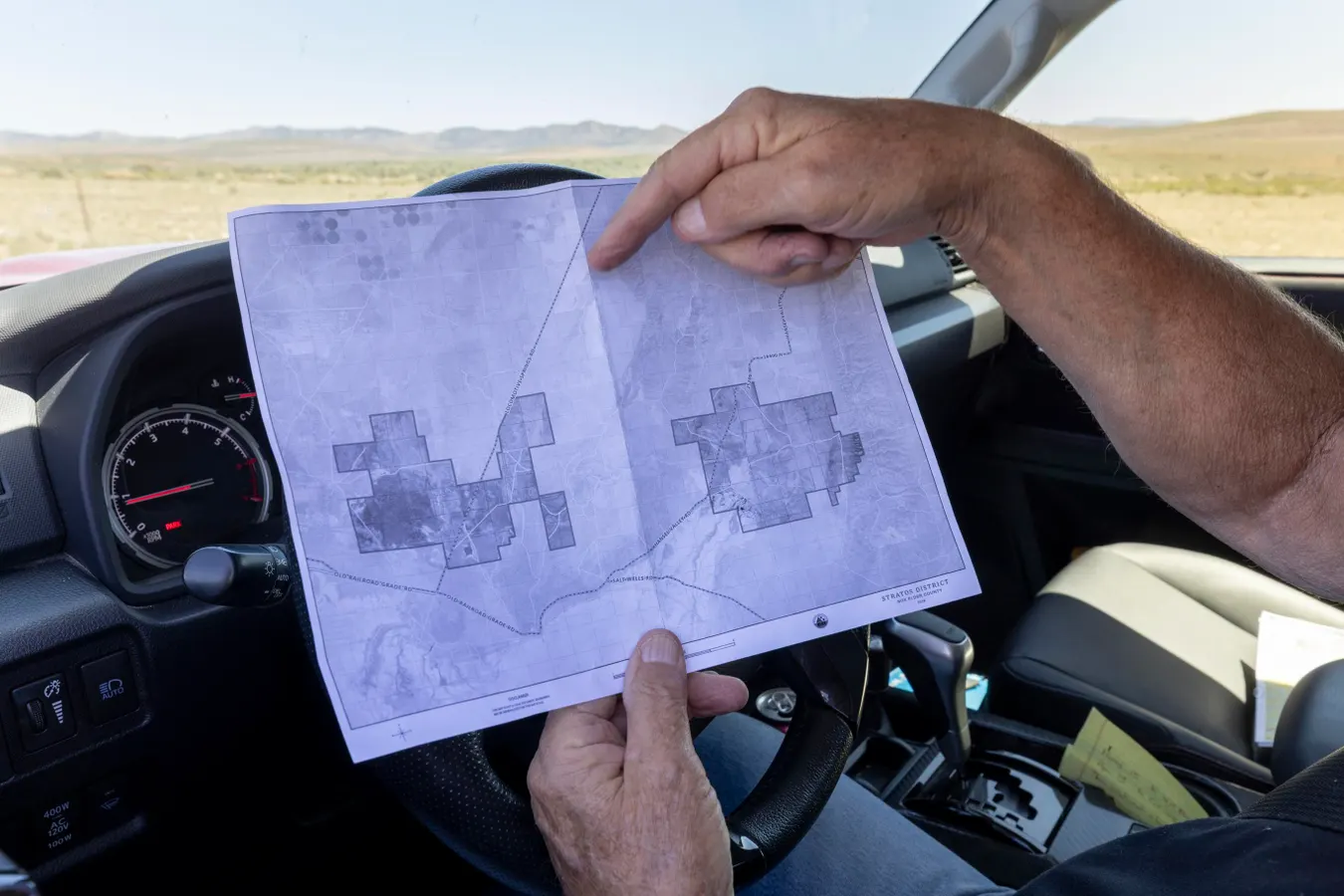
Imagine a construction project three times the size of Manhattan, powered entirely by natural gas, with no renewable energy commitments. Imagine it raising local nighttime temperatures by as much as 28 degrees. Imagine the surrounding ranchland potentially becoming, in the words of a local ecology professor, “comparable to the Sahara Desert.” Now imagine that when hundreds of residents showed up to protest, a county commissioner told them to “grow up”—and approved the project anyway.Welcome to the Stratos Project in Box Elder, Utah. Welcome to the AI data center boom.Across America, communities are pushing back against AI data centers—over noise, water use, energy demands, and a development pace that often leaves residents with little say. Box Elder is all of that, multiplied to a scale that strains credulity.Since OpenAI introduced ChatGPT in 2022, there has been a mad rush to harness the power of artificial intelligence, and a corresponding need to build data centers to accommodate exploding data-storage demand. Though some critics warn AI’s commercial potential may be exaggerated, its transformative power and benefits are already obvious. But so are the environmental and social costs—and the growing fury of the people being asked to bear them.Last year, communities in 37 U.S. states blocked or delayed $156 billion in data center investments across 48 projects. A JPMorgan analysis found that more than 60% of data-center capacity planned for completion in 2027 isn’t yet under construction. But electricity demand from AI data centers surged 50% globally last year and is projected to increase by another 75% this year, according to the International Energy Agency. The Wall Street Journal reports some new facilities will use “the same amount of power as a midsize city.”The Stratos project in Box Elder, a rural community in northwest Utah, will house a 9-gigawatt AI data center and power generation campus occupying approximately 40,000 acres—almost three times the size of Manhattan. Once fully operational, its power demands will exceed twice Utah’s current electricity consumption and its full buildout could cost up to $100 billion. It will be the world’s largest AI data center.According to project developers and state officials, Stratos will add 10,000 construction jobs and 2,000 permanent positions in Box Elder, generate $30 million in initial tax revenue, and as much as $108 million after full buildout. Supporters characterize its construction as a national security imperative, necessary for the U.S. to stay competitive with China in the race for AI supremacy.While they also claim the project will generate its own power without burdening Utah’s grid, these assertions are wishful thinking at best. The Stratos project has no independent connection to an electrical grid and no commitment to renewable energy. It depends entirely on natural gas from the Ruby Pipeline, a 680-mile gas artery running through northern Utah, raising urgent concerns about air quality. Utah Clean Energy estimates the project could increase carbon emissions by 55% to 75%, making Stratos potentially the state’s largest single-point emissions source. Nitrogen oxide emissions alone could reach approximately double the entire Salt Lake County industrial total, the equivalent of Utah’s entire oil and gas industry in a single year.These projections have prompted stark warnings from scientists. Robert Davies, a Utah State University physics professor, estimates the thermal load would be “the equivalent of about 23 atom bombs’ worth of energy dumped into this local environment every single day,” raising local daytime temperatures by 5 degrees Fahrenheit and nighttime temperatures by up to 28 degrees. Ben Abbott, an ecology professor at Brigham Young University, has warned that this shift could transform Utah’s semi-arid climate into conditions comparable to the Sahara Desert, with devastating consequences for wildlife, plants, and surrounding ranchland. On May 4, Box Elder County commissioners voted unanimously to approve the project despite strong opposition from hundreds of residents. Commissioner Boyd Bingham told the crowd, “For hell’s sake, grow up.” Later in May, just nine days after the project was approved by Utah’s Military Installation Development Authority (MIDA)—a state body created to support defense-related infrastructure—the initial phase moved through a fast-tracked county approval process. To attract the investment, MIDA reduced the applicable energy tax rate from the standard 6% to 0.5%.The water rights applications generated some of the largest public protests to a water filing in recent Utah history, ultimately forcing developers to withdraw their first application. A local coalition called BEAR (Box Elder Accountability Referendum) filed two referendum applications on May 8 to put county approval on the November ballot, but on May 28, the Box Elder County Attorney ruled that the resolutions were administrative, not legislative in nature, blocking the ballot path entirely. BEAR is considering going to court. A group called Alliance for a Better Utah already has. A separate group, Utah Civic Compact, argues that MIDA violated state law by improperly using the military-nexus trigger to override normal democratic land-use controls.The pressure is producing results—of a kind. On June 1, Utah Senate President J. Stuart Adams demanded that investor Kevin O’Leary reduce the project’s footprint by 75%, add environmental protections and increase transparency. A few days after Adams announced that O’Leary had conceded to all demands, the investor posted on X that a 75% reduction “simply isn’t realistic for a project of this scale.” The two sides, in other words, haven’t even agreed on what they agree to.The Stratos Project may be an outlier in scale, but the battle over it and the pattern it represents is not. Across the country, AI infrastructure is being built quickly, at enormous cost, with limited consideration for the people who will live with the consequences, triggering deep public anger. The AI boom is real. The need for data centers is real. But so is the need for rules that require developers and government officials to accommodate community needs—rather than override them.
One Utah County's Fight Over A $100 Billion Data Center — And What It Means For All Of Us
AI data centers are reshaping communities across America. Residents are fighting back, and largely losing.
959 words~4 min read