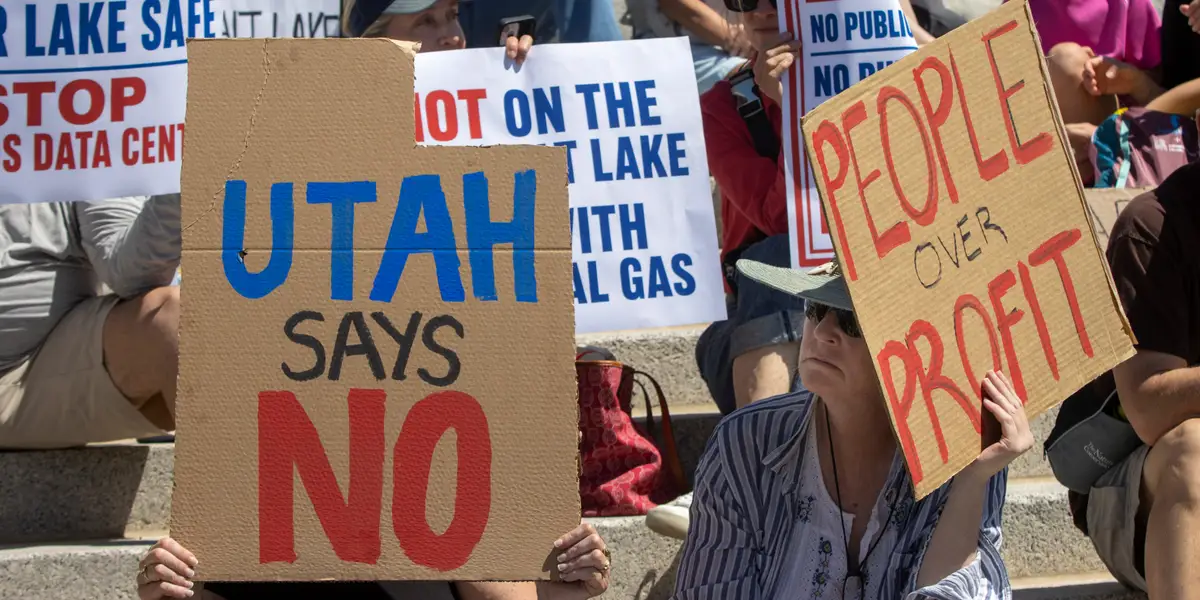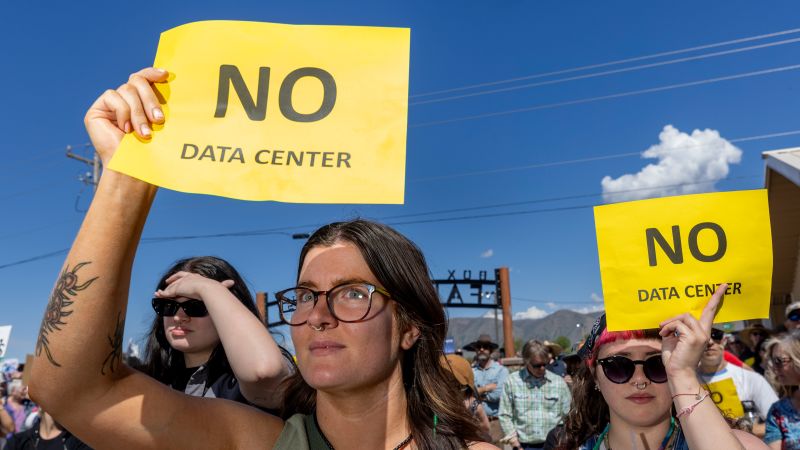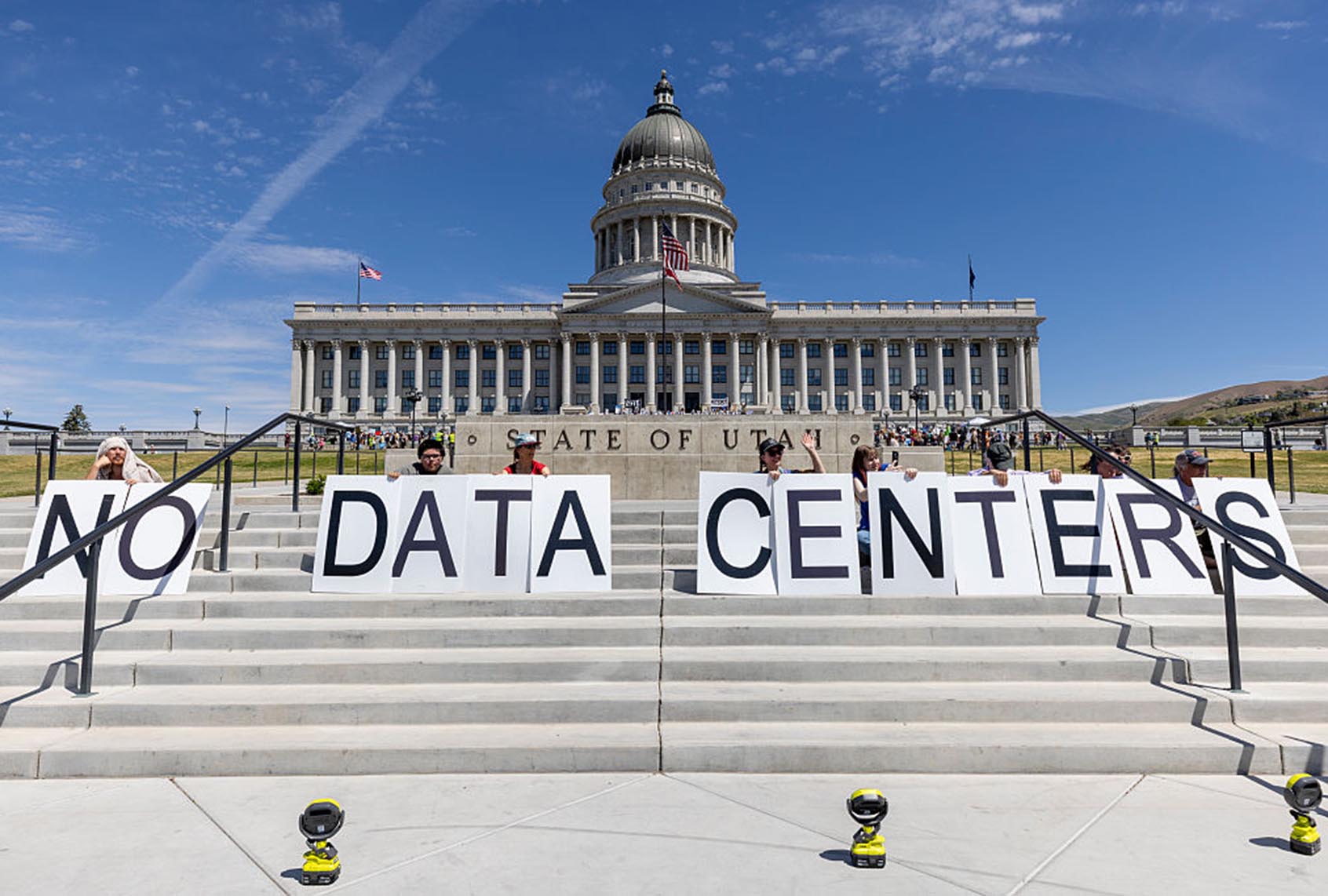
Shark Tank’s Kevin O’Leary has been making the media rounds defending the 40,000-acre data center project he’s backing in northern Utah. Dismissing residents’ concerns over the environmental impacts and water demands of the proposed project in the drought-stricken Great Salt Lake region, O’Leary has claimed protesters are “bused in,” “misinformed,” and alleged that China has had a hand in orchestrating the public push back.
“The Stratos project in Utah is an example of data center largesse,” says Jim Walsh, the policy director of Food and Water Watch, an organization leading a campaign to stop the rapid development of data centers across the country. As proposed, the project would be more than double the size of Manhattan. Walsh adds, “It’s important to recognize that the impacts of this data center go beyond the water and energy concerns that impact the residents of Salt Lake. They’re going to be pulling gas from the Ruby Pipeline, and this project is going to perpetuate more fracking in the Western U.S., a practice for extracting natural gas that uses extreme amounts of water.”
This week on The Intercept Briefing, host Jordan Uhl speaks to Walsh about the massive Utah project, the environmental and economic impact of data centers on communities especially where water is already scarce, and the Trump administration’s push to cut regulations at the federal and local level to accelerate the build-out of data centers and AI infrastructure.