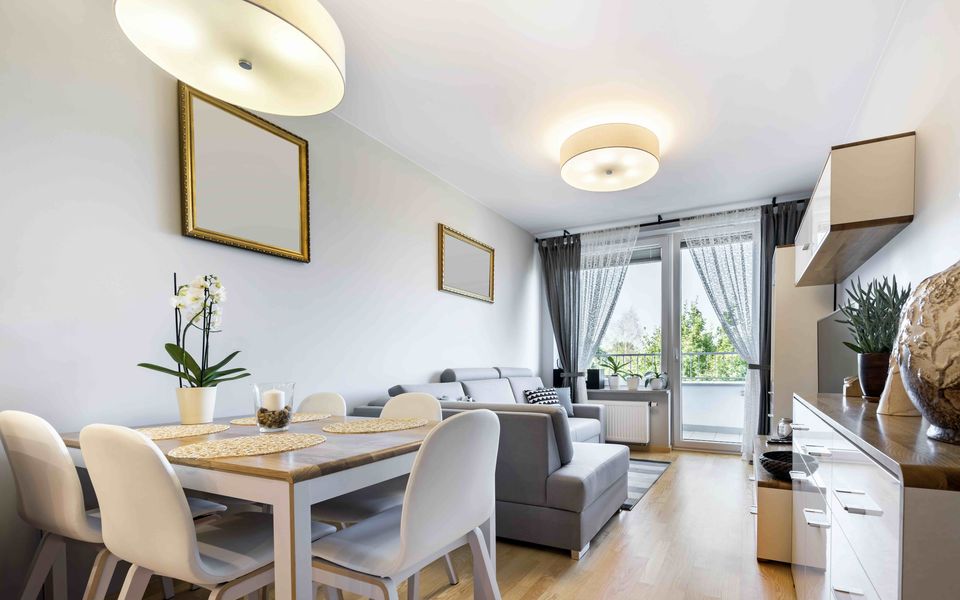
The population may be shrinking, but demand for housing – especially for smaller homes – is increasing. The Bank of Greece attributes this paradox mainly to the increase in single-person households, mainly students, singles, digital nomads and the divorced. Now, several developers are building smaller homes.
In Athens, from 2011-2021, the population may have decreased marginally by 0.4%, but the number of households grew by 8.4%, or by 127,300 units in absolute terms, mainly due to the increase in single-person households, by 36.9%. This development is turning more categories of tenants and buyers toward small homes, which is boosting their prices.
Moreover, residential buildings that are being created in place of old office buildings and industrial properties are configured as small residences, from 20-25 sq.m. up to 60-70 sq.m.
That is because small apartments yield more (per sq.m.) compared to larger ones, and because they remain more affordable, in proportion to larger ones, and therefore appeal to a larger portion of interested parties.
In its recent report on Greece, the IMF notes that the real estate market has not yet had time to adapt to demographic changes. Despite Greece’s acute demographic problem, the number of households is not decreasing. Young people are trying to leave their parents’ house earlier, but without any immediate plans to cohabit, get married or start a family, while the rise in divorces is breaking the population into more households, fueling the need for housing. As a result, interest is shifting to quality, small homes in urban centers, which remain hard to find.