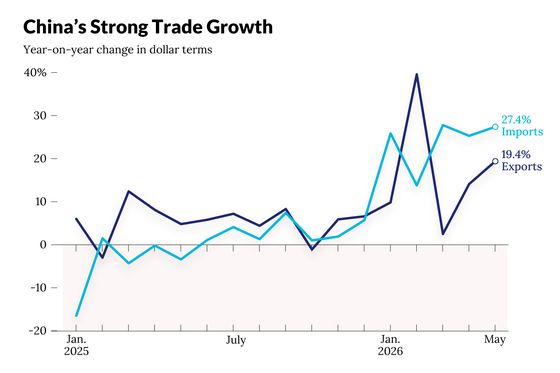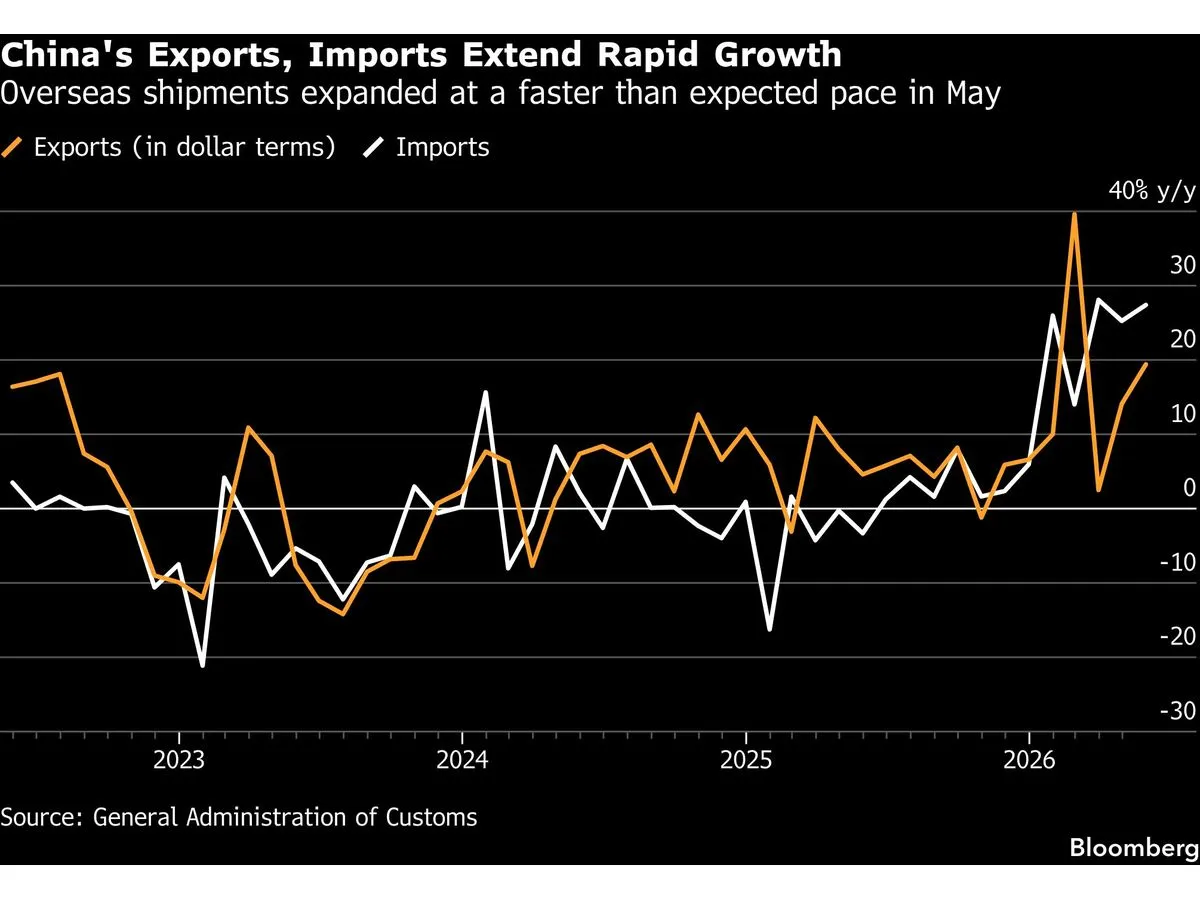
Skip to Content News Archives Economy Energy Oil & Gas Renewables Electric Vehicles Mining Commodities Agriculture Real Estate Mortgages Mortgage Rates Finance Banking Insurance Fintech Cryptocurrency Work Wealth Smart Money Wealth Management Investor Personal Finance Family Finance Retirement Taxes High Net Worth FP Comment Executive Women Puzzmo Newsletters Financial Times Business Essentials More Innovation Information Technology FP500 Podcasts Small Business Lives Told Tails Told Shopping Financial Post Store Obituaries Place a Notice Advertising Advertising With Us Advertising Solutions Postmedia Ad Manager Sponsorship Requests Classifieds Place a Classifieds ad Working Profile Settings My Subscriptions Saved Articles My Offers Newsletters Customer Service FAQ News Economy Energy Mining Real Estate Finance Work Wealth Investor FP Comment Executive Women Puzzmo Newsletters Financial Times Business Essentials HomePMN BusinessAI Supercycle Propels China's Trade With 111% Boom in Chip SalesChina’s exports and imports expanded rapidly in May, topping forecasts as a global investment supercycle in artificial intelligence drives up prices and demand for hardware made by the world’s manufacturing powerhouse.Author of the article:Last updated 4 hours ago You can save this article by registering for free here. Or sign-in if you have an account.t8xr3kq{elpxhrmv0xhbk54s_media_dl_1.png General Administration of Custom(Bloomberg) — China’s exports and imports expanded rapidly in May, topping forecasts as a global investment supercycle in artificial intelligence drives up prices and demand for hardware made by the world’s manufacturing powerhouse.Subscribe now to read the latest news in your city and across Canada.Exclusive articles from Barbara Shecter, Joe O'Connor, Gabriel Friedman, and others.Daily content from Financial Times, the world's leading global business publication.Unlimited online access to read articles from Financial Post, National Post and 15 news sites across Canada with one account.National Post ePaper, an electronic replica of the print edition to view on any device, share and comment on.Daily puzzles, including the New York Times Crossword.Subscribe now to read the latest news in your city and across Canada.Exclusive articles from Barbara Shecter, Joe O'Connor, Gabriel Friedman and others.Daily content from Financial Times, the world's leading global business publication.Unlimited online access to read articles from Financial Post, National Post and 15 news sites across Canada with one account.National Post ePaper, an electronic replica of the print edition to view on any device, share and comment on.Daily puzzles, including the New York Times Crossword.Create an account or sign in to continue with your reading experience.Access articles from across Canada with one account.Share your thoughts and join the conversation in the comments.Enjoy additional articles per month.Get email updates from your favourite authors.Create an account or sign in to continue with your reading experience.Access articles from across Canada with one accountShare your thoughts and join the conversation in the commentsEnjoy additional articles per monthGet email updates from your favourite authorsSign In or Create an AccountorExports jumped more than 19% from a year earlier, the most in three months and higher than all but one estimate in a Bloomberg survey. Imports soared over 27% in May, according to data released by the General Administration of Customs on Tuesday, leaving a trade surplus of $105.4 billion — the biggest since January. Chips and computers contributed to about half the growth in both exports and imports, Bloomberg calculations showed. Overseas sales of semiconductors soared 111% to $36 billion, the fastest expansion since 2013.Get the latest headlines, breaking news and columns.By signing up you consent to receive the above newsletter from Postmedia Network Inc.A welcome email is on its way. If you don't see it, please check your junk folder.The next issue of Top Stories will soon be in your inbox.We encountered an issue signing you up. Please try againThe strong export growth “suggests continued support from AI-related hardware demand and possibly some front-loading of overseas orders amid geopolitical uncertainty,” said Hao Zhou, chief economist at Guotai Junan International Holdings. “Strong export performance is providing a meaningful buffer to domestic softness.”The global AI infrastructure buildout has emerged as a key force propelling Asian trade this year, cushioning the impact of a global energy crisis stemming from the conflict in the Middle East. It’s leading to a huge windfall for companies like the South Korean giant Samsung Electronics Co. as well as lesser-known Chinese hardware suppliers such as Zhongji Innolight Co., a maker of optical modules critical to data centers. Outbound shipments of computers and parts soared 66% in May from a year ago, the fastest pace since 2010 and up from a 47% gain in the previous month. High-tech exports climbed 51%, the most since 2021. Much of the surge came as a result of soaring chip prices at a time when a global race among tech giants to build data centers is leading to a shortage that could last for years. In volume terms, China’s chip exports rose only 2%.In another sign of the impact from the AI rush on the world’s No. 2 economy, South Korea’s semiconductor exports to China jumped over 200% in May from a year earlier. China still relies on imported chips as restrictions imposed by the US block its access to many of the machines needed to make advanced semiconductors. Apart from AI hardware, car exports continued to post solid growth at nearly 40%. Automakers have no choice but to step up efforts to sell overseas, as domestic sales plunged 22% in May from a year ago in the sixth straight month of double-digit declines. What Bloomberg Economics Says …“The report allays concerns that the Iran war is taking a toll on China’s export engine, and highlights increasing linkages between the global tech cycle and trade flows.”Eric Zhu, economist; read full report hereExports to the US rose almost 36% — the most since 2021 — extending their recovery after a long streak of double-digit declines during the tariff war started by Donald Trump. The increase may have been exaggerated by the statistical effect of a low base from a year ago, when China and the US were locked in tit-for-tat tariff hikes that at one point brought levies to over 100%.Export growth accelerated across most major regions in May, with the exception of the European Union and Latin America. Shipments to the Southeast Asian nations in the Asean group soared nearly 25% and climbed almost 19% to Africa. Though China’s sales in the EU expanded less than 8%, its imports from the bloc shrank for the first time in three months, meaning the trade surplus actually grew slightly and remained above $30 billion in May.The imbalance will do little to soothe trade tensions with Europe. Officials there are preparing the ground for possible new tools to counter China’s export surge, which they partly blame on insufficient domestic demand, an undervalued currency and generous subsidies.Back home, the AI boom is driving K-shaped expansion across China’s trade, factory production and industrial profits. In contrast to high-tech exports, overseas sales of traditional items like clothes and toys declined by 4% and 7% in May, respectively.The divergence complicates China’s economic policymaking, as a large portion of the economy is still suffering from anemic consumer demand, even as some factories in AI-related fields prosper. The export strength is potentially making Chinese authorities more comfortable with a stronger yuan. In contrast to labor-intensive products, high-tech exports are less sensitive to domestic currency appreciation. With the cost of oil, chips and metals sharply on the rise, China’s export prices jumped at their fastest rate in three years in April, a reversal from years of an almost-unbroken contraction. But such increases have yet to spread to most Chinese goods, suggesting intense domestic competition still limits what factories can charge buyers.And despite being the world’s biggest oil importer, China is buying far less crude from abroad, with inbound shipments falling 5% in the first five months of 2026 from a year ago in volume terms. “The external demand engine remains one of China’s key drivers,” said Lynn Song, chief economist for Greater China at ING Bank NV. “Domestic demand, though, continues to lag behind.”(Updates with additional details throughout, adds comment in final paragraph. An earlier version of this story corrected month in second paragraph.) Join the Conversation This website uses cookies to personalize your content (including ads), and allows us to analyze our traffic. Read more about cookies here. By continuing to use our site, you agree to our Terms of Use and Privacy Policy.
AI Supercycle Propels China's Trade With 111% Boom in Chip Sales
China’s exports and imports expanded rapidly in May, topping forecasts as a global investment supercycle in artificial intelligence drives up prices and demand for …
1,377 words~6 min read