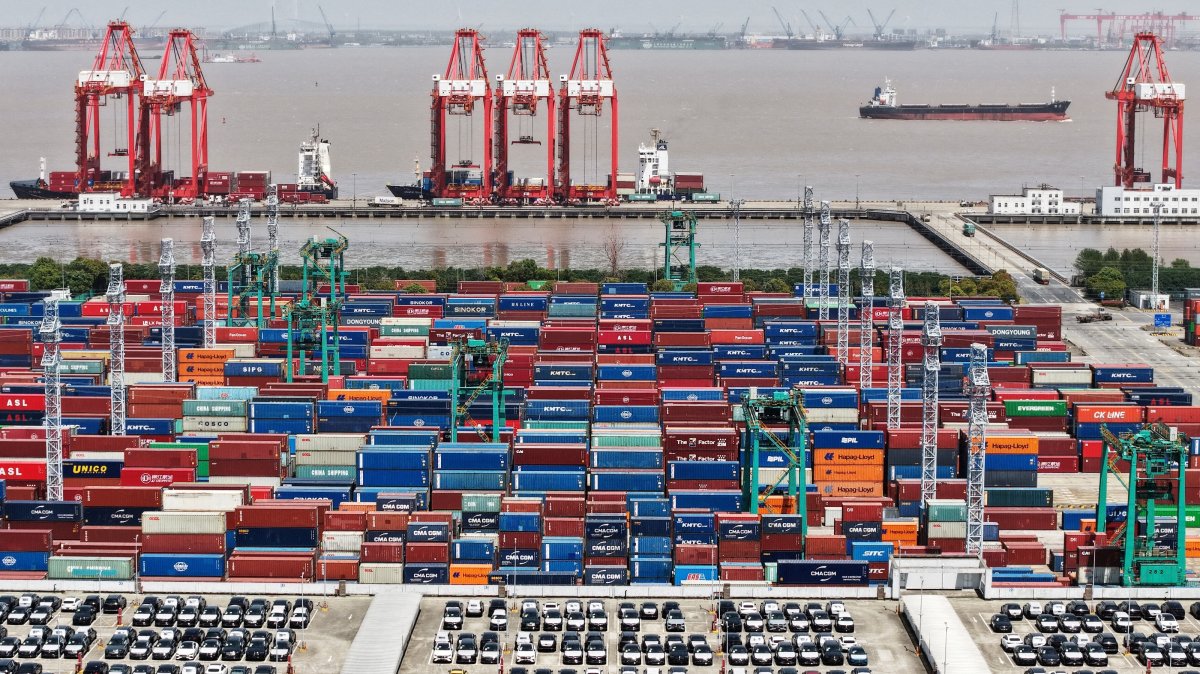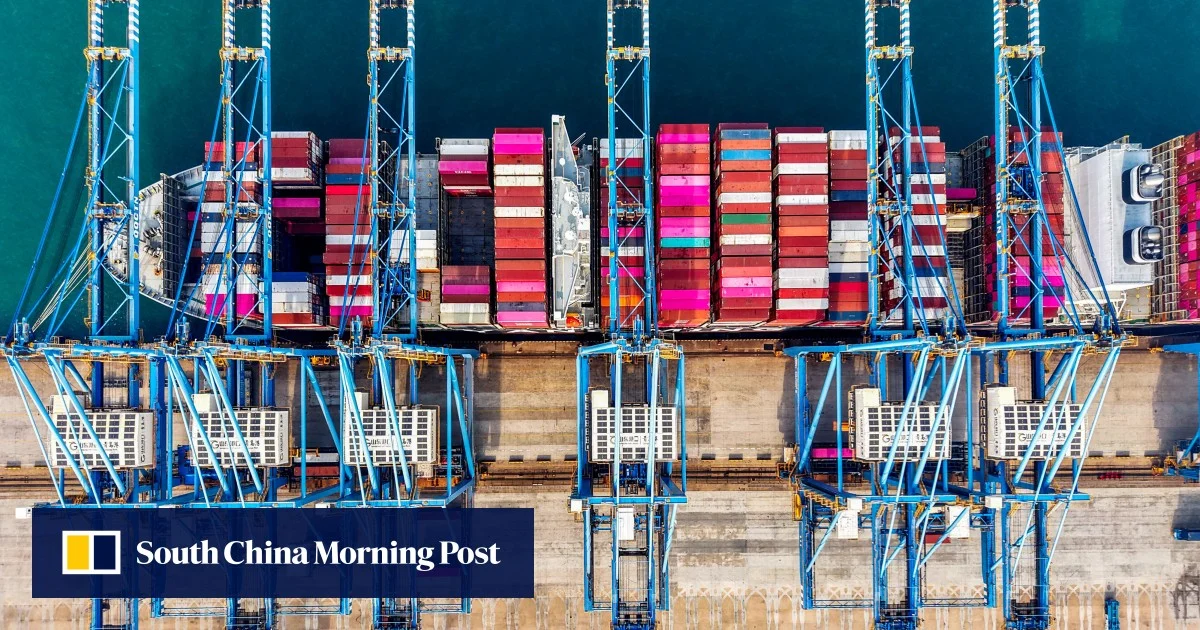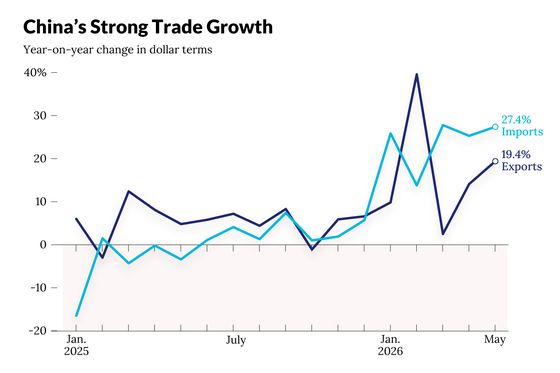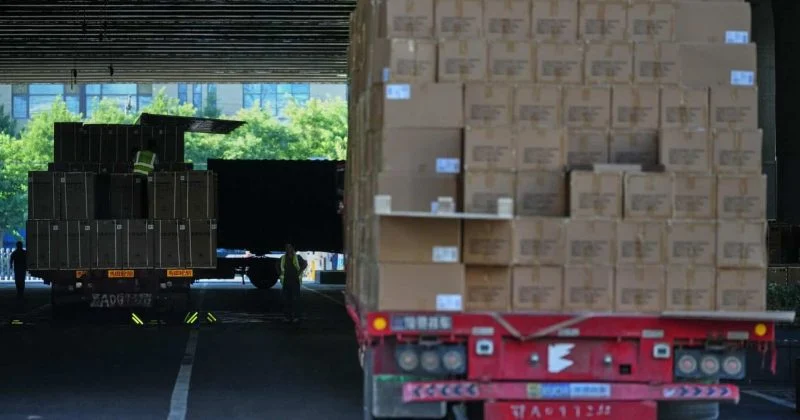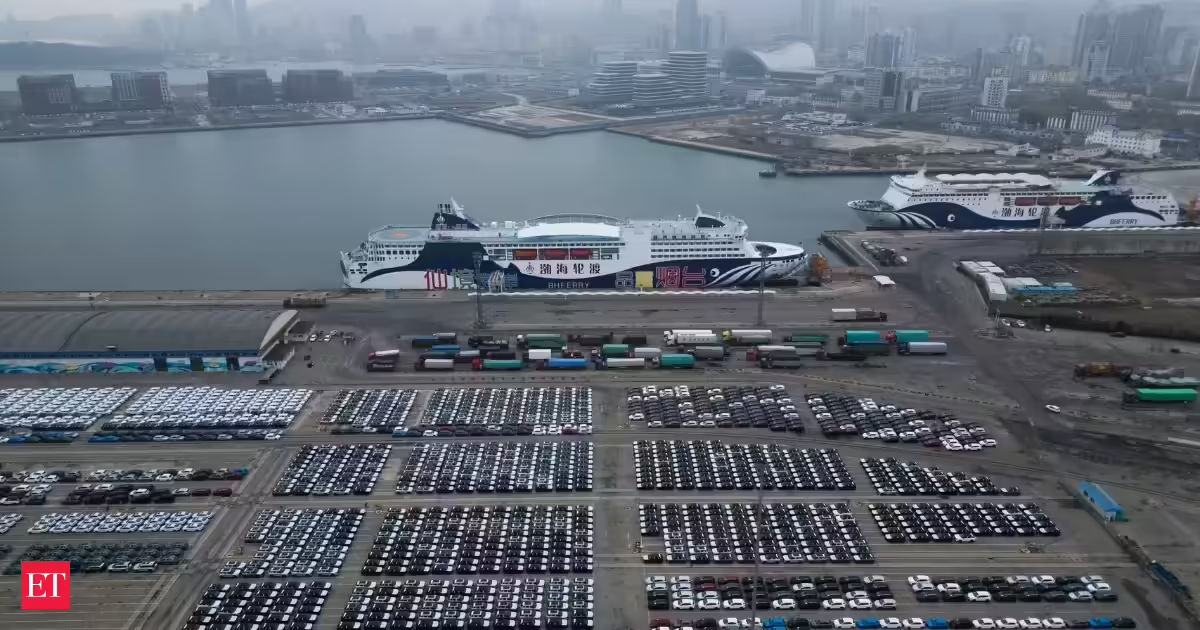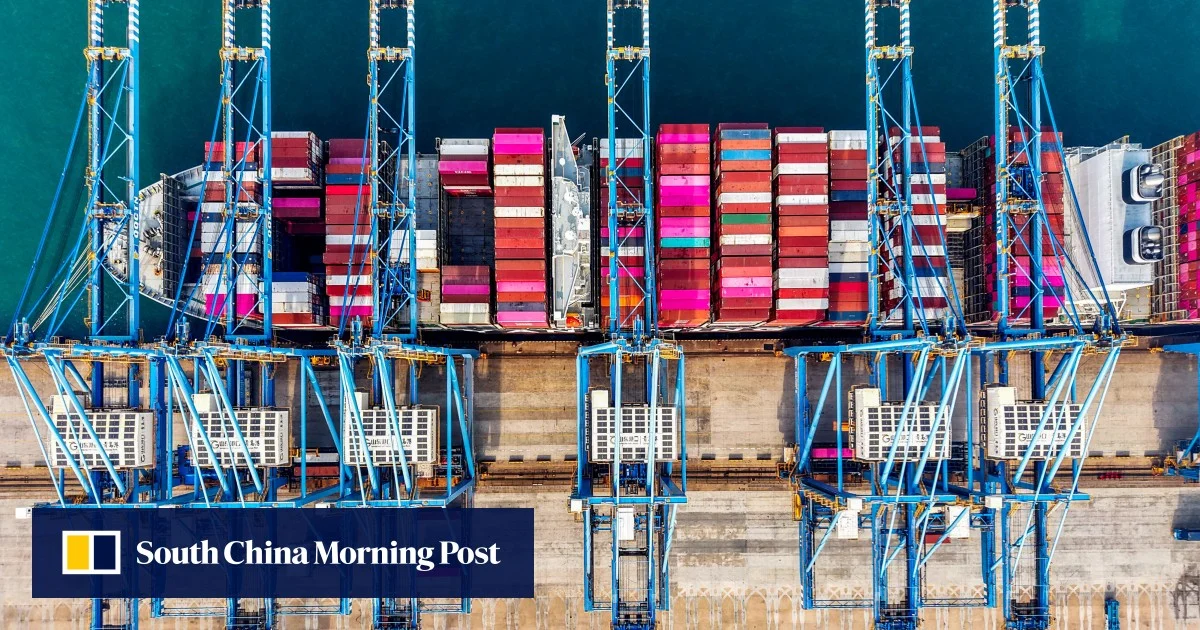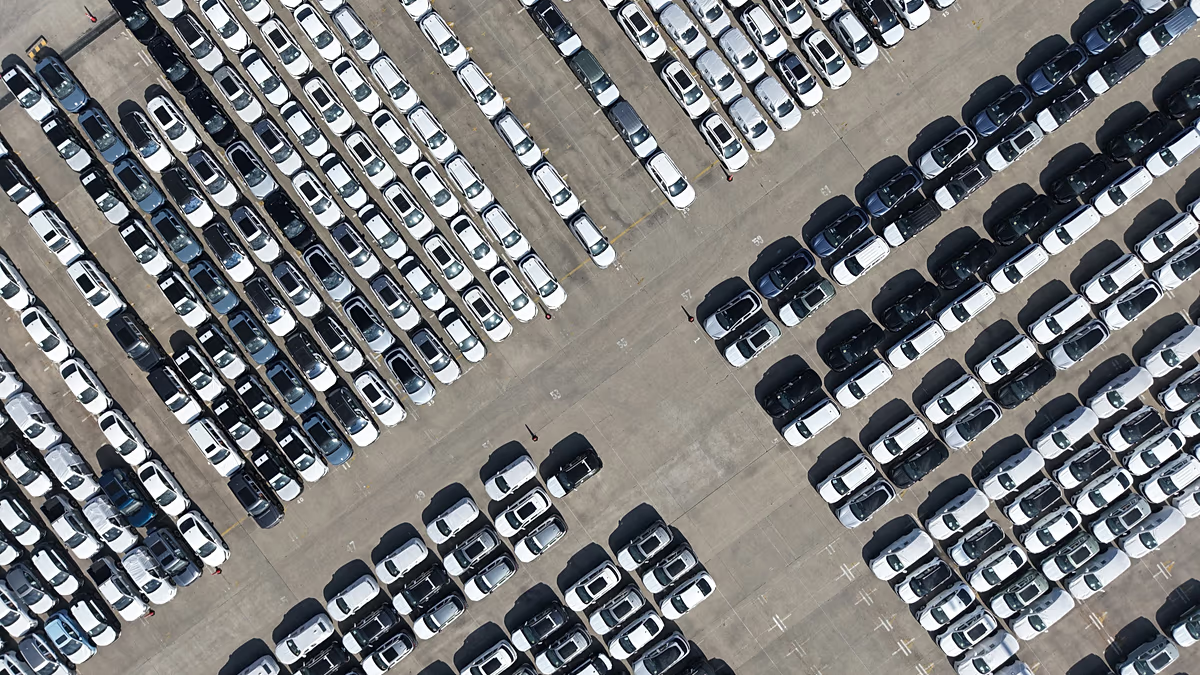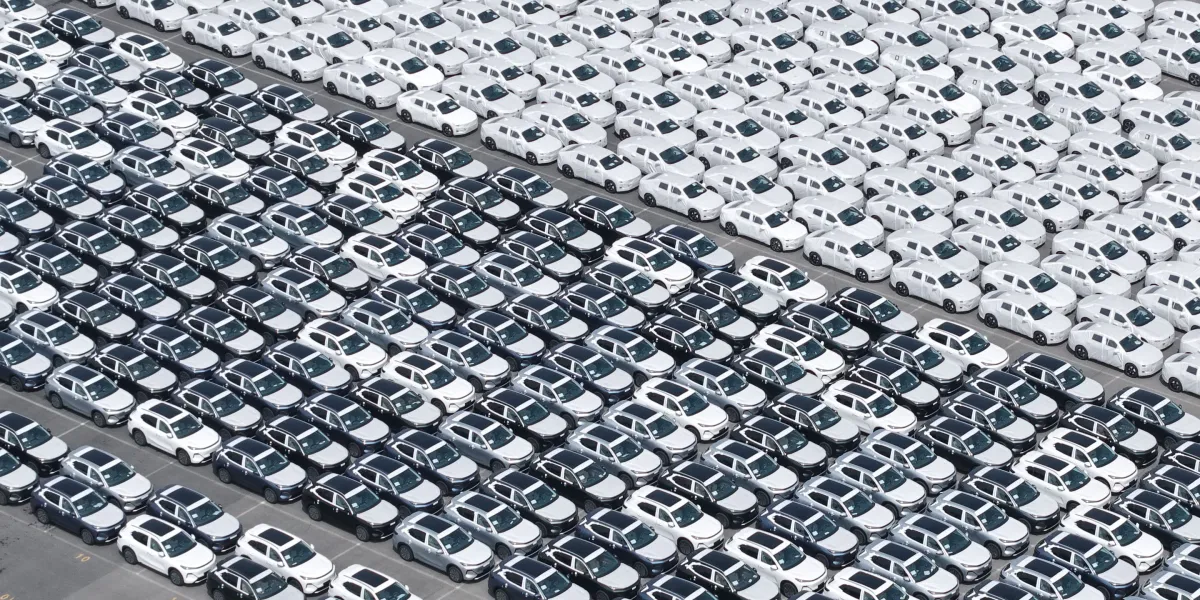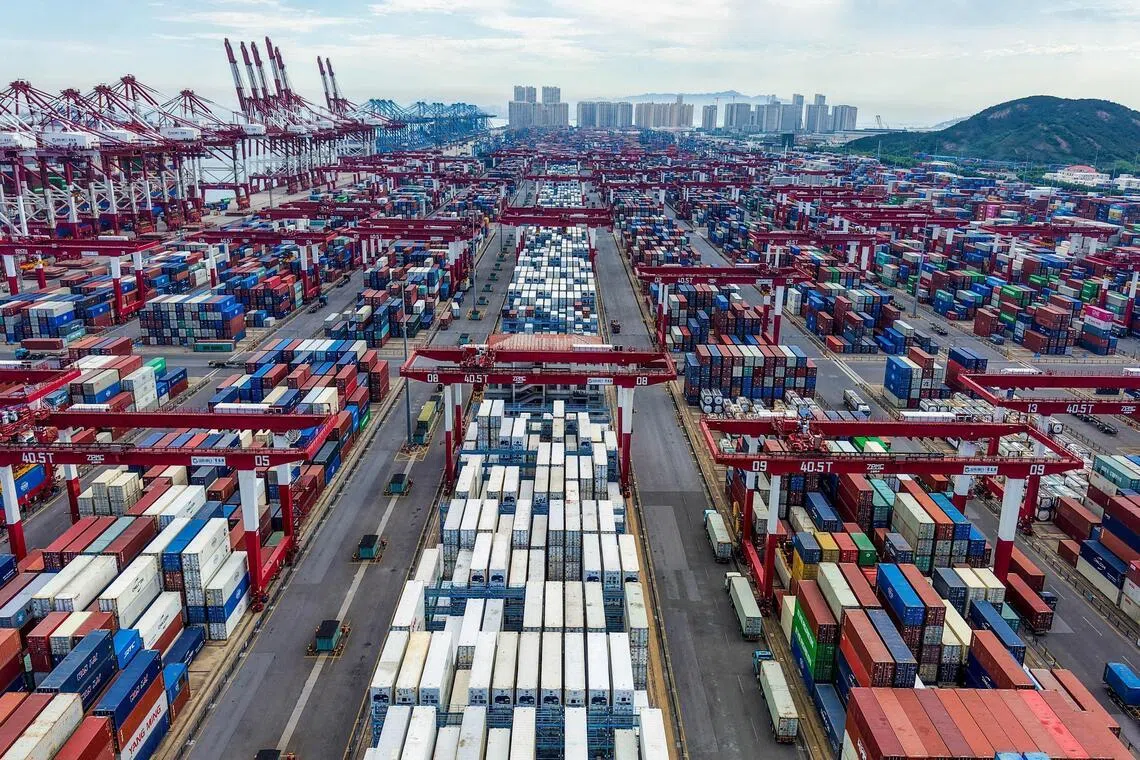
BEIJING – China’s exports rose at a faster pace in May, topping forecasts as booming demand for artificial intelligence hardware offsets disruptions from the war in Iran.Exports jumped more than 19 per cent from a year earlier, the most in three months, according to a statement released by the General Administration of Customs on June 9. That compares with the median forecast of 15 per cent in a Bloomberg survey of economists and a gain of 14.1 per cent in April. Exports to the United States – a politically sensitive figure – surged 35.4 per cent year on year.Imports soared over 27 per cent in May, leaving a trade surplus of US$105.4 billion (S$135.9 billion), the biggest since January. The global AI infrastructure buildout has emerged as a key force propelling Asian trade in 2026 despite a global energy crisis stemming from the conflict in the Middle East. It is leading to a huge windfall for companies like South Korean chipmaking giant Samsung Electronics as well as lesser-known Chinese hardware suppliers such as Zhongji Innolight, a maker of optical modules critical to data centres. Chinese imports also climbed as companies load up on foreign chips and equipment. South Korea’s semiconductor exports to China jumped over 200 per cent in May from a year earlier.The AI boom is driving K-shaped expansion across China’s trade, factory production and industrial profits. In April, semiconductors and computers accounted for half of China’s export growth, while traditional products like clothing flat-lined. The divergence complicates China’s economic policymaking, as a large portion of the economy is still suffering from anaemic consumer demand, even as some factories in AI-related fields prosper. The export strength is potentially making Chinese authorities more comfortable with a stronger yuan. In contrast to labour-intensive products, high-tech exports are less sensitive to domestic currency appreciation. With the cost of oil, chips and metals sharply on the rise, China’s export prices jumped at their fastest rate in three years in April, a reversal from years of an almost-unbroken contraction. But such increases have yet to spread to most Chinese goods, suggesting intense domestic competition still limits what factories can charge buyers.And despite being the world’s biggest oil importer, China is buying far less crude from abroad, with inbound shipments projected to fall to the weakest since 2022. BLOOMBERG
China exports jump 19% in May on booming AI trade as shipments to US surge
Booming demand for AI hardware offset disruptions from the war in Iran. Read more at straitstimes.com. Read more at straitstimes.com.
384 words~2 min read