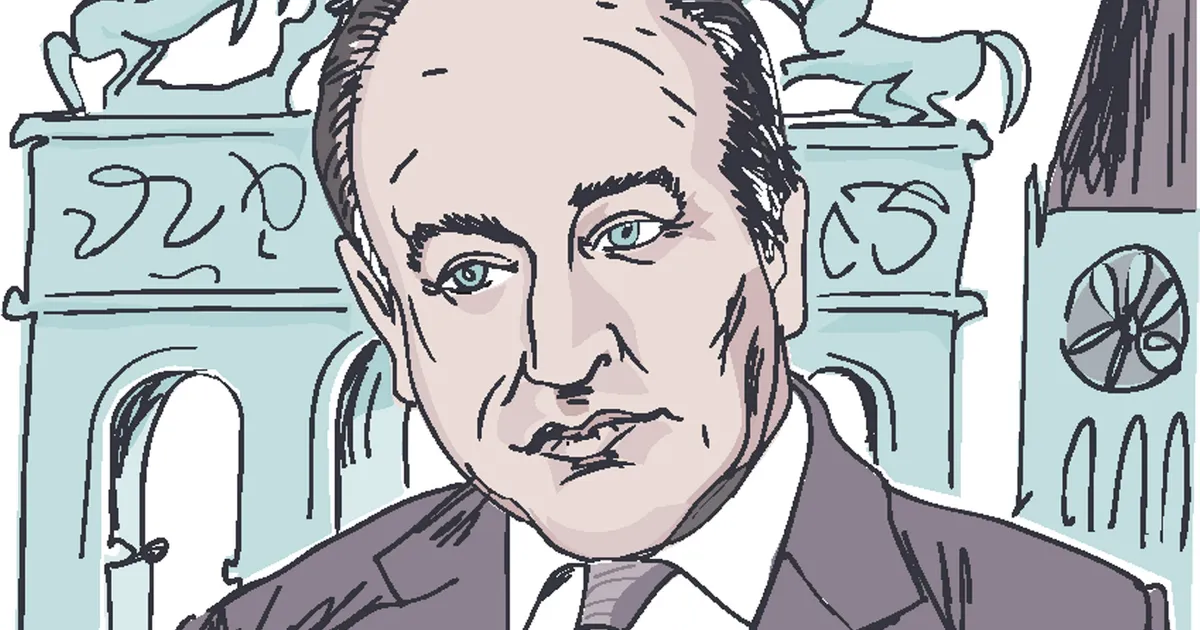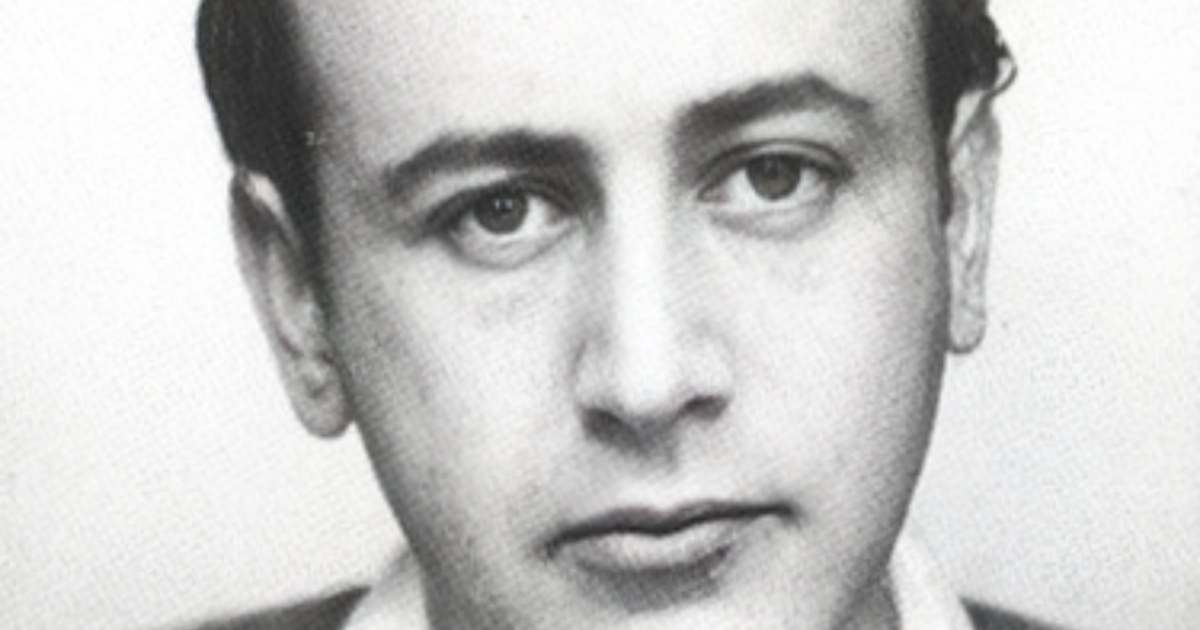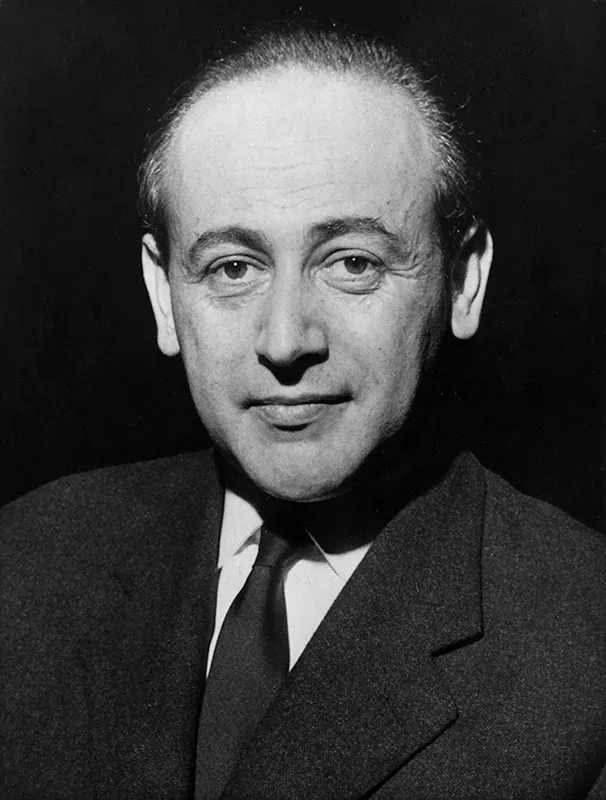
Three new books by and about Romanian poet Paul Celan demonstrate that he was a problematic figure in many ways.Paul Celan: A Lifeby Anna Arno. Translated by Soren Gauger. Belknap Press, 2026. 416 pages.Letters to Gisèleby Paul Celan. Translated by Jason Kavett. NYRB Poets, 2024. 544 pages.Buy on Bookshop.orgConversation in the Mountains: Collected Prose of Paul Celan by Paul Celan. Translated by Rosmarie Waldrop. New Directions, 2026. 80 pages.Buy on Bookshop.orgDid you know LARB is a reader-supported nonprofit?LARB publishes daily without a paywall as part of our mission to make rigorous, incisive, and engaging writing on every aspect of literature, culture, and the arts freely accessible to the public. Help us continue this work with your tax-deductible donation today!THE RECENT ARRIVAL of three books by or about Paul Celan provides enormous insight into how the writer’s many personal devils meshed to create one of the great bodies of work in 20th-century poetry. The Polish art historian Anna Arno’s biography Paul Celan: A Life (2026), translated to English by Soren Gauger; a collection of the poet’s correspondence with his French wife, Letters to Gisèle (2024), edited by Bertrand Badiou and translated by Jason Kavett; and last month’s republication of Conversation in the Mountains: Collected Prose (1983), in Rosmarie Waldrop’s 1986 translation, cast complementary light on Celan. On the personal level, the resulting portrait confirms what was said of him in April 1955 by the publisher Gotthold Müller: “You will understand that the personality of the author Paul Celan, with all due esteem for his poetic work, has become a bit problematic.” But they also demonstrate that he was problematic in many other ways. If he was a prickly, prideful man, always on the qui vive for insults, slights, and any hint of antisemitism in those around him, as a poet, he thought that opacity was a virtue but also took umbrage when this was pointed out to him. Trouble regularly sought him out, and when it didn’t, he went and found it himself.Celan was a child of Europe’s borderlands, of the bloodlands that hosted the Holocaust. He was born Paul Antschel in 1920 into a middle-class Jewish family in Czernowitz, now known as Chernivtsi in southwestern Ukraine, which was a heavily Jewish city in Bukovina. The city had long been part of the Austro-Hungarian Empire, although during Celan’s youth in the interwar years, it was passed between Romania and the Soviet Union. Through it all, Celan remained faithful to the German that was the language of his home, as it was of the bulk of the city’s Jewish community. He had a gift for languages, and this gift enabled him, when Czernowitz was part of Romania (and later Russia), to add Romanian and Russian to his stock of languages. He would subsequently include French, English, and Portuguese, and would translate poetry and prose from all of these tongues.The central event of his life and poetry was the Holocaust, during which his parents were deported to the east and killed in the death camps. Celan remained in Bukovina and worked at a slave labor camp. His survival marked him with the seal of a guilt that he—like so many survivors—never shook. He would describe his poetry as “a memorial,” “an epitaph,” and “a grave” for the victims of the annihilation of European Jewry.Celan took to poetry early, and after the war, he lived in Bucharest, where his greatest poem, “Todesfuge,” was published in Romanian in 1947. He spent early 1948 in Vienna and moved to Paris, where he spent the final 22 years of his life. He lived for several years in a hotel on the Left Bank, remaining there with his wife, the artist Gisèle Lestrange, until moving to more comfortable digs owned by her family. He ultimately obtained a position teaching German at the most elite of French schools, the École normale supérieure, a post he held full-time from 1959 until his death in 1970.It is foolhardy for any reader to hope to ever find a skeleton key to Celan’s famously opaque poetry; the secret is to allow the language to flow, to possess you. Anna Arno, in her biography, does a noble job explicating many individual poems. Denying Celan’s opacity, however, means ignoring that it was a central element of his oeuvre, something the poet admitted he strove for.In October 1960, when receiving the prestigious Georg Büchner Prize, he told the audience in an acceptance speech, included in Conversation in the Mountains:[I]t is very common today to complain of the “obscurity” of poetry. Allow me to quote, a bit abruptly […] a phrase of Pascal’s which I read in Leo Shestov: “Ne nous reprochez pas le manque de clarté puisque nous en faisons profession.” [“Don’t reproach us for our lack of clarity, for this is what we profess.”]Celan here seems to be imputing “lack of clarity” to all of poetry, but it is a quality he did indeed profess for his own. On August 20, 1965, in a letter to his wife (included in Letters), he spoke of a newly completed poem, saying that “it is quite decent, it seems to me, maybe not opaque enough.” His opacity was commented on throughout his life. Arno writes that the German writer Erhart Kästner said of Celan’s poetry, when the latter won the Literature Prize of the Free Hanseatic city of Bremen in 1958, that “he ventured considerably farther away from ‘comprehensibility and logic in its conventional understanding’ than any other German poet.” That difficulty allows us to understand Celan himself. As he once wrote, “a poem is not the representation of reality, it is reality itself”—a reality he lived in his very being.Celan’s work was voluminous, filling seven thick tomes in the German edition of his complete works. Though admitting the difficulty of his work, he paradoxically resented the lack of comprehension it encountered. For a time, he was close to the postwar German writers of Gruppe [Group] 47. He would break with many of its members, sometimes because they had once had Nazi affiliations, sometimes because he accused them of antisemitism, sometimes because they didn’t defend him quickly or strongly enough in his many literary and personal disputes. Celan felt both misunderstood and, at times, attacked by its members. Letters editor Badiou tells us that Celan felt “his poetry [was] often reduced by the majority of the Group 47 members to ‘poesie pure,’” and that “the majority of writers and their public” seemed unable “to see his poetry and thought as what they are: ‘a memorial (Denkmal) to the victims of the Nazis and a form of resistance to the repression of history and forgetting.’”First among the determinative aspects of Celan’s writerly and personal being was his Jewishness. He wrote to his wife, who was not Jewish: “You are courageously the wife of a poet. […] You are, You know it well, the wife of a poète maudit: doubly, triply ‘Jewish.’” We can assume that he wasn’t saying he was Jewish in two or three ways but rather that the “doubly” and “triply” are multipliers of the profundity with which he felt his Jewishness. The epigraph to one of his poems, “And with the Book from Tarussa,” was borrowed from Marina Tsvetaeva and is virtually an autobiography in four words: “All poets are Jews.”Another definition Celan provided was that “Jewishness is, for [him], less a matter of its issues than its pneuma.” Jewishness, he wrote to the German-born Israeli publisher Gershom Schocken, “is present in each of my volumes, and my poems imply my Judaism.” In fact, there was no poetry without his faith. “For what is Judaism,” he asked, “if not a form of the Human, what is Poetry if not a form of this same Human[?]”For some of his more perspicacious readers, the profundity of Celan’s Jewishness was precisely what made his poetry as stark and difficult as it was. In 1967, the critic Peter Horst Neumann placed Celan’s poetic language under the sign of his Jewishness, particularly the prohibition of graven images. He wrote that Celan’s was “a poetry that oriented itself according to [an] absolute language and the ban on images of the Torah [and] would have carried out a turning against art, against itself.”The Holocaust as a subject and backdrop was a natural corollary to his focus on Jewishness. Of his poem “Todesfuge,” Celan said it was “an epitaph and a grave” for the millions who have neither. This poem, unquestionably his greatest, one Arno considers the most important of the 20th century, features prominently in both her biography and his correspondence with his wife. It is, in fact, the poetic axis around which everything revolves over much of his life.The poem was, until shortly before publication, titled “Todestango” (“Deathtango”). Arno quotes and seems to accept the claim by a friend of Celan’s from his hometown that, when the poem was written, Celan did not yet know of the gas chambers and crematoria, though this is quite unlikely. The Holocaust had not yet become the center of Jewish consciousness that it later became, but its horrific reality was already known in 1947, certainly to Jews from Central Europe. Even more, some of the most stunning images in the poem, from the description of Sulamith’s “ashen hair” to the “grave in the sky,” are meaningless, not just obscure, if the crematoria are not implied.Celan seemed to consider the Holocaust his own territory, one to which he had priority and whose entry he guarded against intruders. He was, for a time, an admirer of the poet and Holocaust survivor Nelly Sachs. Their correspondence is almost unbearable to read. Sachs was a woman troubled by a mental illness as crippling as Celan’s. She loved Celan, his family, and his work, and his mere existence was a lifeline for her in her Scandinavian solitude. Arno reports that this fact didn’t prevent him from complaining to a young friend and admirer that, in the young woman’s dissertation, she “had repeated a claim made by the ‘Nelly Sachs apologists’ that she had been the first to write about Auschwitz. He thought giving Nelly Sachs first place was ‘monstrous.’” Sachs would win the Nobel Prize in 1966 and invite Celan to the ceremony. He begged off attending. Sachs’s paranoia was centered around Nazi plotters in Sweden, who were spying on her in her home. She died of colorectal cancer in May 1970, just weeks after Celan drowned in the Seine. Her death arrived on the day of Celan’s funeral.Public readings of “Todesfuge” figured in most of Celan’s public events for two decades. Readings were an important part of Celan’s life and livelihood, and he traveled extensively to give them. Early in his reading life, he struggled to find the correct tone with which to read it. This resulted in clumsy readings and even clumsier criticisms of his performances that in turn set off Celan’s suspicion that his critics were antisemites. Late in his life, his readings of the poem were received enthusiastically. A review of a 1968 reading described Celan’s “incantatory voice.” (An example of Celan’s skillful reading can be heard in Wim Wender’s 2023 documentary Anselm.) Things were not always so, and his readings in his youth were received with disdain. The critic and philologist Walter Jens reported that “when Celan appeared for the first time, people said: ‘But who can listen to that!’ He read with very much pathos. We laughed about it. ‘He reads like Goebbels!’ said someone.” Celan himself reported in a letter that another German writer had said of his reading of the poem that “that lunatic reads like Goebbels in a synagogue.” The insensitive nature of these criticisms, even when the comments were from writers who couldn’t be seriously suspected of antisemitism, fueled Celan’s certainty that he was surrounded by antisemitism and antisemites.His Jewishness and the Holocaust—both as poetic subject and as part of his lived experience—fed not only his poetry but also the paranoia that dogged him for much of his life. In 1962, as reported by Arno, “he violently tore a yellow scarf from his wife’s neck. The color upset him; like many others, he associated it with the Jewish star.” His unbalanced nature manifested itself in many ways. Colors, numbers, and even right and left were all assigned special significance. Did his fear of the left side have to do with that being the direction to which those directed to the gas chambers were sent upon arrival in the death camps? His obsession with colors even led his wife—who was, until he tried to kill her in 1965, in total thrall to him—to abandon painting when her husband’s crises were at their height. In fall 1965, when his madness exploded into the open with this murder attempt, he sent a poem to his son: “Love / Besieged by colors, besieged by numbers / Truth / Besieged by colors, besieged by numbers / Human / Besieged by colors, besieged by numbers.”It’s difficult to delineate the borderline between pride, touchiness, and paranoia in Celan’s life. Early warnings of his future full-blown paranoid schizophrenia appear at many early points in his life. His reaction to the accusation of plagiarism made by the widow of his mentor, the Franco-German poet Yvan Goll, was both understandable and disquieting. Goll had been a friend and supporter of Celan, and in 1953, three years after he died, Goll’s widow, Claire, perhaps (as Arno speculates) out of thwarted romantic feelings for Celan, accused him of plagiarizing her husband. The charge spread and was deemed by some to be credible, though Arno makes its falsity plain. Celan’s fight to clear his name took many years, and was all-consuming. It also provided Celan with confirmation that antisemites were everywhere. He wrote to an old friend in Romania, Alfred Margul-Sperber, that “it will surely come as no surprise that various Nazis and ‘non-Nazis’ felt inclined to step up and reiterate and repeat [the accusation]. I have yet to find anyone who responds with clear indignation.’” The critics, he said, were “descendants of Goebbels.” It is worth noting that Claire Goll, his accuser, was herself a Jew.Celan’s refusal to have any dealings with anyone who had had anything to do with Nazism is understandable and certainly cannot be condemned out of hand. That some of those he rejected were children during the Hitler years and made no conscious choice to support the regime seems to be taking matters a tad too far. But Hitlerism for him was omnipresent. As Arno summarizes, he bizarrely said of Heinrich Böll, an anti-Nazi writer who never hesitated to call out the presence of antisemitism in postwar Germany, that he was “an ‘egregious anti-Nazi’ who comfortably and profitably nestled into his irreproachable persona […] so comfortably that here and now he can permit himself the most despicable infamies.” Celan would also feud with and accuse his longtime lover, the Austrian writer Ingeborg Bachmann, along with her eventual husband Max Frisch, of failing in the fight against recrudescent antisemitism over a negative review that he thought was tinged with antisemitism. Arno puts it well: Celan, over the course of his writing life, “went on to suffer antisemitic attacks, or at least words he interpreted as such. Under fire and persecuted, he feverishly, sometimes insistently, demanded support. […] He lobbed accusations and burned bridges; above all, he begged for attention.”The roots of Celan’s wife, Gisèle Lestrange, could be traced back to the Middle Ages, including an ancestor who participated in the Crusades and presumably had massacred Jews. Their correspondence makes for harrowing reading. Lestrange was an artist who subordinated herself to Celan in almost every way, even surrendering to him the right to name her own works. Reading their letters, which overflow with claims on both their parts of eternal love, it is hard not to think that they perhaps protested too much. We know from Arno’s biography, as well as other collections of Celan’s correspondence, that he was not a particularly faithful husband. One of his affairs stretched across 10 years. This does not exclude the sincerity of his love for his wife, the mother of his two children, one of whom died at birth. He even introduced her to some of his lovers, so his infidelities weren’t all conducted behind her back. Their marriage’s motto, as they wrote, was “Stand firm.” Its obvious fault lines and fractures were ignored in the false belief that all was well, until such belief was no longer possible.Celan injected his deep love for his Jewishness into his love letters: “Long live our Love. Long live our son Eric. Long live Poetry. Long live Truth. Long live the Jews.” Pledges of eternal love flow back and forth (Celan to Lestrange: “I will love You all my life, I live only because of You and for You”), followed by temporary separations, Celan’s stabbing of Lestrange in 1965 (and later himself), internments in mental hospitals, and finally a definitive separation. Their second motto, repeated in countless letters, including one written two days before he assaulted her, was “Wird sind es noch immer”: “We are still what we are.” When they hit bumps in the road, they convinced themselves that all would soon be well, or at least that that was possible. He wrote to Lestrange at one point that separation from her would be “the victory of our enemies. I do not accept this separation.” The enemies were within him, and they would finally win.On October 14, 1969, he gave a brief address in Israel to the Hebrew Writers Association, collected in Conversation in the Mountains. He was only six months away from his death, which was assumed to be, and which all signs point to having been, a suicide. He expressed his support for Israel, for Israeli writers. In Israel, he told them, “I find much of the compulsion toward truth, much of the self-evidence, much of the world-open uniqueness of great poetry. And I believe I have encountered the calm and confident resolution to hold on to what is human.” But he also told his gathered peers: “I believe I have an idea of what Jewish loneliness means.”Jewishness, opacity, the Holocaust, and madness were all constitutive elements of Celan’s poetry and life, but there was one other interest that hung over his head in partnership with all the rest. Suicide stood in wait through much of his life. His final love, Ilana Shmueli, knew Celan in Czernowitz, and they reconnected shortly before his end. Shmueli wrote of how suicide was already a topic of his conversation in the postwar years, when the poet was in his twenties. He was haunted by guilt for surviving the war when his parents hadn’t. Another friend of his youth said that “that sense of guilt probably kindled the severe mental illness which came later and led to his suicide.” Arno writes that suicidal thoughts only occurred to Celan at moments of mental crisis, but they clearly occurred periodically throughout his life. His copy of Jean-Paul Sartre’s book on Stéphane Mallarmé has an underlined passage in which Sartre writes, of one who died by suicide, that “in losing his being, [he] gains an incorruptible unity,” to which Celan added an exclamation point. He further underlined in Sartre another passage: “It is the movement of suicide itself that must be reproduced in the poem.” He even incorporated suicide into his teaching, assigning for translation by his students a long passage from Honoré de Balzac’s La Peau de chagrin (1831) that begins “There is something grand and awful, not to be expressed, in suicide.”That, grand, awful, inexpressible thing became his final act. Arno describes his end: “It was probably on the night of April 19–20, 1970, that Celan jumped or waded into the Seine, not far from Pont Mirabeau. He went missing on the Passover holiday evening. The Hebrew name given to him at his bris was ‘Pesach (Passover).’ ‘Sounds too Jewish, doesn’t it!’ he would tease Ilana Shmueli.” The following day, his wife found his wristwatch and documents in his apartment. She feared the worst. He had once told her, apparently, that if they found his watch, it would mean he was dead. Also on his desk was Wilhelm Michel’s biography of Friedrich Hölderlin. Celan had underlined a sentence in pencil: “Sometimes this genius goes dark and sinks down into the bitter well of his heart.” His body was found in the Seine a few weeks later. LARB ContributorMitchell Abidor is a historian and translator of French, Spanish, Italian, Portuguese, and Esperanto. His latest book is Victor Serge: Unruly Revolutionary (2025).ShareLARB Staff RecommendationsUnder the Language: A Conversation with Pierre Joris on Paul CelanDavid Brazil interviews Pierre Joris about his new collection of Paul Celan writings, “Memory Rose into Threshold Speech.”David BrazilJan 20, 2021Making History Sing: On Vera Mutafchieva’s “The Case of Cem”Josh Billings reviews Bulgarian author Vera Mutafchieva’s historical novel “The Case of Cem.”Josh BillingsMar 13, 2024
Long Live Poetry | Los Angeles Review of Books
Three new books by and about Romanian poet Paul Celan demonstrate that he was a problematic figure in many ways.
3,487 words~16 min read