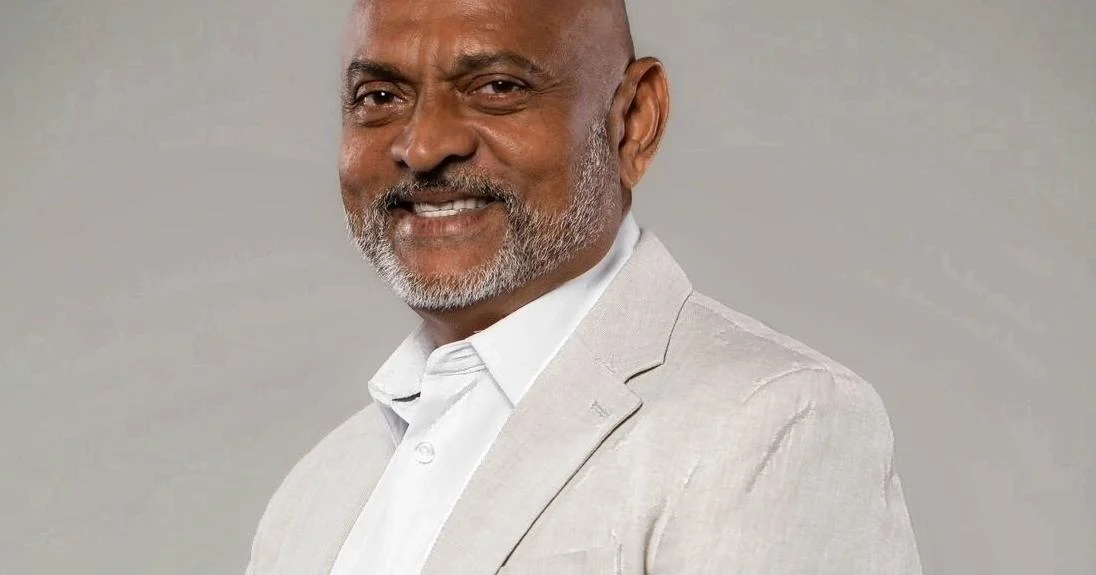
REGIONAL security consultant Dr Garvin Heerah said the decision to extend the state of emergency (SoE) for a further three months should not be made without clearly defined objectives and measurable outcomes.“The decision to extend a state of emergency is not one that should be made on momentum alone,” he told the Express yesterday.He was responding to announcement by the Office of the Attorney General on Sunday that Prime Minister Kamla Persad-Bissessar would be going to Parliament tomorrow with a resolution to debate a three-month extension to the SoE.Heerah said if the Prime Minister and Minister of Defence believed additional time were necessary, they also had a responsibility to clearly outline what they intended to achieve during the extension period. He argued that improvements in security conditions could not be both the justification for extending the measure and the sole method of assessing its effectiveness.“The population deserves more than assurances—they deserve benchmarks,” he said.He called for the Government to identify specific crime reduction targets, operational goals and safeguards designed to protect civil liberties during the period of the emergency measures.“What specific crime reduction targets are expected? What operational milestones must be achieved? What civil liberties safeguards remain in place, and who is monitoring them?” he asked.Heerah described an SoE as a significant constitutional measure that should be used carefully and subject to oversight.“If it is to retain public legitimacy, and that legitimacy is not guaranteed, it must be time-bound, goal-specific, and subject to independent accountability,” he stressed.He added that a three-month extension represented a significant period and should be utilised with clear objectives.“Three months is a meaningful window. It should be used with the same precision and intent the State expects of its security forces on the ground,” he said.Minor killings require greater scrutinyHeerah also commented yesterday on the killing of 12-year-old Mercedez Layne from Erin whose body was found Sunday morning in a grassy area in Carapal Road, Erin. He said the recent killing of minors in Trinidad and Tobago pointed to deeper concerns about the country’s security and law enforcement systems and required greater scrutiny from national institutions.Heerah said the deaths of at least eight minors during the first half of 2026, together with at least 75 juvenile fatalities recorded over the past decade, represented more than isolated incidents.“The violent deaths of children are among the most disturbing indicators a society can confront,” he said.He argued that the figures reflected a pattern that required what he described as “serious institutional interrogation.”Heerah questioned whether agencies responsible for investigating such deaths were adequately resourced and whether every case was receiving the level of forensic and investigative attention required in homicide investigations.“Are the agencies responsible for investigating these deaths adequately resourced?” he asked. “Are they treating each case with the forensic and investigative rigour that a homicide demands, regardless of the victim’s age or social background?”He also expressed concern about what he described as the absence of a visible profiling framework for perpetrators involved in the killings of minors.According to Heerah, authorities needed to determine whether the deaths were linked to broader psycho-social issues, organised criminal activity or opportunistic violence.“That distinction matters enormously, both for prevention and prosecution,” he said.He warned that security agencies that failed to distinguish between such categories would be unable to effectively address the problem.“A regional security posture that cannot distinguish between these categories is one that will continue to bury children,” he stressed.Heerah said the deaths of minors served as an indication of how effectively the State protected vulnerable citizens.“The deaths of minors reflect on us all. They are a measure of how well—or how poorly—the State protects its most vulnerable,” he said.
Heerah: Don’t extend SoE without clear objectives
REGIONAL security consultant Dr Garvin Heerah said the decision to extend the state of emergency (SoE) for a further three months should not be made without clearly defined objectives and
607 words~3 min read