June 9th, 2026
The concept of antagonistic pleiotropy looms large over present thought on the evolution of aging: that the proteins produced from a given gene can have multiple functions that are beneficial in youth but harmful in later life. Evolution selects for such a gene because the advantage of early life reproductive success near always wins out over the disadvantage of a shorter overall reproductive life span. Thus near all species undergo degenerative aging. More subtly the concept can also apply to systems, protein interactions, or other higher level constructs in cells and tissues. Finding specific, simple, defensible examples of antagonist pleiotropy in cellular biochemistry has proven to be surprisingly hard, suggesting that this is largely a systems-level issue, but here researchers put forward the gene VGLL3 as a candidate.
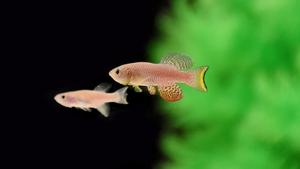
The antagonistic pleiotropy theory of aging predicts genetic trade-offs between early-life and late-life fitness. However, empirical evidence for such trade-offs in vertebrates remains scarce, particularly from causal genetic experiments. Here, combining genetic perturbation with longitudinal phenotyping in the turquoise killifish (Nothobranchius furzeri), we identify vestigial-like 3 (vgll3), previously linked by genome-wide association studies (GWAS) to age at maturity in humans and male Atlantic salmon, as a gene with antagonistically pleiotropic effects.