Story audio is generated using AI
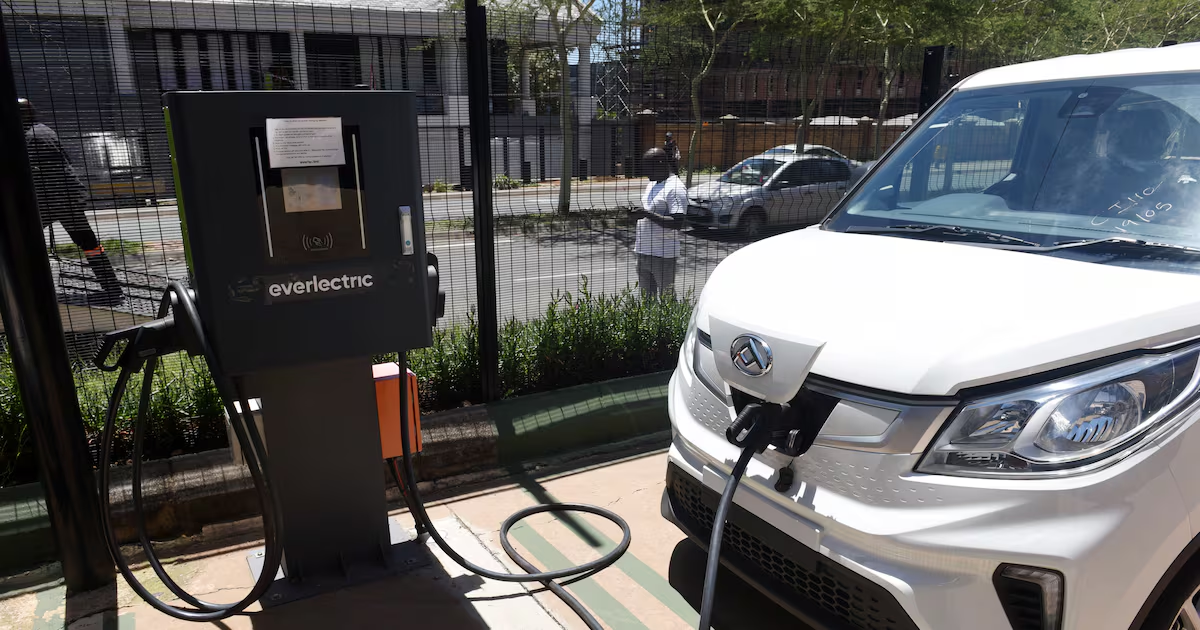
Electric vehicle (EV) sales in South Africa nearly doubled in the first quarter of 2026, with consumers increasingly turning to electric mobility as fuel prices rise and confidence in the country’s electricity supply improves.According to the latest quarterly review by Naamsa, sales of fully electric vehicles rose 96% year-on-year in the first three months of 2026, nearly doubling compared with the same period last year. The growth reflects a gradual shift in consumer sentiment as motorists respond to volatile petrol and diesel prices. Industry body Electric Mission said the country’s EV fleet now comprises about 7,940 passenger vehicles, 562 commercial trucks and 134 electric passenger transport vehicles.“The near doubling of fully electric vehicle sales shows that South Africans are responding to economic realities,” said Hiten Parmar, executive director of Electric Mission.“Consumers are seeing how volatile petrol and diesel prices have become, while electricity costs remain comparatively predictable. Combined with over a year of electricity stability and growing public charging infrastructure, the market is beginning to understand that EVs make the most financial sense.”Electric Mission estimates that EV owners and fleet operators are saving hundreds of thousands of rand in fuel and maintenance costs compared with conventional internal combustion engine vehicles.According to the International Energy Agency’s Global EV Outlook 2026, almost 30% of new vehicles sold worldwide are expected to be electric by the end of this yearThe improved reliability of South Africa’s electricity network has also helped address one of the biggest barriers to EV adoption. The country has experienced more than a year without load-shedding, easing concerns about the practicality of owning and charging electric vehicles.The positive momentum comes as global EV adoption continues to accelerate. According to the International Energy Agency’s Global EV Outlook 2026, almost 30% of new vehicles sold worldwide are expected to be electric by the end of this year.Locally, Electric Mission expects EV sales to more than double last year’s total if current quarterly sales trends continue.Despite the encouraging growth, industry stakeholders warn that South Africa risks losing its competitive position in automotive manufacturing unless the government introduces stronger incentives and industrial policies to support the sector.He said countries that position themselves early with supportive policy frameworks of the supply side and infrastructure are likely to secure the critical next generation of automotive and component investments.Parmar pointed to growing competition from elsewhere on the continent, noting that Kenya has announced tax exemptions for the first 100,000 electric vehicles manufactured locally in an effort to attract investment.He warned that South Africa could lose future automotive and component manufacturing projects to countries offering more attractive policy frameworks.“As Morocco dethroned South Africa as the continent’s largest vehicle producer early in 2026, South Africa risks losing future automotive manufacturing investment to other African countries,” he said.With battery electric vehicles already accounting for nearly a fifth of new vehicle sales in the EU, bold policy intervention will be needed if the local automotive manufacturing industry aims to remain relevant and protect employment.