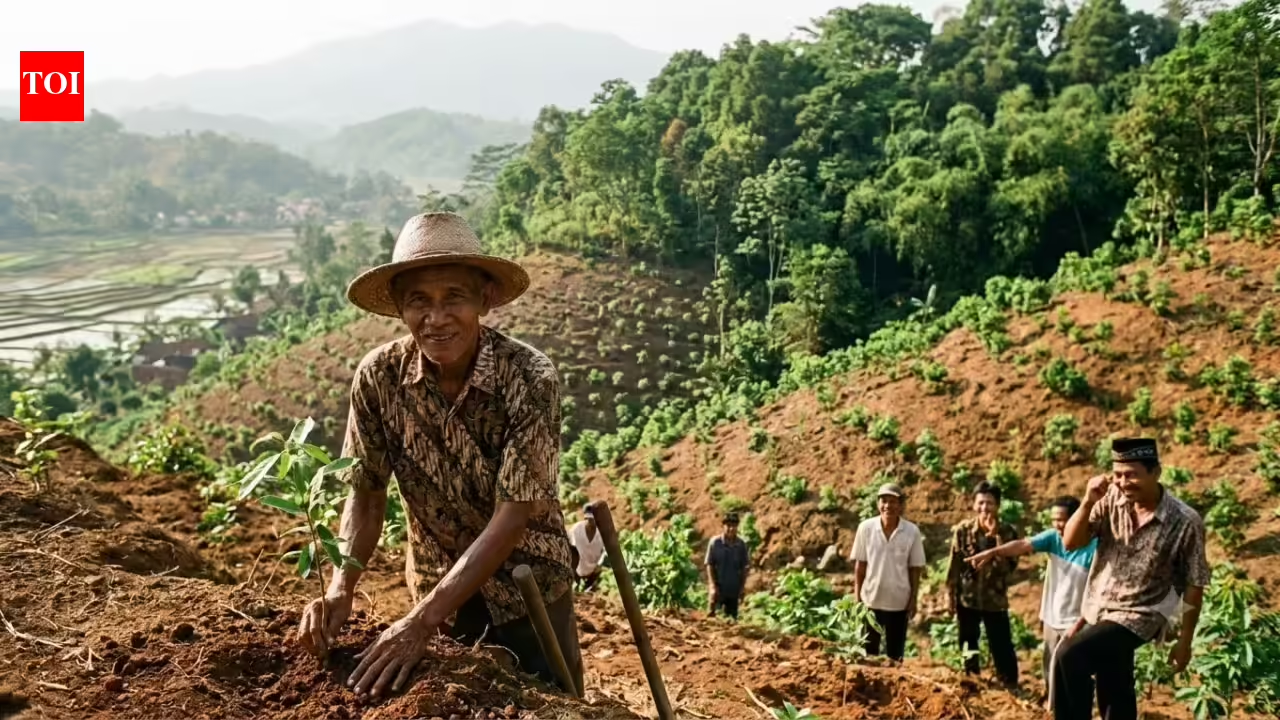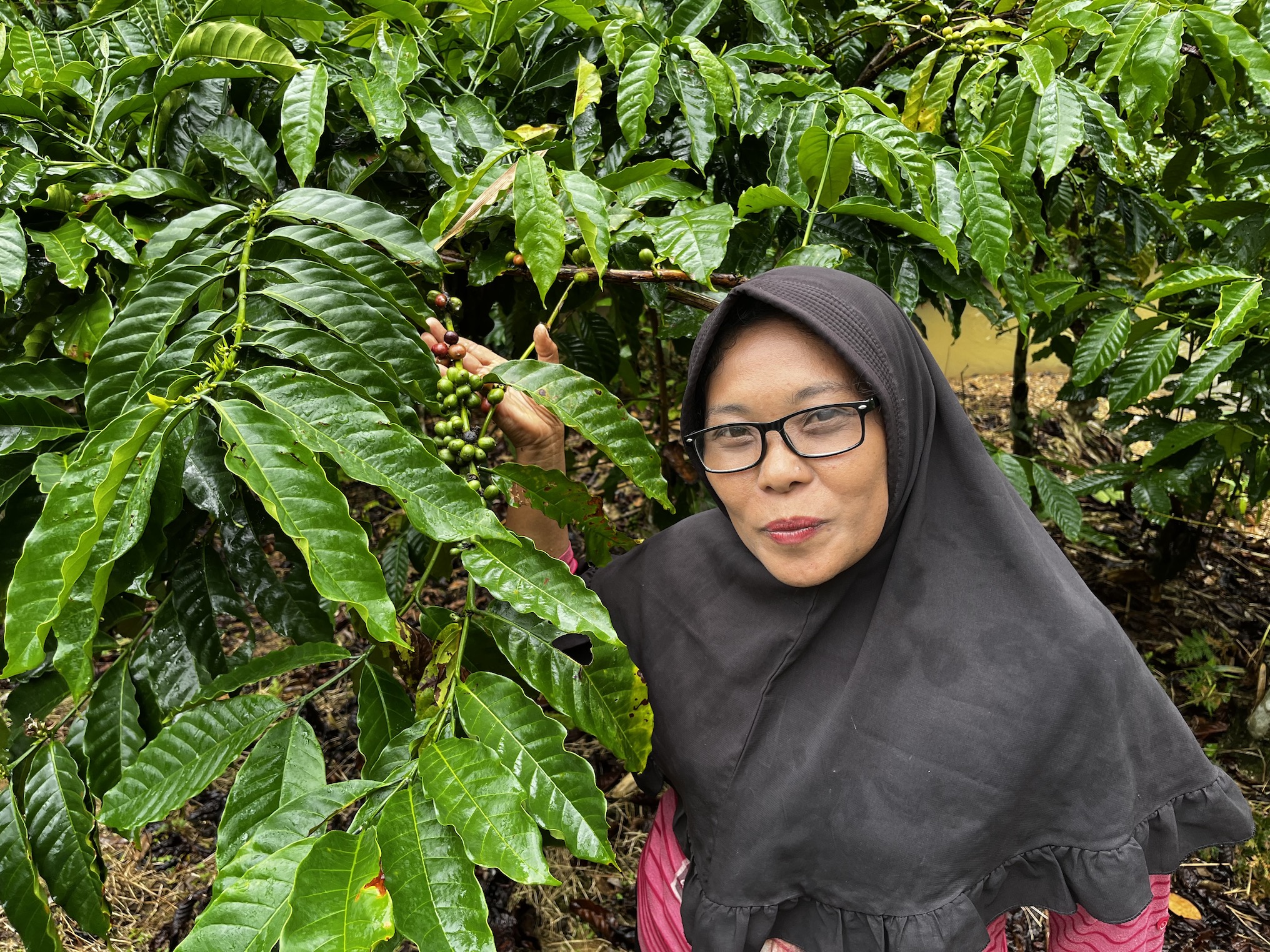
Sri Atmiatun, a farmer in Indonesia’s Batutegi forest landscape, is among hundreds of community members participating in the country’s social forestry program, which grants legal access to state forest land while requiring sustainable management.The program has expanded farmers’ access to training, support and diversified agroforestry systems, contributing to reduced forest clearing and greater conservation awareness, although challenges related to markets, institutions and farming practices remain.Batutegi’s experience reflects both the opportunities and limitations of social forestry, as communities, government agencies and conservation groups work to improve livelihoods while preventing further forest loss.The changes are also creating new roles for rural women, whose growing involvement in farming enterprises and community organizations is reshaping local economies and decision-making.
TANGGAMUS, Indonesia — When Sri Atmiatun arrived in the hills of the Batutegi region in southern Sumatra’s Lampung province in 2017, the coffee trees were already there, overgrown and neglected, slowly fading back into scrub. Her uncle had asked her to take over the plot. Sri agreed, trading years of labor on oil palm plantations in the central Sumatran province of Riau.