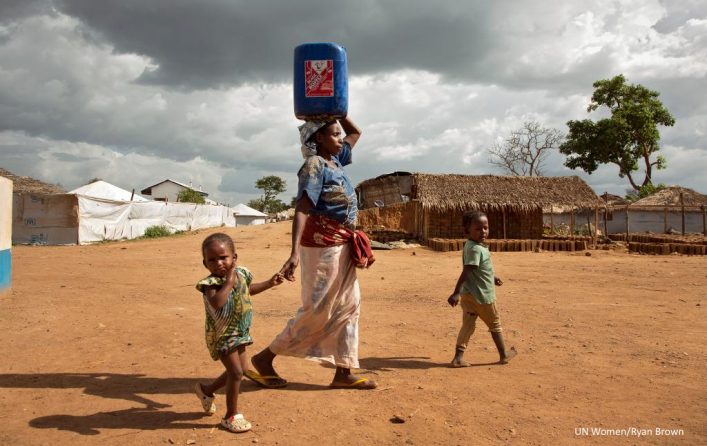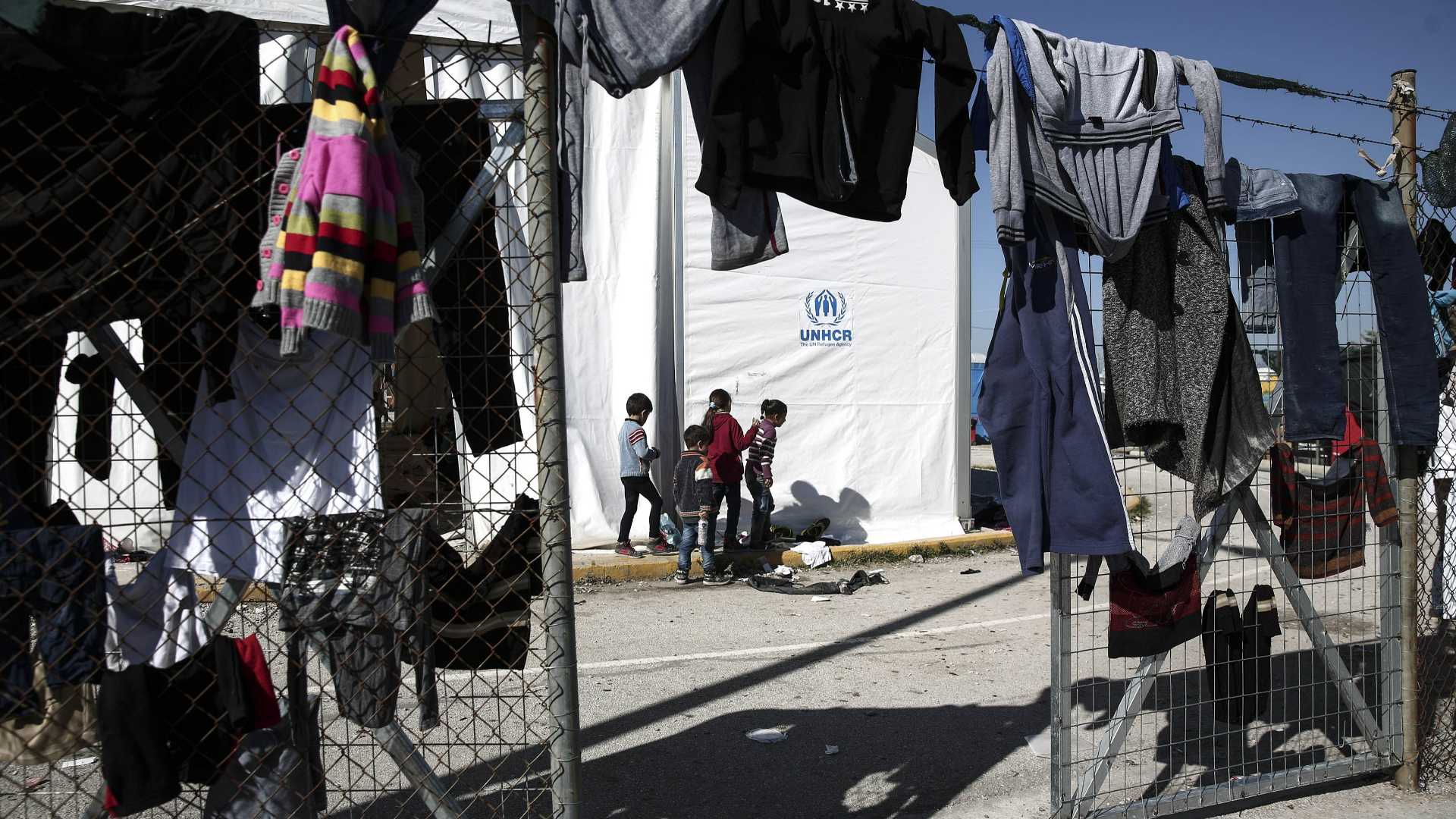
Coverage of the refugee crisis peaked in 2015. By the end of the year, note researchers at the University of Bergen, “this was one of the hottest topics, not only for politicians, but for participants in the public debate,” including far-right xenophobes given megaphones. Whatever their intent, Daniel Trilling argues at The Guardian, the explosion of refugee stories had the effect of framing “these newly arrived people as others, people from ‘over there,’ who had little to do with Europe itself and were strangers.”
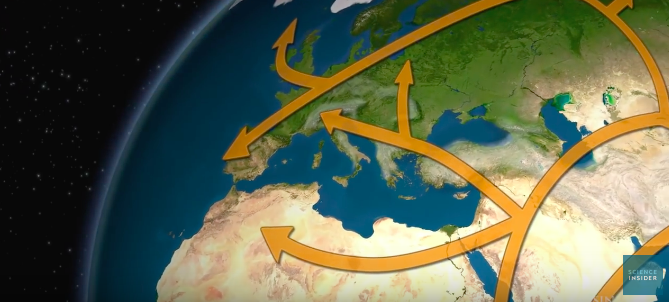
Such a characterization ignores the crucial context of Europe’s presence in nearly every part of the world over the past several centuries. And it frames mass migration as extraordinary, not the norm. The crisis aspect is real, the result of dangerously accelerated movement of capital and climate change. But mass movements of people seeking better conditions, safety, opportunity, etc. may be the oldest and most common feature of human history, as the Science Insider video shows above.
The yellow arrows that fly across the globe in the dramatic animation make it seem like early humans moved by bullet train. But when consequential shifts in climate occurred at a glacial pace—and economies were built on what people carried on their backs—mass migrations happened over the span of thousands of years. Yet they happened continuously throughout the last 200,000 to 70,000 years of human history, give or take. We may never know what drove so many of our distant ancestors to spread around the world.