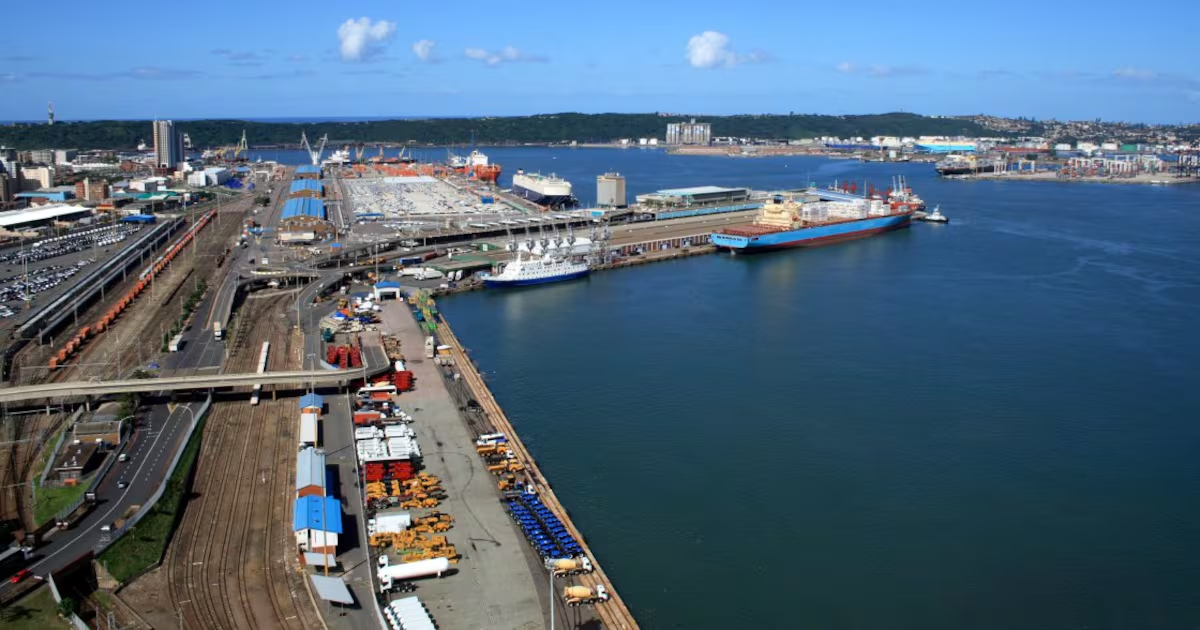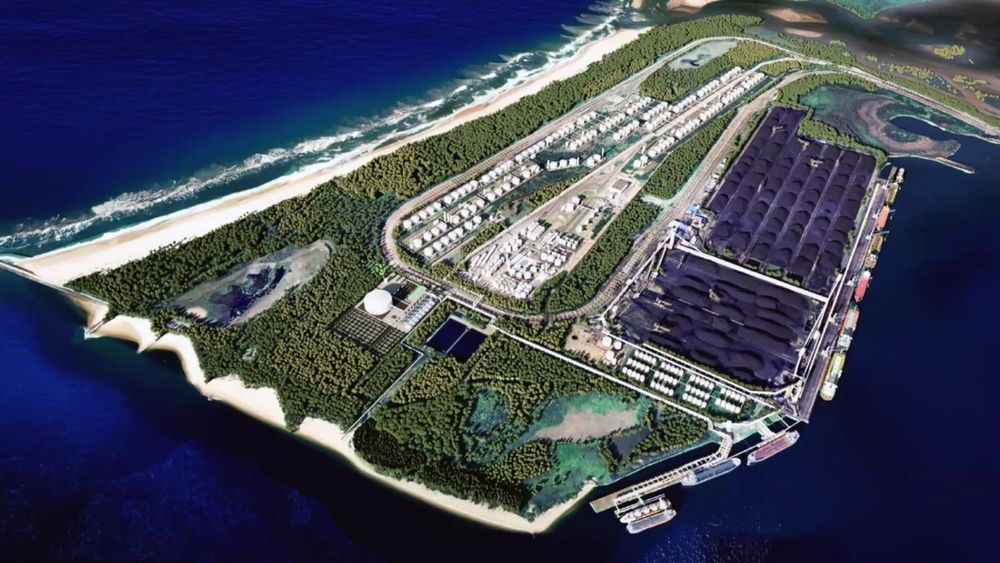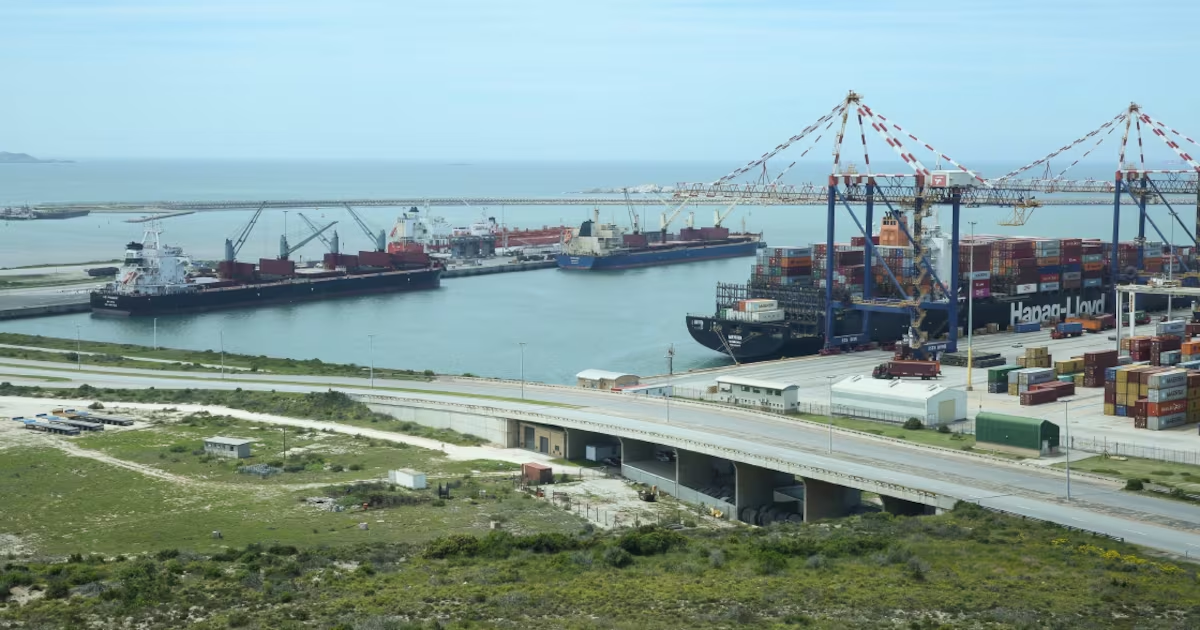
The 25‑year terminal operator agreement between Transnet National Ports Authority (TNPA) and Ukwanda LNG for the development of an onshore liquefied natural gas (LNG) regasification terminal at the Port of Ngqura must be situated within the structural realities of South Africa’s energy economy: a system defined by electricity instability, declining regional gas supply and constrained industrial expansion. With a capital commitment of about R22bn, inclusive of a R2bn dedicated LNG berth, the project is not merely a logistics intervention but a foundational reconfiguration of how energy, infrastructure and industrialisation intersect in the South African context. At the core of the agreement lies the introduction of large-scale LNG import and regasification capacity estimated at around 3.6-million tonnes per annum once fully operational. The capacity is designed to support up to 3,500MW of gas-to-power generation within the Coega Special Economic Zone (SEZ). This generation potential materially exceeds the 3,000MW allocation identified within South Africa’s broader 6,000MW gas-to-power programme, underlining the extent to which Ngqura could become a major anchor of the country’s transition fuel infrastructure. In a national grid system where supply deficits have become endemic, this quantum of dispatchable capacity is non-trivial. By comparison, 3,500MW far exceeds the output of several mid-sized Eskom coal-fired stations, including Kriel (3,000MW), Arnot (2,352MW) and Hendrina (1,893MW), but with far greater operational flexibility. Gas-fired plants can be dialled to increase or reduce output in response to shifts in demand or renewable generation, helping to stabilise a grid with growing shares of wind and solar power. In this sense the Ngqura development is more than an incremental increase in capacity; it represents a meaningful step toward a more resilient and responsive energy system. This role also aligns with South Africa’s stated drive to diversify its energy mix away from an overwhelming dependence on coal. The Integrated Resource Plan 2019 provides for 14,400MW of new wind capacity, 6,000MW of solar photovoltaic capacity, 2,088MW of storage, and 3,000MW of gas by 2030, reflecting a policy framework in which gas is intended to complement rather than displace the growth of renewables. In that trajectory, the Ngqura LNG project supports diversification on two levels: it broadens the country’s fuel supply base beyond declining pipeline gas from Mozambique, and it helps create the flexible generation needed to integrate larger shares of wind and solar into the grid. In this sense, LNG infrastructure is not an alternative to renewable expansion but part of the enabling architecture required to make a more diversified and lower-carbon electricity system viable. The intervention is particularly salient when examined against the impending “gas cliff”, a structural discontinuity in South Africa’s energy supply driven by the decline of gas imports from Mozambique’s Pande and Temane fields. These fields underpin over 85% of South Africa’s gas consumption, supplying about 160 petajoules annually via pipeline infrastructure. Yet production is expected to taper off sharply between 2026 and 2028, with some projections indicating cessation of supply as early as mid‑2026. The economic implications of this decline are profound. Industrial gas users contribute R300bn-R500bn to the economy and sustain upwards of 70,000 direct and indirect jobs, all of which are jeopardised in the absence of alternative supply sources. The intervention is particularly salient when examined against the impending ‘gas cliff’, a structural discontinuity in South Africa’s energy supply driven by the decline of gas imports from Mozambique’s Pande and Temane fields. These fields underpin over 85% of South Africa’s gas consumption, supplying about 160 petajoules annually via pipeline infrastructure. Within this context the Ngqura LNG facility functions as a strategic hedge against systemic disruption. By integrating South Africa into global LNG supply chains, it effectively decouples domestic gas availability from the depletion cycles of regional reserves. Though exposure to global price volatility creates new risks, a sudden drop in gas supply would be far more damaging, especially for industries such as steel, petrochemicals, ceramics and food processing that depend on gas for energy and industrial feedstock. The LNG terminal thus represents a critical bridging mechanism, cushioning the transition from a pipeline-dependent system to a diversified gas economy. Beyond energy security, the project’s spatial integration with the Coega SEZ amplifies its developmental significance. Spanning about 9,003 hectares and designed as a cluster-based industrial ecosystem, Coega has already attracted tens of billions of rand in investment and supports thousands of operational and construction jobs. The introduction of a reliable LNG supply into this ecosystem fundamentally alters its competitive proposition. Energy-intensive industries — particularly smelters, furnaces, and metallurgical operations — are acutely sensitive to energy reliability and input costs. Aluminium smelting, ferrochrome production and steel manufacturing require uninterrupted, high-temperature processes that are prohibitively vulnerable to electricity disruptions and fuel variability. The co-location of LNG infrastructure with a deep-water port capable of handling large container and bulk vessels, including more than 1-million twenty-foot equivalent units (TEUs) annually, creates a powerful convergence of energy security and logistics efficiency. This convergence lowers transaction costs across the value chain: raw materials can be imported efficiently, processed using stable energy inputs and exported with minimal logistical friction. The result is the emergence of a globally competitive industrial node capable of attracting domestic and foreign direct investment. In such a configuration the Ngqura port ceases to function merely as a conduit for trade and instead becomes an integrated energy-industrial platform. The implications for downstream investment are substantial. Access to regasified LNG enables the establishment of high-temperature industrial applications at scale, from blast furnaces to chemical processing units. It also opens pathways for gas-based industrial innovation, including the potential development of hydrogen derivatives and advanced manufacturing processes. Critically, the presence of a large and reliable gas supply reduces the risk premium associated with long-term industrial investment in South Africa, thereby improving capital allocation outcomes across sectors. The project’s employment impact should be assessed in the short and long term. Over its roughly 36-month construction period, it is expected to create more than 500 jobs, followed by 50 permanent positions once operations begin. While these direct jobs are significant, their broader value lies in the economic activity and investment they help unlock. By anchoring fuel supply for as much as 3,500MW of electricity generation in and around Coega, the project improves the viability of energy-intensive investment that can support additional employment in manufacturing, logistics, maintenance, services and downstream industrial activity. While modest in isolation, the direct job figures therefore understate the broader employment multiplier associated with industrial clustering. The preservation of tens of thousands of existing jobs threatened by the gas cliff, with the creation of new positions in manufacturing, logistics and services, positions the project as a critical labour market intervention. Moreover, the skills development associated with LNG infrastructure, ranging from cryogenic engineering to advanced port operations, contributes to the deepening of South Africa’s technical capabilities. From a macroeconomic perspective the Ngqura LNG project embodies a form of infrastructure-led growth strategy aligned with South Africa’s Just Energy Transition objectives. By enabling lower-carbon gas-to-power generation, it supports the decarbonisation of the electricity mix without sacrificing reliability. Simultaneously, it anchors industrial expansion in a manner that leverages existing comparative advantages — namely, access to mineral resources, strategic port infrastructure and established industrial clusters. The phased implementation, beginning with a floating storage and regasification unit before transitioning to permanent onshore facilities, also introduces a degree of temporal flexibility, allowing gas supply to commence before full project completion. Yet the project’s long-term success will depend on its capacity to navigate a complex set of uncertainties, including global LNG market dynamics, exchange rate volatility and the evolving trajectory of decarbonisation policy. The anticipated operational date of 2035 underscores the need for policy coherence and regulatory stability over an extended horizon. The TNPA–Ukwanda LNG agreement has the potential to reanchor South Africa’s energy economy, mitigate the worst effects of the gas cliff, and catalyse a new wave of industrialisation centred on the Eastern Cape. By linking energy security, industrial capability and port infrastructure into a single integrated system, it offers a pathway toward a more resilient, diversified and globally competitive economic future. • Dr Tshitereke, an honorary professor at Unisa’s Thabo Mbeki School of Public & International Affairs, is chief of staff at the mineral & petroleum resources ministry.
CLARENCE TSHITEREKE | Ngqura LNG is a lifeline beyond the ‘gas cliff’
Pact to develop a R22bn LNG regasification terminal aims to mitigate looming crisis
1,361 words~6 min read