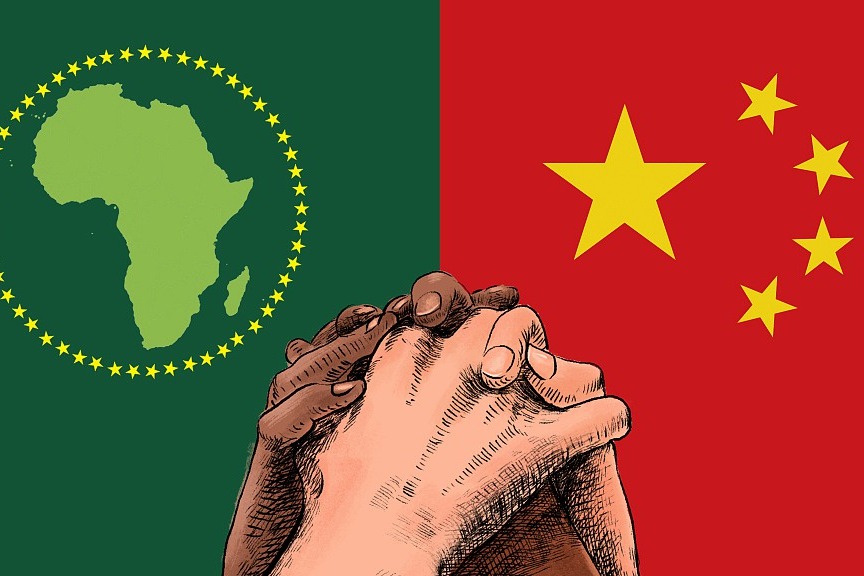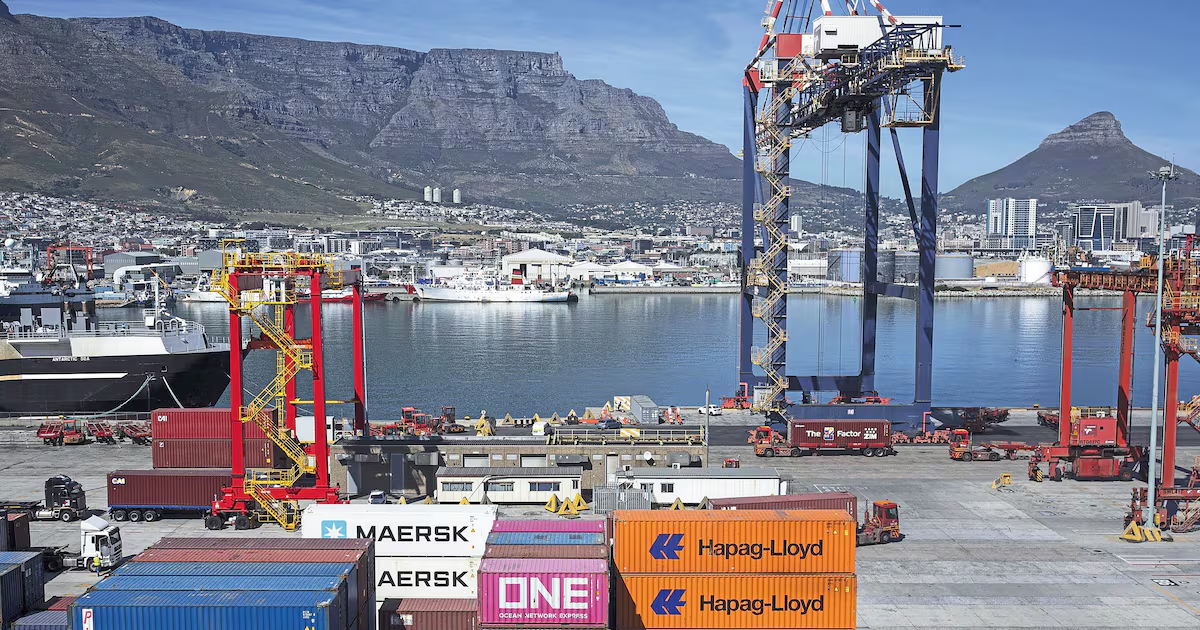
Even after four decades of almost 10% average annual growth, China must still export to affluent markets to sustain its growth momentum. The reasons for this situation remain foreign to our policymakers.South Africa’s geography, geology and history have fused into a deep aversion towards integrating into the global economy. The upside from greater integration between South Africa and neighbouring countries is meagre, particularly when it comes to this country’s and the region’s development shortfalls. Unlike Johannesburg, the geography of the economic capitals of nearly all affluent nations is conducive to international trade. Construction of the Suez Canal undermined Cape Town’s international relevance as a resupply station for ships sailing between Europe and Asia. If the canal were to permanently close tomorrow, South Africa would only benefit marginally, as modern ships can carry adequate provisions, and the city served mostly as a supply depot, not a commercial hub.Today’s Middle East successes highlight the benefits of countries advancing from excessive reliance on commodity exporting. The United Arab Emirates has demonstrated what commercially astute policymaking can achieve. At the same time, Saudi Arabia shows that growth through adding value is difficult for resource-endowed nations that have spawned pervasive patronage networks.Geological endowments routinely provoke patronage politics while undermining international competitiveness. Starting in the 1980s, the World Bank went to great lengths to make Ghana a role model success story. Progress was real but sporadic. Then the discovery of a substantial oil deposit in 2007 became a blessing and a curse.Political voices are quick to denounce capitalism and its inequities. Yet by far the world’s greatest development success story has been China’s rise since the 1980s. Whether labelled as capitalism, or capitalism with Chinese characteristics, or commercial realism, pro-business policies are required to sustain high-volume upliftment.Given South Africa’s history, it was not surprising that then president Thabo Mbeki sought to lead an African Renaissance. But this was never commercially prudent for South Africa or the region. China’s success reflects its approach of targeting affluent markets while increasing its competitiveness.AI is seen by many leading economists as threatening primarily older, highly educated workers. As birthrates plunge in most high-income countries and younger workers rapidly embrace AI tools, Africa’s contribution to global births will soon adjust to 40%. Unlocking this region’s potential will require combining pro-business, pro-global integration policies with personal initiative.As South Africa’s redistribution-focused politics and ultra-elevated youth unemployment suppress initiative, our entry-level service sector jobs, such as those in the restaurant, lodging and ride-hailing sectors, are frequently staffed by foreigners. This was always going to trigger xenophobic tensions. The economies of Russia and China are complementary: China is great at adding value and Russia has an abundance of natural resources. South Africa’s economy is far less complementary to those of our neighbours. Our core binding constraint — insufficient purchasing power to achieve anything resembling full employment — is also this region’s primary binding constraint. This region must integrate far more substantially into the global economy by catering to its evolving needs. The region’s leaders would be more inclined to pursue such integration if they weren’t able to benefit richly from patronage funded by exporting commodities.Post-1994 South Africa should have aspired to be a regional role model and a gateway between Sub-Saharan Africa and the world. Instead, our leaders have entrenched the world’s most severe youth unemployment crisis. This reflects remarkably few of our workers adding value to exports destined for consumer markets with high discretionary purchasing power.We are nearing 20 years of per capita income stagnation. This traces to policies relying imprudently on domestic consumption — despite most of our households being poor, overindebted or both. According to President Cyril Ramaphosa, South Africa’s future is inseparable from the future of Africa. Such thinking contrasts sharply with how high-growth countries add value to exports destined for affluent markets. High growth will continue to elude us without sweeping policy reforms.• Hagedorn is an independent strategy adviser.
SHAWN HAGEDORN | Why SA and Africa are toxic for each other
Commodity exports and anti-business policies stifle economic transformation
649 words~3 min read