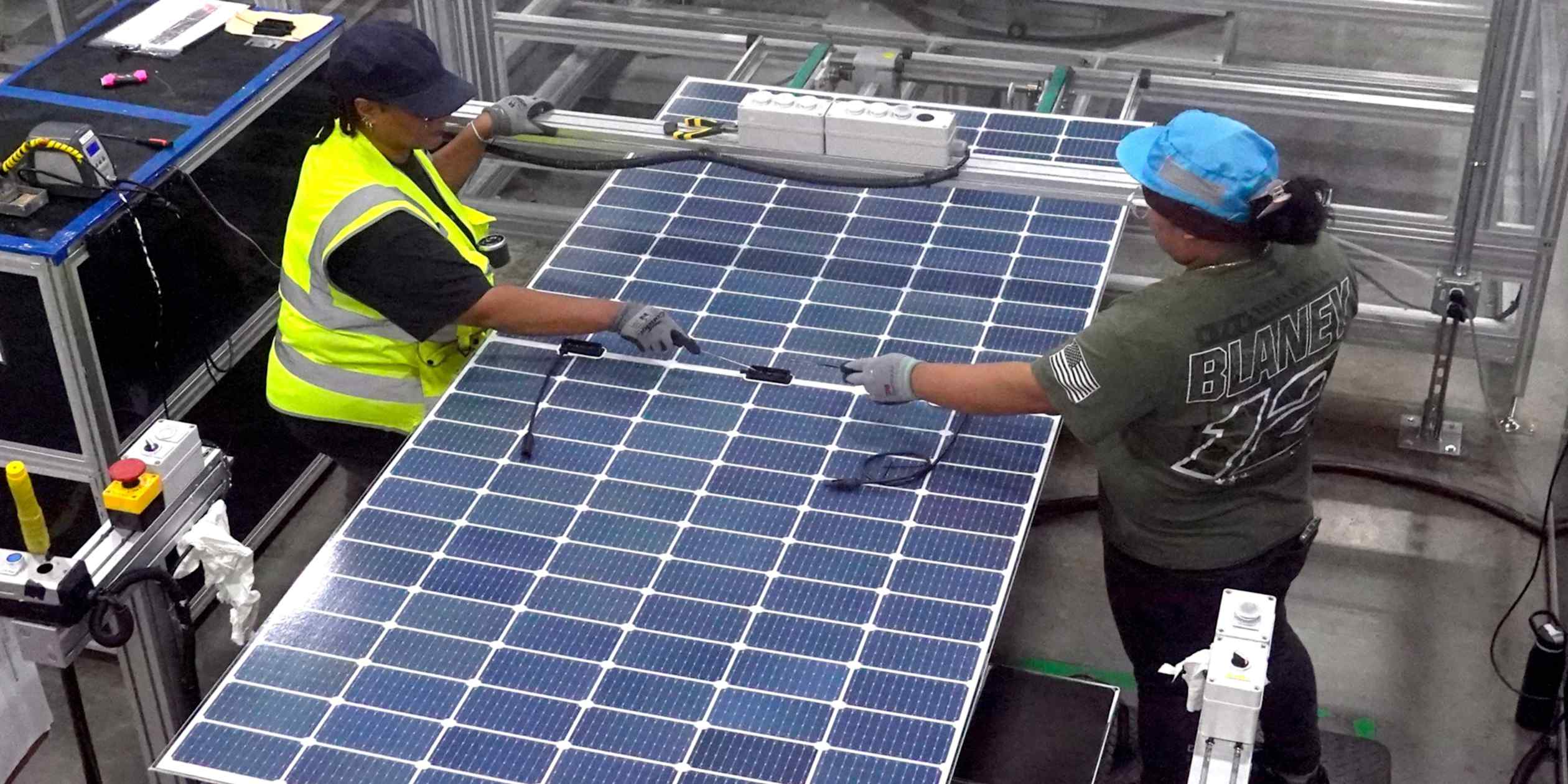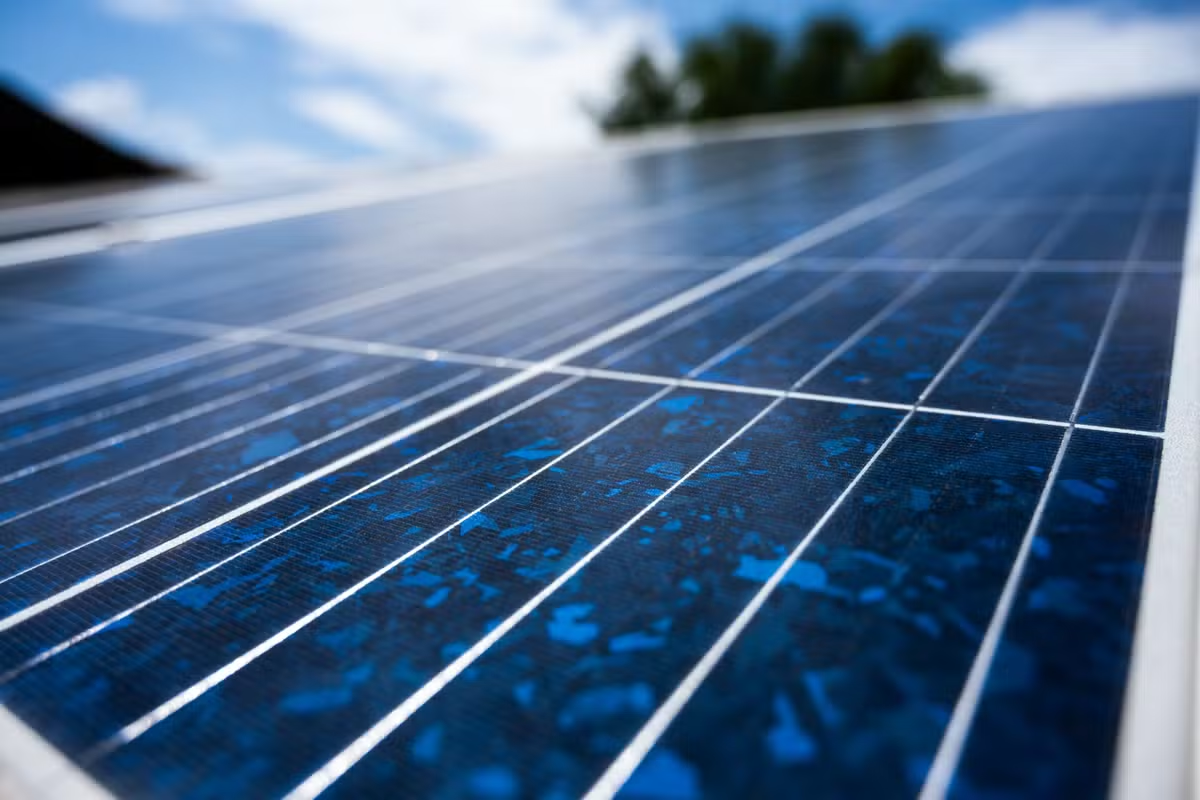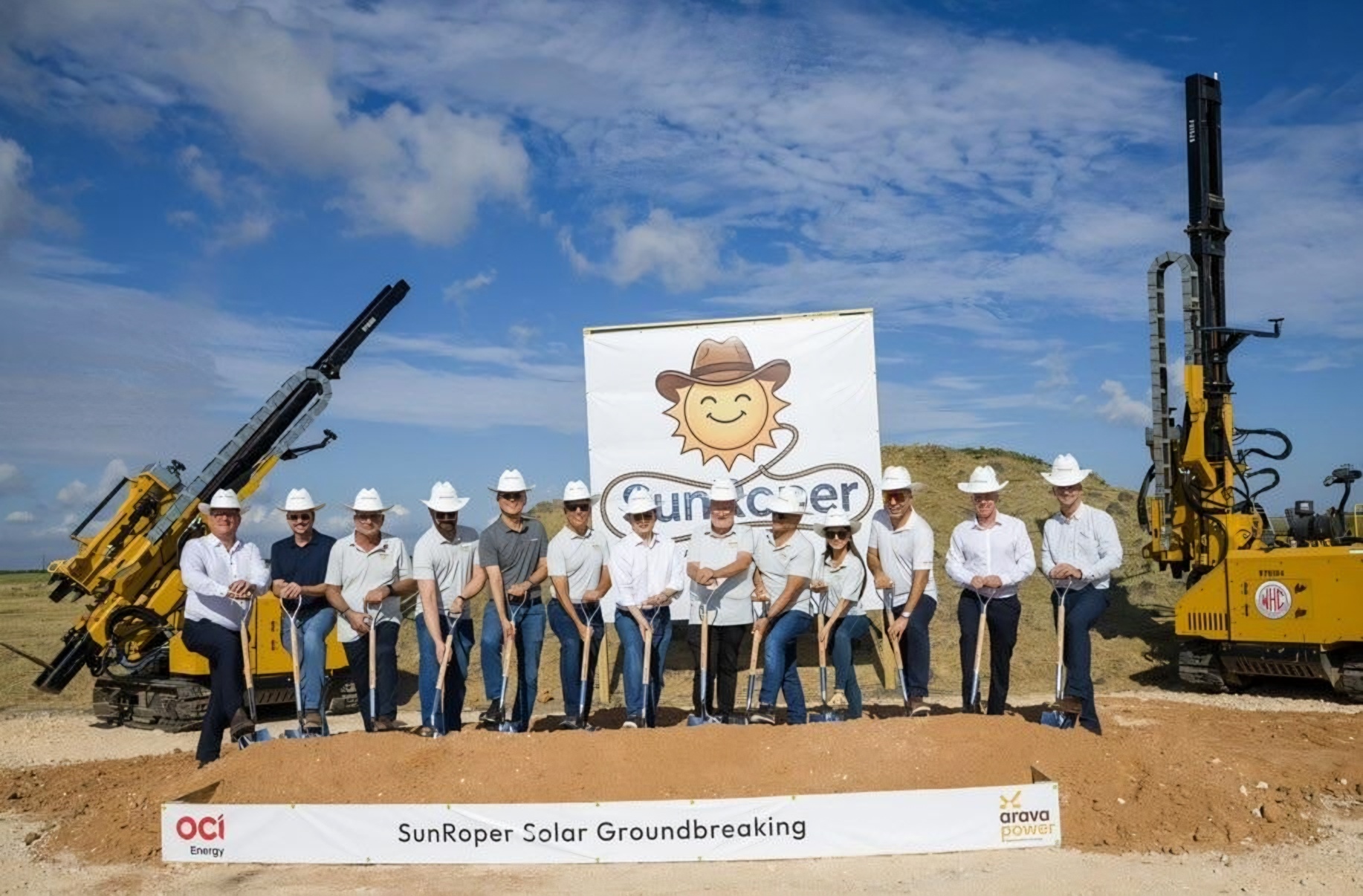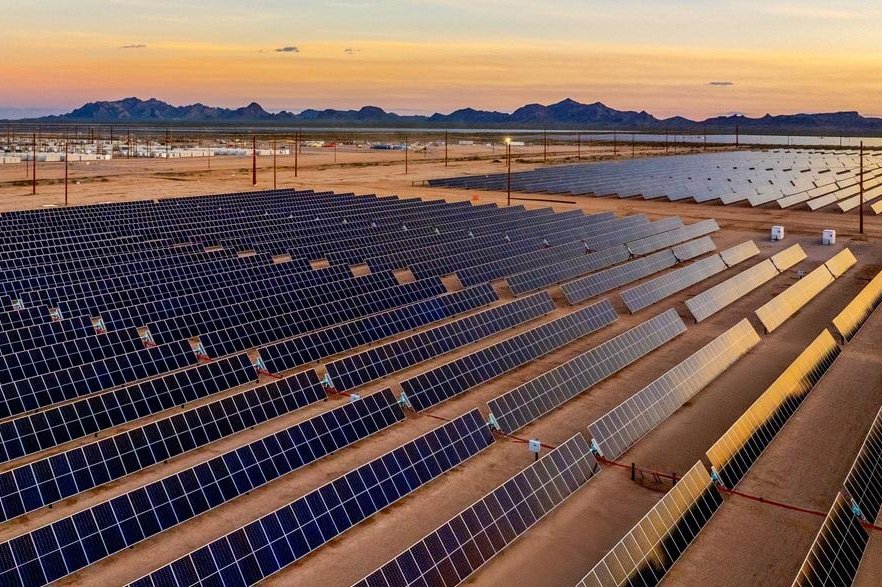
US trade curbs, tax-credit rules accelerate demand for non-Chinese solar supply chains. The Alamo 1 solar power plant developed by OCI Energy in San Antonio, Texas (OCI Holdings) Washington's escalating restrictions on Chinese solar power equipment are creating an opening for South Korean manufacturers as alternative suppliers for US developers.The US government has tightened trade restrictions on Chinese solar materials and technologies in recent months through a combination of tariffs, trade investigations and rules on tax credits.US solar companies and project developers are now seeking non-Chinese suppliers to avoid regulatory risks and preserve eligibility for federal incentives.And Korean solar companies such as Hanwha Solutions and OCI Holdings, which have spent years building supply chains outside China, see this as a chance to broaden their presence in the US.US solar supply chain resetAmong regulations, the most closely watched is a Section 232 investigation into imports of polysilicon, a key raw material used in solar panels for which China produces more than 80 percent of global supply. The investigation was launched by the US Commerce Department last July to assess potential national security risks.Industry officials expect the findings could be released this month, which will further tighten restrictions on Chinese solar materials.The Donald Trump administration's signature legislation, the One Big Beautiful Bill Act, enacted in July 2025, introduced stricter Foreign Entity of Concern rules. These rules disqualify companies and projects link to China, Russia, North Korea from receiving certain tax incentives.The Uyghur Forced Labor Prevention Act, which took effect in 2022, has accelerated the shift away from Chinese solar supply chains. The law bans imports linked to forced labor in China's Xinjiang region, where much of the world's polysilicon is produced.Those policies are already influencing purchasing decisions.Sunrun, the largest US residential solar installer, has begun excluding Chinese manufacturers from its approved module supplier list, according to a report by Reuters.The company's approved supplier list includes non-Chinese manufacturers such as Hanwha Qcells of South Korea, Silfab of Canada, Elin of Turkey. Major Chinese-linked solar manufacturers, including Canadian Solar, JA Solar, Jinko, Longi, have been removed."We have taken a conservative stance and do not procure equipment from manufacturers that would raise compliance concerns," Sunrun Deputy Chief Financial Officer Patrick Jobin was quoted as saying in Reuters' report.OCI's non-China advantageOCI Holdings is one of the few major suppliers capable of offering a solar-power supply chain that completely avoids China.The company produces polysilicon through its Malaysian subsidiary OCI TerraSus, which then goes to Vietnam where it is turned into wafers.Industry estimates say that potential tariffs resulting from the Section 232 investigation could add roughly $10 per kilogram to Chinese polysilicon entering the US market.That could triple the price of Chinese polysilicon, which currently trades at $5 to $6 per kilogram, and make it more expensive than OCI’s, which is estimated to cost approximately $12 per kilogram.An official at OCI Holdings said the company is closely watching the outcome of the US Section 232 investigation into polysilicon imports, which could be released soon.“Outside China, there are only a few major polysilicon suppliers, including OCI, Wacker and Hemlock,” said the official. “As US regulations increasingly favor non-Chinese supply chains, we expect demand for our products to benefit.”Industry analysts echoed the optimistic outlook of OCI TerraSus benefitting from the US solar supply chain shift, despite earlier demand weakness and temporary production disruptions earlier this year.“Stronger enforcement of the Uyghur Forced Labor Prevention Act has since boosted demand for non-Chinese polysilicon in the US, allowing the company’s utilization rates to recover and profitability to begin normalizing,” said Cho Hyun-ryul, an analyst at Samsung Securities. “If the Section 232 measures are announced on polysilicon and derivatives, the premium for non-Chinese polysilicon firms like OCI could widen further.”The company is also expanding its presence in North American power infrastructure through its US subsidiary OCI Energy based in Texas, which controls a development pipeline totaling about 7 gigawatts of solar and energy-storage projects.Hanwha Solution's bet on US Hanwha Qcells' solar panel manufacturing facility in Dalton, Georgia (Hanwha Solutions) Hanwha Solutions, the energy arm of Hanwha Group, also appears well-positioned in the US through its domestic manufacturing facilities.Hanwha Qcells, the company's US subsidiary, operates a solar module production facility with a capacity of 5.1 gigawatts per year in Dalton, Georgia. A separate facility in Cartersville, Georgia is set to begin full operations in the second half of this year. Once operational, the facility will cover the entire production process within the US — from polysilicon ingots and wafers to cells and finished modules.The local facilities allow Hanwha to capitalize on Advanced Manufacturing Production Credits, federal tax incentives for clean energy production.“The Cartersville facility is already partially operational and production is increasing steadily. We expect utilization to continue rising in the second half of the year as it operates a full capacity,” a Hanwha Solutions official said. “As US production ramps up, the AMPC will increase as well.”The policy environment in the US is becoming increasingly favorable for Hanwha Solutions, according to Yoon Jae-sung, an analyst at Hana Securities.“As American solar installers reduce their reliance on Chinese modules to maintain tax credit benefits, the competitiveness of Qcells, which has secured non-Chinese supply chain, is becoming increasingly prominent,” said Yoon.“The growth potential of the US solar market may be larger than anticipated, as the recent expansion of data centers and power shortage concerns are driving increased demand for both solar and energy storage systems.”
Korea's OCI, Hanwha stand to benefit from US solar supply chain shift
Washington's escalating restrictions on Chinese solar power equipment are creating an opening for South Korean manufacturers as alternative suppliers for US dev
899 words~4 min read