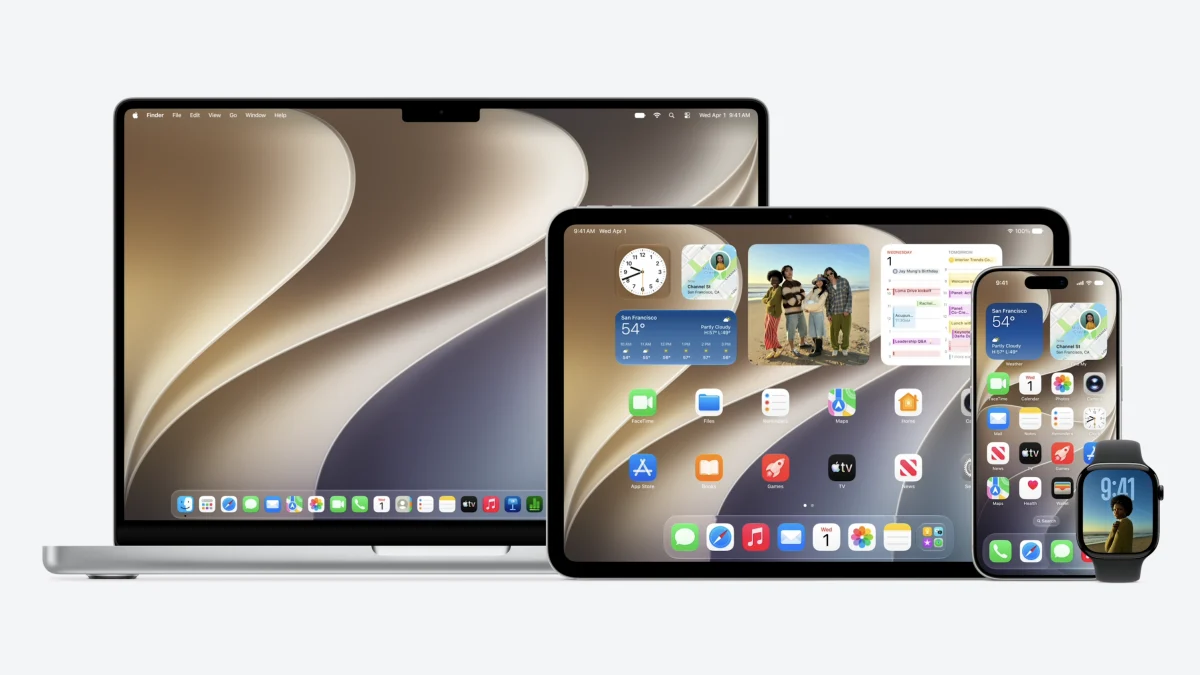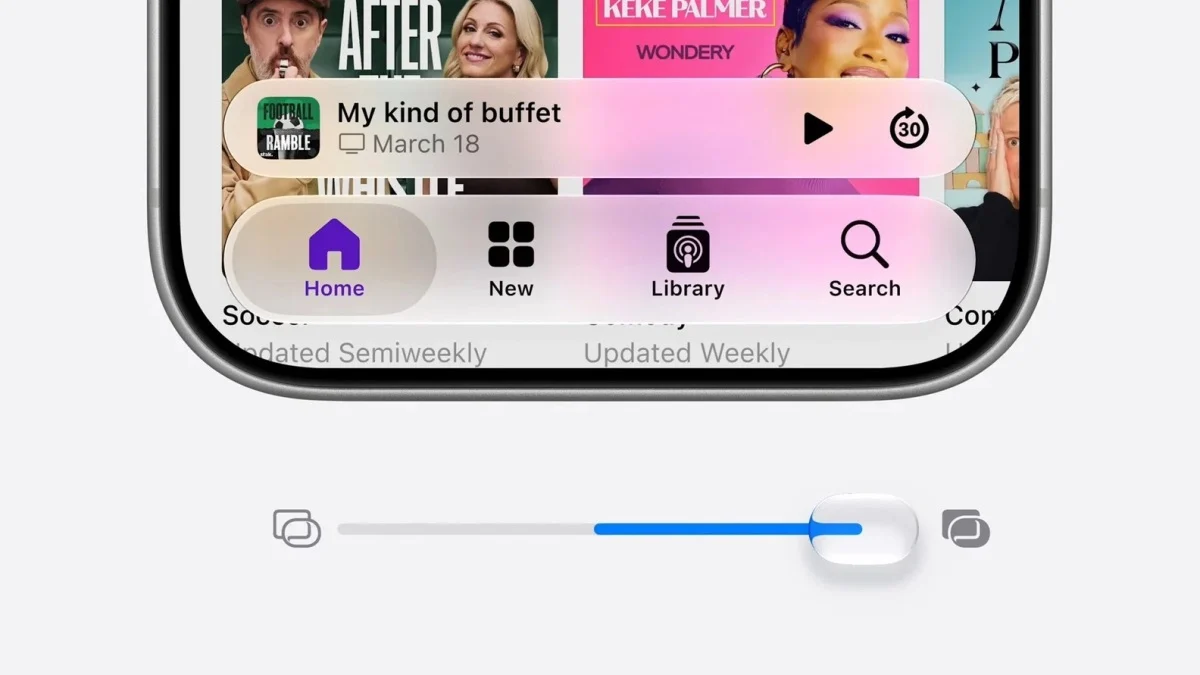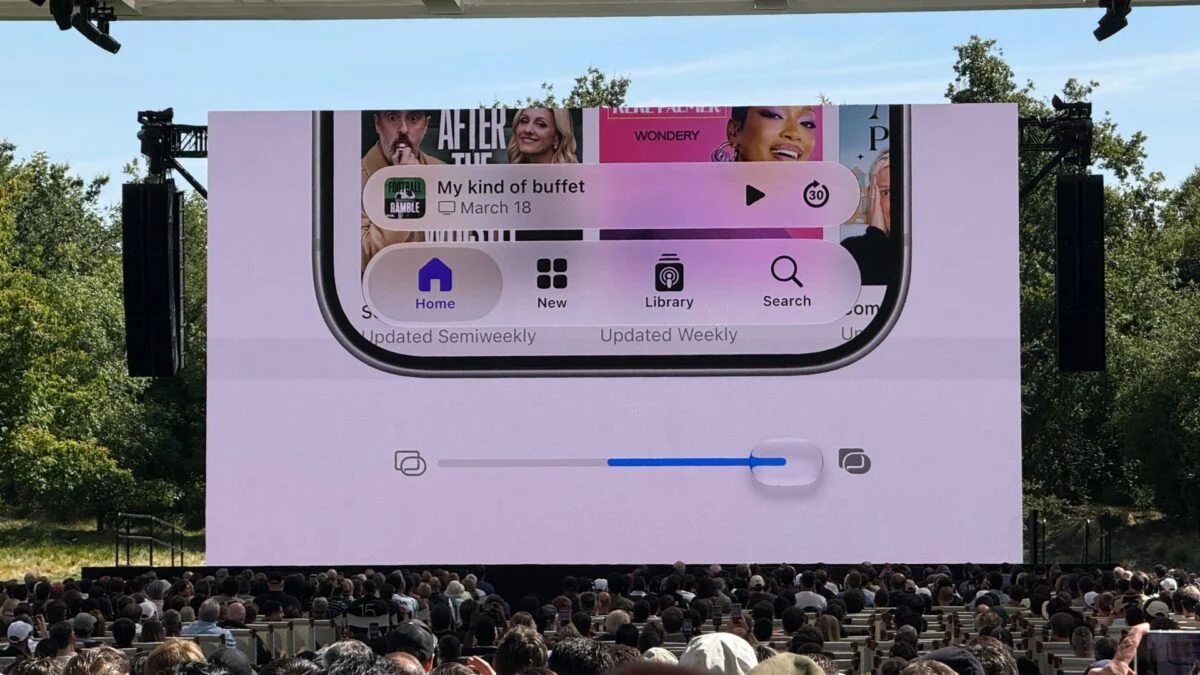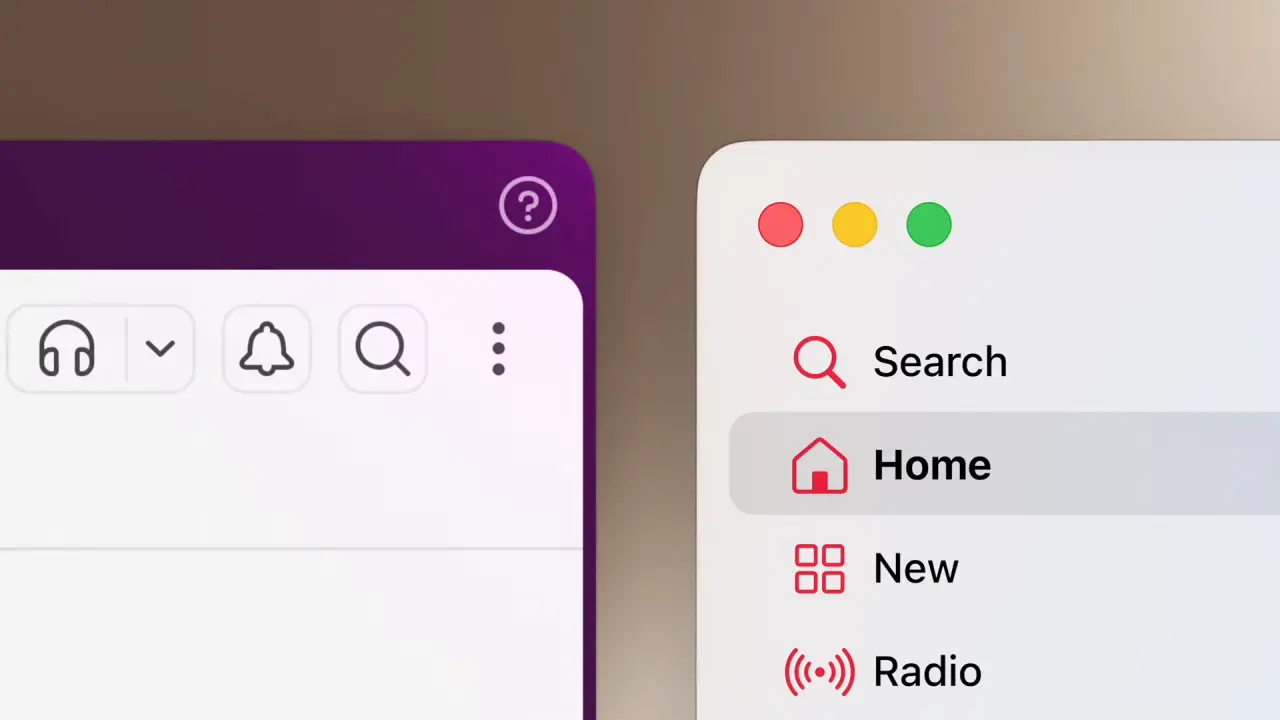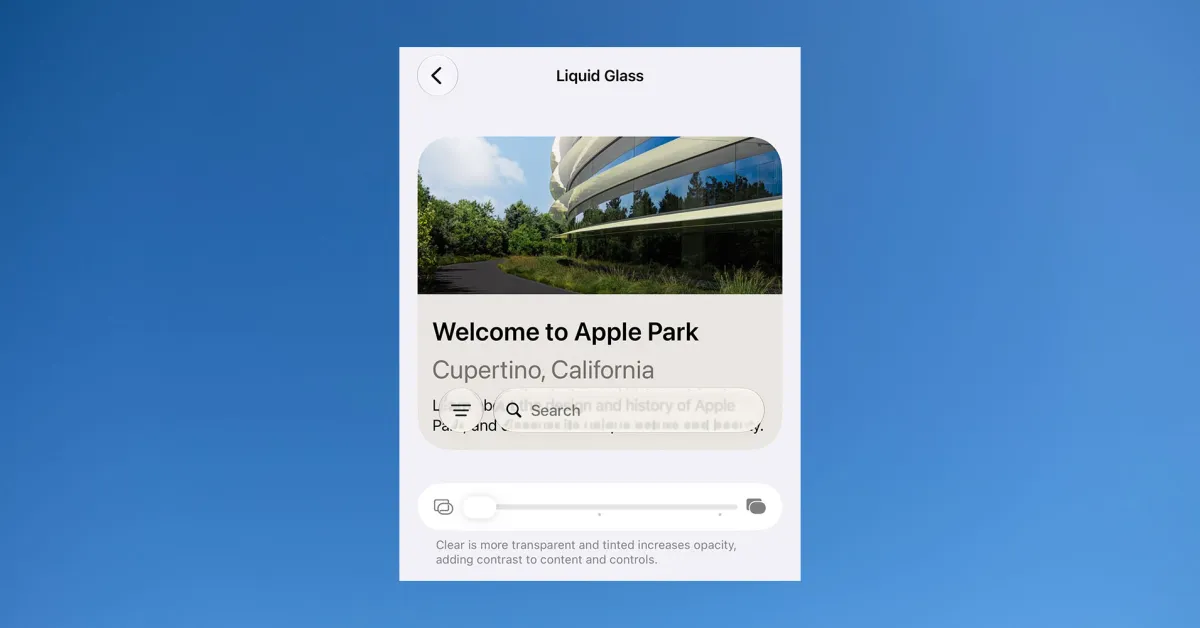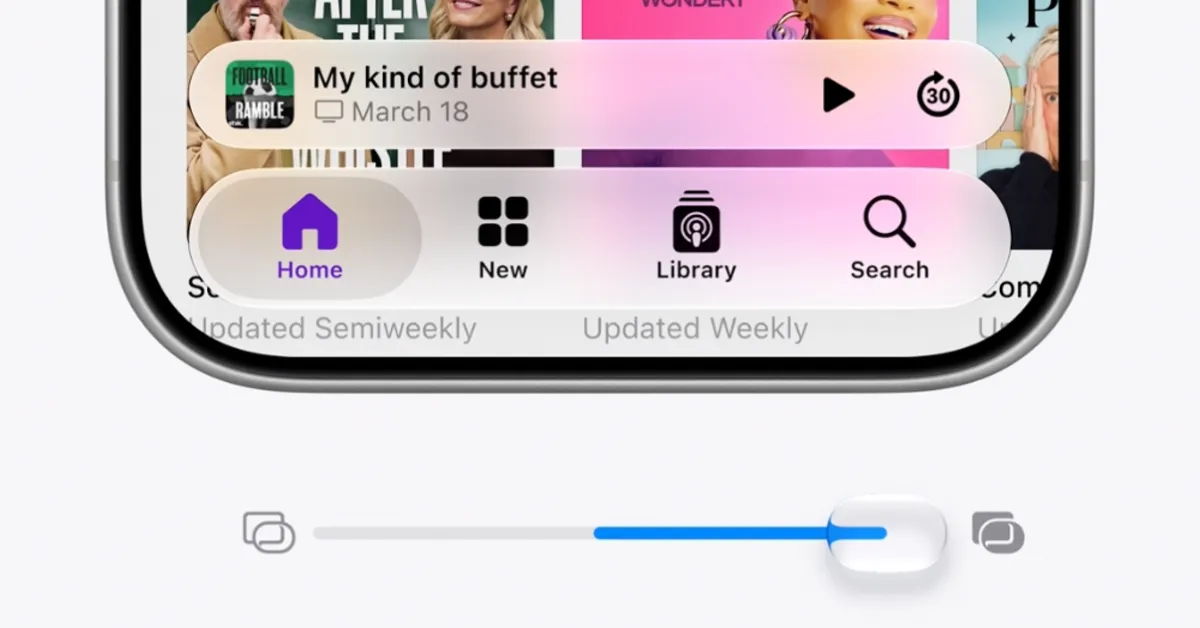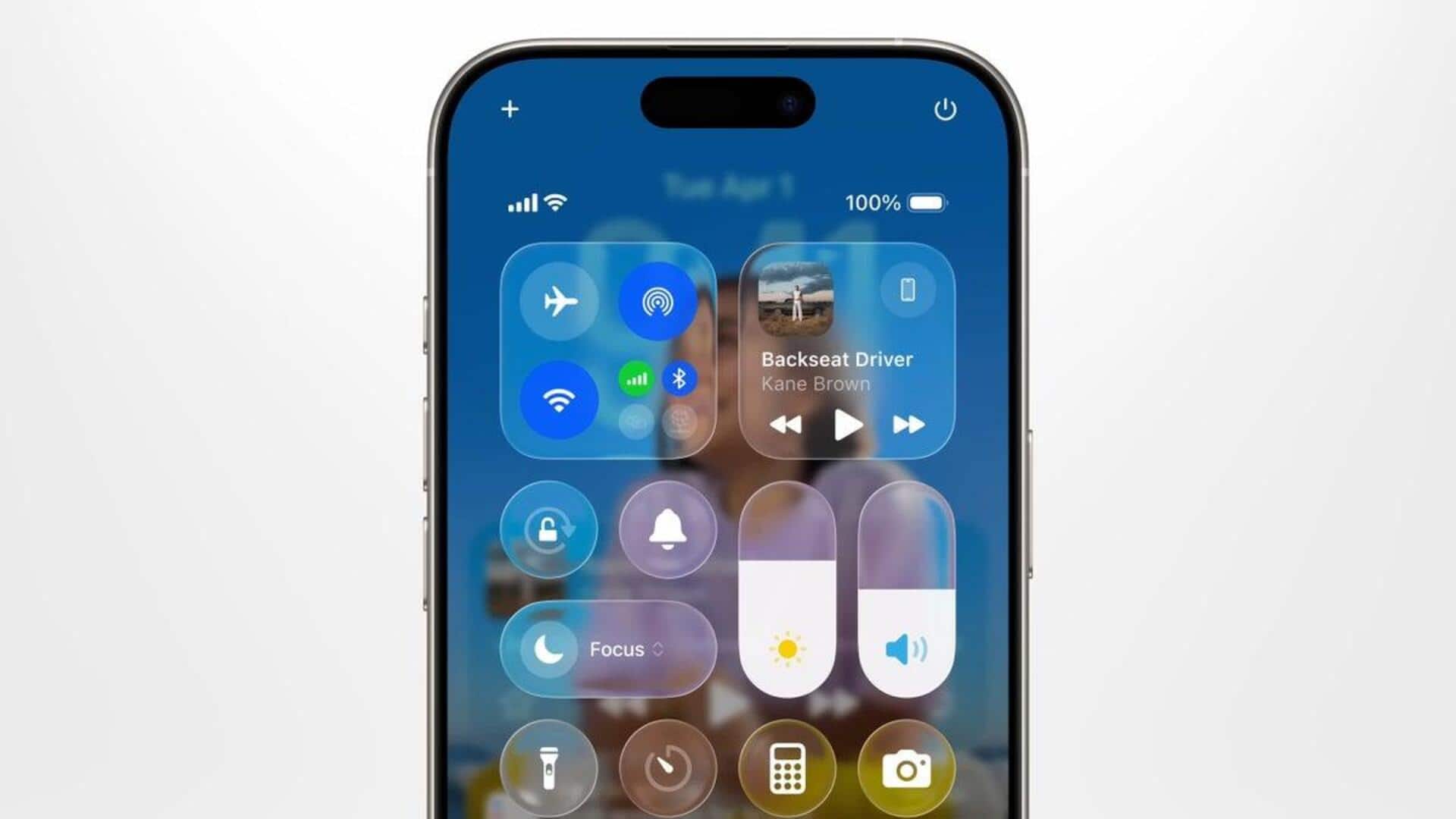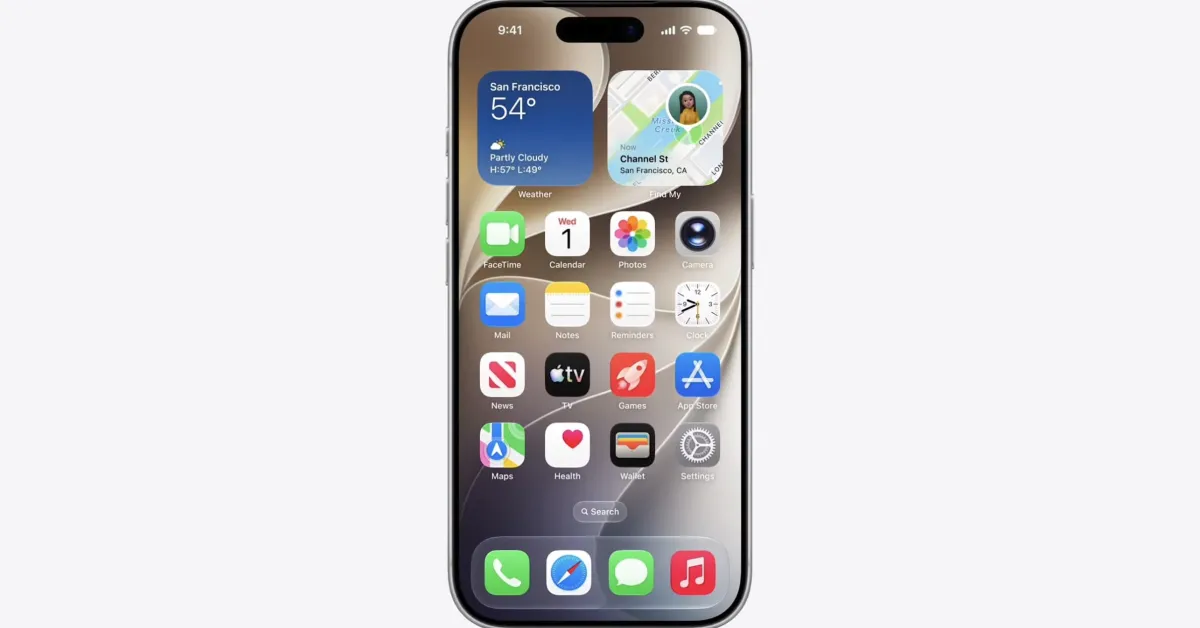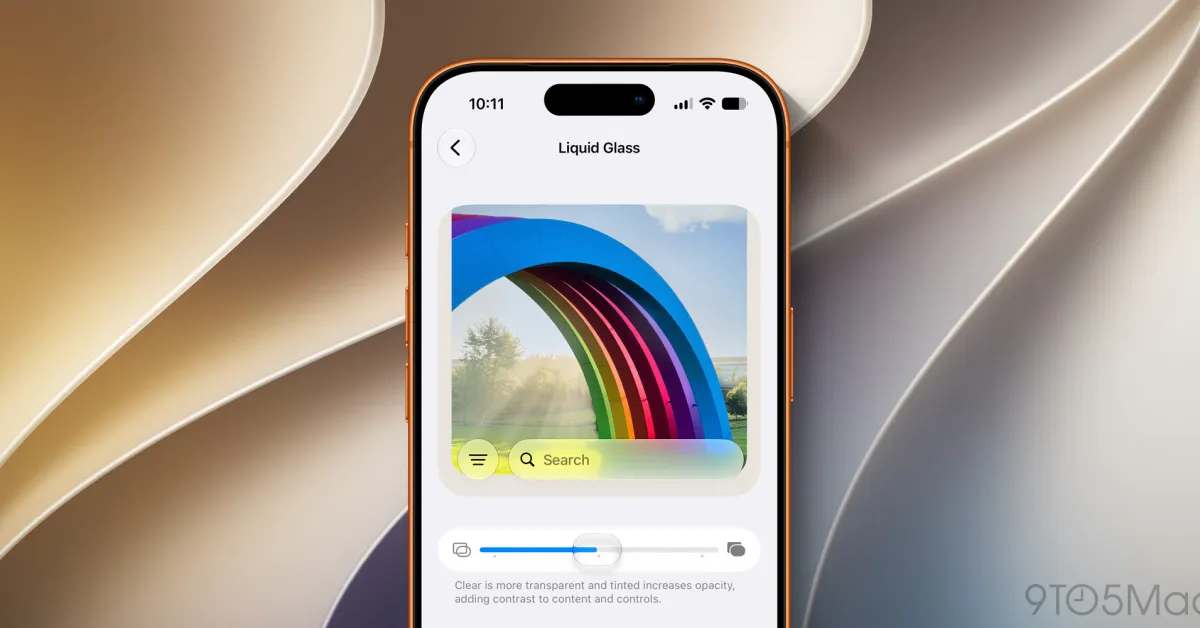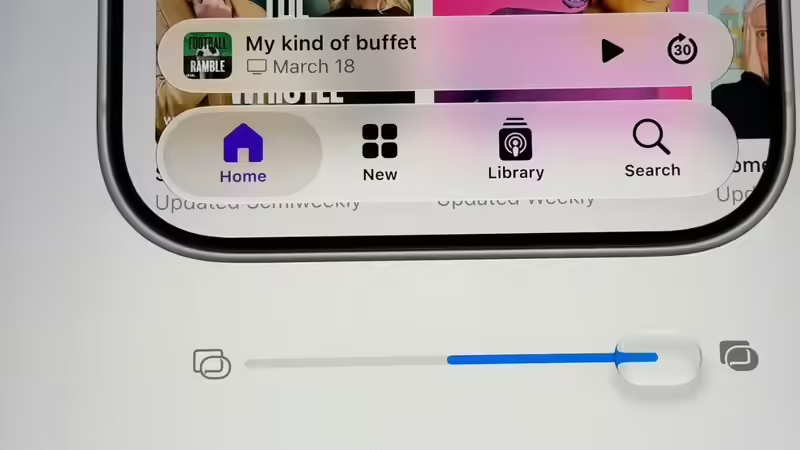
Photo credit: AppleApple used its WWDC 2026 keynote on 8 June to refine Liquid Glass rather than reinvent it, and the headline change is a system-wide slider in Settings that personalises the design across its full range, from crystal-clear to fully tinted, settling the year’s loudest design argument by handing the controls to you. Apple paired it with a real speed pass, claiming apps now launch up to 30 per cent faster, and made the quiet decision that matters most to the largest number of people: it kept every iPhone that runs iOS 26 on the list, back to the 2019 iPhone 11.Key takeawaysiOS 27, previewed at WWDC 2026 on 8 June, refines the Liquid Glass design rather than replacing it, led by a slider in Settings that personalises the look from crystal-clear to fully tinted.Apple says the update launches apps up to 30 per cent faster, loads photos up to 70 per cent faster after capture, and speeds AirDrop by up to 80 per cent, a performance pass aimed at older hardware as much as new.iOS 27 keeps the entire iOS 26 device list: every supported iPhone updates, back to the 2019 iPhone 11 and the second-generation iPhone SE, with no models retired.The all-new Siri AI is gated to the iPhone 15 Pro and the iPhone 16 line and newer, and lands as a beta later this year in English first, so most of that device list gets the look and the speed well ahead of the marquee AI.Apple cast the update as a broad push rather than a single swing. Craig Federighi, Apple’s senior vice president of software engineering, said the company is delivering the next generation of Apple Intelligence across its platforms, introducing a “profoundly more intelligent, knowledgeable, and capable” Siri, expanding child-safety tools for families, and making its software faster and more reliable than before. Three of those four pillars touch the everyday iPhone more than the AI headlines suggest, and the design and speed work is where most users will feel the year.What changed in Liquid GlassThe centre of this update is control. Apple has added a single slider in Settings that sets how the interface looks, sweeping from crystal-clear to fully tinted, so the legibility argument that has run since last June now resolves to a personal setting rather than a verdict imposed on everyone. App icons have been redrawn to look sharper and more defined, with a layered treatment that lends them an almost three-dimensional depth, light catching the surface the way it would on real glass. The broader design pass also reincorporates familiar touches across the system, including more uniform toolbars, edge-to-edge sidebars and coloured sidebar icons, fixing several of the most-cited complaints from iOS 26.Read together, the changes are less a new pane and more a re-glazing: same material, better fitted, with a handle you can finally turn.ChangeWhat it doesLiquid Glass sliderA Settings control that personalises the look, from crystal-clear to fully tintedApp iconsSharper, more defined icons with a layered, almost-3D depthSystem designMore uniform toolbars, edge-to-edge sidebars, coloured sidebar iconsPerformanceApple-claimed up to 30 per cent faster app launches, up to 70 per cent faster photo loadingWhy a slider, and not a retreat? Because Apple is editing its own work in public. Liquid Glass arrived at WWDC 2025 as the most sweeping visual change to the iPhone since iOS 7 in 2013, and it spent the following nine months drawing fire for one thing above all: legibility. Translucent panels over busy backgrounds dropped contrast below comfortably readable levels, and iOS 26 shipped without a clean way to switch the effect off, with the Reduce Transparency accessibility toggle going only part of the way. Apple had already begun softening its stance in the iOS 26.2 point releases, adding a transparency control for the Lock Screen clock and reworking some animations to feel more fluid. The iOS 27 slider is that climbdown made system-wide and official: Apple says it has heard the feedback and adjusted the underlying foundations of how Liquid Glass is built. The grown-up reading is that the design language survives intact; the dogmatism around it is what got dropped.Faster, not just prettierThe part of iOS 27 that will be felt more than seen is the speed. Apple has spent this cycle under the bonnet rather than on the bodywork, the way a carmaker uses a mid-cycle refresh to retune the chassis instead of redrawing the shape, and it is pitching the release as its Snow Leopard moment, after the 2009 Mac update that shipped almost no new features and simply made everything quicker. Apple says apps launch up to 30 per cent faster on iPhone and iPad, photos load up to 70 per cent faster after you take them, and AirDrop transfers move up to 80 per cent quicker. Hand-offs between cellular and Wi-Fi are smoother, and moving files between an external drive and an iPad runs up to five times faster, roughly matching Finder on a Mac. Search has been rebuilt across Spotlight, Photos and Mail for steadier, more relevant results, with a new ranking system feeding Mail’s Top Hits.It matters most for the compatibility story: this tuning targets older silicon as much as new. The engine work is meant to make a four- or five-year-old iPhone feel quicker, not only flatter the latest A19. Treat the percentages as Apple’s own “up to” figures; real gains will vary by model.Which iPhones get iOS 27? Every iPhone that runs iOS 26 runs iOS 27 Apple kept the full list this year. That reaches back to the iPhone 11 line from 2019 and the second-generation iPhone SE, a seven-year support run that breaks Apple’s recent habit of retiring a chip generation every couple of years. Pre-keynote leaks had pencilled in the iPhone 11 for the chop on a new hardware floor; the keynote slide kept the old platform homologated for another season.The catch sits one layer down. Running iOS 27 is a separate thing from getting its headline feature. Apple Intelligence and the new Siri AI need an iPhone 15 Pro, iPhone 15 Pro Max, or an iPhone 16 model or later, so most of the supported list gets the new glass and the new speed while Siri AI stays out of reach. And even on eligible hardware, Siri AI arrives as a beta later this year, in English first, rather than at the general iOS 27 launch so the wait applies to new phones too.iPhone generationRuns iOS 27Gets Apple Intelligence and Siri AIiPhone 17, Air, 17 Pro, 17 Pro Max, 17eYesYesiPhone 16, 16 Plus, 16 Pro, 16 Pro Max, 16eYesYesiPhone 15 Pro, 15 Pro MaxYesYesiPhone 15, 15 PlusYesHardware too oldiPhone 14, 14 Plus, 14 Pro, 14 Pro MaxYesHardware too oldiPhone 13 series and iPhone SE (3rd gen)YesHardware too oldiPhone 12 seriesYesHardware too oldiPhone 11 series and iPhone SE (2nd gen)YesHardware too oldParents get the other headlineAlongside the design and speed work, Apple gave child safety its own pillar, and it is more substantial than a single line. Setting up a child account now switches on age-appropriate protections across the system at once, and a Setup Assistant lets parents choose exactly which apps a child can open and keep control as new ones are added. Communication safety features can require a parent to approve each new contact a child connects with, and can step in automatically when explicit or violent content is being shared. For screen-time habits, parents can set daily allowances across Entertainment, Games and Social Media, with a recommended starting figure drawn from clinical and child-development guidance, plus schedules that change which apps are reachable at different times of day. Screen Time itself has been redesigned around an at-a-glance view of a child’s average usage and top apps, and Apple has put up a dedicated website to walk families through the setup.The rest of the iOS 27 updateBeyond the spine, the fall release adds a thicker layer of features than the keynote headlines let on. Apple Maps gains an enhanced Flyover that blends aerial imagery with AI for more detailed visuals. The Health app adds perimenopause and menopause support in Cycle Tracking, including alerts for cycle deviations. iCloud Shared Albums move to full-resolution, cross-platform sharing. AirPods gain a custom EQ, and AirPods Pro 3 can sync heart-rate data through iPhone via GymKit. Apple Watch picks up a dynamic app grid of five Siri-suggested apps and a consolidated Find My, while Apple Vision Pro can turn panoramas into spatial Environments and connects to Wi-Fi up to three times faster. All of it sits beneath the headline: iOS 27 is a polish-and-performance year built around a single conversational-AI swing.What it means for your iPhone, and why India should careFor most people the upgrade is low-drama and worth taking. You get a more legible interface you can finally tune to taste, a phone that feels quicker, and, if you are on a 2019-to-2022 iPhone, another full year on current software without spending a rupee. That longevity lands harder in India than almost anywhere. Replacement cycles here run longer than in the West, and the iPhone 11, 12 and 13 still sit in millions of pockets as primary phones, so Apple keeping them on the latest iOS means another year of security cover and current features for a base that holds onto hardware.The AI picture is more mixed, and the detail is in Apple’s own availability notes. Apple Intelligence launches in English and fifteen other languages, none of them Indian, so an Indian user gets the full feature set only by running the phone in English. India avoids the harder blocks Apple has placed elsewhere Siri AI is held back from China for now, and from iPhone and iPad in the EU at launch — which means an eligible Indian iPhone set to English should get Siri AI when the beta opens later this year. So the glass and the speed reach almost everyone here; the intelligence reaches the few with newer hardware and English set as their language. The mid-cycle refresh kept every car on the road, then fitted the new engine only to the top trim.Frequently asked questionsWhat is the biggest Liquid Glass change in iOS 27? A new slider in Settings that personalises the design from crystal-clear to fully tinted. It is Apple’s direct answer to the legibility complaints that followed iOS 26, letting you raise the tint for readability or keep a clearer, glassier look.Does iOS 27 drop any iPhones? No. iOS 27 runs on every iPhone that supports iOS 26, back to the 2019 iPhone 11 and the second-generation iPhone SE. Apple retired no models this year, an unusually long support run.Will my iPhone get the new Siri? Only an iPhone 15 Pro, 15 Pro Max, or iPhone 16 model or later qualifies, the same bar as Apple Intelligence. An iPhone 12, 13, 14 or standard 15 gets iOS 27 with its design and speed gains, but keeps the current Siri.When does Siri AI actually arrive? Later this year, and as a beta at first. Apple is opening it for developer testing now, but for users it lands as a beta in English first, with more languages to follow, rather than at the general iOS 27 launch this fall.Is iOS 27 faster than iOS 26? Apple says yes, claiming up to 30 per cent quicker app launches, up to 70 per cent faster photo loading, and up to 80 per cent faster AirDrop, with the tuning aimed at older devices as well as new ones. They are Apple’s own “up to” figures, so real-world gains will vary by model.What is new for parents in iOS 27? A lot. Child accounts enable age-appropriate protections in one step, parents can approve each new contact and trigger automatic interventions on explicit or violent content, and new daily time allowances and schedules sit inside a redesigned, at-a-glance Screen Time.end of article
WWDC 2026: iOS 27 Adds a liquid glass slider and supports every iPhone from 2019
Find latest technology news, gadgets reviews & ratings. Popular & latest gadgets specifications, features, prices, photos & videos. Trending mobile phone comparisons, slideshows, how tos and videos for latest mobile phones, tablets, technology news updates.
1,978 words~9 min read