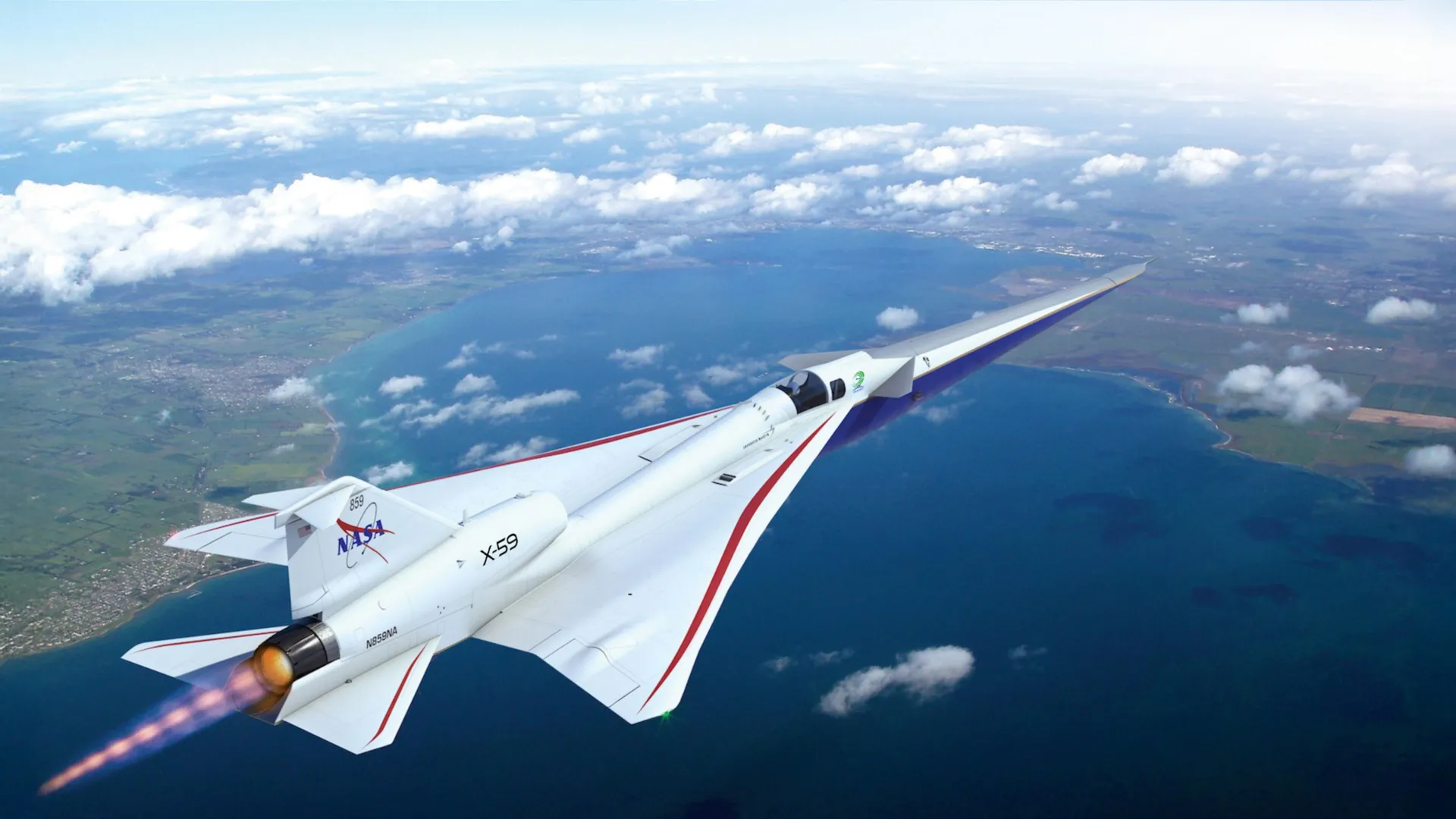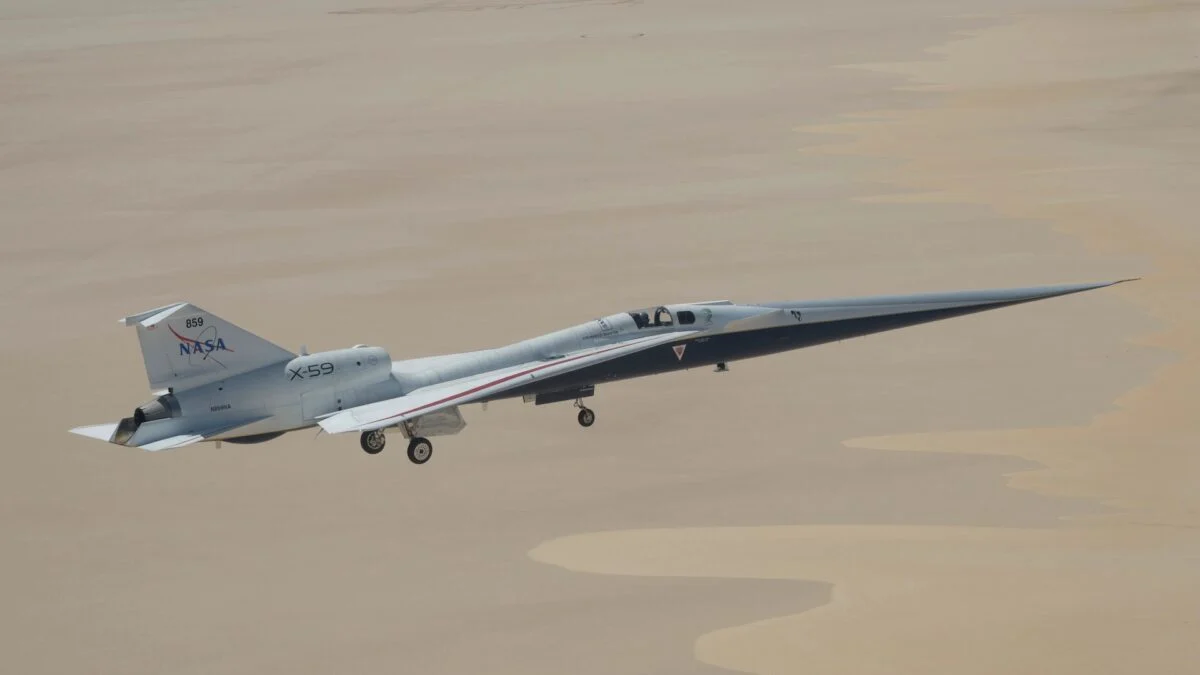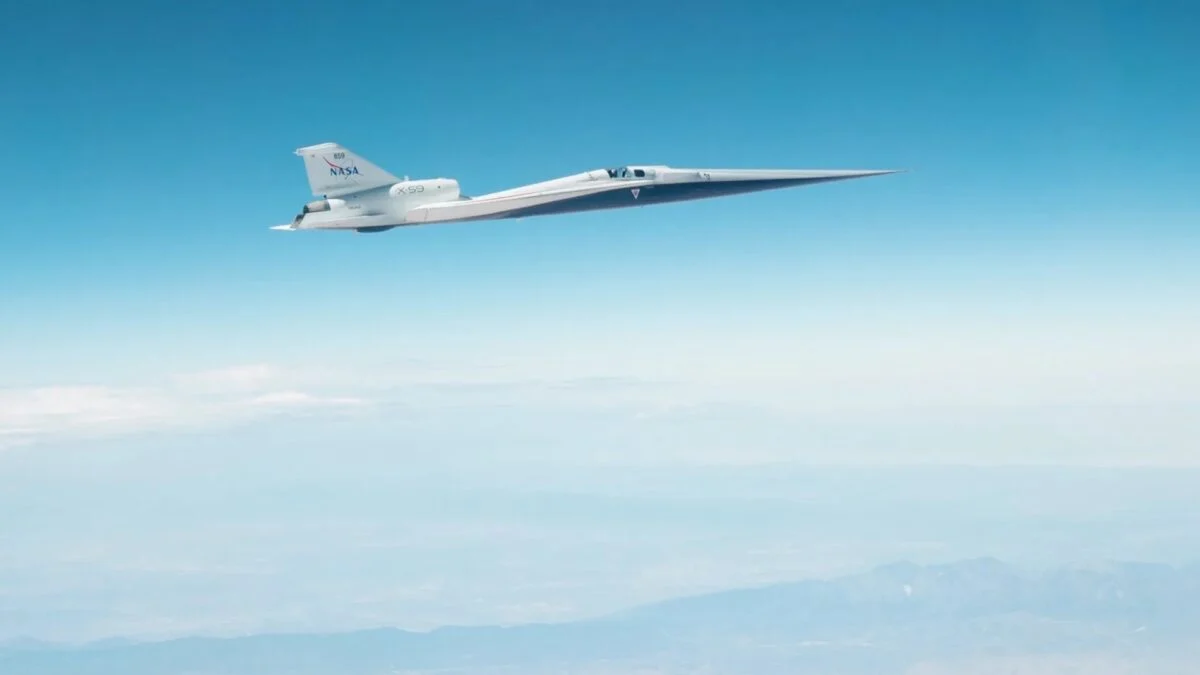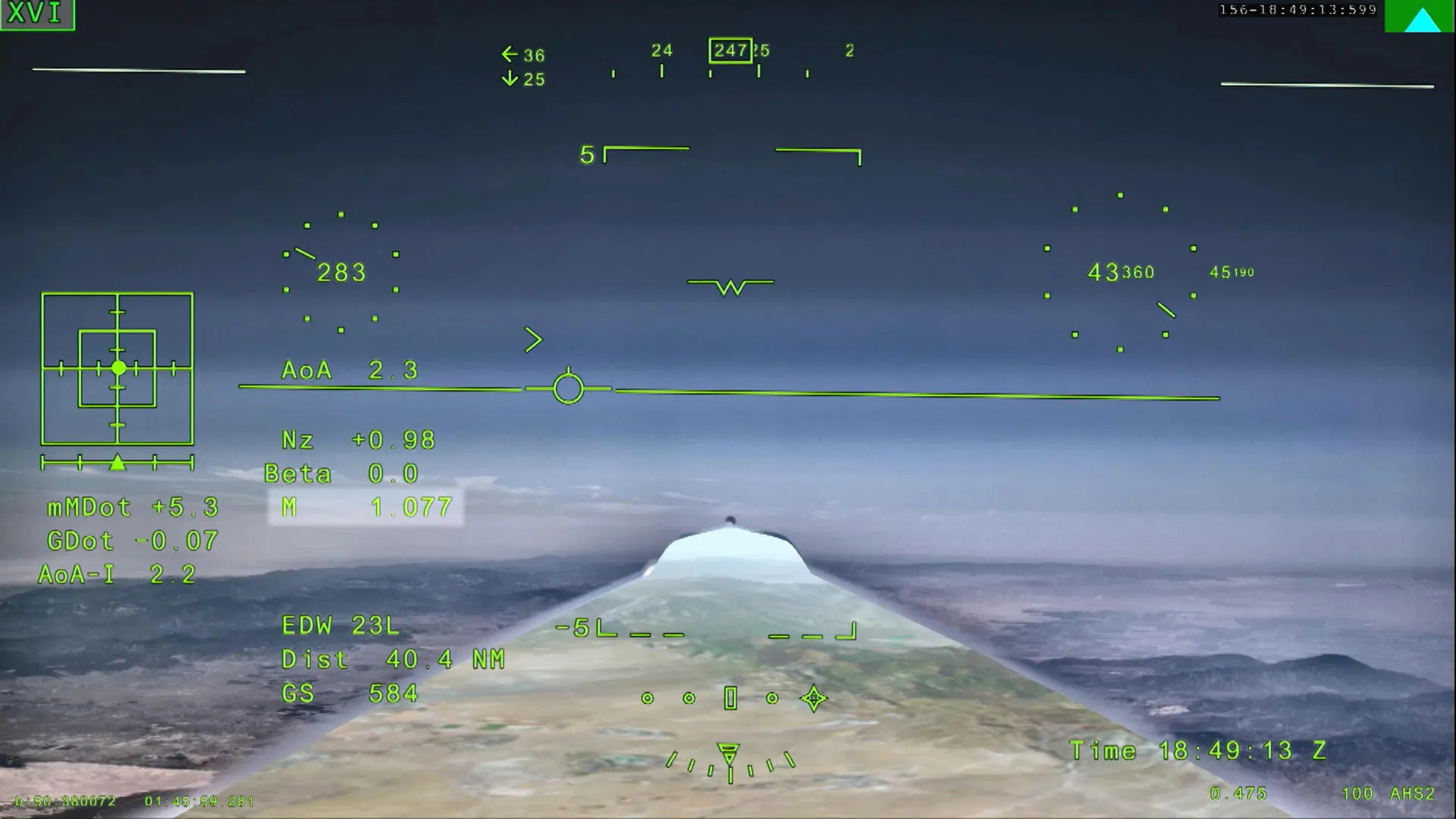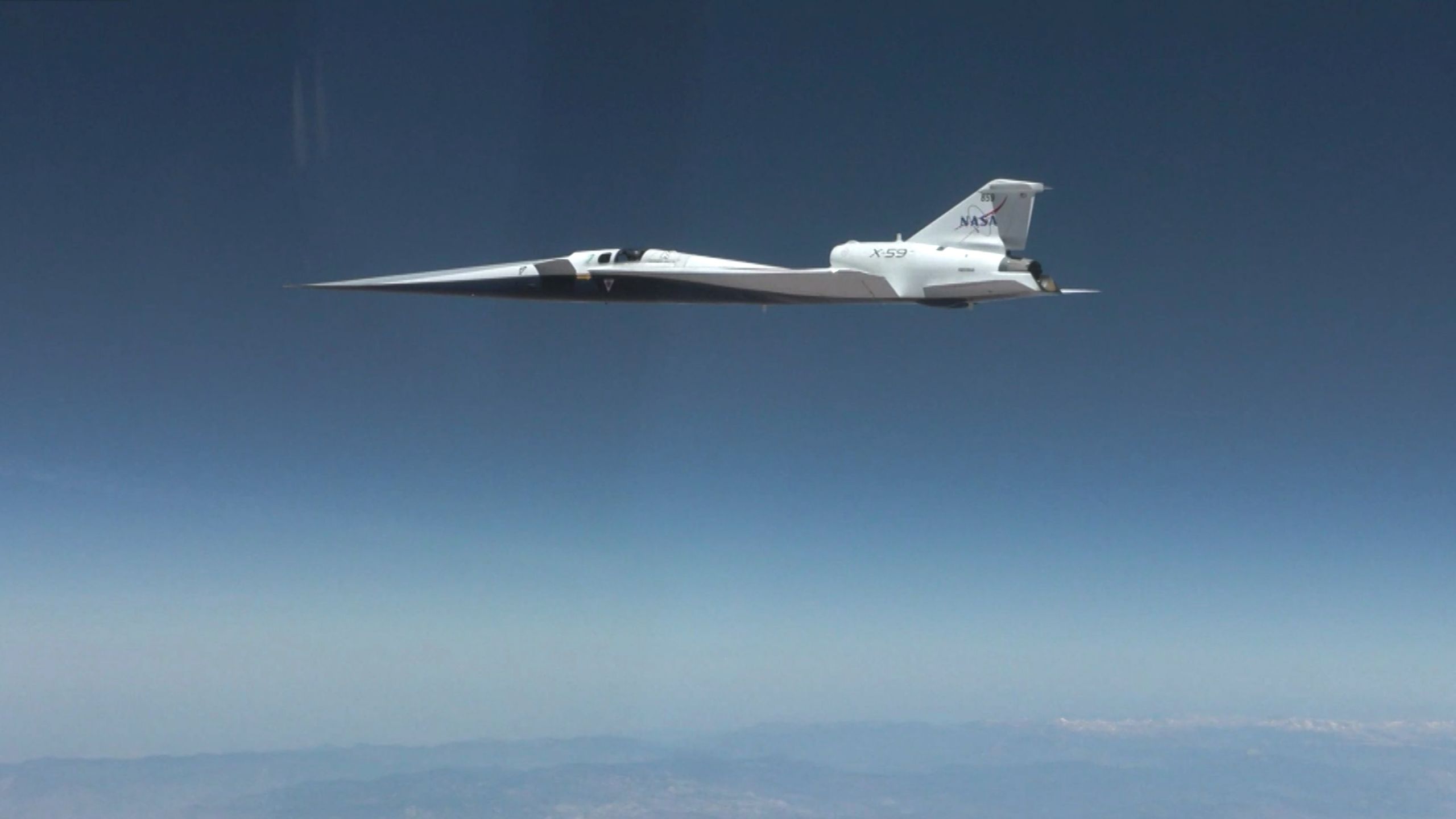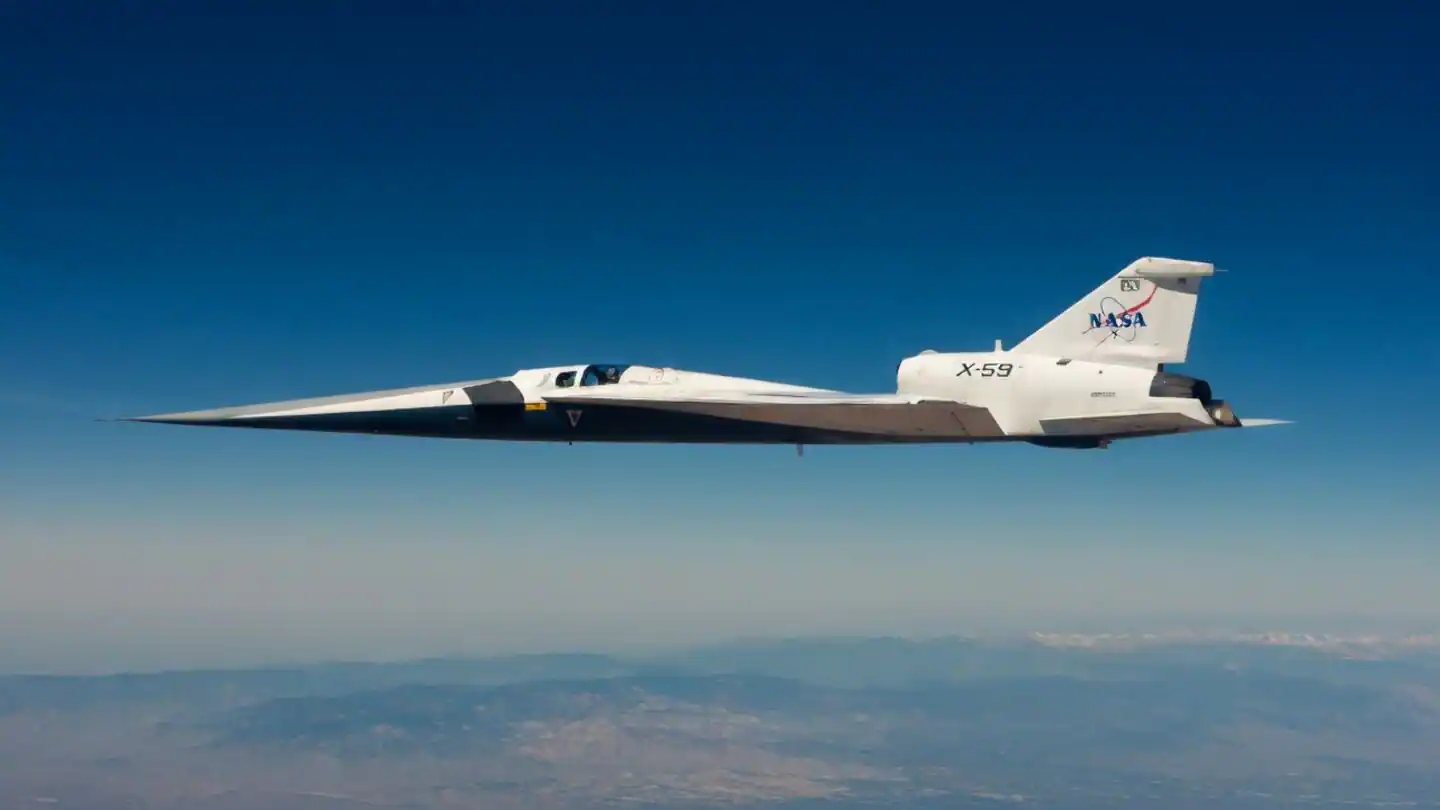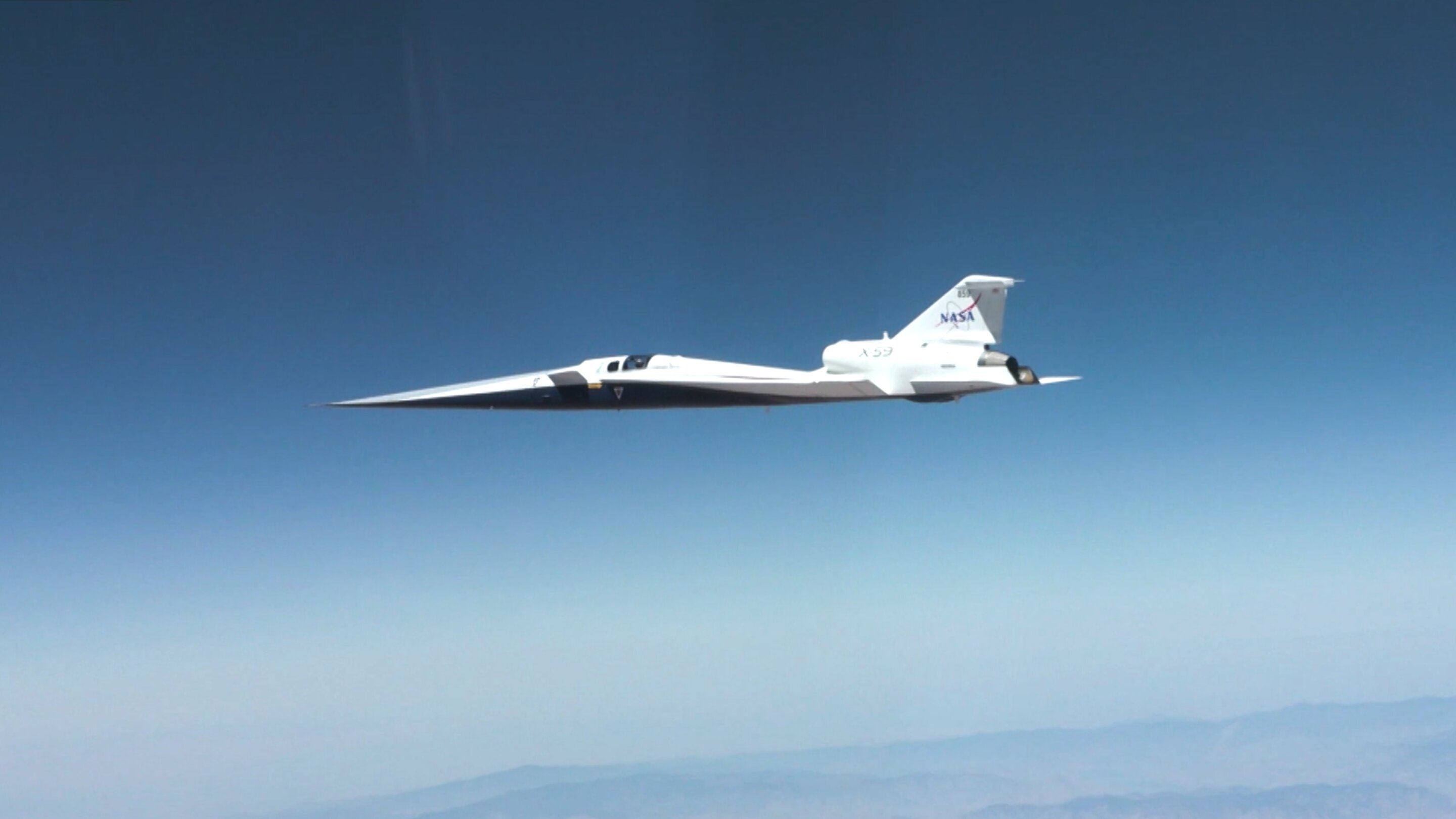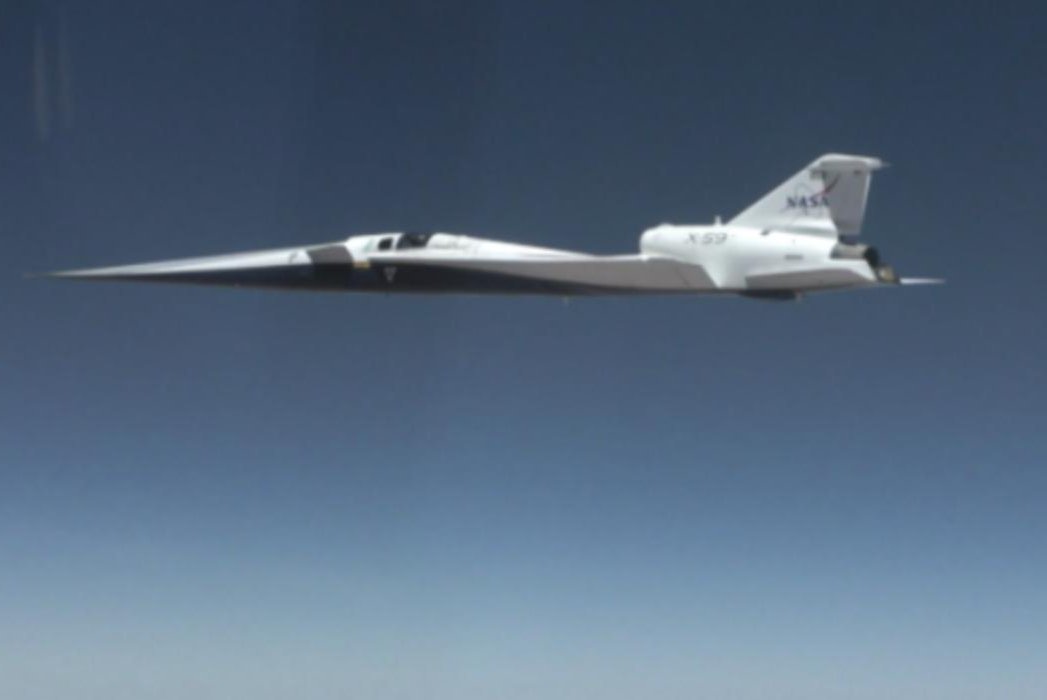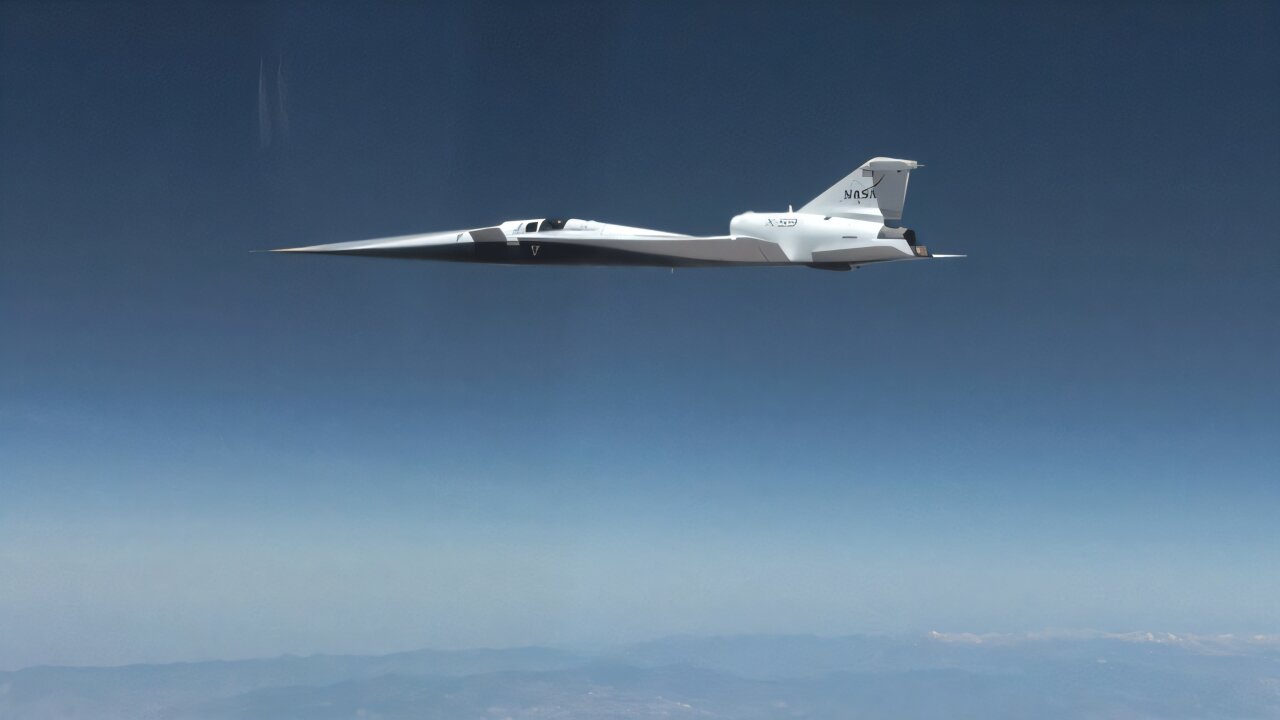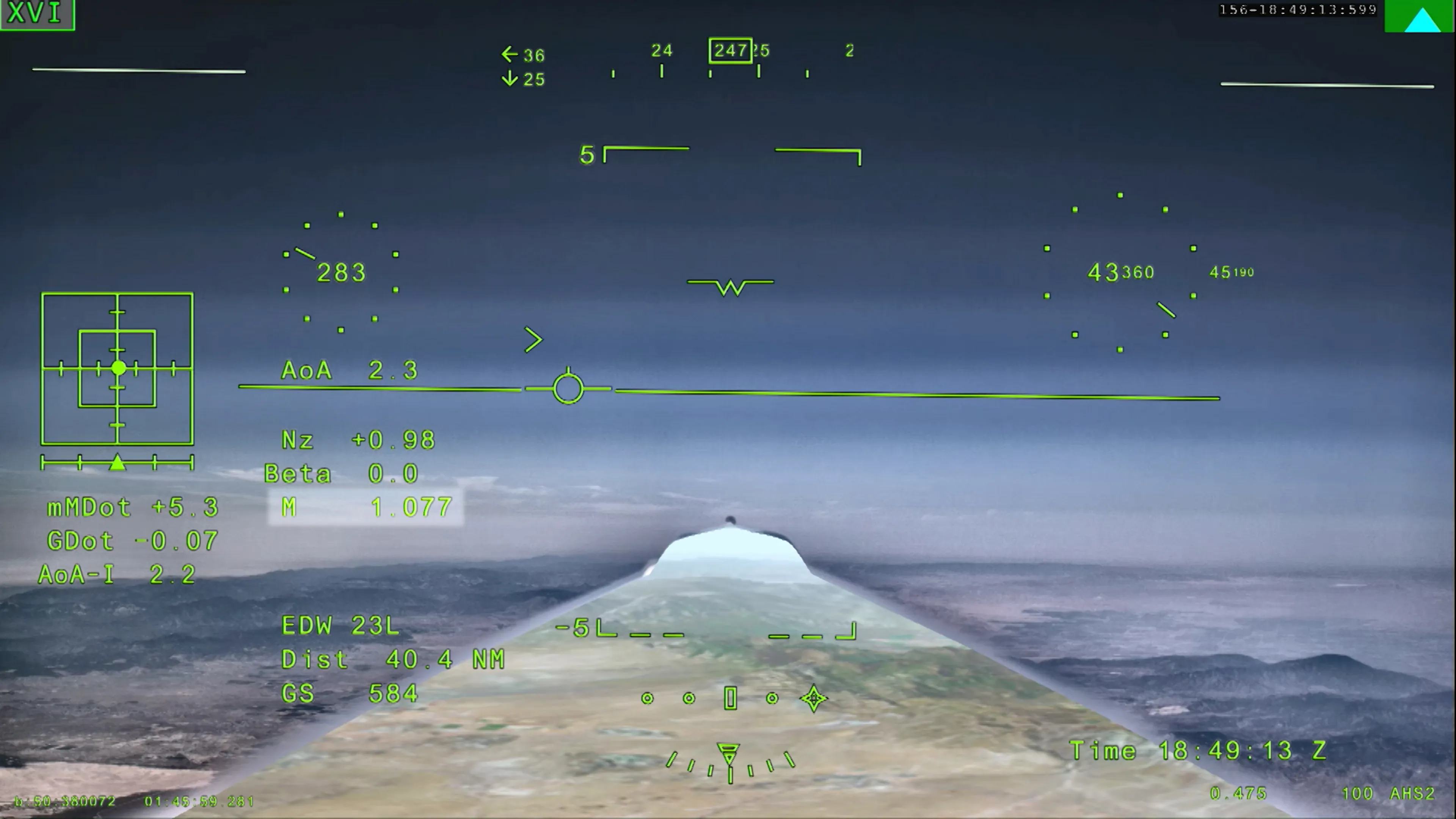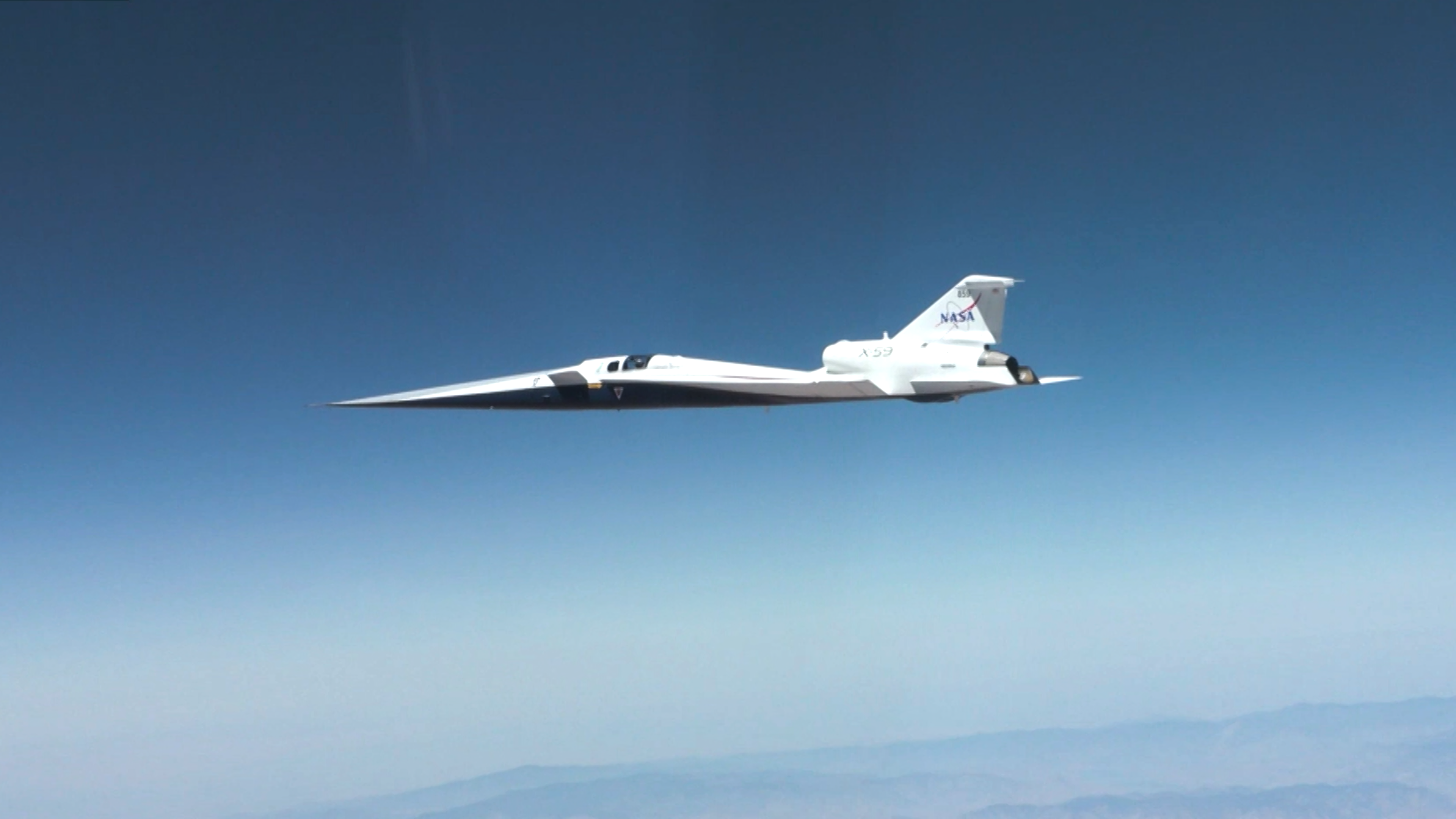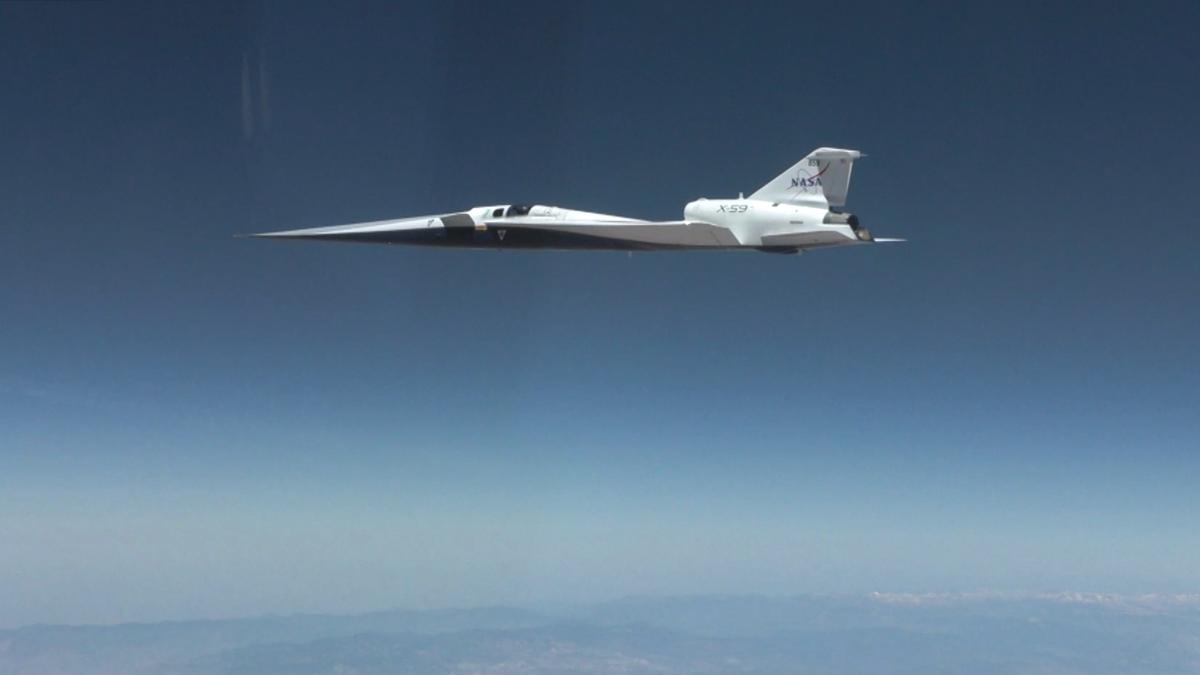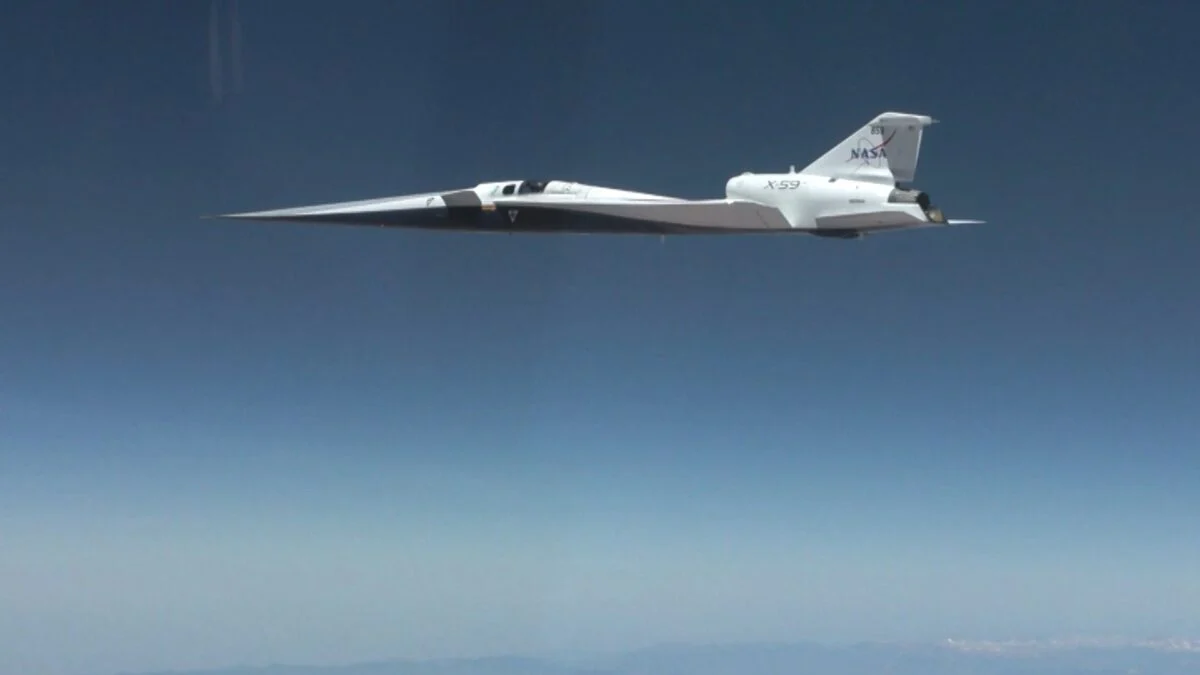
NASA’s X-59 aircraft has finally flown faster than the speed of sound, bringing us one step closer to supersonic flight without the loud, thunder-like clap noise that comes with it. The experimental vehicle took off from the Edwards Air Force Base in California on June 5 at 2 p.m. ET for its latest test flight. During its 81-minute run in the air, X-59 reached a top speed of approximately Mach 1.1, or 713 miles per hour (1,147 kilometers per hour), breaking the sound barrier for the first time. Next up, the aircraft will conduct a so-called mission conditions flight, where it will hit Mach 1.4, or fly at 925 miles per hour (1,488 km/hr) at approximately 55,000 feet (16,764 meters). That’s the same speed and altitude NASA will use to gather data from the public on the aircraft’s quiet thump. More speed, less noise The X-59 is designed to break the sound barrier without producing the loud, explosive sound known as a sonic boom. Instead of a sonic boom, the X-59 aircraft is meant to mitigate the noise and release a sonic thump, according to NASA. In doing so, the experimental aircraft could pave the way for commercial supersonic flight over land.
Since the aircraft’s inaugural flight in October 2025, the team at NASA has been testing X-59’s performance at higher altitudes and faster speeds. Over the last few months, X-59 has flown 16 times in preparation for its supersonic debut.