Read The Diplomat, Know The Asia-Pacific
Affiliation with the Chhatra League, the students’ wing of the Awami League, before October 2024, was not an offense. It cannot be treated as one now.
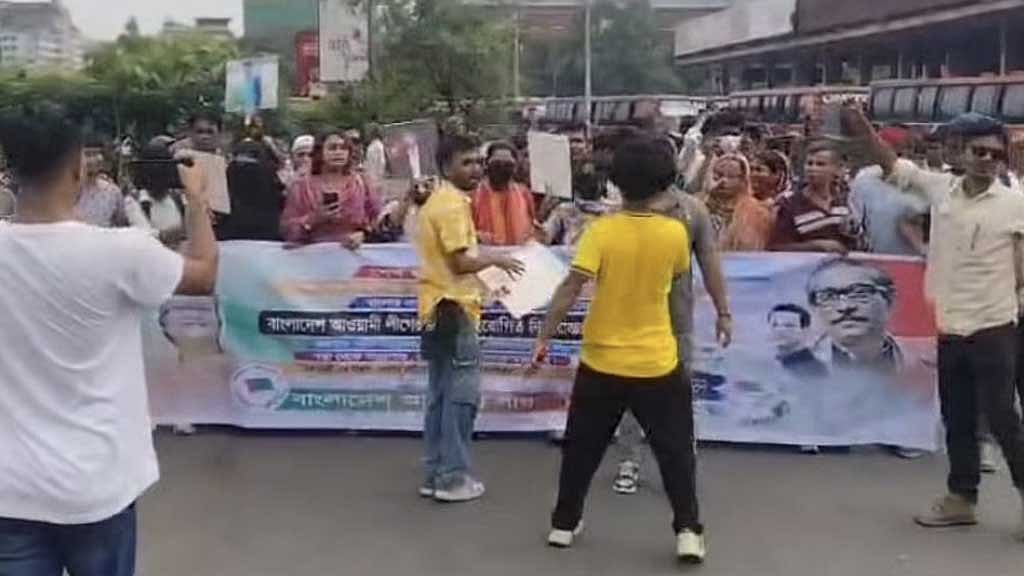
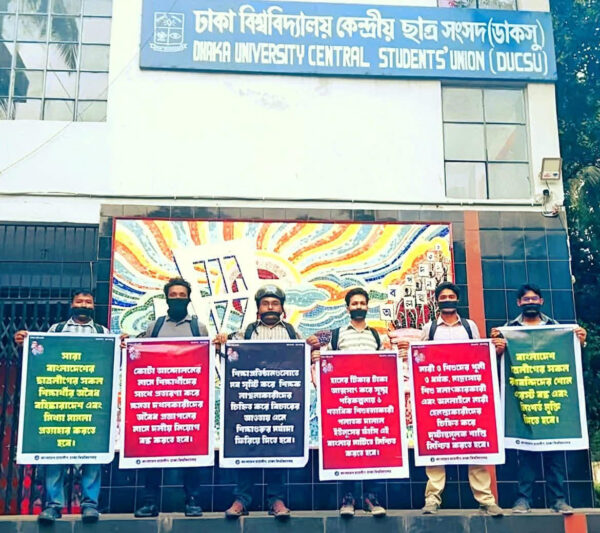
Bangladesh Students’ League activists gather at the Dhaka University campus to press six key demands, including their opposition to the expulsion of students from educational institutions nationwide, Dhaka, Bangladesh, June 1, 2026.
When a government bans a political organization, it faces a legal obligation to ensure that the ban does not reach back in time. This is not just a technical requirement; it is one of the oldest rules of constitutional law — the prohibition on ex post facto laws. The reason for its existence is simple. In a democratic society, a government cannot retroactively classify a past action as a crime, with punitive consequences that were not a crime at the time the law was enacted.
Following the ouster of the Awami League (AL) government on August 05, 2024, the Muhammad Yunus-led interim administration violated this principle by expelling and suspending students allegedly associated with the Bangladesh Chhatra League, the students’ wing of the AL, from public universities in Bangladesh without any hearing, charges, or even the constitutional rights granted to students. It is a consequence that the current administration has the authority, and the constitutional obligation, to correct.