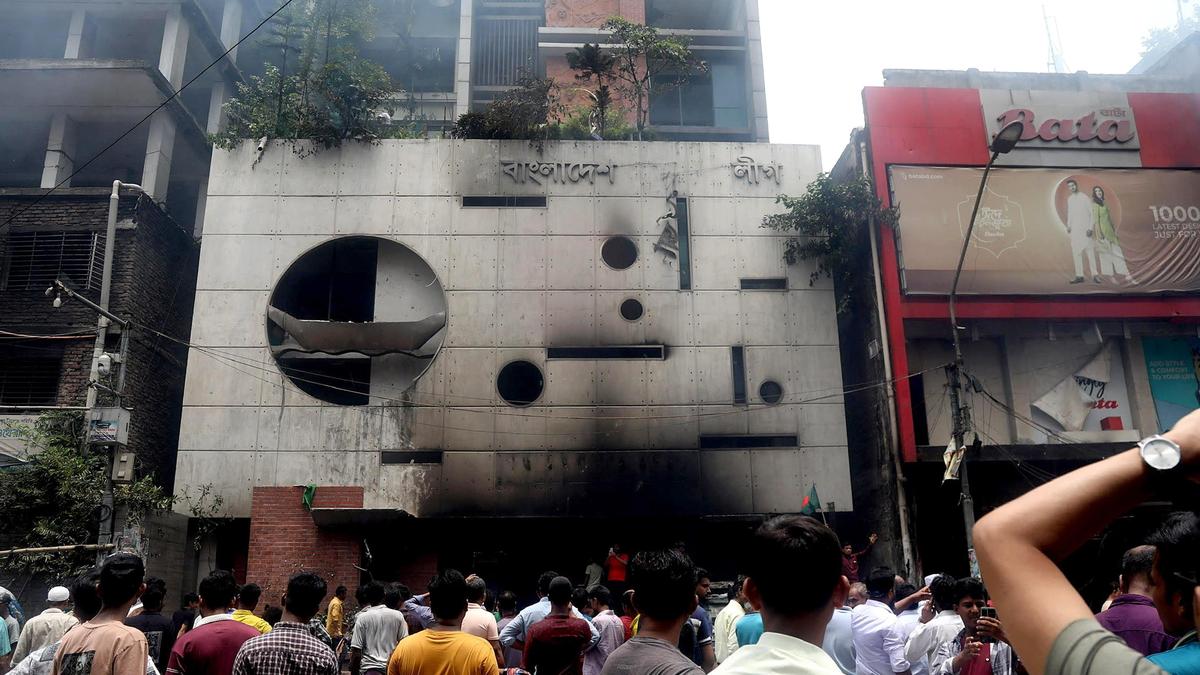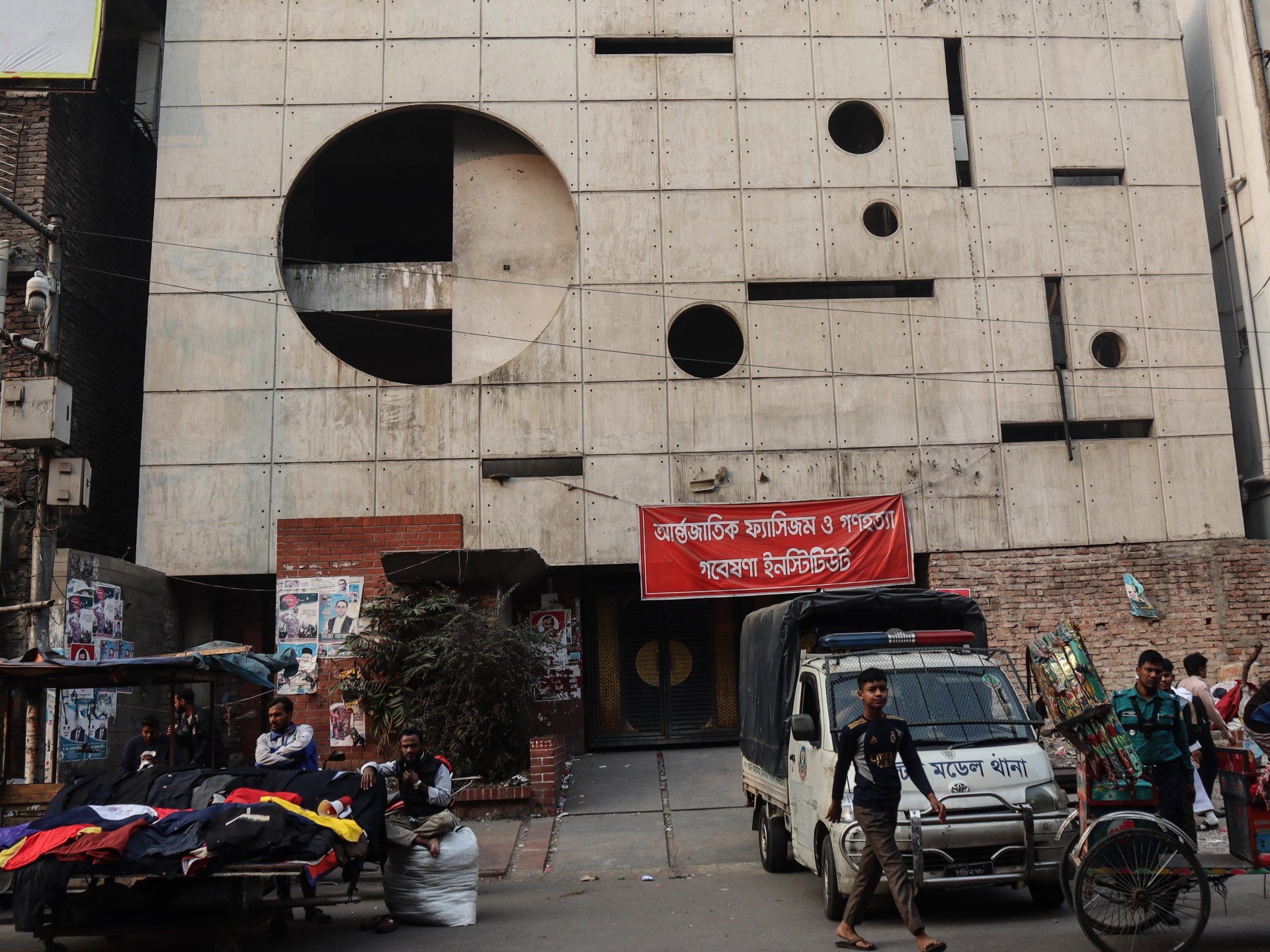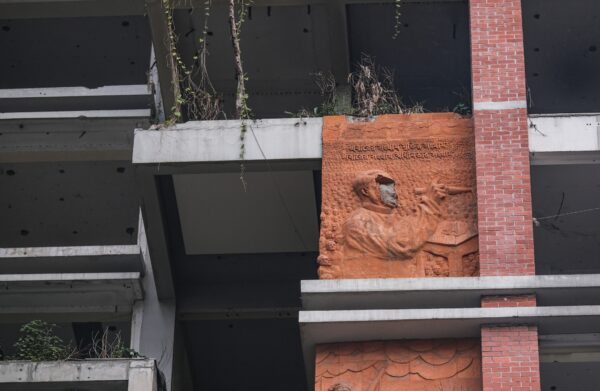
The main gate of the Awami League’s central office on Shaheed Abrar Fahad Avenue (previously known as Bangabandhu Avenue), a property in the middle of Dhaka estimated to be worth nearly 150 million taka, now stands half-broken and shut. A few police officers remain stationed nearby to prevent gatherings of party activists or the kind of mob violence that has become an increasingly dangerous feature of Bangladesh’s political culture over the past two years.
Inside the compound, only a few street hawkers vans can be seen resting quietly. The walls are covered in soot and ash. The surroundings are broken and dirty, with the smell of urine hanging in the air. There are no air conditioners running, no lights, no senior leaders arriving or leaving, no groups of party men sitting around gossiping in their traditional Mujib coats worn over Punjabi – the style once closely associated with Sheikh Mujibur Rahman, the AL’s founding figure and most influential leader.
A similar silence hangs over the AL office in Dhanmondi. Grass now grows freely across parts of the compound. There is little sign that this was once among the country’s most powerful political spaces during the height of Sheikh Hasina’s increasingly authoritarian rule.