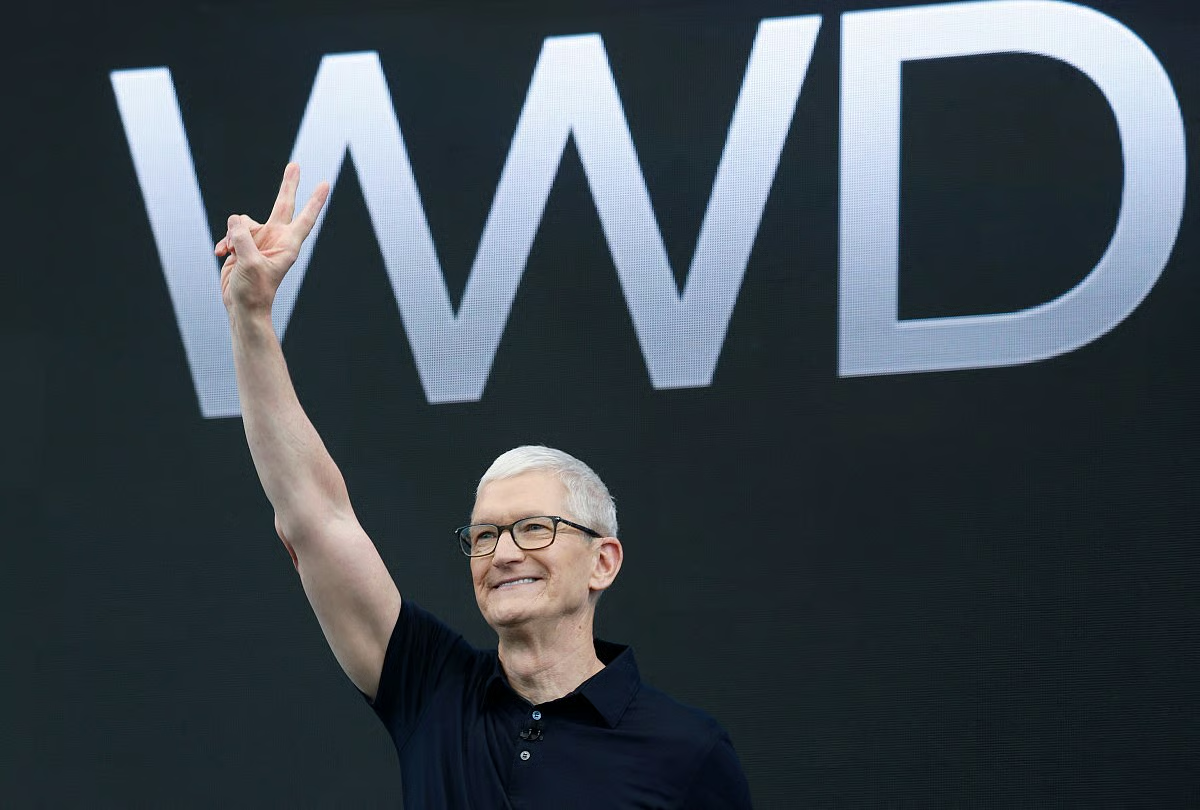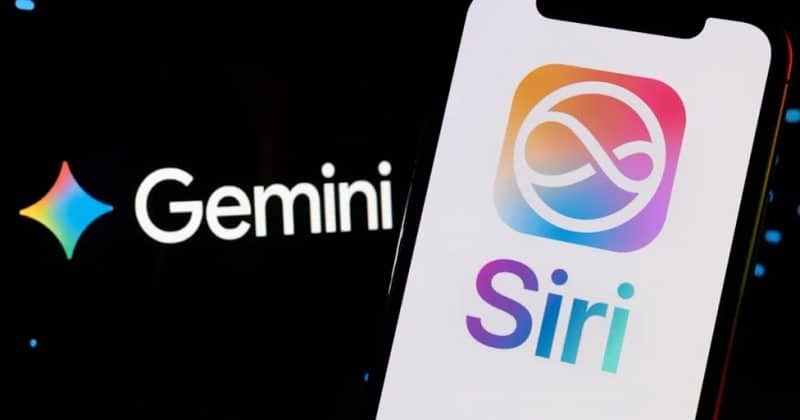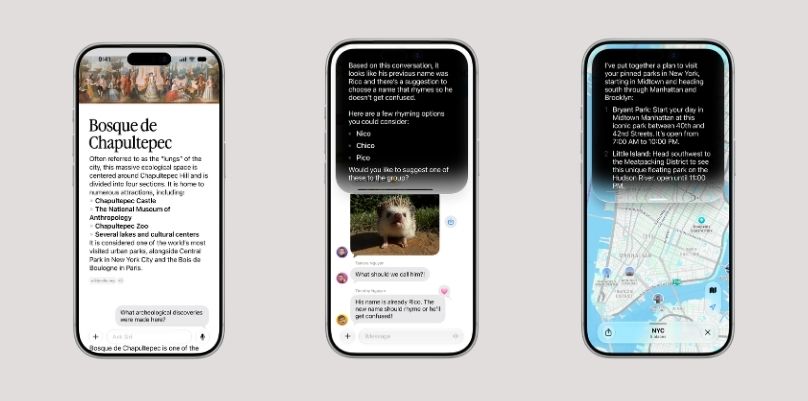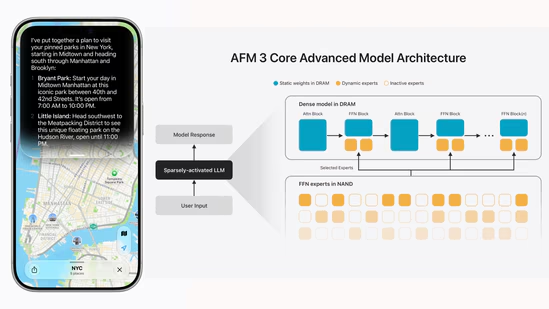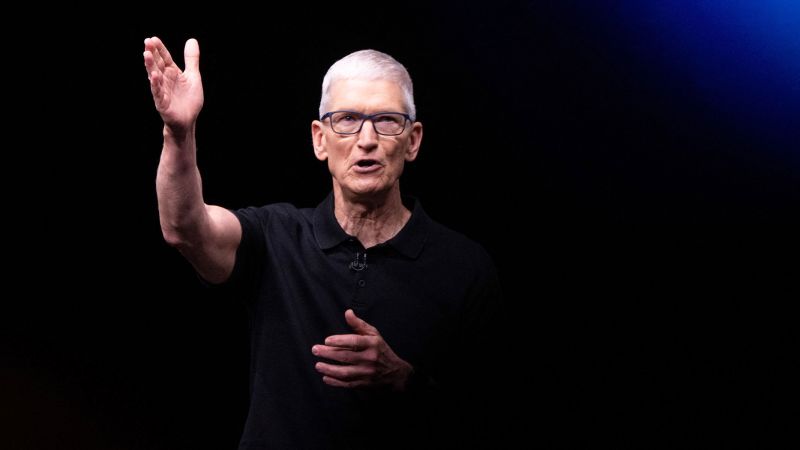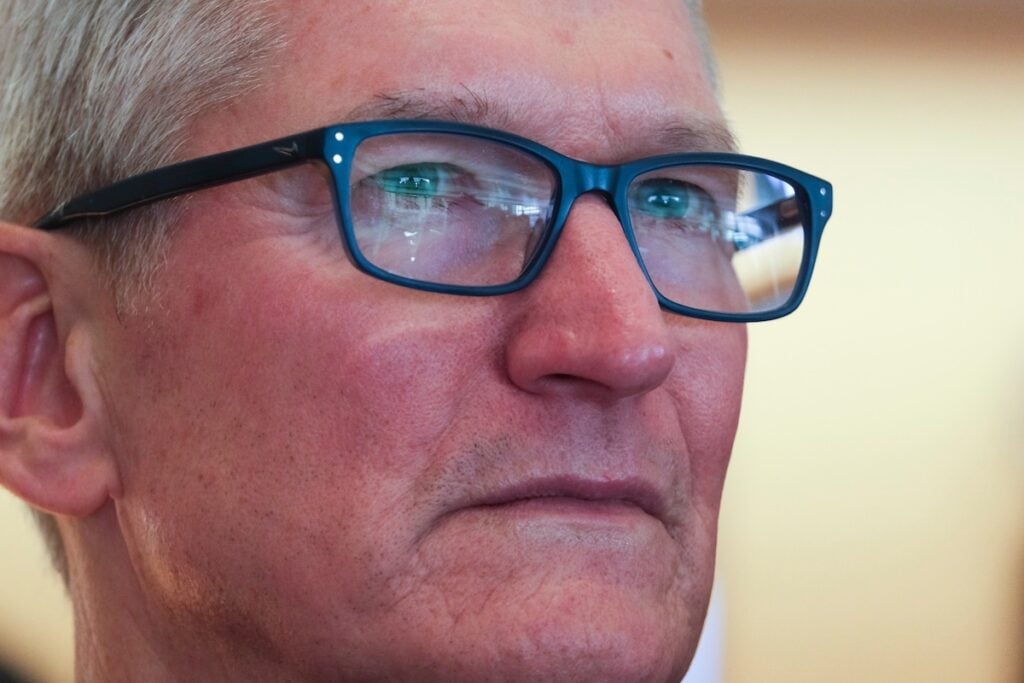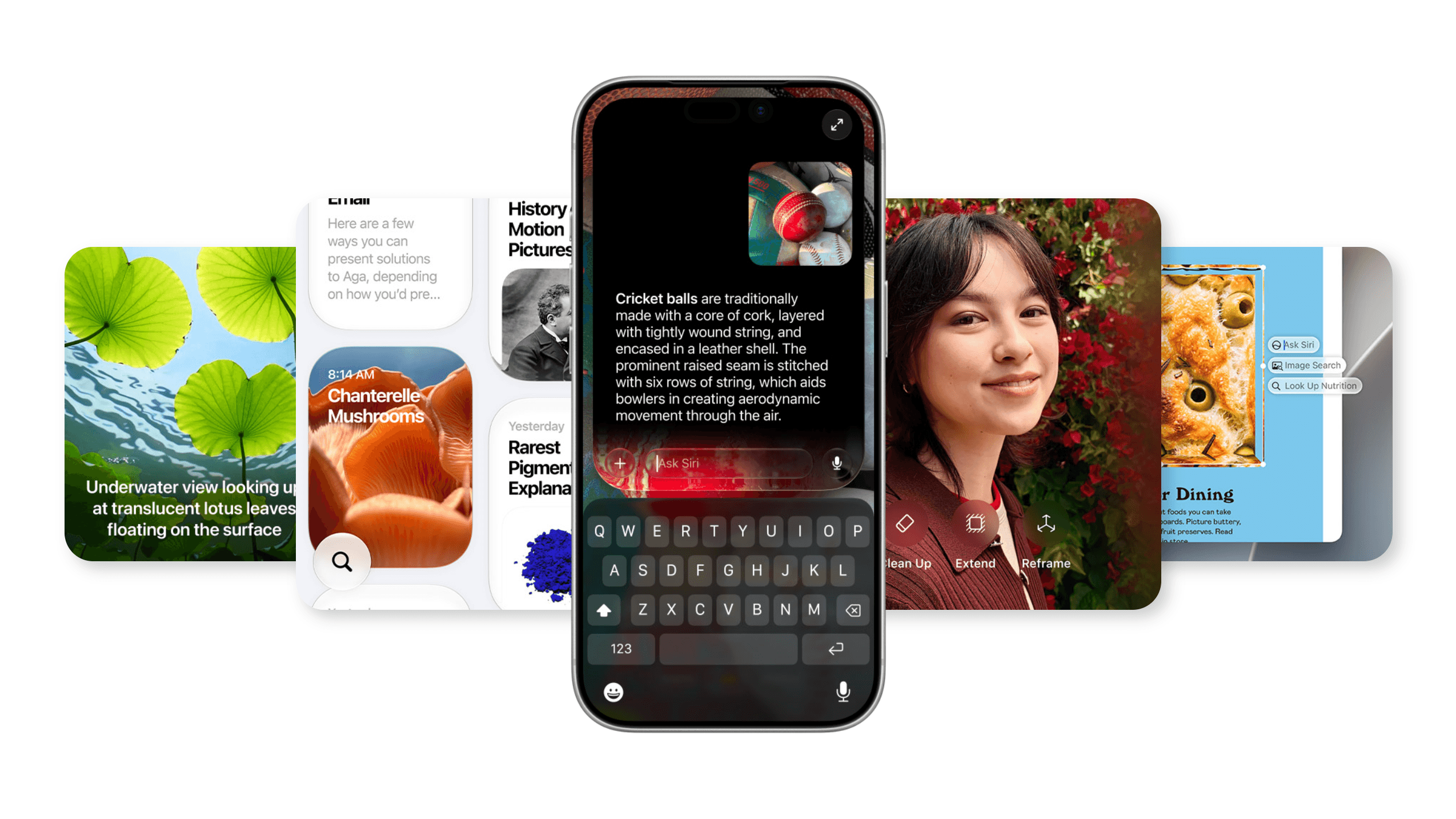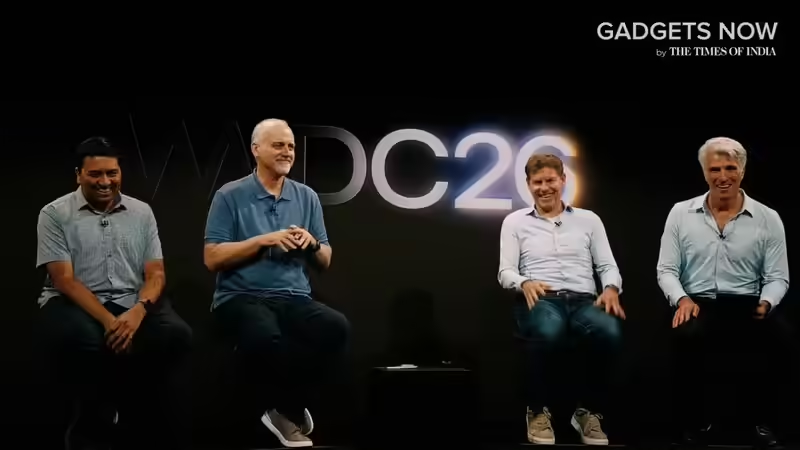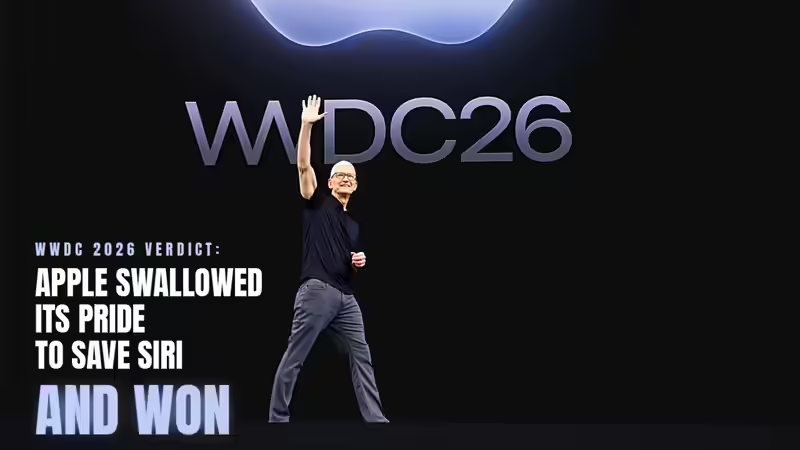
When Tim Cook walks on stage in Cupertino today for his final keynote as Apple's chief executive, a rebuilt Siri will sit at the centre of the show. The catch sits underneath: the intelligence doing the work belongs to Google. Apple has agreed to pay roughly $1 billion — about Rs 8,500 crore — a year to license a custom 1.2-trillion-parameter Google Gemini model, the brain that now powers the new Siri and much of Apple Intelligence. Two years after Apple promised a smarter assistant and then held it back, the turnaround is real. It is also rented. WWDC 2026 is where Apple learns whether a borrowed brain counts as a comeback.Key TakeawaysApple's rebuilt Siri runs on a custom 1.2-trillion-parameter Google Gemini model, leased for a reported $1 billion (about Rs 8,500 crore) a year — roughly eight times the size of Apple's own 150-billion-parameter cloud model.The reset began in early 2025, when CEO Tim Cook lost confidence in AI chief John Giannandrea; Siri moved to Vision Pro creator Mike Rockwell, reporting to software chief Craig Federighi.Giannandrea retired in spring 2026. Former Google and Microsoft AI leader Amar Subramanya now runs Apple Foundation Models under Federighi.The WWDC 2026 keynote on 8 June is Tim Cook's final one as CEO; hardware chief John Ternus becomes Apple CEO on 1 September 2026.The open question is whether a Gemini-powered Siri proves a genuine fix or a lasting dependency on a rival, after Meta poached much of Apple's in-house AI bench.What forced Apple into an AI reset?A single meeting in early 2025 set the turnaround in motion. According to Bloomberg's Mark Gurman, nearly every senior leader gathered near Apple's software engineering offices — Craig Federighi, the finance and operations chiefs, direct reports to the top — with then-chief operating officer Jeff Williams chairing. Tim Cook stayed away. The agenda was blunt: Apple Intelligence had landed with a thud, the promised Siri overhaul was slipping again, and OpenAI, Google, Anthropic and Meta were pulling clear.Rewind to the promise. At WWDC 2024, Apple revealed a smarter Siri that would read your screen, hold personal context and act across apps. It put that vision in the iPhone 16 marketing. Then the assistant proved unable to deliver — Apple's own HAL 9000 moment, the calm voice that politely declined to open the pod bay doors. Generative AI had arrived like the monolith in 2001, a slab of new capability the old guard studied, circled and left untouched for too long.The meeting produced one recommendation to Cook: fresh leadership for AI. By March 2025 he had acted. Having lost confidence in Giannandrea's ability to ship product, Cook moved Siri to Mike Rockwell, the executive who had built the Vision Pro, with Rockwell reporting to Federighi. That single line on an org chart did two things at once. It handed Federighi command of Apple's AI strategy, and it pulled Siri clean out of Giannandrea's house.Rockwell, by Gurman's account, believed he was stepping up to lead all of Apple's AI and report to Cook directly. Federighi saw it differently — Rockwell would run Siri and report to him. Rockwell took the narrower brief. The man widely cast as Apple's AI fixer ended up a lieutenant rather than a chief.Apple builds the car. Google now builds the motor.The fix Apple showcases today is, at heart, a licensing deal. Bloomberg first reported in November 2025 that Apple would pay around $1 billion a year for a custom 1.2-trillion-parameter Gemini model built by Google specifically for Siri and Apple Intelligence. CNBC reported that Apple chose Gemini over bids from OpenAI and Anthropic after an internal bake-off. The evaluation ran under the codename Project Glenwood, overseen by Rockwell himself.Think of Apple's AI as a car. For two years Apple insisted on building the whole thing in-house — chassis, gearbox and engine. The chassis held up: Apple's devices, its operating systems and its Private Cloud Compute infrastructure form a tightly engineered monocoque, the integrated structure rivals struggle to match. The engine seized. Apple's in-house cloud model tops out at 150 billion parameters; its on-device model runs at 3 billion. Both sat well short of the powerband of a frontier model from Google or OpenAI.So Apple dropped in a crate engine. The 1.2-trillion-parameter Gemini unit is roughly eight times the displacement of Apple's own cloud model, and it uses a mixture-of-experts layout — only the cylinders a task needs fire at once, which keeps the running costs down. Apple keeps the monocoque: simple, private requests run on the device, and heavier reasoning routes to Gemini inside Private Cloud Compute, where Apple says the data stays stateless and Google is barred from training on it.EngineParametersWhere it runsBuilt byOn-device model3 billioniPhone, iPad, MacAppleCloud model150 billionPrivate Cloud ComputeAppleGemini model (new)1.2 trillionPrivate Cloud ComputeGoogleThe arithmetic of the relationship is the part that should give Apple pause. Google already pays Apple a reported $20 billion a year to remain the default search engine in Safari. Now a billion flows back the other way, for intelligence. Two of the world's largest companies run on each other's money — and Apple, the firm sitting on more than $150 billion in cash, chose to buy the engine rather than finish building its own.The talent Apple lost on the way to the fixWhile the leadership reshuffled, the bench emptied. Through 2025, Meta raided Apple's small foundation-models team with compensation that dwarfed Apple's. Ruoming Pang, who led that team, left for Meta's superintelligence group on a package reported above $200 million; Tom Gunter and Mark Lee followed. In January 2026, Gurman reported four more researchers gone in a matter of weeks, and Stuart Bowers, who had led Siri engineering, departed for Google DeepMind. Design chief Alan Dye left for Meta too. The Financial Times reported that recruiters had begun describing the exodus as a crisis of confidence.Giannandrea's own exit completed in stages. Apple announced his retirement in December 2025; he advised until spring 2026, then left in April as his stock vested. In his place, Apple hired Amar Subramanya — a former Microsoft AI vice-president who had spent 16 years at Google, including a stint leading engineering for the Gemini Assistant — to run Apple Foundation Models under Federighi. The irony writes itself: the man now building Apple's models once helped build Google's.This is where the Blade Runner question surfaces. The new Siri will look, sound and feel like Apple. Underneath, it thinks with Google's brain. So is it Apple's own intelligence, or a replicant — convincing, capable, wearing the right face, yet grown in someone else's lab? Apply the Voight-Kampff test and the answer turns uncomfortable: more human than human, and only partly Apple's own.The staging today sharpens the point. This is Tim Cook's final keynote as CEO. Apple confirmed in April that Cook becomes executive chairman on 1 September 2026, with hardware engineering chief John Ternus taking over as chief executive — a fact set out plainly in Apple's filing with US regulators. Ternus, a hardware man, inherits a software-and-models problem he received rather than caused. Gurman expects Rockwell, the supposed fixer, to stay off the stage entirely, with Cook handing the assistant to Federighi to present. The architect of the fix watches from the wings.What does Apple's AI overhaul mean for iPhone users in India?For now, Indian users get the assistant in English and little more. India ranks among Apple's fastest-growing premium markets, yet Apple Intelligence reaches Indian iPhones only through localised English (India) — the wider suite skips Hindi, Tamil, Bengali and the rest. Siri takes simple spoken commands in English mixed with nine Indian languages, while the deeper Apple Intelligence features stay English-first. A genuinely smarter Siri that still stumbles over how most of India actually speaks would land here as a half-fix.The Gemini deal raises a second, quieter question. A Google model handling Indian users' personal context — their messages, photos and on-screen activity — routes that reasoning through Private Cloud Compute, where Apple says the data stays private and free of training use. How that arrangement sits with India's Digital Personal Data Protection regime, as the rules firm up, is worth watching. In a market where Apple sells privacy as hard as it sells hardware, an assistant that thinks on a rival's infrastructure is a story the competition will gladly tell.Two verdicts, one keynoteBy the time Cook says his goodbyes today, Apple will hold one verdict and leave another pending. The first is the easy one: a Gemini-powered Siri should demo beautifully — fluent, contextual, quick, everything the 2024 version promised and held back. On stage, the comeback looks complete.The second verdict takes longer and matters more. Apple has bought a working assistant at the price of a standing dependency on Google, a foundation-models team rebuilt from a thinned roster, and a new chief executive who takes over on 1 September with the work half-finished. Apple's own engineers are reportedly racing to ready a one-trillion-parameter model of their own. Until that day arrives, the most important question at WWDC 2026 sits beneath the applause: when the new Siri finally answers, whose intelligence is doing the talking — Apple's, or a replicant's wearing Apple's voice?FAQIs the new Siri powered by Google?Yes. Apple's rebuilt Siri and parts of Apple Intelligence run on a custom 1.2-trillion-parameter Google Gemini model, which Apple licenses for a reported $1 billion (about Rs 8,500 crore) a year. Heavier requests process inside Apple's Private Cloud Compute, while simpler ones stay on the device.When will the new Siri launch?Bloomberg has reported the overhauled Siri was on track for spring 2026, with features expected to arrive through the iOS 27 cycle that begins at WWDC 2026. Apple often ships early features as a beta first, so a phased rollout is the likeliest path.Will the new Siri work in Indian languages?As things stand, Apple Intelligence reaches Indian users in localised English (India) rather than Hindi or other Indian languages, though Siri accepts simple spoken commands in English mixed with nine Indian languages. Whether the Gemini-powered version widens that support is one of the open questions heading into WWDC 2026.Did Apple's AI chief leave?Yes. John Giannandrea, Apple's AI head since 2018, lost oversight of Siri in March 2025, and Apple announced his retirement in December 2025. He departed in April 2026; Amar Subramanya now leads Apple Foundation Models under Craig Federighi.Is this Tim Cook's last WWDC as CEO?The WWDC 2026 keynote on 8 June is widely expected to be Cook's final one as chief executive. Apple has confirmed that Cook becomes executive chairman on 1 September 2026, with John Ternus succeeding him as CEO.end of article
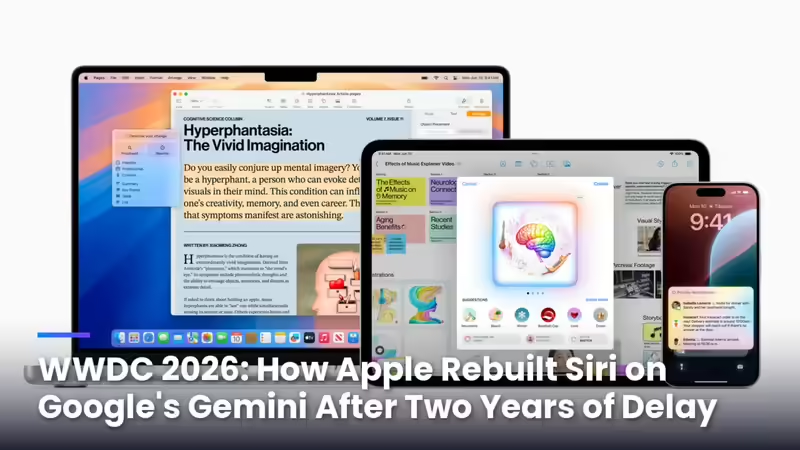
WWDC 2026: How Apple Rebuilt Siri on Google's Gemini After Two Years of Delay
Tim Cook takes the stage for his final keynote as CEO with a rebuilt Siri at the centre — powered by a 1.2-trillion-parameter Google Gemini model leased for about Rs 8,500 crore a year. WWDC 2026 tests whether a borrowed brain counts as a comeback.
1,764 words~8 min read