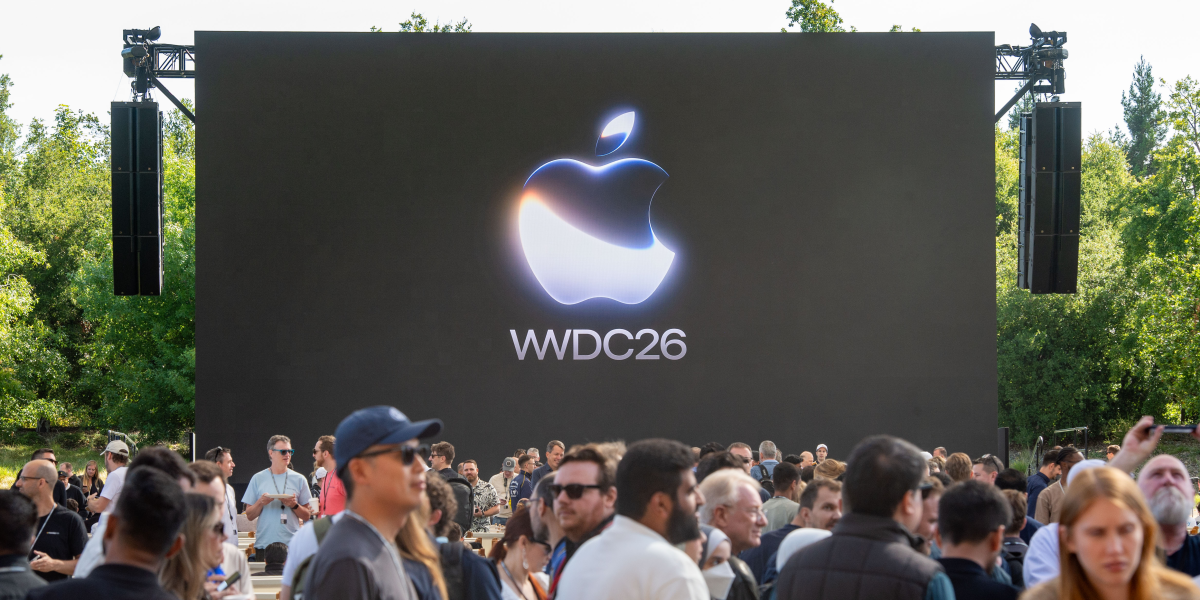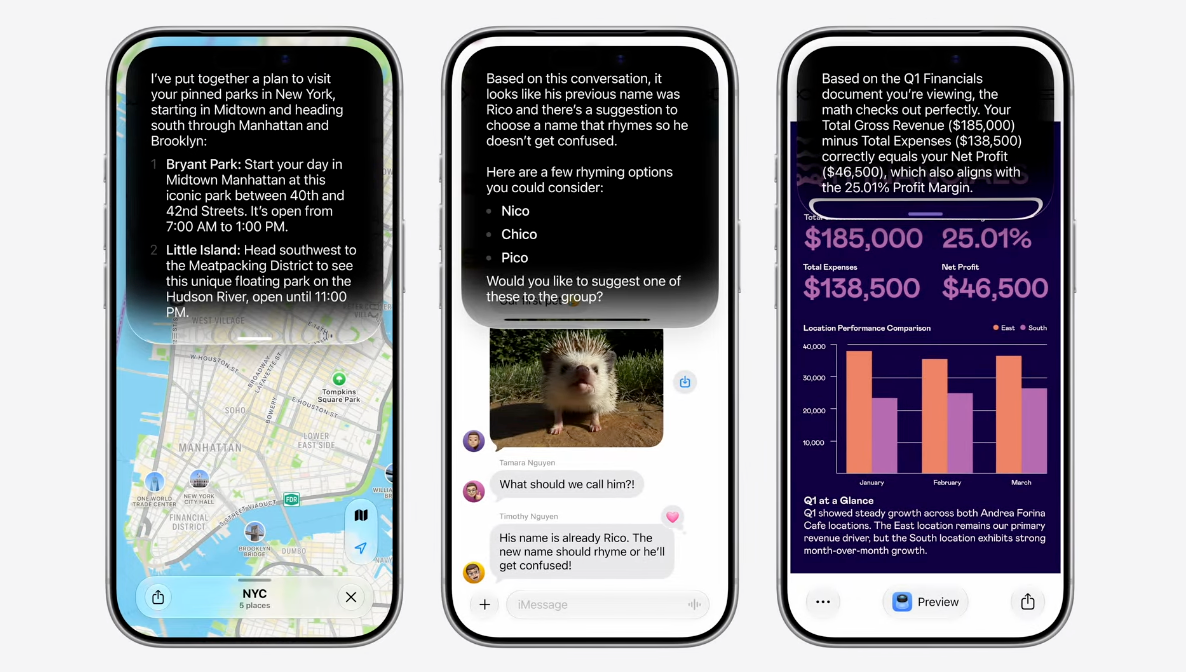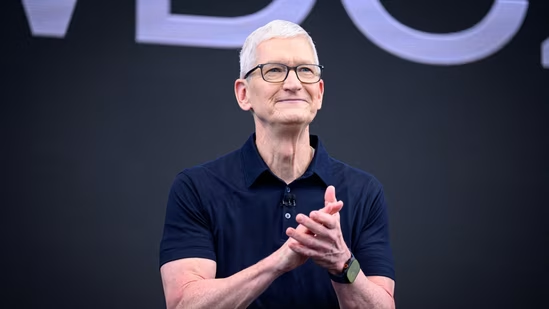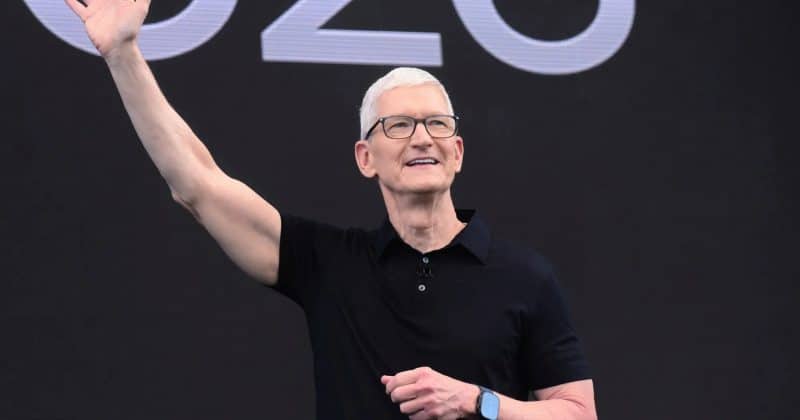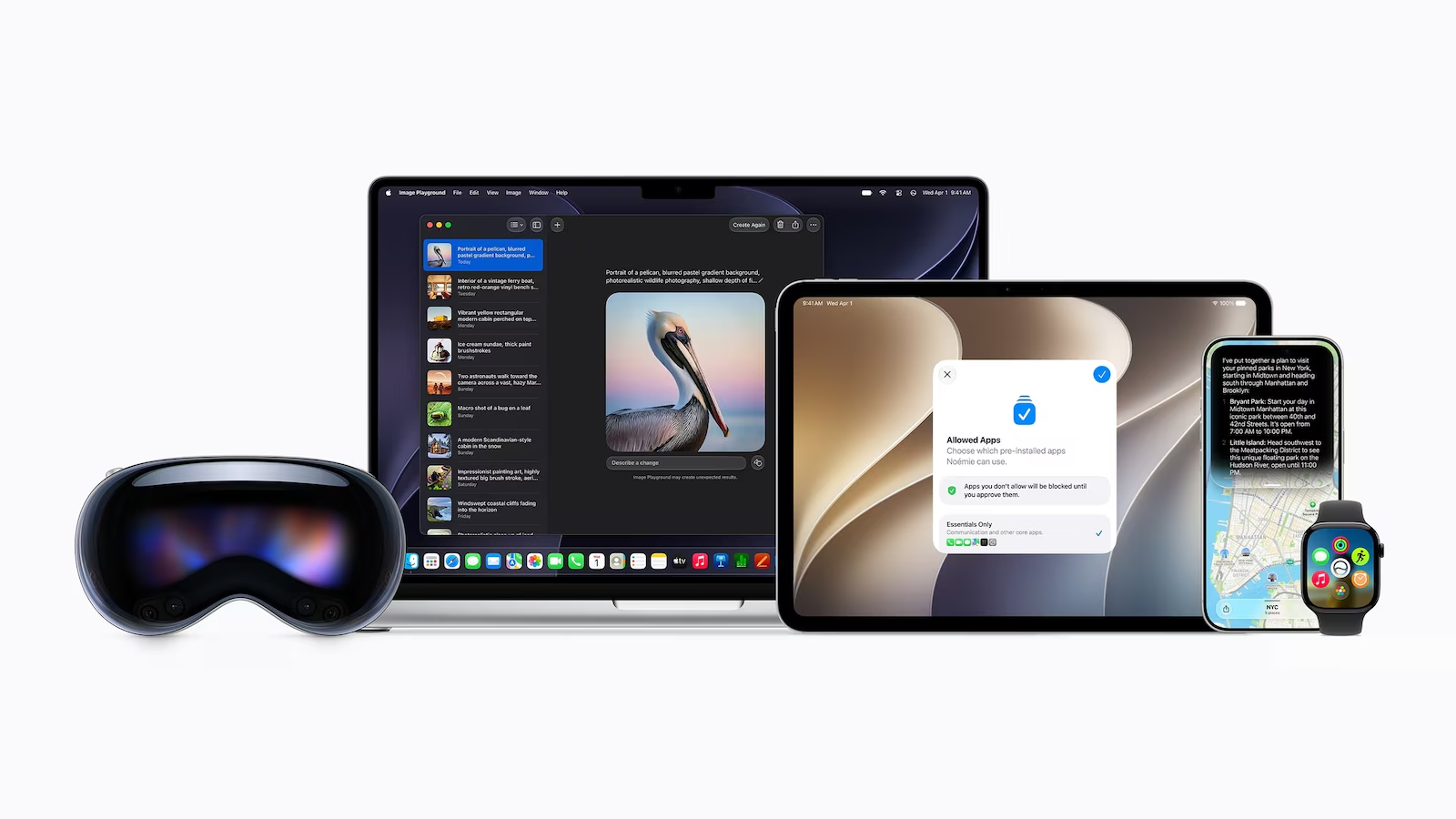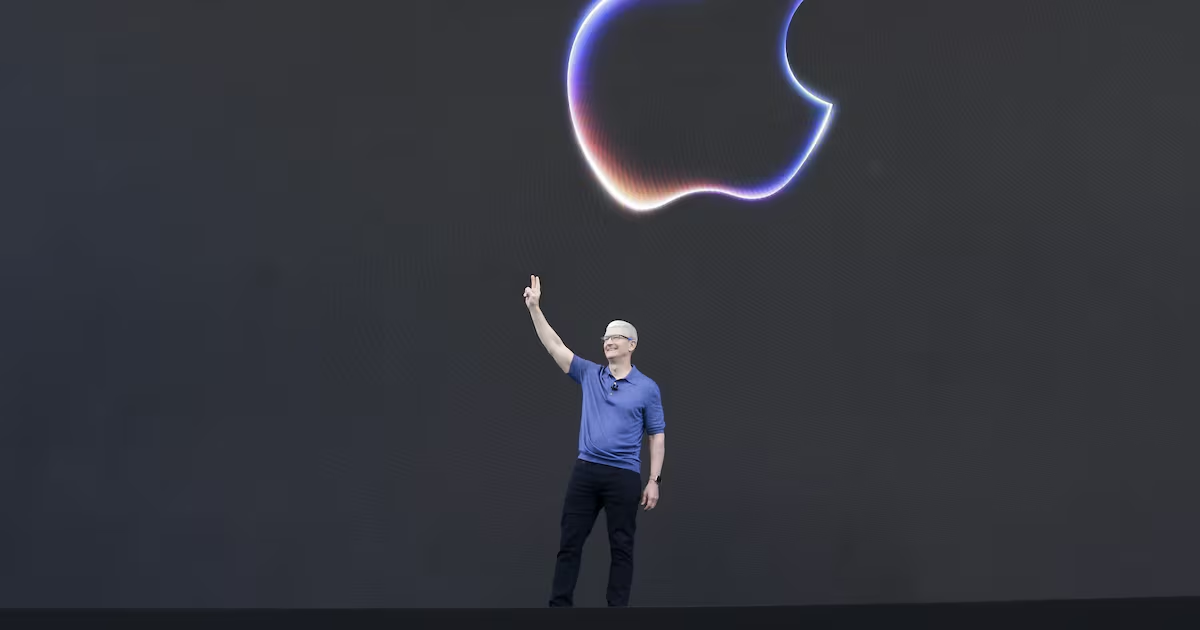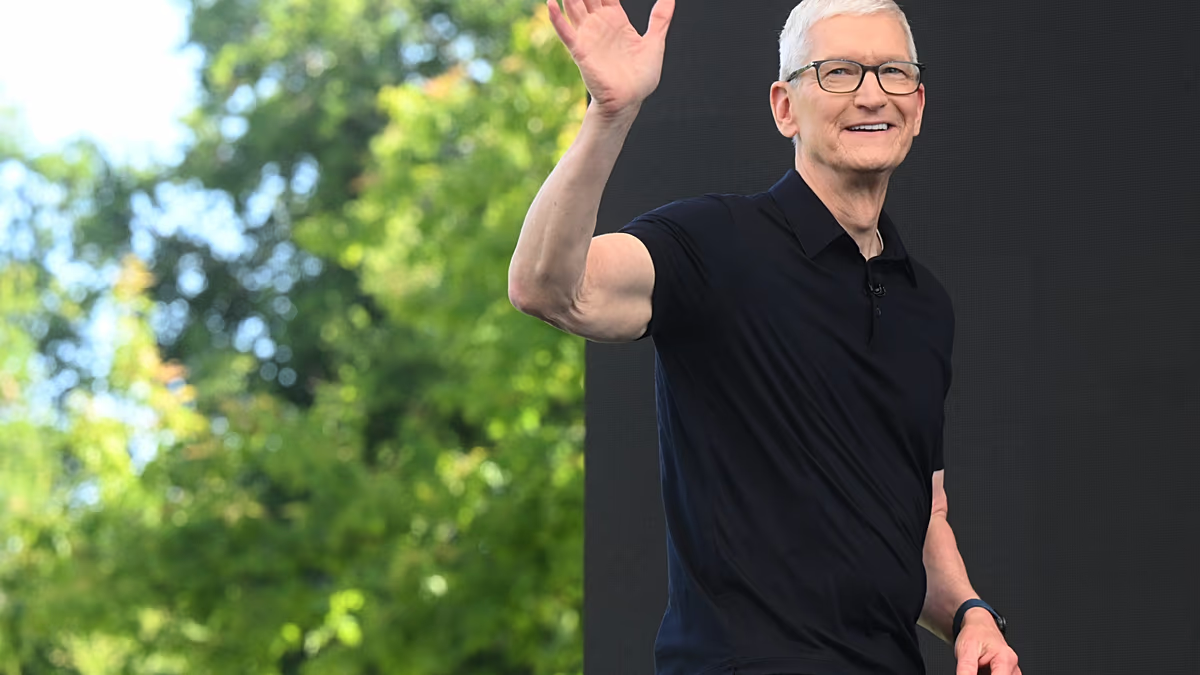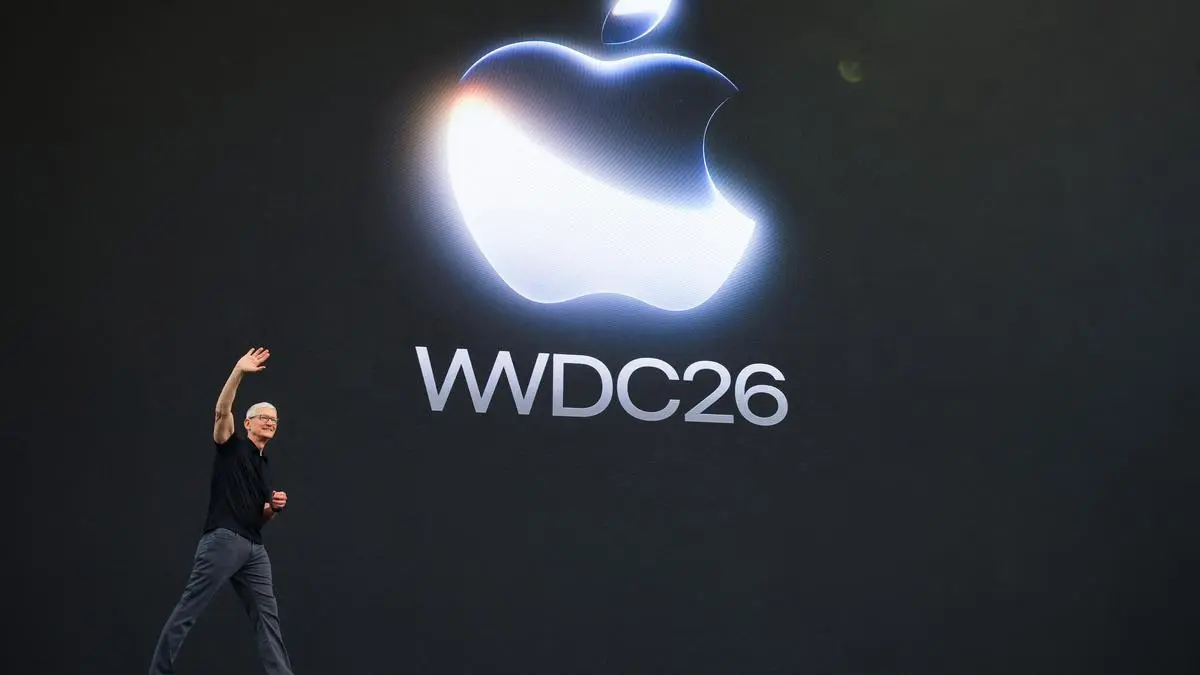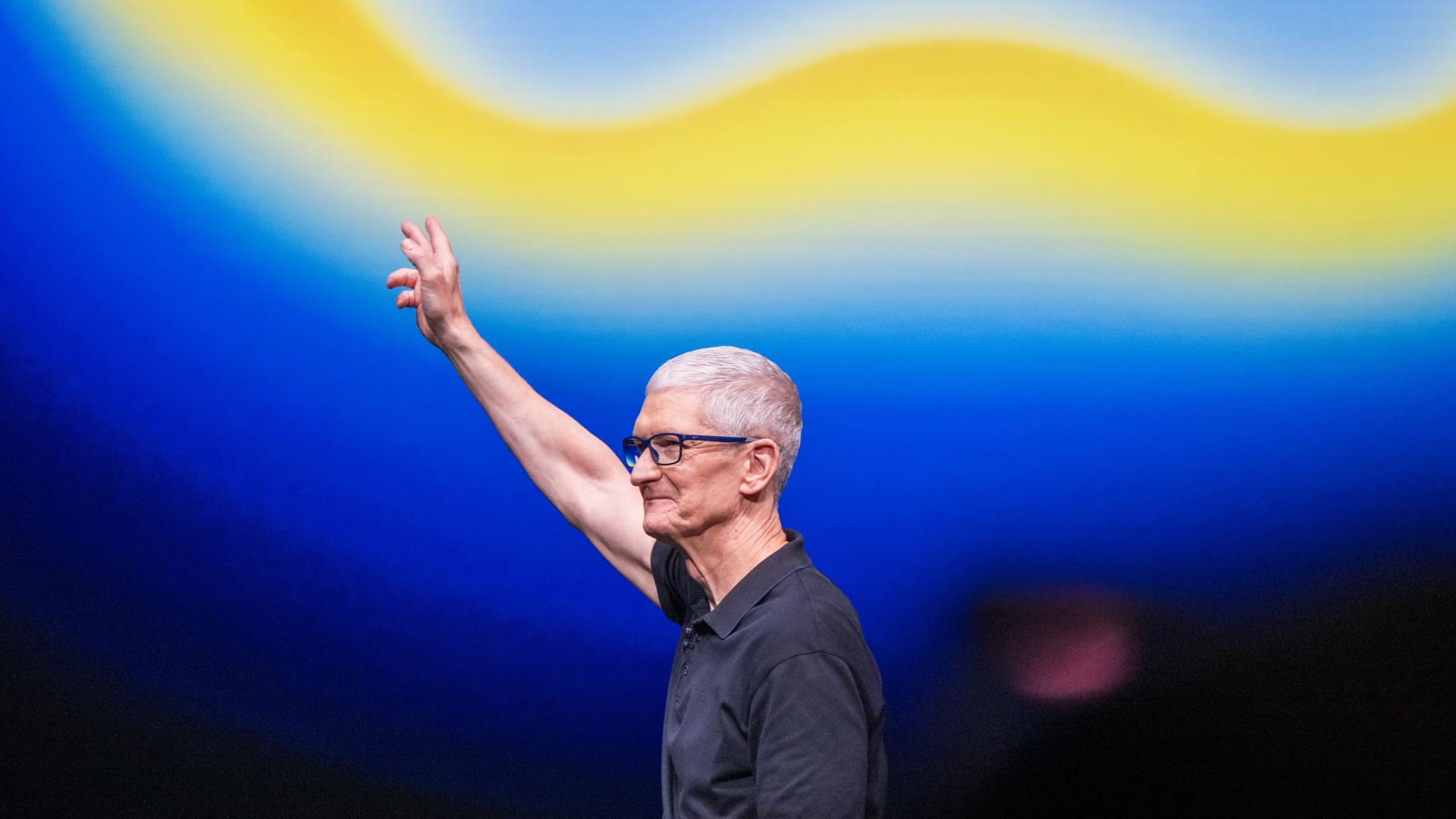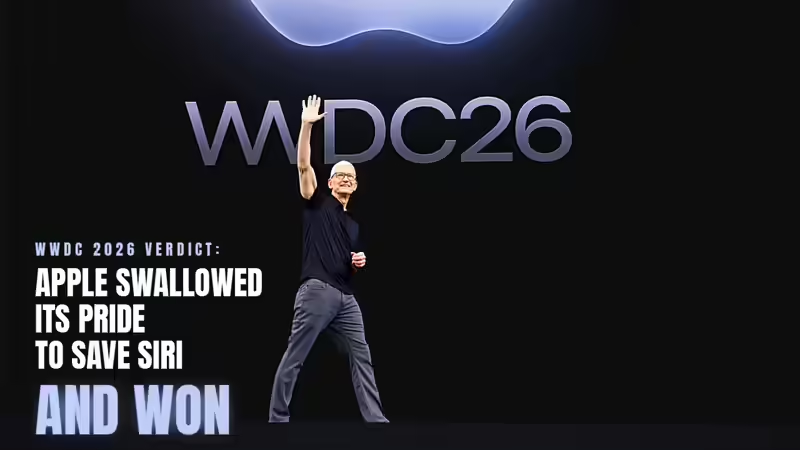
Image credit: Apple The man wiped a tear from his eye in front of the world's developers, and the strange thing is that it felt earned. Tim Cook has fronted fifteen of these keynotes, most of them as a master of ceremonies introducing other people's genius, and on 8 June he stood at Apple Park for the last time as chief executive and told the room, in his farewell, that developers "have helped people connect, create, learn, and experience the world" in new ways. Exit, stage left, after a 28-year run — the longest residency in the theatre's history, the final performance timed to land in the same week the company finally fixed its most embarrassing prop.Be clear about what WWDC 2026 was. It was a redemption play staged with the precision of a closing-night production: the ageing lead taking his bow, the understudy — John Ternus, CEO from 1 September — standing in the wings with the script already memorised, and at centre stage, under the brightest light Apple could rig, the character everyone had written off in the second act. Siri. Dead since roughly 2016, mourned by approximately three people, suddenly upright and speaking in full sentences.Key TakeawaysSiri AI is the headline act of iOS 27: conversational, contextual, multimodal, with a standalone app and customisable expressive voices, arriving as a gated English-first beta before a September general release.Apple's third-generation Foundation Models do the talking; Google's Gemini frontier models did the teaching. Craig Federighi spent an exclusive post-keynote session dismantling the "Siri runs on Gemini" shorthand slide by slide.AFM Cloud Pro, the heaviest model, runs on Nvidia GPUs inside Google's cloud — wrapped in Private Cloud Compute, Nvidia confidential compute, Intel TDX and two hardware roots of trust.iOS 27 is the Snow Leopard play: 30 per cent faster app launches, 70 per cent faster Photos, 80 per cent faster AirDrop, and a thousand-line word wall of refinements including Hindi and Marathi Scribble support.This was Tim Cook's final WWDC as chief executive. John Ternus takes the corner office on 1 September, and the keynote doubled as a handover ceremony with a lump in its throat.The week ran heavy on these closing-night touches. At the developer centre I watched Cook work the room like a frontman on a farewell tour, posing for individual selfies with more than 50 media attendees — every shot framed with the patience of a man who had stopped checking his watch for good. When my turn came, he told me he loves the energy in India — unprompted, the second time he had said it to me that week — and then offered something that sounded less like media handling and more like a man taking inventory: that among his favourite things at Apple has been interacting with upcoming developers bringing in new innovations. Hold that line. It pays off in the grounds of Apple Park. Executives at this altitude usually treat the press like turbulence. Cook treated us like the audience that had bought every ticket since 2011, and the difference between performance and gratitude was, for once, invisible.The Most Honest Keynote Apple Has Ever StagedWWDC 2026 was the finest keynote of the Cook era because it was the most humble — fight me. For two years Apple ate criticism over Siri the way the rest of us eat breakfast. The 2024 promises slipped. The 2025 keynote tap-danced around the hole where an assistant should be. Wall Street sharpened its pencils, Bloomberg sharpened its knives, and somewhere in Cupertino a decision was made that ranks among the bravest in the company's 50-year history: admit the home-grown approach had failed, write Google a cheque reported at $1 billion a year — then gut the leadership that presided over the mess and rebuild the whole thing in eighteen months flat.Companies the size of Apple — worth more than the GDP of most G20 members — are constitutionally incapable of this kind of honesty. Their immune systems reject it. Yet there was Craig Federighi on keynote day, presenting Siri AI as though the previous decade of "I found this on the web" had happened to some other company, and there he was again the next morning in a small room with some of the biggest names in technology writing — Gadgets Now among them — taking apart the convenient shorthand that had formed overnight. The shorthand said Siri now runs on Gemini. Federighi's correction was surgical, and his phrase about Google's deployed assistant stack — "the amount of the Google assistant we use, which is none" — was the most quotable sentence of the week.So Whose Voice Is Actually Coming Out of Your iPhone?Apple's own, and the distinction matters more than any spec on the slide. Think of it the way a rock band thinks of a record. Gemini is the legendary producer brought into the studio — the Quincy Jones figure who listens to the rough cuts, tightens the arrangements, and teaches the band things about their own sound they had missed for years. Apple Foundation Models, third generation, are the band. The fingers on the fretboard are Apple's. So is the name printed on the sleeve. What Amar Subramanya — Apple's VP of AI, the Bangalore University graduate who once ran engineering for Gemini itself and whom I interviewed at Apple Park — confirmed in the session is that the AFM family was "refined using outputs from Gemini frontier models". Distillation. The producer teaches; the band plays. The microphone stays with Apple.The voices are where you hear the difference, literally. Siri AI ships with new expressive voices you can tune for pace and personality, animated through the Dynamic Island when working a request, summoned by a swipe down from mid-screen, and given a permanent home in a standalone Siri app that remembers your conversations and follows you onto iPad and Mac. The answers run longer, the back-and-forth holds context, and the assistant can at last see what is on your screen and act on it.Pause and remember what we are upgrading from. For a decade, asking the old Siri anything harder than the weather was like asking a labrador to file your taxes — boundless enthusiasm, a few seconds of promising activity, and then something arrived chewed. You asked for your mother and it rang your mortgage broker. You asked for a restaurant and it offered, with the serene confidence of a sommelier, a web search. You set two timers and it kept one, like a bookie. This was the assistant on the most expensive phone money could buy, and Apple sold two billion devices with it anyway, which tells you something magnificent and slightly terrifying about brand loyalty. Against that history, the demo at Apple Park felt less like an update and more like an exorcism.The architecture underneath is clever, and I say that as a man professionally obligated to roll his eyes at keynote diagrams. A system orchestrator sits inside the OS and routes every query to the right model: AFM Core and the new AFM Core Advanced on the device itself, AFM Cloud as the server workhorse, and AFM Cloud Pro for the heavy reasoning. Core Advanced is the headline trick — a 20-billion-parameter model built sparse, lighting up only one to four billion parameters per request, which is how those new expressive, customisable Siri voices run entirely on the phone. Federighi called the orchestrator "key to the privacy architecture of our entire system", and for once the privacy talk has visible engineering under it: Cloud Pro runs on Nvidia GPUs inside Google's cloud, yet wrapped in Private Cloud Compute extended with Nvidia confidential compute, Intel TDX, and two separate hardware roots of trust. Apple built a vault, parked it in a rival's basement, and kept both keys.The Burning Question: Who Captured Whom?The strategic read is where this gets delicious, because both Cupertino and Mountain View walked away convinced they won. Google banks a billion dollars a year and the quiet validation that its models are the industry's teaching standard. But look at where the customer relationship lives. The orchestrator — the layer that decides which model answers you, which sees your personal context, which holds the privacy guarantee — belongs to Apple. So does the interface, the new Siri app, the swipe-down gesture, the animation in the Dynamic Island. In the platform era the lesson was that owning distribution beats owning content. The lesson forming in front of us now: owning orchestration beats owning the model. Models are turning into session musicians — superb players you book by the hour and replace by Tuesday. The band that owns the stage keeps the franchise. Apple just demonstrated you can outsource the genius and keep the throne.History grades this exact manoeuvre on a curve set in 1980. IBM, in a hurry to ship a personal computer, licensed an operating system from a tiny outfit called Microsoft — and left in the clause that let Microsoft sell MS-DOS to every IBM clone on Earth. Within a decade the hardware colossus had become a commodity box-shifter and the supplier owned the industry. Every technology licensing deal since has lived in the shadow of that catastrophe, and Apple's lawyers have plainly studied the autopsy. Distillation rather than deployment — Gemini as teacher rather than tenant. The orchestrator, the interface and the customer relationship all held in Cupertino. Apple structured the one version of the IBM deal where the supplier stays a supplier. Google got the cheque. Microsoft, in 1980, got the future. The difference is the whole game.One hedge sits in the fine print. Pre-keynote reporting described the heaviest model as a licensed 1.2-trillion-parameter Gemini that Apple's own servers lacked the muscle to run. The on-record account from Federighi's team is narrower and considerably more flattering to Apple. The gap between those two stories is the single most important thing to watch when Siri AI exits its gated beta. Apple has earned the benefit of the doubt this week, and only that.The Extensions framework is the quiet second front. iOS 27 opens the iPhone to third-party AI — the door through which ChatGPT, Claude and Gemini's own app walk onto the platform as guests rather than gatekeepers. Every rival model becomes an act booked into Apple's venue, playing by Apple's stage rules, paying Apple's door. The same company that spent two years behind in the AI race ended this week owning the most valuable real estate in it — the default position on a billion-and-a-half active devices. Aggregators win by owning demand. Apple just reminded everyone it owns more demand than anybody.Wall Street, for the record, responded to all this with the enthusiasm of a cat shown a calendar. Apple shares opened the day up around 2 per cent and turned negative during the keynote itself — a slide that began somewhere between the privacy diagrams and the parental controls. I find this oddly reassuring. Markets have priced software keynotes at zero since the dawn of the genre; they wanted a folding phone and got a faster Photos app. The investors selling on Monday afternoon were grading the show. The story that matters gets graded in September, when Siri AI meets a billion impatient users with thick accents, patchy networks, and contempt accumulated over a decade of "I found this on the web". That is the earnings call that counts.iOS 27 Is the Fastest Apology in the BusinessThe rest of the keynote belonged to the rest of humanity — the people who would struggle to pick a parameter out of a police line-up and simply want the phone to stop wheezing. iOS 27 is Apple's Snow Leopard move — the fabled 2009 release that marketed "no new features" and delivered a decade of stability — except this one arrives with receipts. App launches 30 per cent faster. Photos appearing in the library 70 per cent faster. AirDrop transfers 80 per cent quicker, file transfers to external drives five times quicker. After the Liquid Glass turbulence of 2025 — the overheating complaints, the animation stutters, the general sense of an OS wearing a suit two sizes too flashy — this is Apple doing the unglamorous thing: opening the bonnet and rebuilding the engine instead of repainting the badge.The word wall tells the real story. Apple publishes this thing every year — hundreds of micro-features in eight-point type — and every year it rewards the obsessive reader. This year's wall is a masterpiece of the form. Perimenopause and menopause logging arrives in the Health app, years overdue and consequential for half the species. Shortcuts gains "Else if" support, which means Apple shipped a basic programming construct in 2026 to an automation tool it launched in 2018, and somewhere a computer science professor is weeping into his terminal. Photo Shuffle now lets you choose a specific pet, a feature I guarantee was demanded internally by an executive with two dogs and a favourite. AirPods get Custom EQ. GymKit lands on iPhone and AirPods Pro 3. The Passwords app goes agentic, marching off to websites on your behalf to fix your disgraceful credentials. Child accounts become mandatory under 13. Each of these lines hid below the keynote's sightline; every one of them makes the phone better.Where Does India Sit in All This? Closer to the Stage Than EverFront row, and for the first time the invitation looks personal rather than commercial. Start with the wall: Scribble support for Hindi and Marathi with Apple Pencil — handwrite in Devanagari and watch it become text. Alternate calendars for India now hold your home time zone while you travel. Natural language time formats arrive for Hindi. Call recording transcription expands. These are small lines in small type, and they represent something Apple India watchers have waited a decade for: localisation as engineering priority rather than marketing checkbox.The bigger signal arrived a day before the curtain rose, and Gadgets Now was the only outlet watching. Gayatri Goundadkar, a 20-year-old Swift Student Challenge Distinguished Winner from Pune, stood in the grounds of Apple Park on 7 June with an iPad and demoed Steady Hands — an Apple Pencil app that reads hand tremor in real time and lifts the shake out of artwork, built for her grandmother who paints in the Warli tradition. Susan Prescott brought Tim Cook over. The schedule allotted four minutes. Cook stayed past ten, querying her about PencilKit and the Accelerate framework with the attention of a man whose calendar had surrendered, while John Ternus — the incoming CEO — watched. Remember what Cook told me at the developer centre about his favourite part of the job. This was that sentence made flesh. The same week, Bijoy Thangaraj's Guitar Wiz took an Apple Design Award for inclusivity.Hold both halves of that picture together. Apple booked record India revenue in the quarters running up to this handover, built on a manufacturing bet that turned Indian factory lines into the second pillar of the iPhone supply chain. For fifteen years that was the whole India story: the factory floor, the export number, the PLI scheme arithmetic. The arc of this WWDC says the next chapter gets written in Swift, in Pune and Bengaluru, by a generation that skipped the assembly line and went straight to imagination. Whether Apple resources that developer pipeline at the scale of its manufacturing bet is the question I intend to put to Ternus for the next five years.The InheritanceThe succession, then. The final scene. John Ternus inherits, on 1 September, the most enviable hand any incoming chief executive has been dealt this century: record iPhone numbers, an India business compounding like interest, a Mac line that completed its Apple Silicon crossing this very week — macOS 27 Golden Gate runs on Apple Silicon alone, and four Intel machines were quietly shown the door, closing a chapter opened in 2020. He also inherits the one prize that eluded Cook through fifteen keynotes: an AI story with a working product at the end of it.But study the staging of that post-keynote session, because Apple choreographs rooms the way directors block scenes. Federighi at the lectern. Subramanya, Mike Rockwell and Sebastian Marino-Mess as the engineering chorus. Greg Joswiak at the side. Ternus seated among them — present, observing, learning the material. And Tim Cook in the audience, watching other people explain the future of his company, already letting go. The tear at the keynote was for the developers. The seat at the back of that session was the real farewell: the moment a chief executive becomes a spectator at his own theatre.He even told me what comes next, and it is perfect. Once the transition completes and Ternus takes over, Cook said, he plans to watch a lot of American football. Read that again. The man who ran the most scrutinised company on Earth for fifteen years — who spent his autumns launching iPhones into the teeth of Wall Street expectations — intends to spend them watching other people get tackled instead. After a 28-year run on this stage, the encore is a Sunday on the sofa. Even the greatest showmen eventually swap the theatre for the stadium.Siri AI ships in gated beta later this year, English first, general release expected with iOS 27 around September — the same month Ternus takes the stage as the lead. If the assistant performs in the wild the way it performed at Apple Park, this week will be remembered as the moment Apple traded its pride for its future and got the better end of the deal. If it stumbles, the company has at least taught the industry one unforgettable lesson on its way down: the bravest thing a 50-year-old giant can do is stand in front of the world, admit the song was out of tune, and hire the best producer money can buy.Frequently Asked QuestionsWhat is Siri AI and when does it launch?Siri AI is the rebuilt assistant unveiled at WWDC 2026 on 8 June — conversational, contextually aware, multimodal, with a standalone app and customisable expressive voices. It ships as a gated English-first beta later this year, with general release expected alongside iOS 27 around September 2026.Does the new Siri run on Google Gemini?Siri runs on Apple's own third-generation Apple Foundation Models. Gemini frontier models were used to refine them through distillation, and the heaviest model, AFM Cloud Pro, runs on Nvidia GPUs inside Google's cloud under Apple's Private Cloud Compute privacy architecture. Craig Federighi stated Apple uses zero of Google's deployed assistant stack.What are the biggest iOS 27 improvements?Speed and stability lead: 30 per cent faster app launches, 70 per cent faster Photos library loading, 80 per cent faster AirDrop, five times faster file transfers to external storage, plus Liquid Glass refinements, mandatory child accounts for under-13s, an agentic Passwords app, and hundreds of smaller features.What India-specific features arrived at WWDC 2026?Scribble handwriting support for Hindi and Marathi with Apple Pencil, alternate Indian calendars that hold your home time zone while travelling, natural language time formats for Hindi, and expanded call recording transcription. India also featured through Pune's Gayatri Goundadkar, who demoed her Steady Hands app for Tim Cook.Was this really Tim Cook's last WWDC as Apple CEO?Yes. Apple announced on 20 April 2026 that John Ternus becomes chief executive on 1 September 2026, with Cook moving to executive chairman. Cook closed the keynote with an emotional farewell to developers.Which Macs lose support with macOS 27 Golden Gate?macOS 27 runs only on Apple Silicon — M1 or later. Four Intel machines are dropped: MacBook Pro 16-inch (2019), MacBook Pro 13-inch (2020), iMac (2020) and Mac Pro (2019). Intel Macs remain on macOS Tahoe with security updates.end of article
WWDC 2026 Verdict: Apple Swallowed Its Pride to Save Siri and Won
Apple's WWDC 2026 showcased a revitalized Siri AI, a major upgrade for iOS 27. This event marked Tim Cook's farewell as CEO, with John Ternus set to take over. The new Siri promises conversational and contextual interactions. Apple collaborated with Google for AI model development, ensuring advanced capabilities. This marks a significant step for Apple's AI future.
3,277 words~15 min read