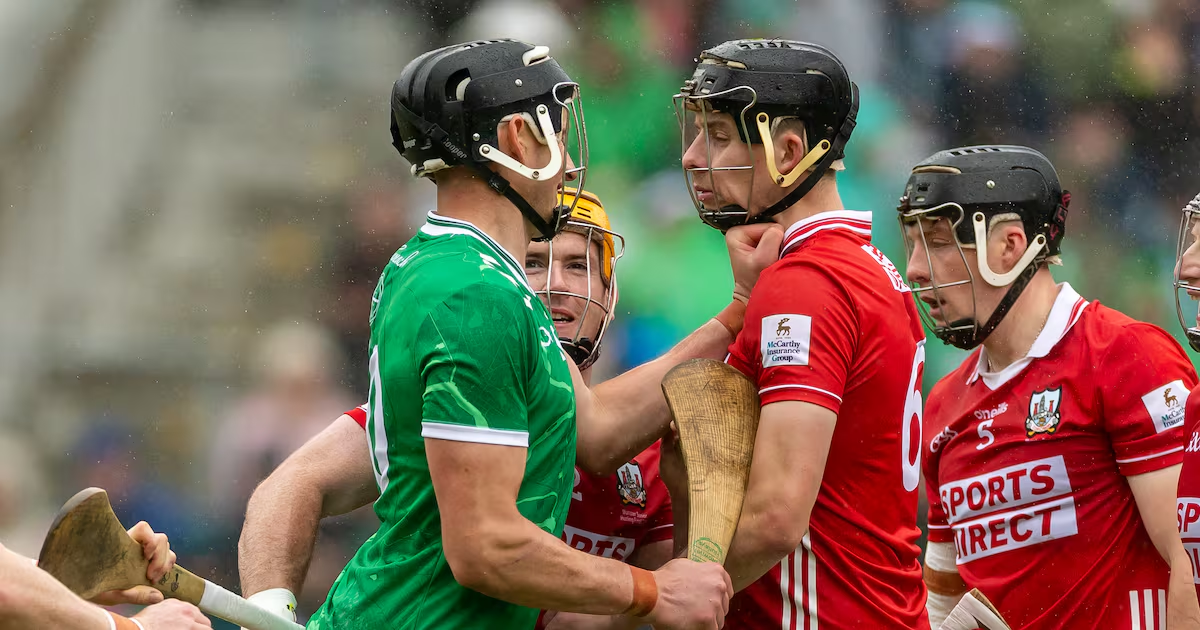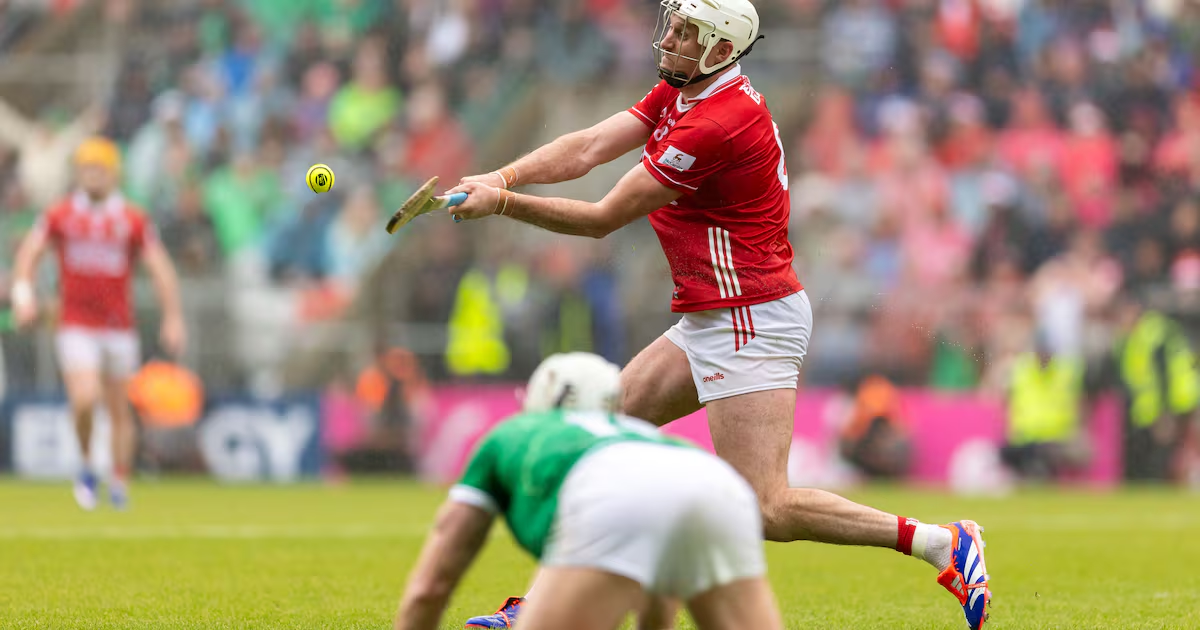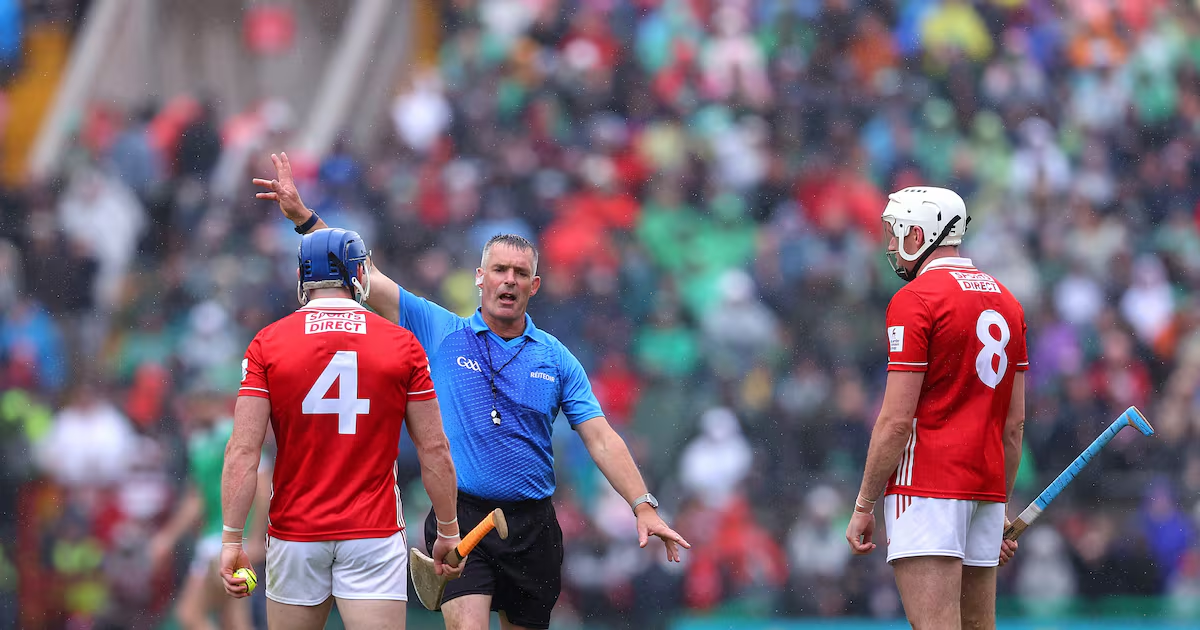
The ugliest sight on Sunday in Páirc Uí Chaoimh came at the end, as James Owens and his team approached the tunnel under the South Stand. The booing was loud and unsparing. Rows and rows of grown men leant over the wall, roaring abuse and finger-pointing at the referee as he walked off.It was, granted, a day of high intensity, swirling emotions and razor-thin margins. At the end of a one-point Munster final, tensions are always going to be at fever pitch, particularly when the endgame was as messy and contested as this one was. Owens’s decision to call time while the ball was in the air for Cork’s last attack was undoubtedly correct – the clock had run over two minutes past the five he’d signalled. But the Cork crowd didn’t want to hear it by then.They had long since decided that Owens was ruining their day. Ben O’Connor came into the press conference afterwards and complained that he didn’t feel Cork had committed double the amount of fouls that Limerick had. He was right, they didn’t. But nor had they conceded double the amount of frees. The final count was 18-13 against them. Was that total a fair reflection of the game? The manic half-hour after the final whistle was no time to hope for accuracy in that assessment. Too much adrenaline flowing, too many slights and grumbles flying around in the ether. But what happens after a good night’s sleep, a mug of decent coffee and a review of the video? Let’s find out.We sat down on Monday morning and went through every free awarded – as well those where Owens kept his whistle down from his mouth. In one sense, this is deeply, deeply unfair on the Wexford referee. There were 36 players on the pitch in Cork on Sunday and two managers on the sideline – none of them are having their performance examined in minute detail and none of them would appreciate the intrusion if it happened.Referee James Owens with Cork players after the final whistle against Limerick. Photograph: Tom O’Hanlon/Inpho But since Owens became such a lightning rod for criticism after the game, it feels only right that his calls should be analysed. Not to add to the pile-on, more to give an accurate breakdown of what happened. If you’re going to hammer the ref, you better be sure of your ground.So here it is. Owens gave 31 frees in the game. Of those, 23 were absolute, stone-cold, no argument decisions. As it happens, three of those 23 were initially criticised by either commentator Marty Morrissey or Brendan Cummins on co-comms, before one or other of them rowed back upon seeing a replay. Owens, of course, saw no replays.Of the remaining eight frees awarded, three were what any reasonable neutral would classify as 50/50 calls. An example would be the time Tim O’Mahony stood up Diarmaid Byrnes by the sideline under the North Stand four minutes before half-time. It wasn’t dangerous, it was more just a physical clash between two huge men and its equivalent was let go several times in the game. Byrnes wouldn’t have been crying if he hadn’t got it, put it that way.The 50/50 calls are one place Cork can legitimately feel a little aggrieved. All three of them went Limerick’s way. Had Byrnes been done for overcarrying instead, it would have been a free in for Cork on the Limerick 45. Out by the sideline, so no gimme. But scoreable, no question.That leaves five frees over the course of the game that were, to these eyes anyway, simply the wrong call. Four of these resulted in frees awarded against Cork, two against Shane Barrett and one each against Seán O’Donoghue and Alan Connolly. The one against O’Donoghue in the 42nd minute was particularly harsh, since Aaron Gillane grabbed his arm going down and should have conceded a free out. O’Donoghue paid a heavy price too – already on a yellow, he was hauled ashore almost immediately.Two calls in particular infuriated the Cork crowd, just short of the hour mark. They were both down by the Limerick endline as first Seán Finn and two minutes later Darragh O’Donovan came out with the ball. Connolly’s challenge on Finn was feather-light. O’Donovan bought his free from Barrett, ducking into his oxter and collapsing to the floor. Neither of them were fouls, plain and simple.Referee James Owens yellow cards Seán O'Donoghue of Cork. Photograph: James Crombie/Inpho Two of these wrong calls resulted in points for Limerick. On the Cork side, they were awarded one free in error – against Byrnes in the second half when Barrett was holding his arm on the way. Connolly slotted it between the posts.And what about the non-calls? Well look, in any game of hurling, you can see dozens more frees than are actually given, if that’s what you’re into. For the most part, it isn’t what hurling people are into. Indeed, the most widely-held gripe against Owens on Sunday was that he called too many frees and should have swallowed the whistle a bit more.But for what it’s worth, we counted another nine times in the game where he could have called fouls. Five of those would have resulted in a free for Cork, four of them for Limerick. That’s without counting the Limerick claims for a penalty in the first half, which looked more or less the equal of the one given to Cork at the other end.So, what does it all mean? The free count was 18-13. Three 50/50s went against Cork, four wrong calls went against them too, costing them a net total of two points. Including the penalty, the balance of non-calls against the two sides more or less evened themselves out over the course of the day.That said, Owens clearly didn’t have a great game. After going the first 12 minutes of the first game between these two teams last month without giving a single free, he was in more pedantic form on Sunday. He got himself into a bind by calling small fouls early. Even though they were mostly correct, he walked himself into a Pringles performance – once he popped, he clearly felt he couldn’t stop.Did he cost Cork their Munster title, though? Well, if you’re red-nosed and spittle-flecked from screaming like a loon as Owens walked down the tunnel, you can certainly decide that’s the case. But in reality, your team went the whole of the second half of a Munster final without managing a single point attempt from play. That probably had more to do with the outcome than anything the referee did.
A foul-by-foul analysis of the frees awarded in the Munster hurling final
A review of the tape shows that Cork can feel slightly aggrieved by the refereeing - but that wasn’t what cost them their title
1,106 words~5 min read