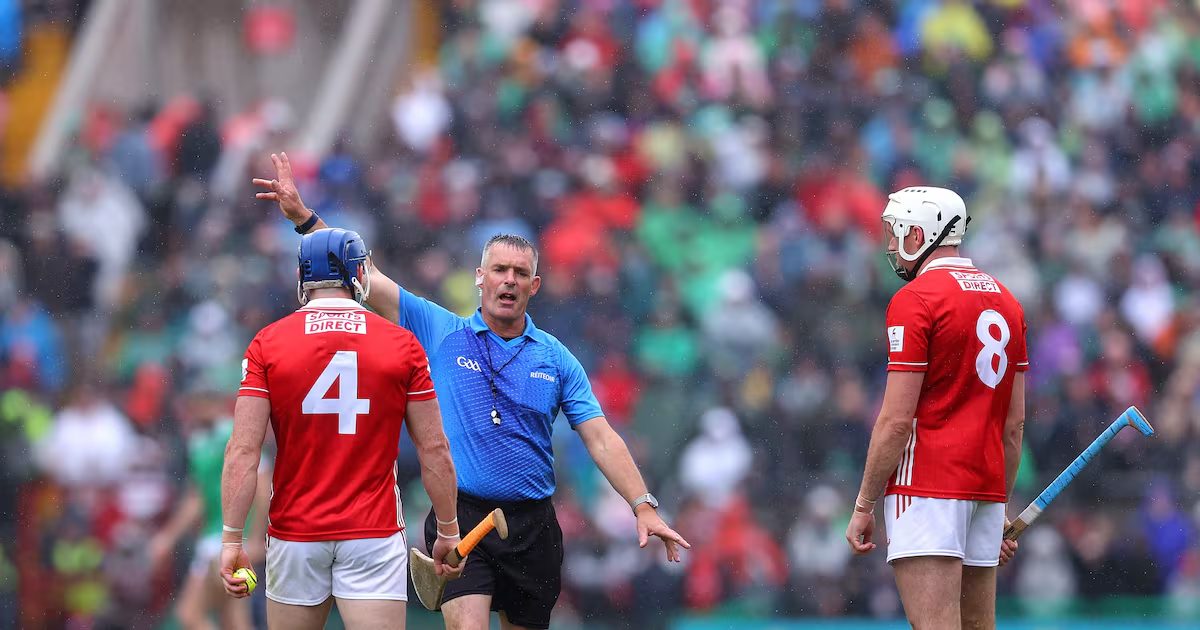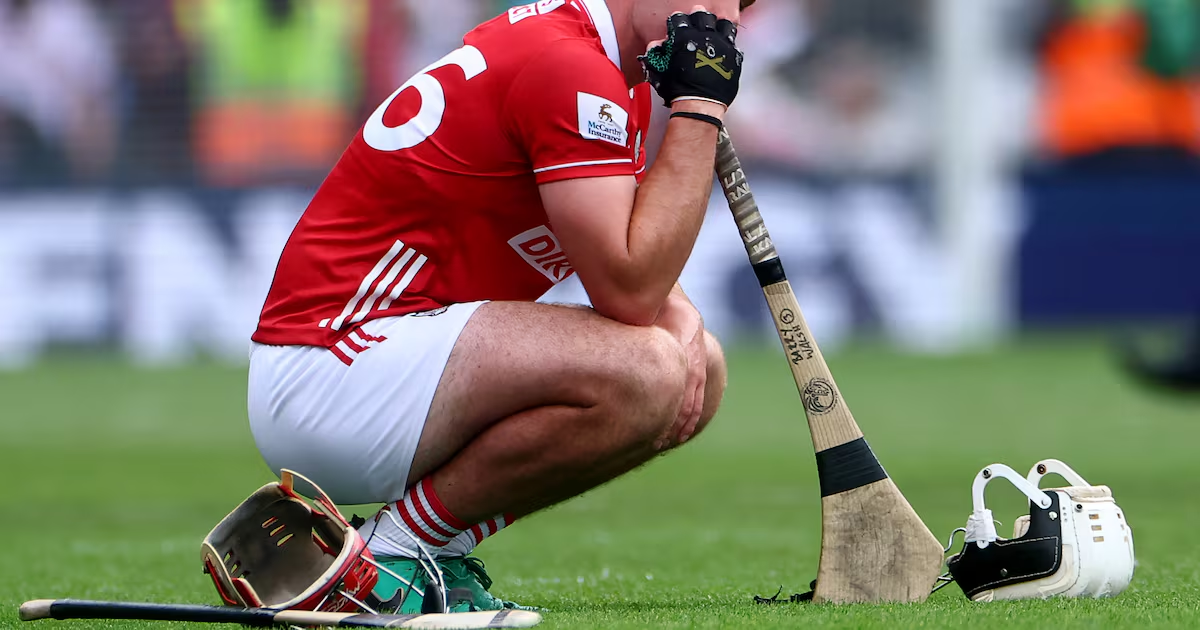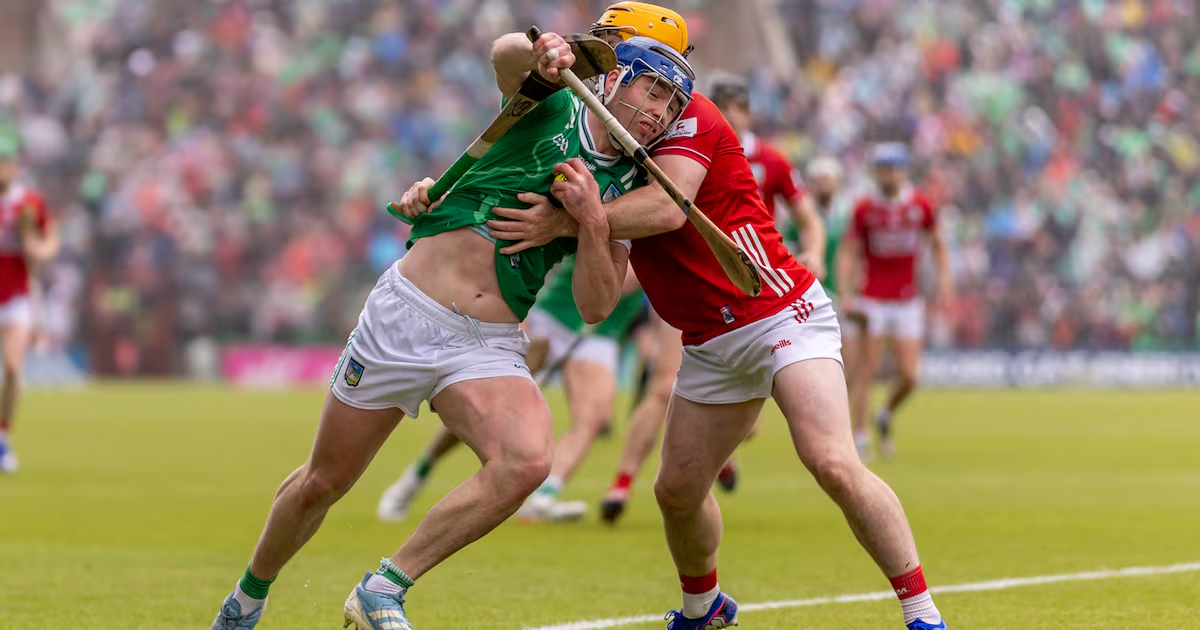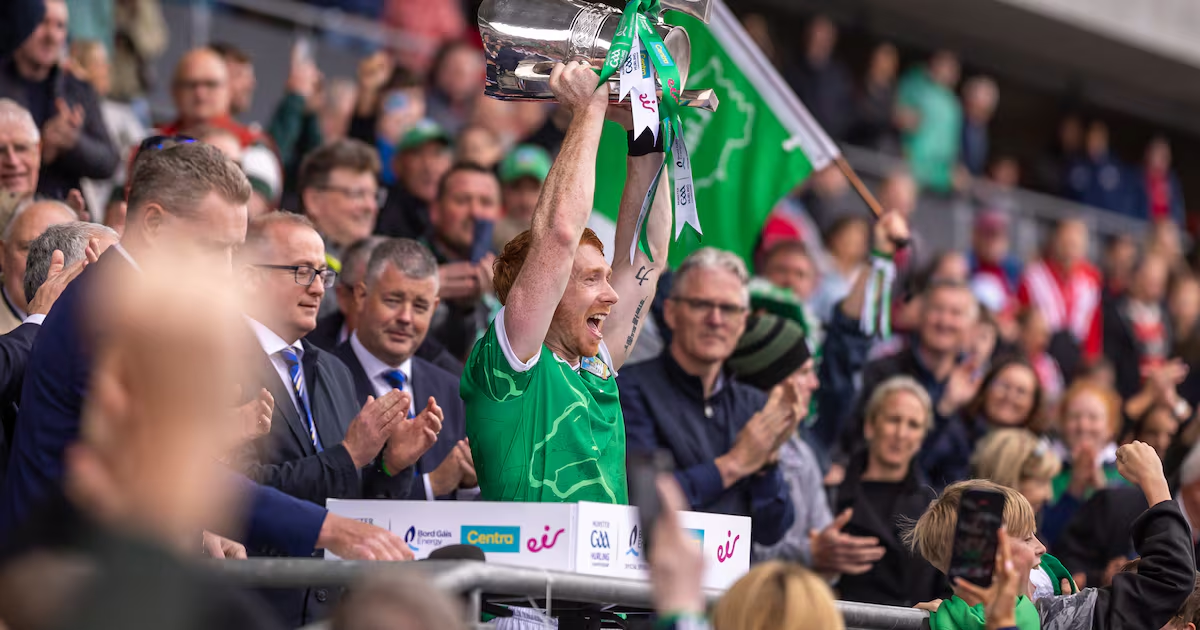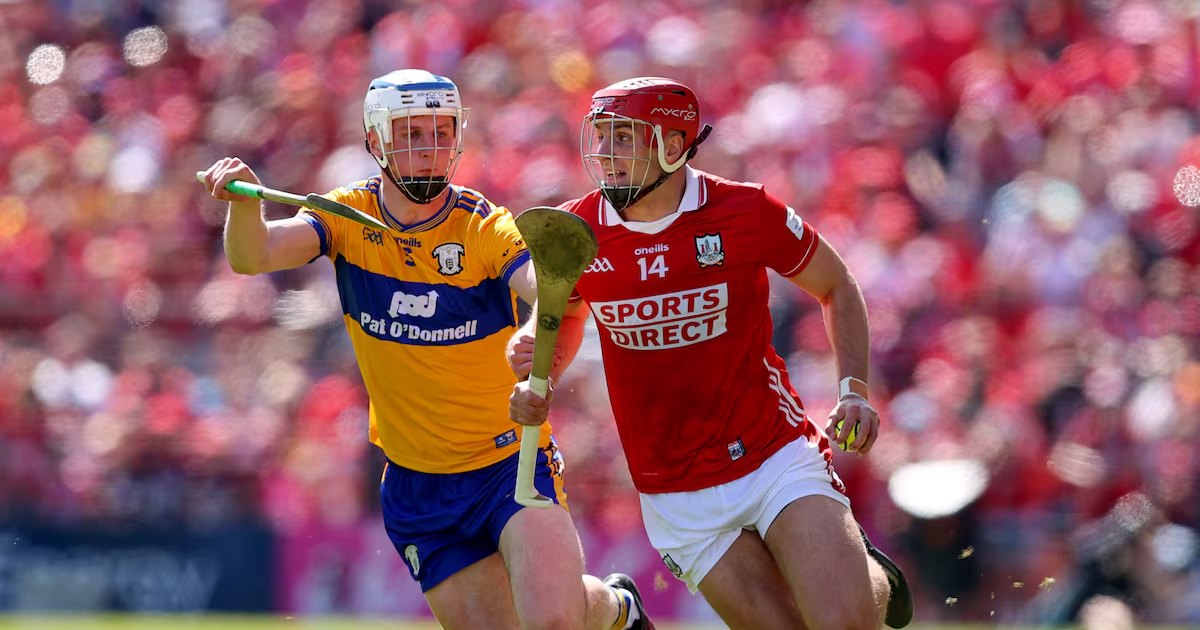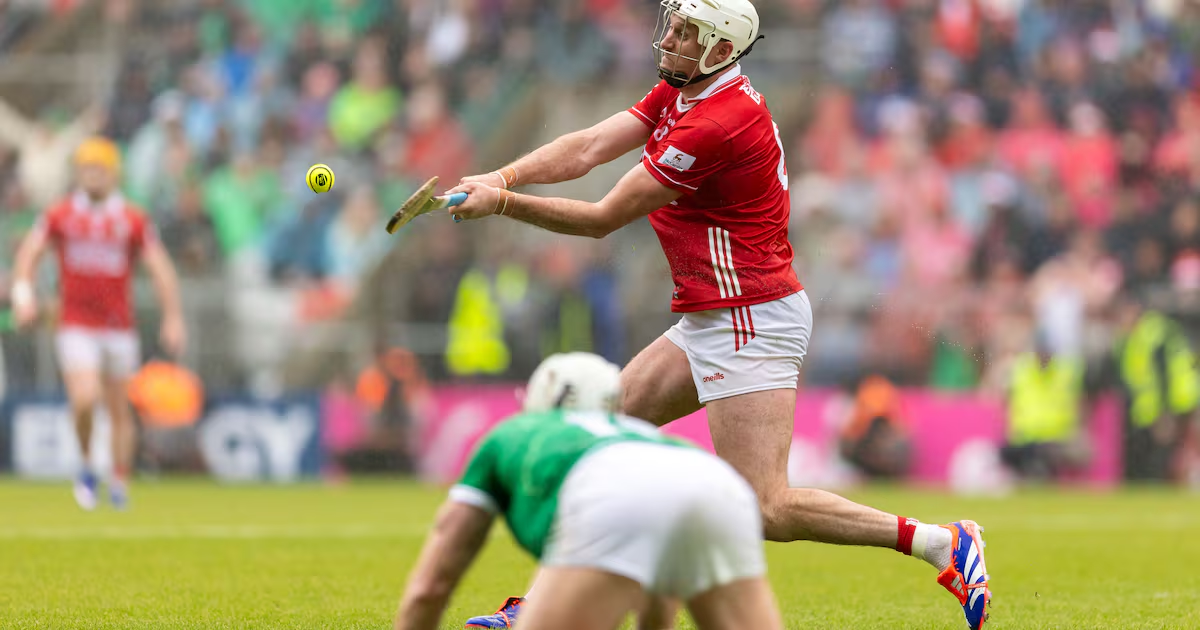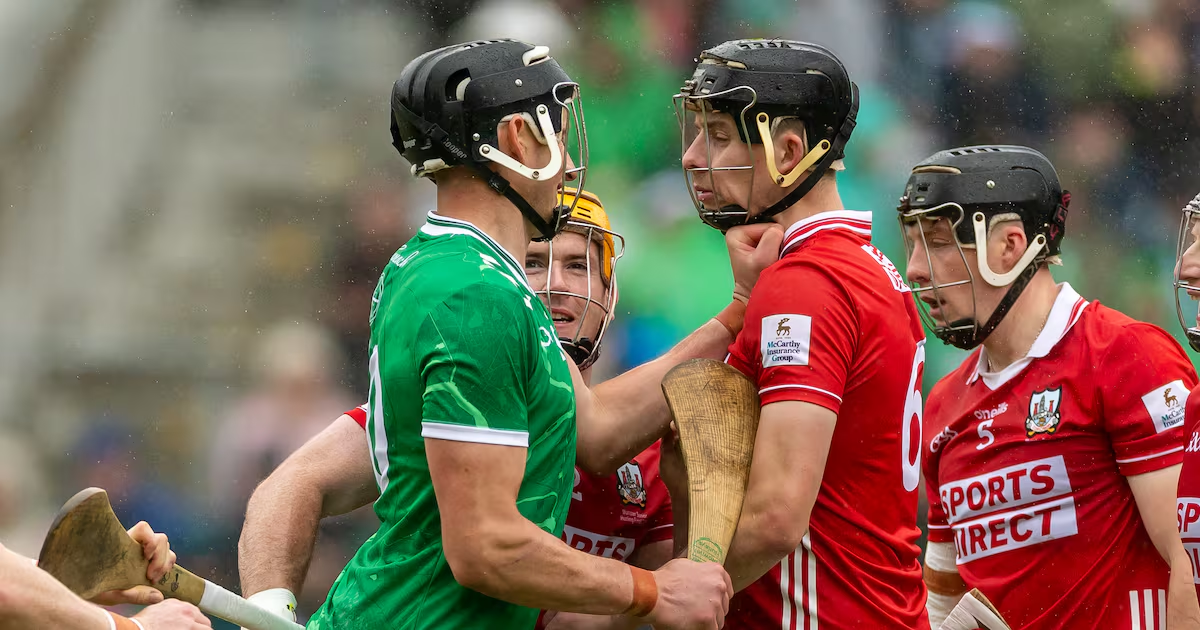
At the end, the Páirc Uí Chaoimh stewards lined the perimeter, sturdy and dogged in their defence of the field. They were adamant there would be no pitch invasion, regardless of how insistent the Limerick hordes were on their need for one. Though the standoff held for longer than you’d think, the green wave overwhelmed them eventually. It was that kind of day by the Lee.Snapshots from a feral afternoon. This was a Munster final whose entire context was framed by the conditions. Incessant mizzle that turned the surface into a skiddy, untameable sheet of glass. Wind that swirled and looped erratically, harder to trust than a fairground chancer giving tarot readings for a fiver. The half-time DJ delighted in it all, striking up Here Comes the Rain Again by The Eurythmics. Thirty players walked in the parade. Nickie Quaid was the only one who covered his hurley with a towel wrapped around it. Or maybe that should be like the old line about Eric Cantona: it wasn’t odd that he wore his collar turned up, it was odd that the others wore it down. Whither or which, Quaid ended the afternoon as Man of the Match.How to make sense of it all? Even the numbers from the day feel a bit upside down. Limerick led just four times in the game – and only once, the final one, for more than a minute. Cork didn’t score a point from play in the second half, yet still got to the 70th minute one ahead. They pucked just a single wide in the game. Has a team ever lost a Munster final on one wide? Or ever won one, come to that?Aaron Gillane was taken off in the 49th minute, held scoreless by Seán O’Donoghue, himself taken off in the 42nd. The Cork defender left the pitch to a hero’s ovation from the crowd, sympathy raining down on the basis that he was only going off because he was on a yellow card. When Gillane followed him soon after, the Limerick crowd were determined not to be shown up. Despite it ranking as one of the least effective outings of Gillane’s Limerick career, they rose to hail him as if he’d scored a hat-trick. It’s a Munster final, after all. You can’t be giving an inch.John Kiely arrived into the press room afterwards looking like a man who’d done an hour juggling knives on a spin bike. We’ve seen him after epic matches before, wins and losses in Munster and in Croke Park, and he’s generally been the picture of above-the-fray serenity. This was a different Kiely. Drained. Exhilarated. Glowing.Cork's Tim O'Mahony with William O'Donoghue of Limerick. Photograph: Tom O’Hanlon/©INPHO “It was a titanic battle,” he said. “We didn’t expect anything else other than that. I suppose no matter how much you prepare yourself, it’s not until you’re inside in the middle of it that you realise this is a real, real, real battle. Everything was contested with all our might, and they contested it with all their might. It was a proper game of hurling, a proper Munster final.“We just had to keep battling and battling and trying to win enough ball to get enough shots. We probably needed to be six points better than them to win by one.”That was how they won it, ultimately. Both goalkeepers pulled off brilliant saves at either end, both teams hit the post. But once the dials stopped whizzing, the basic truth of this final was that Limerick took 42 shots across the afternoon, whereas Cork only took 23. Given that disparity, it was heroic stuff at times from Ben O’Connor’s side to keep their noses in front coming down the stretch. But Limerick deserved their win.O’Connor, like most of his Cork brethren, had things to say about referee James Owens afterwards. To be fair to him, he prefaced it all by admitting up front that he was speaking through Cork-tinted glasses. All the same, he had several bones to pick, mostly around the fact that he felt Cork found it more difficult to win frees. Referee James Owens at the final whistle of Munster final. Photograph: James Crombie/©INPHO “Disappointed after it,” O’Connor said. “I thought a few decisions went against us that we were punished heavily for. Small margins at this level.“I thought it was very stop-start. Thought there was a lot of frees. Did we commit twice as many frees as the opposition? I have to watch back on television. But ye saw it live lads, ye were in the stand above. Did we commit twice as many frees? I’m a Corkman, so I’m saying we didn’t. Ye’re the neutrals, so ye’ll have to make up your mind on that.”Well, since he asks, the free count was nowhere near as weighted against Cork as O’Connor makes out. Cork conceded 18 frees on the day, Limerick conceded 13. A difference, yes. But not twice-as-many of a difference. As well as that, since we’re nitpicking, the home side actually scored more from frees as well – a total of 1-8 including Mark Coleman’s penalty, as compared to 0-7 for Limerick. [ The GAA has too many rules. Just look at the Ger Brennan and Jim McGuinness casesOpens in new window ]But reducing a day like this to beads on an abacus feels small and picayune, like a beat cop collaring pickpockets in the middle of a riot. The roiling, thundering vibe of this Munster final was a more frantic thing, an urgent sense of everyone involved going beyond themselves. Limerick and Cork are the best of sport, thrillingly tangoing their way through hurling summers for eight years now. Six teams left in the All-Ireland. It’s no slight on the other four to start counting the days until these two meet again.
Ben O’Connor’s complaint about free count in the Munster final not backed up by numbers
Cork manager adamant they conceded ‘twice as many frees’ as Limerick but the count was 18-13
968 words~4 min read