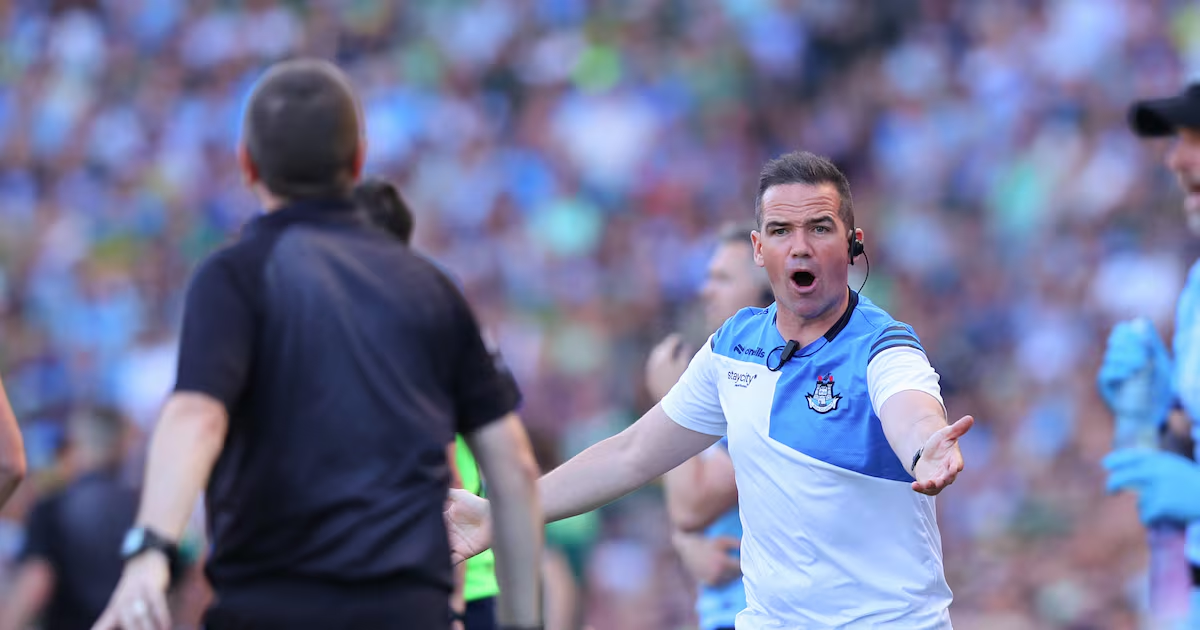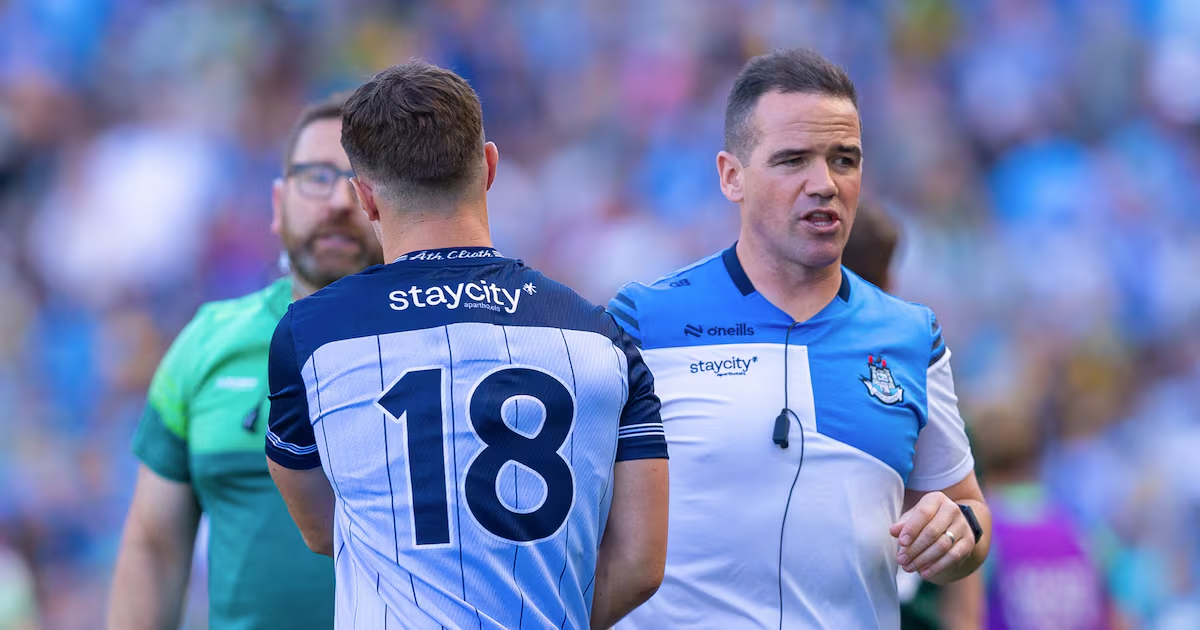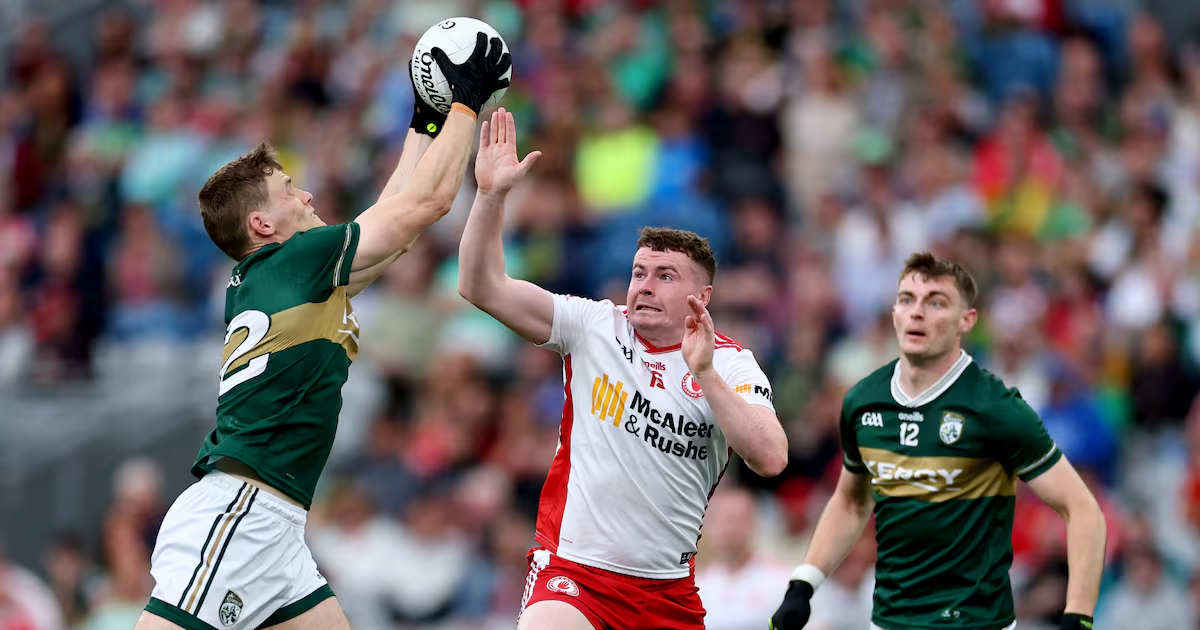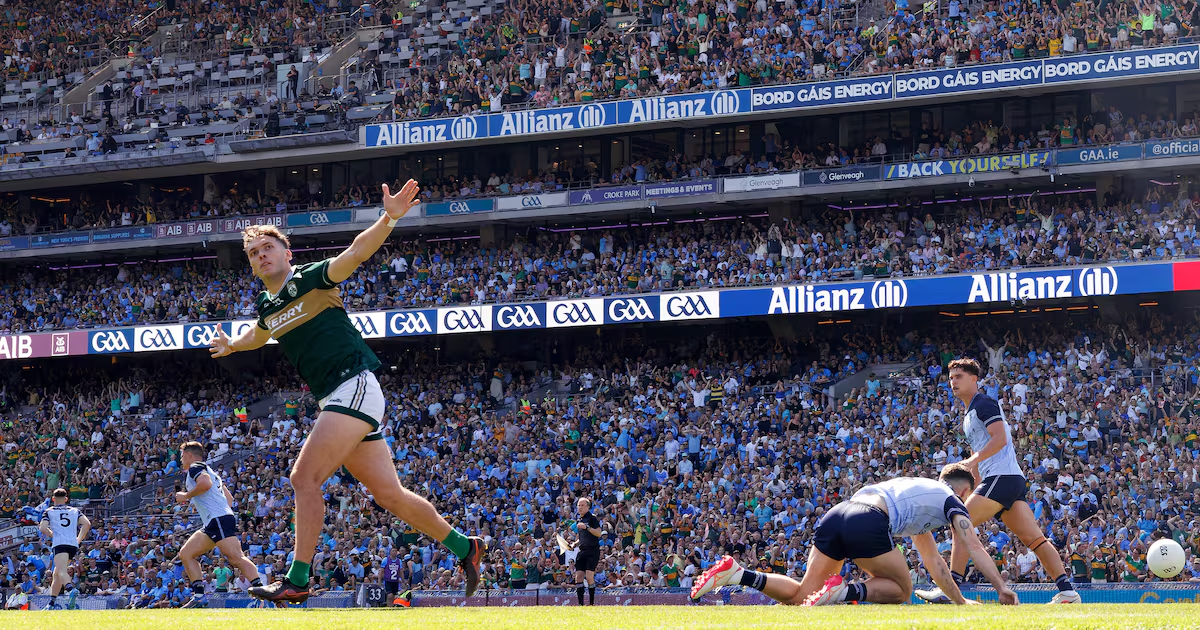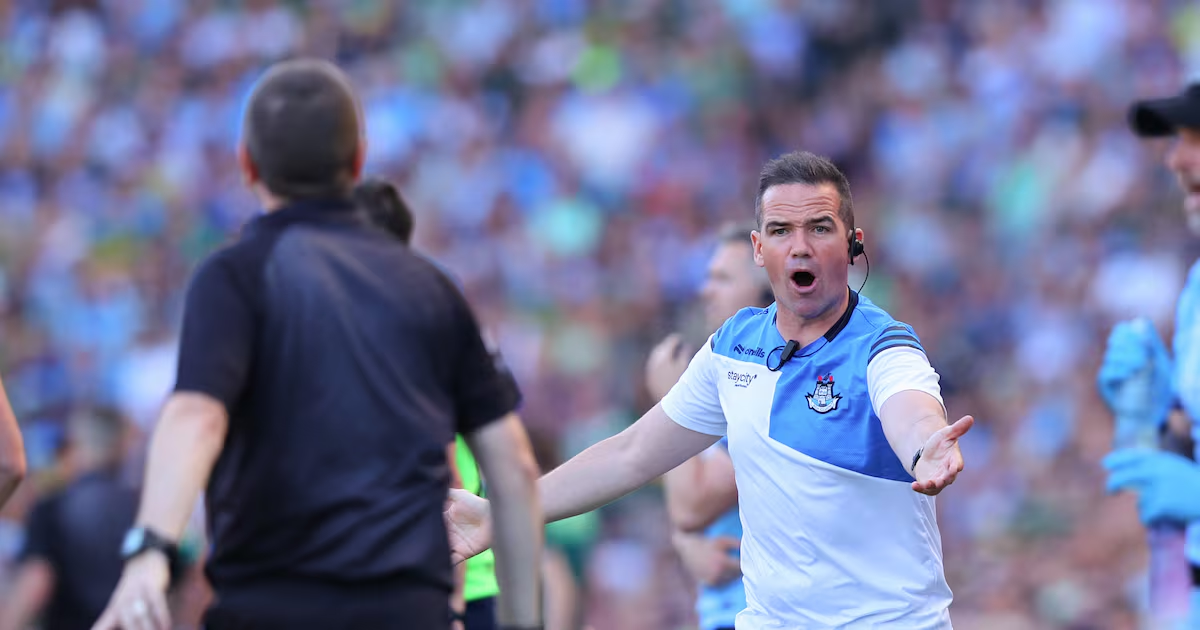
Ger Brennan wasn’t putting a tooth in it in his post-match media conference. The Dublin manager had seen his team come out on the wrong side of three consequential decisions – all to some extent arguable and in the case of Kerry’s second goal - by consensus a square infringement by Seán O’Brien - a cast-iron mistake.“I would feel very strongly that for both sets of players today, and other intercounty players – even hurling as well – some of the games, that video-assisted technology has to come into play for key decisions.“Because there were obviously three key decisions that didn’t go our way today. I feel strongly on that, because I’m trying to explain to our guys down in the dressingroom, who are out on their feet given the effort they put in.”There is something uncompelling about the argument that teams work too hard to be denied by mistakes. The games are subject to human arbitration. Of course, there’ll be errors. It’s not as if the same highly trained players don’t make mistakes themselves.Brennan acknowledged this by twinning potential officiating errors with his team’s mediocre conversion rate but did he have a point: should obvious mistakes not be capable of review?It is not as if this was a freak occurrence. The weekend just gone was the third in a row to be overshadowed by obvious and consequential mistakes.Kerry's Seán O'Brien scores his side’s second goal, which was a blatant square ball. Photograph: Laszlo Geczo/Inpho Two weeks previously in Kerry’s quarter-final, Tyrone had a couple of decisions go against them, which frustrated manager Malachy O’Rourke in the aftermath.“At one stage, the Kerry boys even stopped playing because it seemed so blatant,” he said. This was a reference to a 63rd-minute foul on Peter Teague, which went unpenalised, and Kerry played on and scored through Dylan Geaney.There followed a converted 45 from Paudie Clifford when the ball had clearly gone wide off Diarmuid O’Connor.Eight days later in the hurling semi-final, a crucial decision in the 57th minute saw Limerick goalkeeper Nickie Quaid escape with a yellow card when there were arguments for both a black – ruled out on the basis that Peter Duggan had not been in possession of the ball – and red for a contact with the head.Tony Kelly scored the penalty but had Quaid been off the field for much of the last 10 minutes, the match would have tilted, as Limerick would have been down to 14 and without their traffic controller to direct play in the crucial closing minutes.Clare's Peter Duggan is fouled by Nickie Quaid of Limerick in a moment that generated controversy in the All-Ireland hurling semi-final. Photograph: Tom O’Hanlon/Inpho This weekend, there were three big calls: the penalty awarded to Kerry in the second minute when Joe O’Connor looked to have leaned into Peadar Ó Cofaigh Byrne – not a clearly incorrect decision but one that might have benefited from review; the second Kerry goal, which was an obvious square ball; and Ross McGarry’s touch that was blocked by Paul Murphy and Michael Breen in the goal but from some video angles looked to have crossed the line.The case for video review has as a result become urgent. So, what are the arguments against its introduction?They almost all centre on the times such reviews take, whether the TMO in rugby or VAR in soccer. The GAA prides itself on the speed and tumult of its games and the idea of everyone standing around waiting for a technology assisted determination is anathema.To an extent, it’s already an issue. Every time the Hawk-Eye official is prompted – or prompts – everyone must twiddle their thumbs until the word comes back whether or not a point has been scored. It’s not excessive in Croke Park but in Thurles, you could nearly go for a pint waiting on the outcome.The concept of video review has been looked at by the GAA, as confirmed by one official.“We did an extensive report on the feasibility study of a VAR-type system and it would have been very strongly against introducing it. Because with the best will in the world, no matter how much you try to focus it on dealing with the simple ones and the straightforward ones, the line moves as to what’s simple and straightforward.”Overall, the main issue appears to be the impact on the flow of matches. Soccer stops for long periods to allow referees to re-adjudicate video footage and the same is true of rugby but at least the latter sport features many breaks in play for setpieces.Dublin's Peadar Ó Cofaigh Byrne tackles Kerry's Joe O’Connor at Croke Park, leading to a penalty for Kerry. Photograph: James Crombie/Inpho At what point does the action get stopped? Within 30 seconds of a goalmouth incident, the next score could be taken. Football and hurling move quickly and feature plenty of scores so calling play back would create problems in itself.At this point though, has it become more about striking a balance than worrying about runaway mission creep?There is a big reputational problem for the GAA and any sport where what the viewing audience sees is at variance with what the refereeing decision.It is why association president Jarlath Burns ended up on a sticky wicket trying to explain the difference between what Ger Brennan did for his 12-week suspension and what Donegal manager Jim McGuinness did for identical actions to go unaddressed: because one was reported by the referee and the other was not.The broadcast or streaming viewership could see the detail in both situations and reach their own conclusions.It has been the same with recent incidents. Mistaking off whom a ball ran wide and not seeing a square infringement are already assisted decisions. Each referee brings four umpires to the match. Nonetheless, when the error is so easily spotted, shouldn’t it be possible to communicate that when officials are mic-ed up to each other?Ironically, umpires literally get in the way of potential technological solutions. The problem with applying Hawk-Eye to the goal-line – say for the McGarry incident – is that umpires are meant to stand beside their respective posts for optimal positioning and would therefore potentially block the camera’s view.It is understandable that controversial calls on what constitutes a foul simply have to remain at the referee’s discretion but for how long can important binary decisions – is the ball in or out, who hit it last? – be mistakenly taken when everyone watching sees exactly what happened?
Three weeks of obvious errors caught on screen raises pressure on GAA to consider video review
It’s not a straightforward issue but watching clear mistakes have consequences creates a reputational problem
1,082 words~5 min read