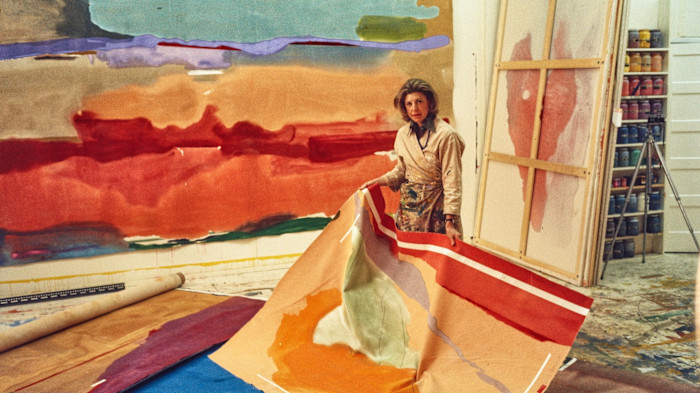
Helen Frankenthaler told two stories about her Manhattan childhood. In the first, she is creeping along the pavement with a piece of chalk, drawing an uninterrupted line from the Metropolitan Museum to her home at 74th Street and Park Avenue; her nanny follows a few paces behind. In the second, she has filled the bathroom sink with cold water and is dripping her mother’s red nail varnish into it, watching the swirling patterns form and re-form for hours.
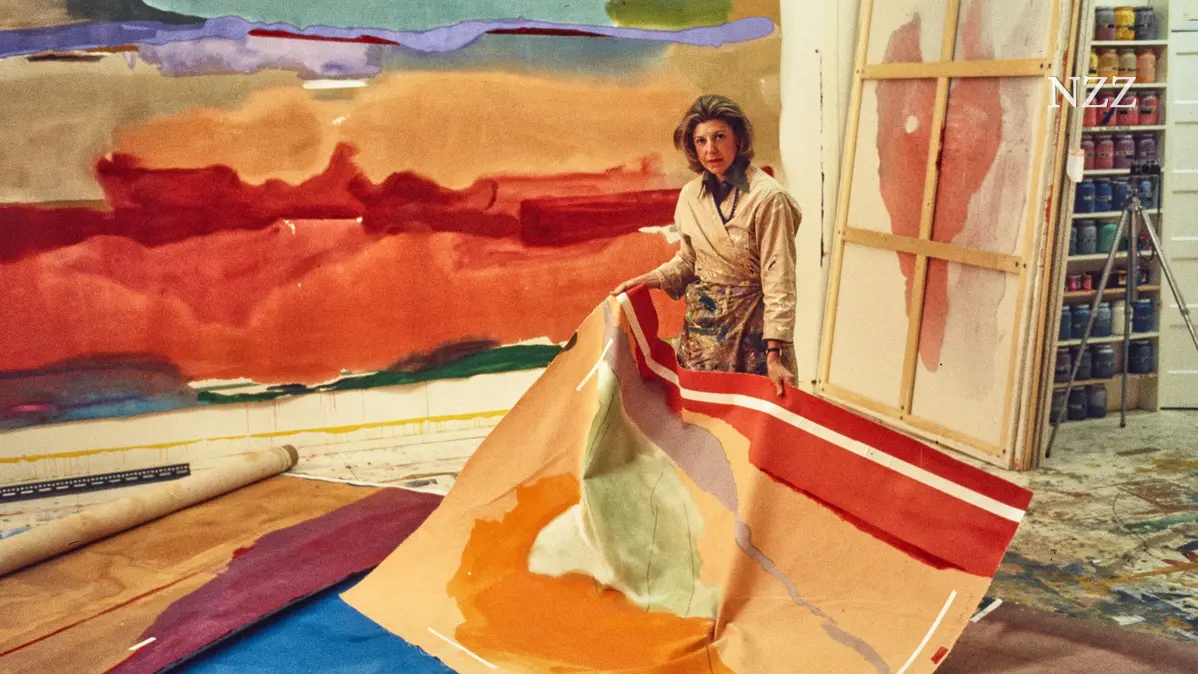
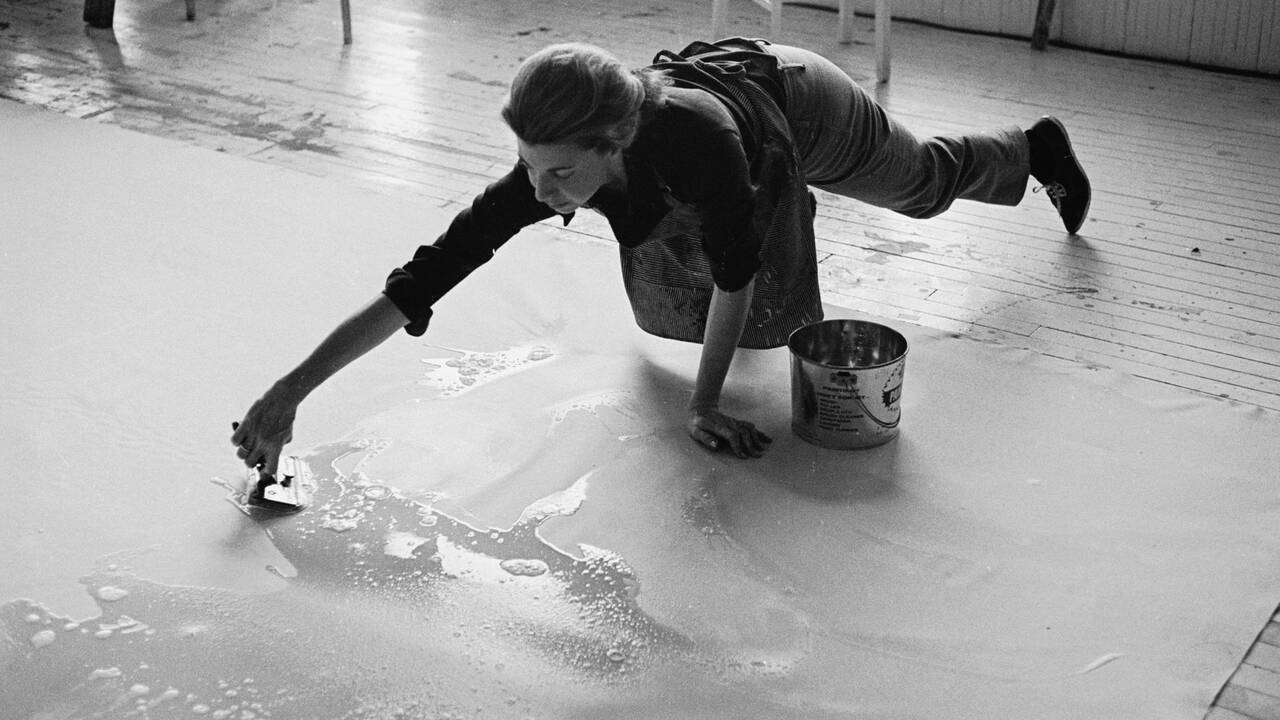
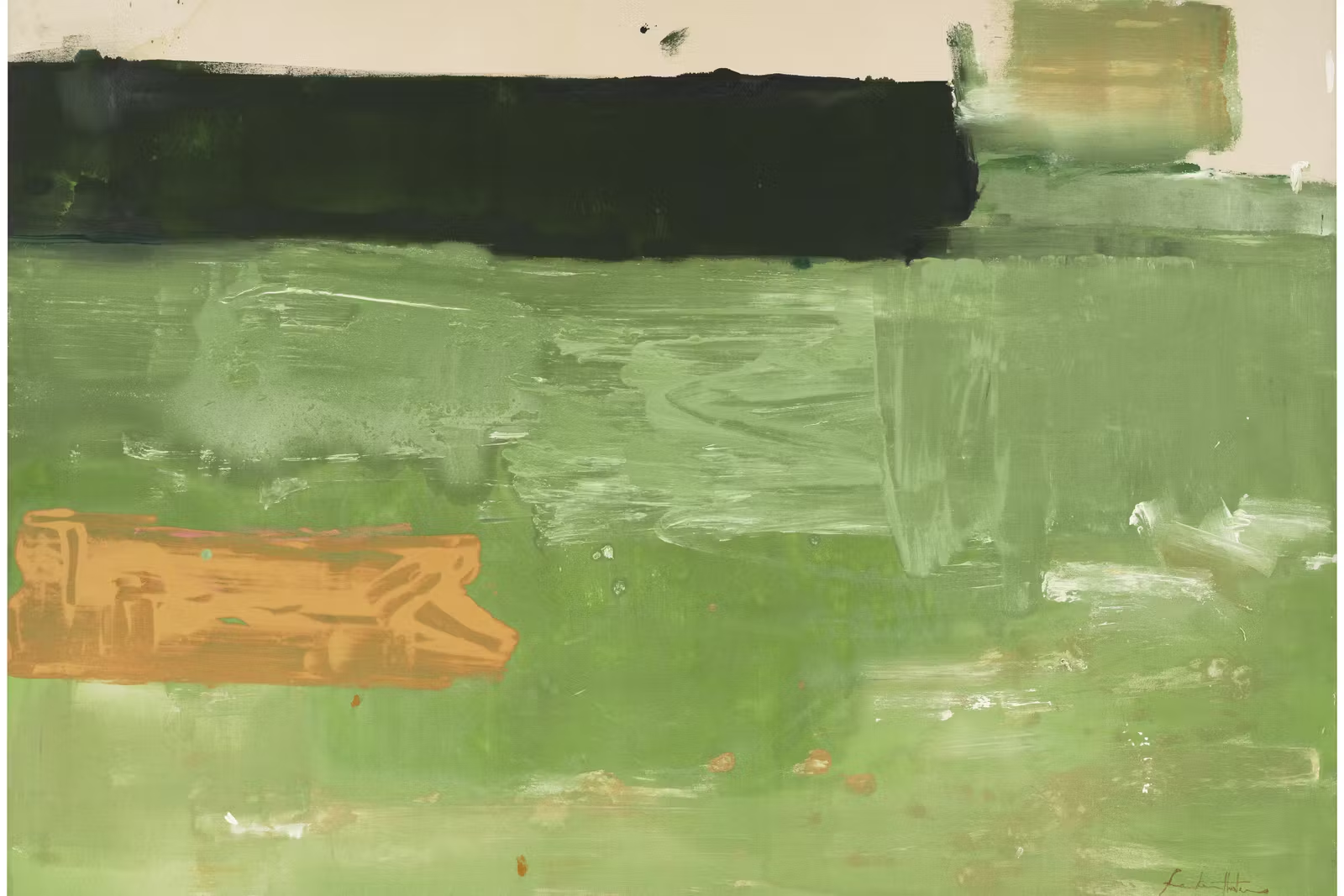
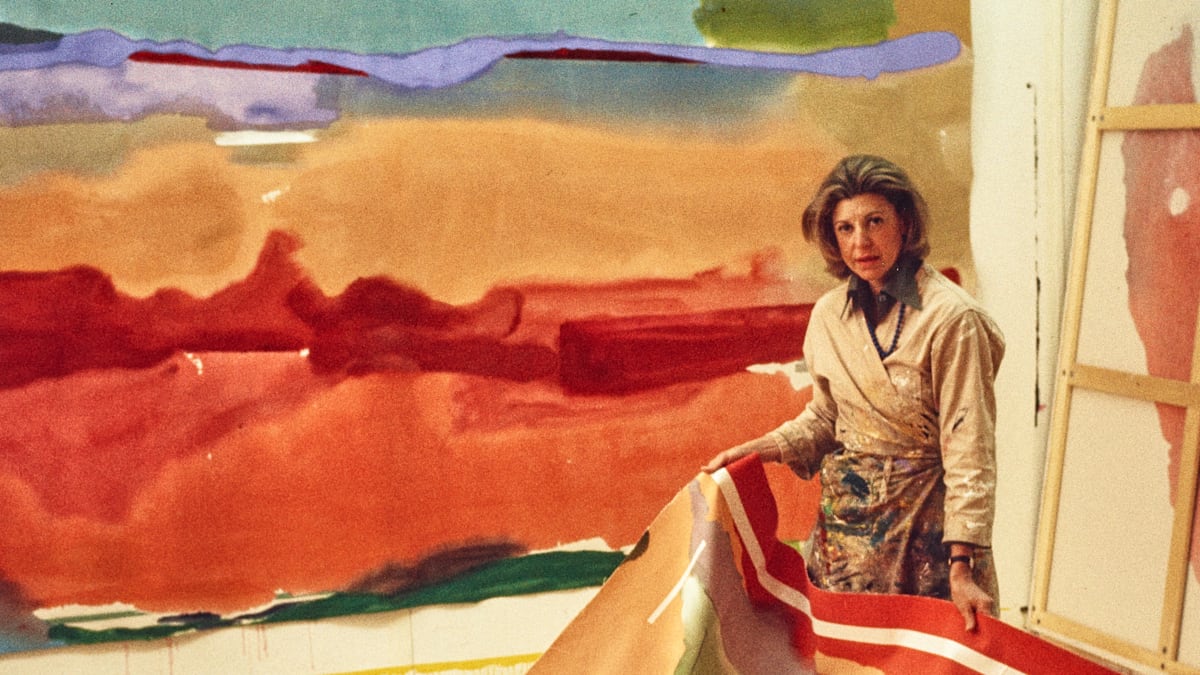
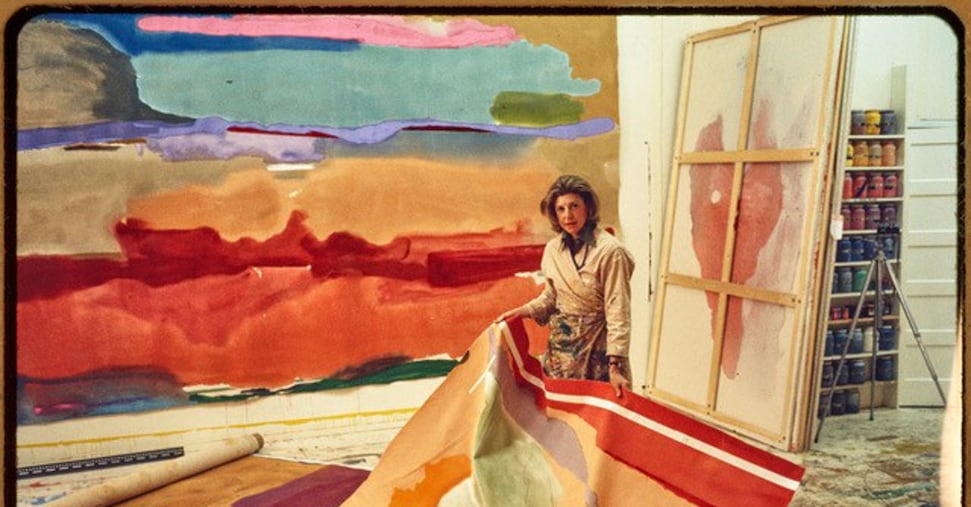
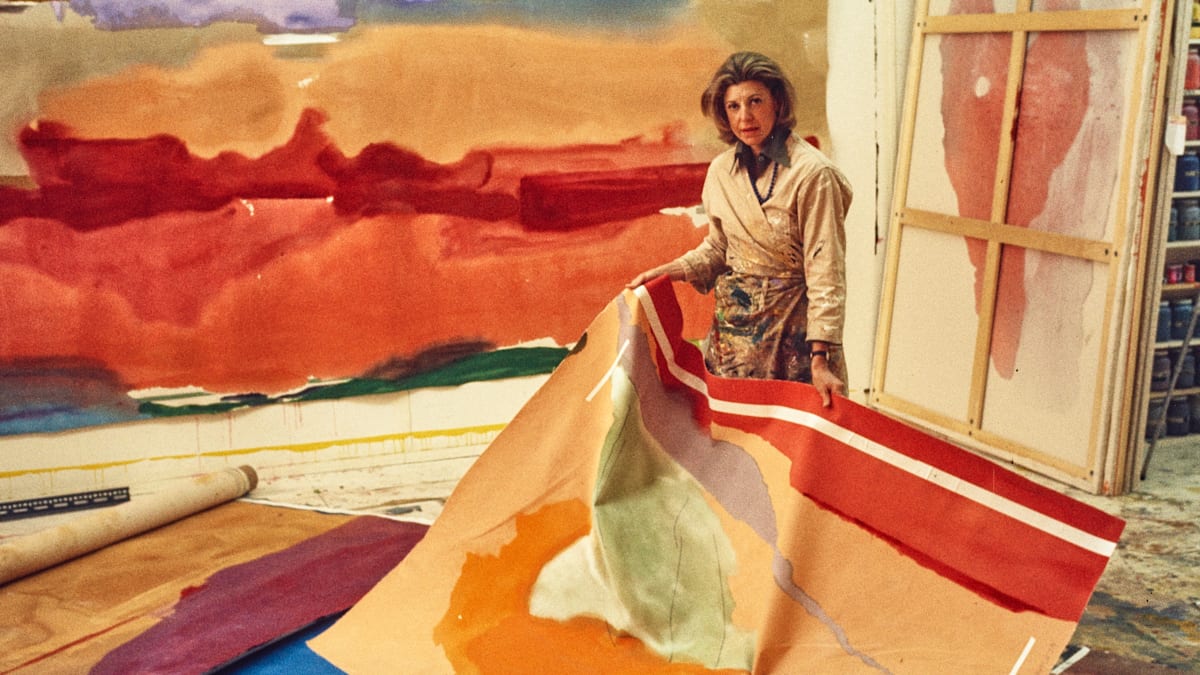
In 1952, she made those prophecies of line and colour come true. Aged 23, she stapled unprimed canvas to the floor, sketched rough charcoal contours, poured on diluted oil paint until it drenched the fabric, creating soft bursts and pools of translucent colour, and invented her “soak-stain” method of abstract painting.
Frankenthaler (second right) with Lee Krasner, Clement Greenberg and Jackson Pollock, at Eddie Condon’s New York jazz club, January 1951 © Helen Frankenthaler Foundation Archives, New York
For the next five decades, in a studio filled with more mops, sponges and buckets than brushes, she produced singular, coolly lyrical, self-contained and immensely refined abstractions, distinct from the fierce, nervy expressionism of friends such as Jackson Pollock and Lee Krasner, and aloof from subsequent pop and minimalist trends. Working in nonchalant splendid isolation she became America’s remote grande dame of abstraction — in 1989 she declared “the number of living artists I truly esteem I can put on one hand and I wouldn’t even have to lift up all my fingers” — and remained little known beyond.