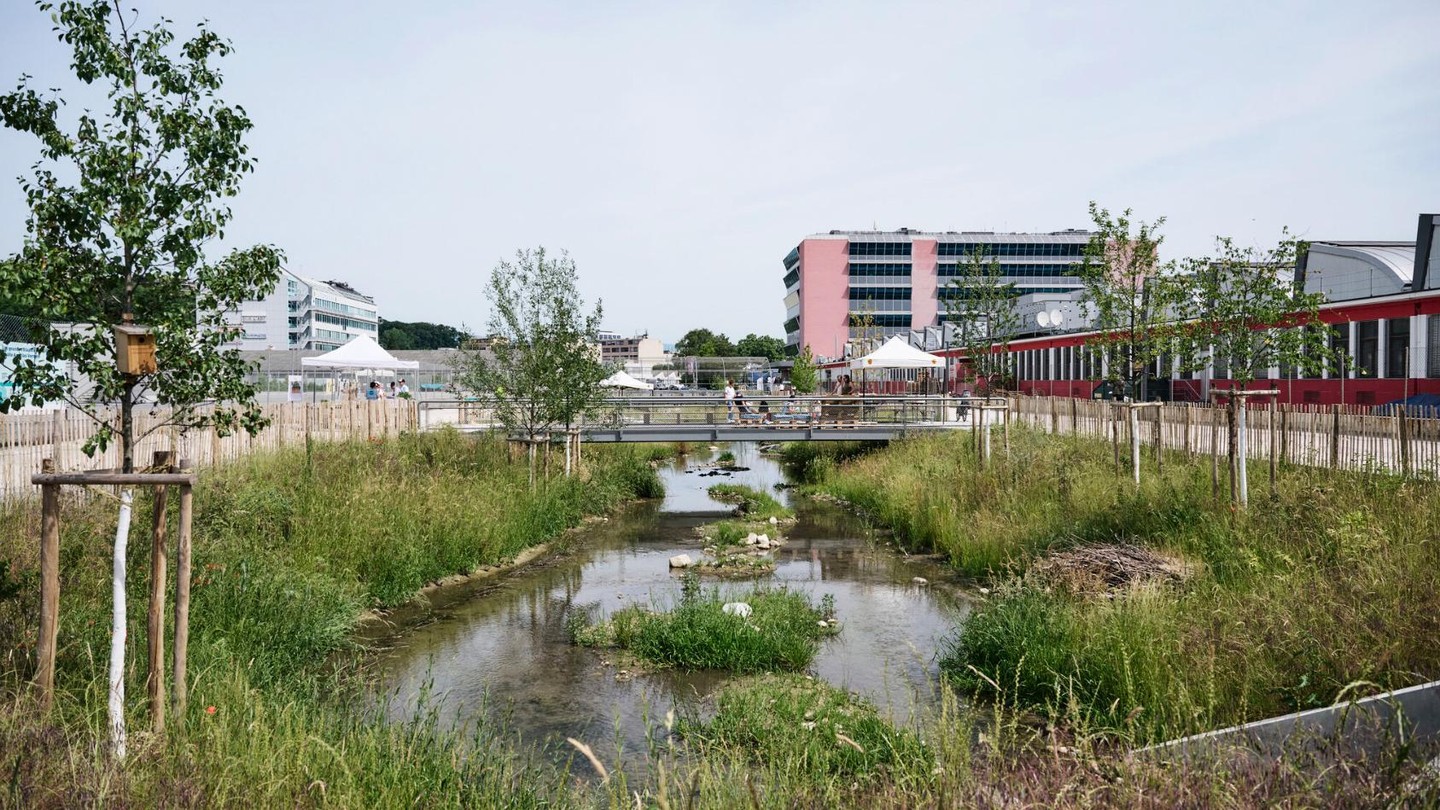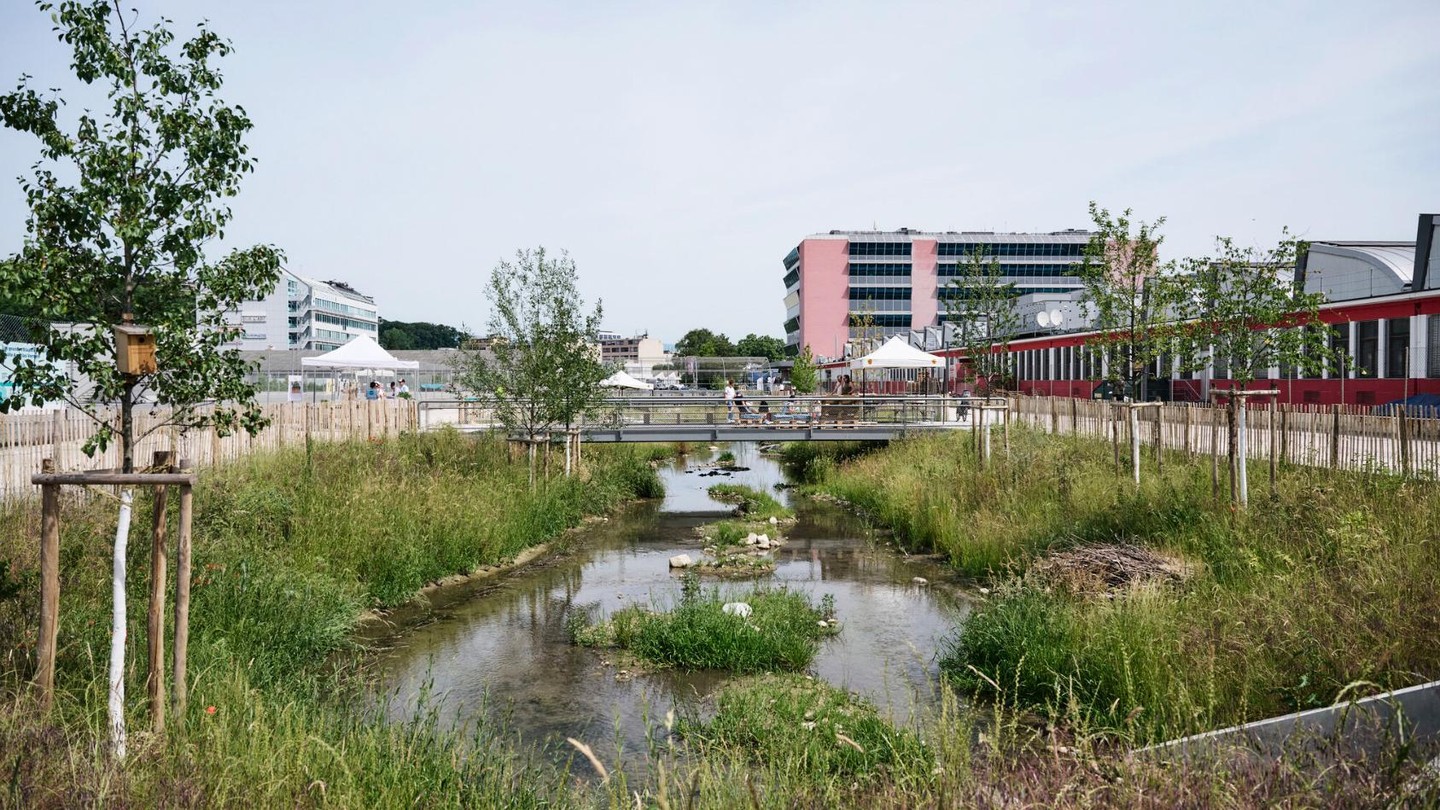
The latest issue of Cahiers d’EspaceSuisse features an article dedicated to the Maillages fertiles research project, developed by the Laboratory of Architecture and Sustainable Technologies (LAST). This contribution highlights research on the role of green public spaces in ecological transition processes and climate change adaptation.As cities face growing challenges related to global warming, resource conservation, and the improvement of living environments, the implementation of concrete measures to support the ecological transition has become a necessity. Through the study of the Geneva-based “Espaces Rivières” project, which involves the reopening and renaturation of urban waterways within the Praille Acacias Vernets (PAV) development area, the article explores how green public spaces can serve as drivers of climate adaptation while enhancing quality of life in dense urban environments.The article also presents the multicriteria assessment methodology developed within the framework of Maillages fertiles. This approach highlights both the strengths and certain limitations of strategies seeking to reconcile urban intensity with a stronger presence of nature in cities. Several avenues for improving the “Espaces Rivières” project are identified, including increasing tree canopy cover and expanding vegetated areas in order to maximize the project's environmental and climate-related benefits.This publication contributes to ongoing discussions on climate adaptation strategies and on the central role that green public spaces can play in the design of more resilient, attractive, and sustainable neighbourhoods. More broadly, the findings underline that adapting cities to climate change will require the combined mobilisation of multiple complementary approaches and planning instruments.
Fertile networks supporting urban transition
The latest issue of Cahiers d’EspaceSuisse features an article dedicated to the Maillages fertiles research project, developed by the Laboratory of Architecture and Sustainable Technologies (LAST). This contribution highlights research on the role of green public spaces in ecological transition processes and climate change adaptation.
244 words~1 min read