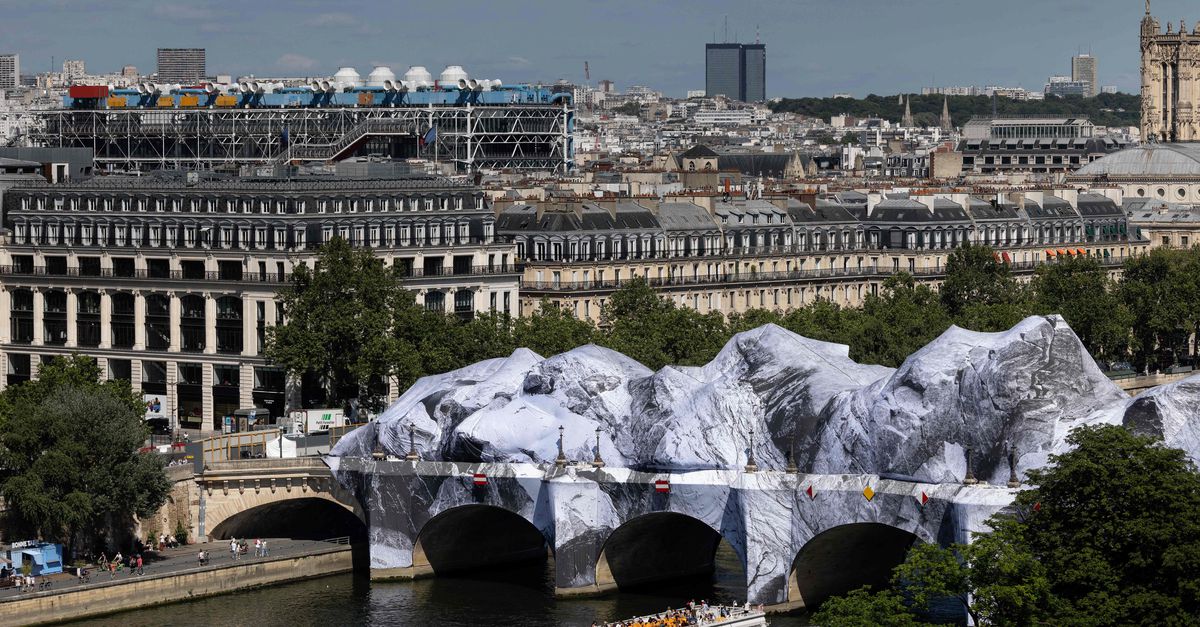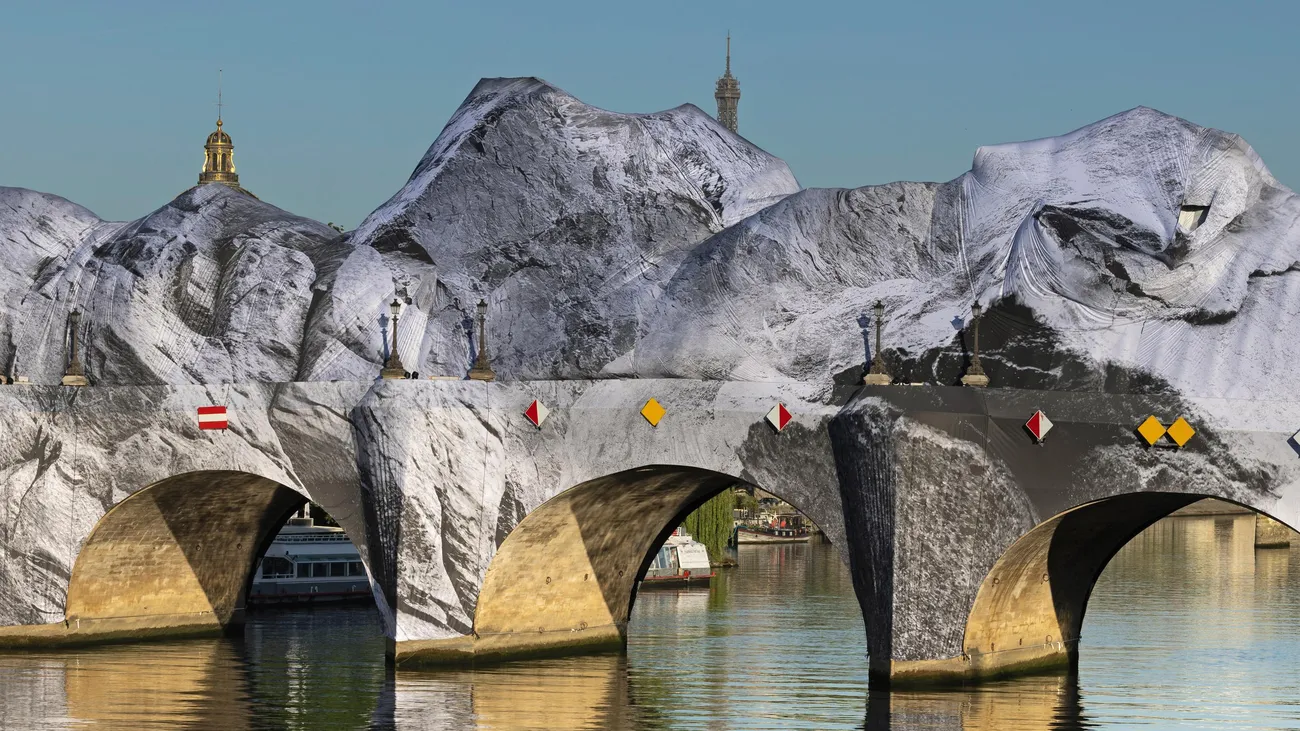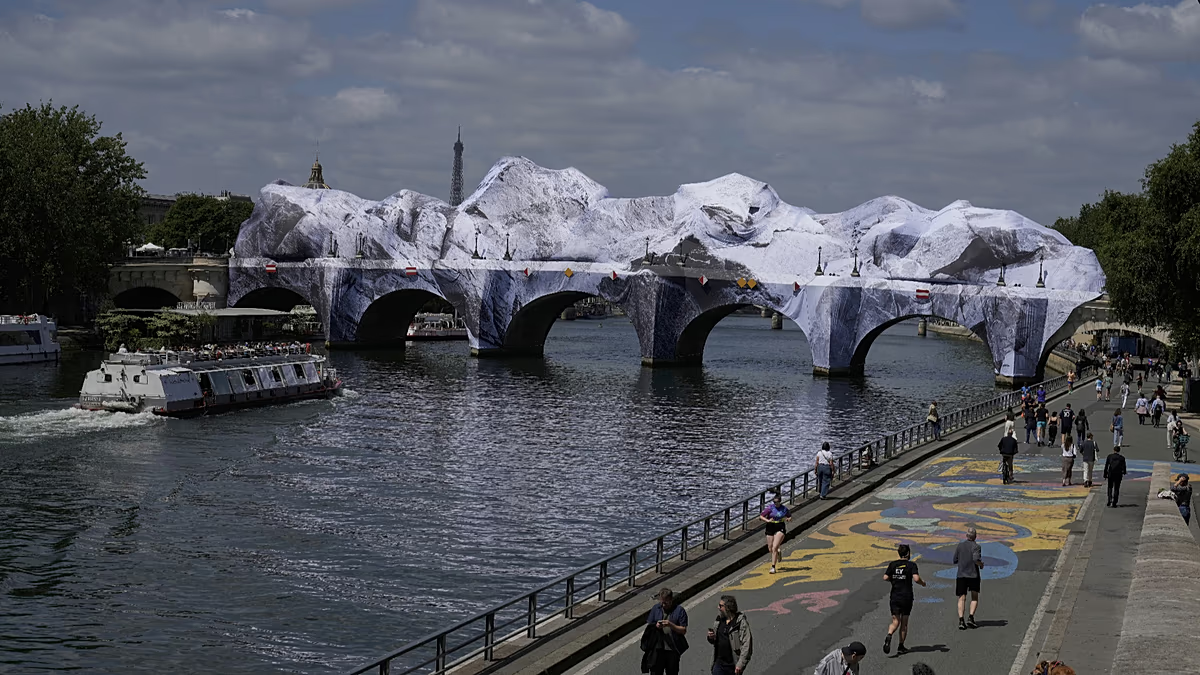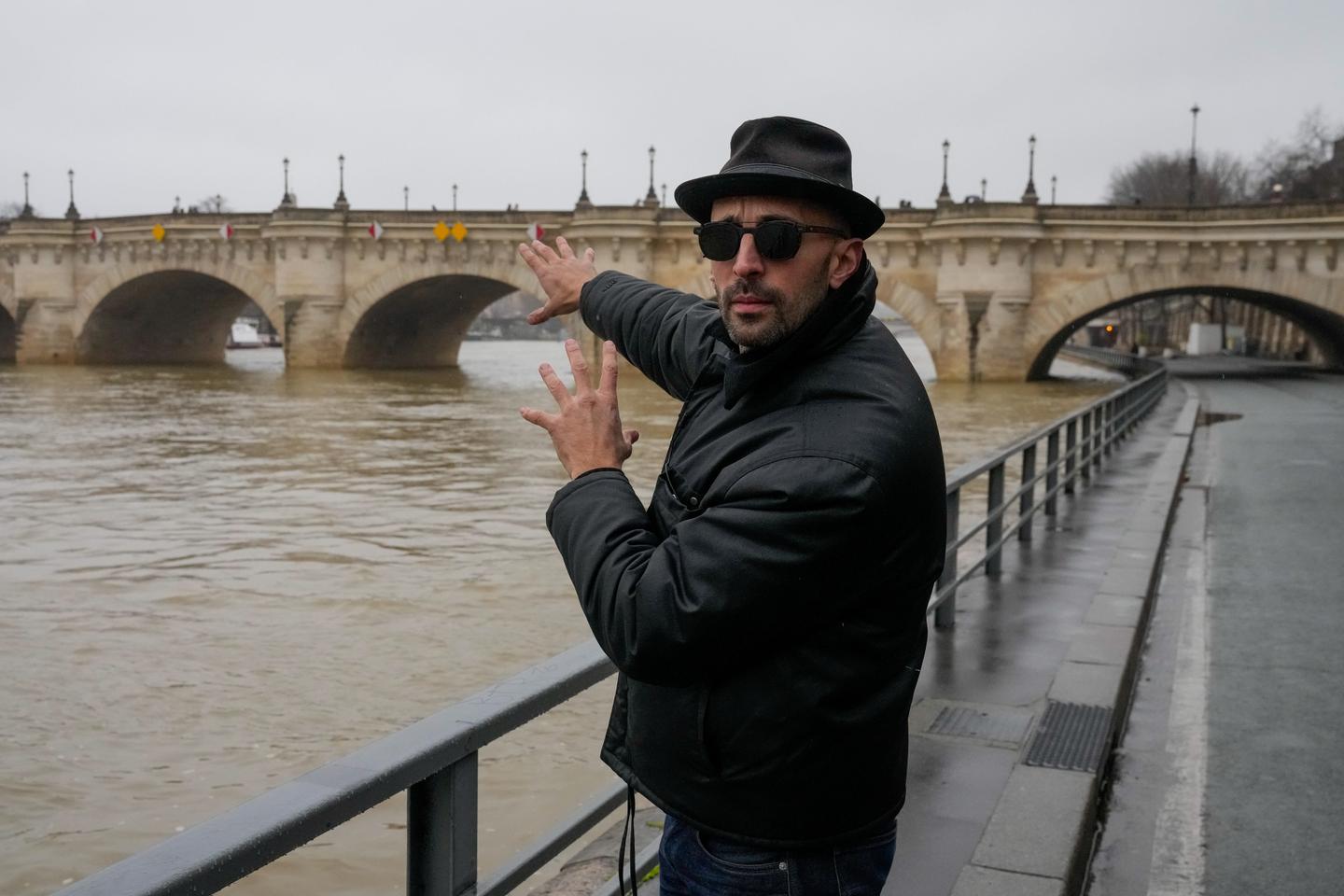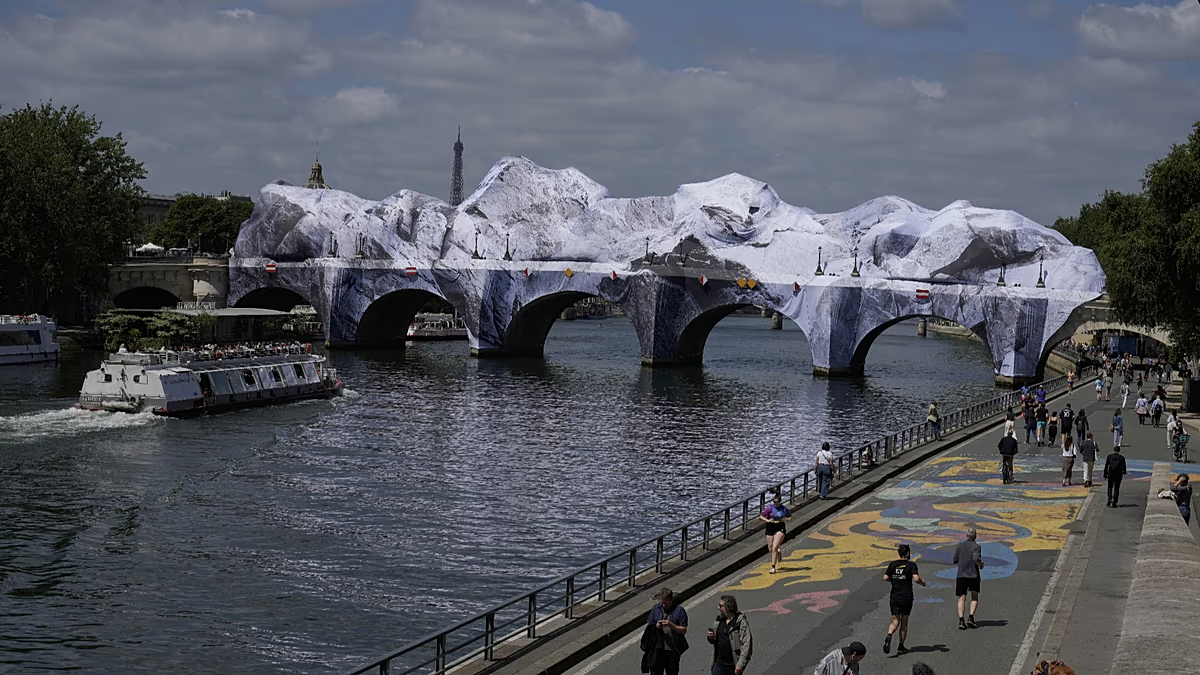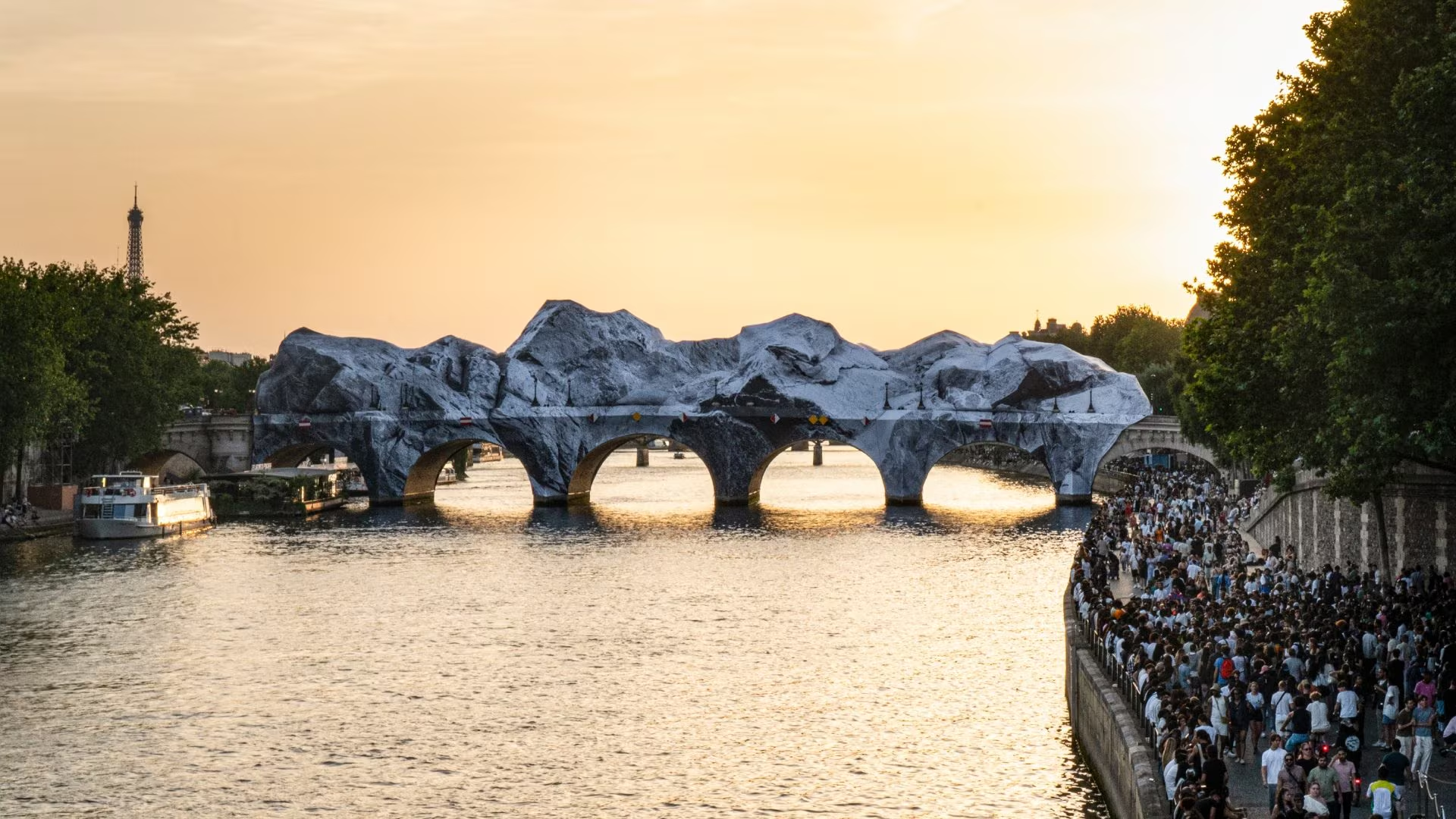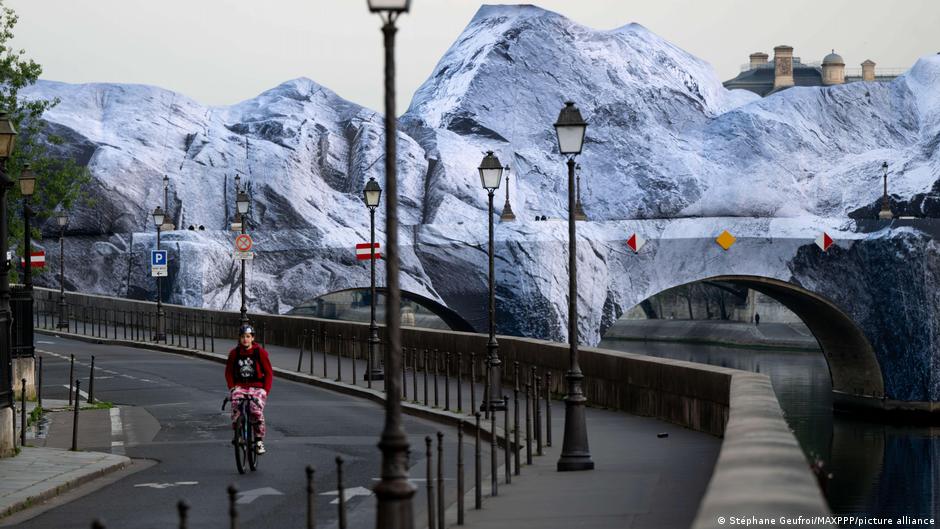
Somewhere between Venice and Paris, just as afternoon tea was served—raspberry tartlets and biscotti squisiti, coffee poured from silver ewers into porcelain cups—JR, the French artist known for his public installations, was starting to freak out. He wasn’t panicking and, in fact, maintained a façade as smooth and zippy as any of the trompe-l’oeil murals with which he has wrapped famous buildings around the world. Yet, as the Venice Simplon-Orient-Express barrelled west, through the Dolomites to Colico and Bergün and Brenner Pass, he contemplated the risks inherent in his latest project. He would begin installing it shortly after the train pulled into the Gare de l’Est.The piece is called “La Caverne du Pont Neuf” (“The Pont Neuf Cave”). It was to be free to the public, accessible twenty-four hours a day, and would open forty-one years after Christo and Jeanne-Claude wrapped the same bridge, the city’s oldest, in more than forty thousand square metres of luminous nylon. “I have to say, I never dared to dream of the Pont Neuf,” JR admitted. “I wouldn’t even think of doing it.” He was sitting, legs tucked under him, on a sinuous tangerine-colored velvet banquette in the Observatory, a bucket-list carriage of his own design. It wasn’t that he was afraid that no one would come to the cave. It was that he was sure they would—in droves, and expecting the sort of ecstatic collective experience that the Paris Olympics delivered so ably, in 2024.“You’ll have a generation of people who will remember it,” JR said. “It’s not the kind of thing where people say, ‘Oh, really? Maybe I was there.’ No, everybody says, ‘I know exactly where I was when I saw it.’ ” As the commander of a sort of public-art moon landing, he needed to make every memory bounce.JR usually creates things that you look at rather than into. But, early on, he decided to approach “La Caverne” as a piece of sculpture. He wanted height. He wanted volume. He wanted scaffolding, until he realized that was a horrible idea. “Where are you gonna find that?” he said. “Buildings reserve scaffolding for years ahead. You’d have to get it in from all over Europe, and then what?” Then he had an epiphany: he could build with air. The result is a giant inflatable structure, fabricated by Air Toiles Concept, a company out of Plougoumelen, in Brittany, that makes blow-up trophies for sporting events like Indian Premier cricket and the FIFA Arab Cup. (Funding comes from the sale of JR’s works and from corporate partners.) Visitors can walk its length, entering at Île de la Cité and exiting in front of La Samaritaine. The cave motif has been a through line of JR’s work—in 2019, he “excavated” the courtyard of the Louvre. “When you look back in time, you realize that the only myth we all believed in was the fact that humans and animals came from caves and cracks in the earth,” he said. “Today, our caves are our phones.”A cave-raising is a political endeavor as much as an artistic one. In public art, much like in public life, you have to build a coalition in order to get anything done. “We started with Anne Hidalgo, and she said, right away, ‘I’ll do it,’ ” JR recalled, referring to Paris’s former mayor. (Her term ended just before the project’s inauguration, so, to be safe, JR met with the other candidates during election season.) One meeting united more than seventy stakeholders, including the fire and police chiefs. Another presentation was devoted to assuaging the worries of the city’s bouquiniste union. Without the buy-in of these bureaucrats and booksellers, JR said, “La Caverne” never would have made it off the factory floor. “They came together and really took me by the hand,” he said. Merci to the Deep State, Municipal Summer-Fun Division.
Inside the Creative Cavern of JR
Riding in his custom-designed car on the Orient Express, the French artist reflects on his latest large-scale project—turning the Pont Neuf into a giant inflatable cave.
640 words~3 min read