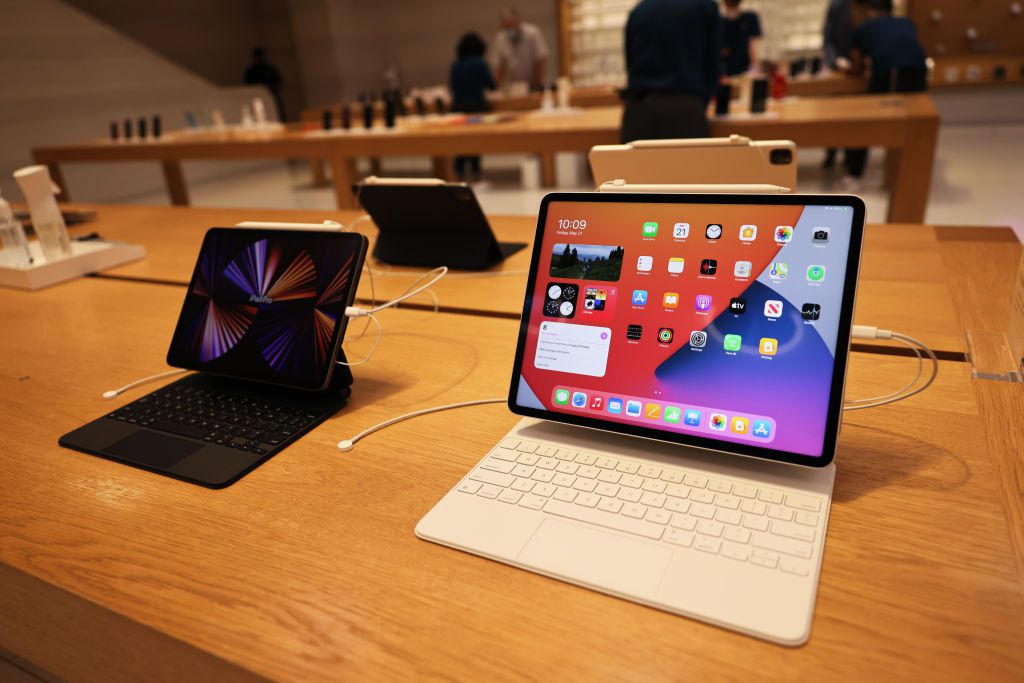
With smartphone customers holding back on purchases in face of price inflation, there is a demand for complementary devices such as tablets and laptops that analysts feel may lead to a full-blown trend in coming months of 2026Shipment data from the first three months of the year shows that smartphone sales dipped 5 per cent while other device markets like tablets grew 5 per cent. Similarly, the laptop market delivered a “standout performance” in Q1 with 4.4 million shipments or 31.1 per cent on-year increase, as per IDC.Analysts speaking to businessline said that while overall sales remain muted owing to the memory cost inflation, customers may switch devices in coming quarters. Companies stressed by the smartphone dip also appear to be manipulating device features towards this end.“There is a push from brands in face of the price inflation. Tablet specifications are also changing to meet smartphone requirements recently,” said Faisal Kawoosa, Founder of Techarc.To Kawoosa’s point, tablets like Realme’s Pad 3 Lite (₹15,000) provides better screen display and battery life compared to the same brand’s Narzo90x (₹17,000) although the smartphone’s camera quality is superior.Changing needsShipment dips during the first quarter of any calendar year are cyclical in nature. Yet, only smartphones suffered the worst of it this year. Part of it is due to change in customer requirements for devices like tablets and laptops, as per experts.“The market is seeing an increased preference for larger screen sizes, as consumers are using tablets as both a media consumption device and a productivity tool. This is strengthening the premiumization trend as consumers demand higher configurations and better displays. In Q1 2026, the market experienced a double-digit increase in ASP. Though the memory cost inflation also affected the prices, its impact was relatively limited in the quarter,” said Anshika Jain, Principal Analyst at Counterpoint Research, noting positive momentum in domestic manufacturing and consumer demand, even during adverse market conditions.Similarly, a study by Techarc stated that users are shifting some of their mobile expectations to laptops: longer unplugged battery life, anytime-anywhere readiness, AI-assisted functioanlity and premium thin-and-light design. It estimated that 88 per cent laptop users agree their laptop expectations were defined by smartphone experiences.“Despite persistent upward pressure on PC prices due to rising component costs, particularly DRAM and GPUs, consumer demand has remained resilient. With prices having increased over the past two quarters and expected to rise further in the coming months, proactive and transparent communication from vendors, partners, and channel stakeholders has encouraged early purchase decisions, thereby helping sustain overall market demand,” Bharath Shenoy, Research Manager, Devices Research, IDC.IDC expects cautious laptop sales in the second half of the year compared to the first half when favourable supply allocations, aggressive channel stocking, and front-loaded procurement ahead of anticipated price hikes, offered favourable momentum for the laptop market.However, Shenoy pointed out that laptops too have noticed a softness in the market since April.“Usually, there is back-to-school demand, which not there now because customers want good offers during festive sales. So sales may carry forward to Q3 when they expect better deals,” said Shenoy.Despite these changing trends, Dhananjay Bhosale, a tech content creator who reviews devices, said followers have not flagged any major shift in device preferences since it is still easier to find a good smartphone over tablets or laptops.“Larger screens are preferred but not significant enough to drive away smartphone demand,” said Bhosale.With the memory demand racing ahead of global supply, both brands and users continue to adjust the levers in hand to tide them over the bloated prices.Published on June 7, 2026
Smartphone users may shift to alternative devices in coming quarters
Smartphone sales decline as users increasingly turn to tablets and laptops amid price inflation and changing consumer preferences.
TL;DRAI
Smartphone sales fell 5% in Q1 amid DRAM inflation; laptops surged 31%, tablets 5% as users shift to larger screens. For IT leaders, multi-device procurement replaces mobile-first as memory costs reshape enterprise device budgets and vendor positioning.
591 words~3 min read