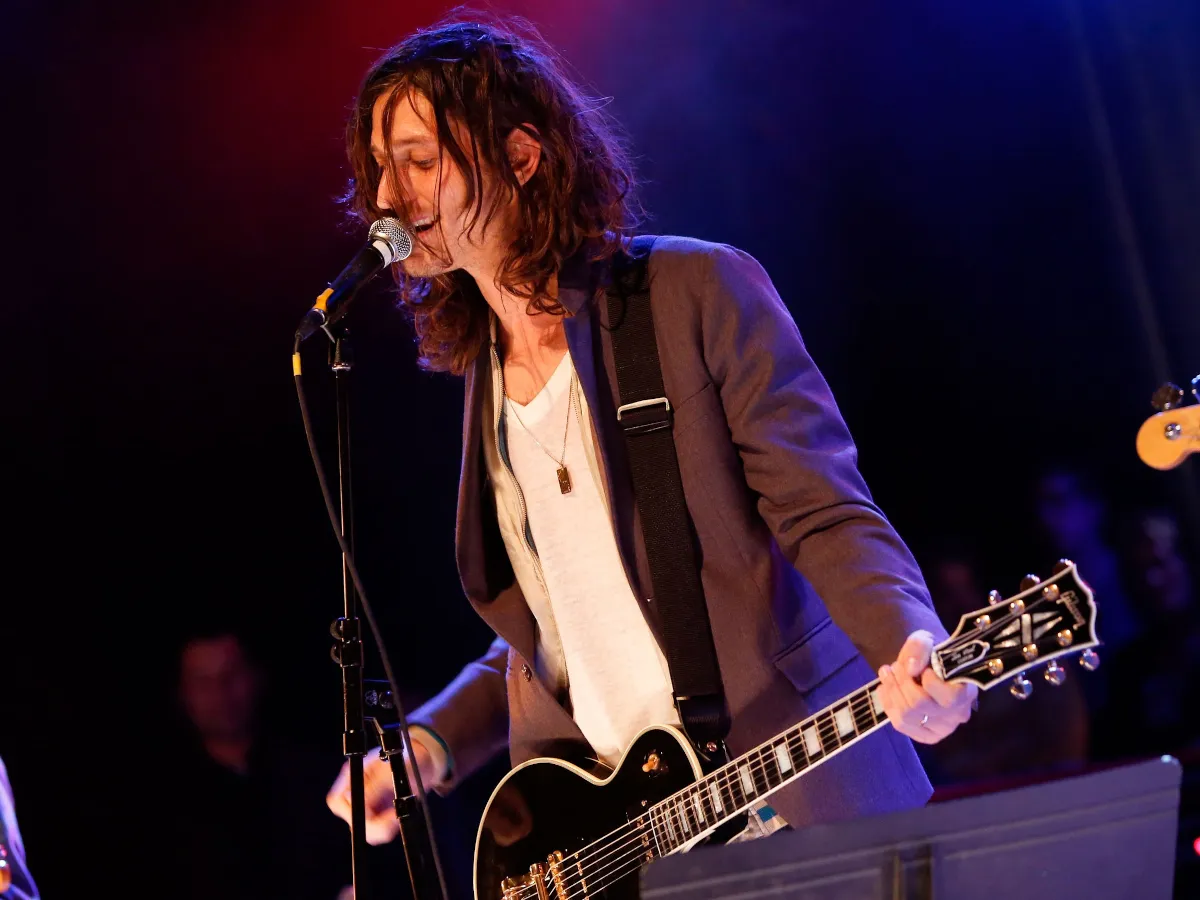
Skip to Content Subscribe Our Offers My Account Manage My Subscriptions FAQ Newsletters Canada Canadian True Crime Canadian Politics Health World Israel & Middle East Financial Post NP Comment Longreads Puzzmo Diversions Comics NP News Quiz New York Times Crossword Horoscopes Life Eating & Drinking Style Sponsored Play for Ontario Travel Travel Canada Travel USA Travel International Cruises Travel Essentials Culture Books Celebrity Movies Music Theatre Television Business Essentials Advice Lives Told Tails Told Shopping Buy Canadian Home Living Outdoor Living Tech Style & Beauty Kitchen & Dining Personal Care Entertainment & Hobbies Gift Guide Travel Guide Deals Savings National Post Store More Sports Hockey Baseball Basketball Football Soccer Golf Tennis Driving Vehicle Research Reviews News Gear Guide Obituaries Place an Obituary Place an In Memoriam Classifieds Place an Ad Celebrations Working Business Ads Archives Healthing Epaper Manage Print Subscription Profile Settings My Subscriptions Saved Articles My Offers Newsletters Customer Service FAQ Newsletters Canada World Financial Post NP Comment Longreads Puzzmo Diversions Life Shopping Epaper Manage Print Subscription HomeNP CommentYoni Goldstein: How a rock star is quietly leading the way on pro-Israel activismThe Strokes' Nick Valensi has been silent about his bandmate's antisemitism. But that may be the best course of actionLast updated 13 minutes ago You can save this article by registering for free here. Or sign-in if you have an account.The Strokes' guitarist Nick Valensi Photo by Imeh Akpanudosen/Getty ImagesThere have never been more people speaking up for Jews and Israel than there are right now. Every day, our social media feeds and inboxes are filled with people, Jewish and not, fighting the good fight against the lies, double-speak and sheer insanity of those who vilify our way of life and Israel, the safest place in the world for Jews to live freely and openly.Enjoy the latest local, national and international news.Exclusive articles by Conrad Black, Barbara Kay and others. Plus, special edition NP Platformed and First Reading newsletters and virtual events.Unlimited online access to National Post.National Post ePaper, an electronic replica of the print edition to view on any device, share and comment on.Daily puzzles including the New York Times Crossword.Support local journalism.Enjoy the latest local, national and international news.Exclusive articles by Conrad Black, Barbara Kay and others. Plus, special edition NP Platformed and First Reading newsletters and virtual events.Unlimited online access to National Post.National Post ePaper, an electronic replica of the print edition to view on any device, share and comment on.Daily puzzles including the New York Times Crossword.Support local journalism.Create an account or sign in to continue with your reading experience.Access articles from across Canada with one account.Share your thoughts and join the conversation in the comments.Enjoy additional articles per month.Get email updates from your favourite authors.Create an account or sign in to continue with your reading experience.Access articles from across Canada with one accountShare your thoughts and join the conversation in the commentsEnjoy additional articles per monthGet email updates from your favourite authorsSign In or Create an AccountorMany of those who are speaking up were in Toronto on May 17 for the World Symposium Against Antizionism, a first-of-its-kind event that brought together leading voices speaking out against the hatred that many of us encounter constantly these days.National Post readers have surely watched, heard or read their work, and found themselves nodding along in agreement and wondering why their moral clarity and sound reasoning has not helped the world see the light.This newsletter from NP Comment tackles the topics you care about. (Subscriber-exclusive edition on Fridays)By signing up you consent to receive the above newsletter from Postmedia Network Inc.We encountered an issue signing you up. Please try againHowever, you are likely less familiar with Nick Valensi and his brand of activism. He has taken a very different approach to the issue at hand — one that we all need to consider very carefully because it has serious merit, even if it appears diametrically opposed to the advocacy approach that much of the Jewish community has adopted since October 7.In April, New York rock legends the Strokes, of whom Valensi is a founding member, headlined the Coachella Valley Music and Arts Festival in California. Coachella runs annually on two consecutive weekends, with the same bands largely playing both, and the Strokes’ first performance was considered a major hit.But on the second weekend, the band’s appearance was largely overshadowed by political statements made from the stage by lead singer Julian Casablancas, along with imagery displayed on massive video walls that criticized the wars against Iran and Hamas.Casablancas followed up by appearing on the popular YouTube series Subway Takes, where famous people are interviewed while riding the New York metro.“American Zionists … get the benefits of white privileged people, but talk like they are Black people during slavery,” he told host Kareem Rahma, adding that, while October 7 was “bad,” “Native American rebellions didn’t mean it was OK to do what we did. Slave rebellions that were violent didn’t mean that slavery is not bad.”Casablancas concluded by saying, “It’s been nice having a career,” as if Jewish, Zionist overlords would immediately disband the Strokes for wrong-think. Of course, nothing of the sort happened.But something crucial did happen: Valensi immediately stopped performing with the band. When the Strokes did a set on one of the final episodes of Stephen Colbert’s late-night show, Valensi was nowhere to be seen. The band issued a statement saying, “Nick Valensi will be taking a temporary break from the scheduled tour, but we look forward to his return.”Valensi has said nothing publicly since Cablancas’ outbursts, but fans and followers are generally of the mind that he has left the Strokes because of Casablancas’ statements about Jews. It’s not hard to see the reasoning. Valensi himself is Jewish — you might say very Jewish.In a 2018 interview with Tablet Magazine, he related his own personal history. Born to a Sephardic Jewish father, a man Valensi described as “really, deeply religious,” he recounted going to synagogue every weekend and fasting as a child on Yom Kippur. (His mother was born into a Catholic family, but converted when she met Valensi’s dad.)He added that he has explained to his kids that, “Just because we skipped the Seder this year and just because we don’t go to synagogue every Saturday doesn’t mean we’re not Jewish, because being Jewish is more something that’s in your bloodline. You don’t really choose to be Jewish or to not be Jewish.”He also said that in his household, “We speak about Judaism and Jewishness pretty regularly. We’ve had that conversation many times.”Knowing how foundational Judaism is to Valensi, it is not a stretch to suggest that he may have taken issue with his bandmate’s antisemitic actions and comments. But what is more interesting is his response: no statement, nothing on social media, just deafening silence.Psychologists often understand silence as a trauma response. When our brains perceive a situation as unsafe or threatening, they tell us to stop speaking — a result often called the “freeze state.” It is not an empty silence, but rather one filled with anxious internal dialogue, and it can be very dangerous to mental and physical health. Silence can signal entrance into a state of hyper-vigilance and lack of trust, and often requires a long process to reverse.But there is another scientific interpretation of silence that sees it as an important, even strategic outlet. Research suggests that actively engaging in quietness can reduce emotional stress and activate healing. The brain, studies show, benefits from silence, allowing us to process information and feelings more effectively.Strategic silence has even made its way into the workplace, and has been proven to increase influence and help draw out important information that might not otherwise be offered. Silence can be a powerful tactic to disassociate from toxic colleagues and workplaces.I’d like to think that Valensi’s reaction to Casablancas is just that — a strategic and very powerful response.These days, the blueprint for the pro-Israel and -Jewish community is very much the opposite. Every time we see appallingly antisemitic and anti-Zionist rhetoric, we rush to counter it with facts and arguments grounded in reality.Sometimes this is successful, such as in the case of Taryn Thomas, a Stanford student who visited the Nova Exhibition, which chronicles the death and inhumanity of October 7. Thomas attended the exhibit, she said in a media interview, “mainly to look for Zionist propaganda.” But when she saw how horrific that day was, she said “it broke my mind.”Yet more often than not, this strategy causes our adversaries to double down. Jews often find ourselves confronted with an impossible duality: our urge to speak up against hate on the one hand, but also a necessity to call out our own bad behaviour, rare as it might be. This is why many Jews and their allies will say, for example, that they support Israel, but not its current government or the “occupation.”Witness, as one example, the cries from within the Jewish community against Israeli National Security Minister Itamar Ben-Gvir, who recently was lambasted from all sides for taunting flotilla activists arrested in Israel and a birthday cake featuring a noose. (Of course, some flotilla activists were subjected to far worse when they returned home to Spain and were summarily beaten by police.)Are Ben-Gvir’s actions toxic to our cause? Perhaps. But why do many Jews feel the need to speak up about it, when it is being weaponized by our enemies? What is to be gained? Do we seriously believe that doing so will make our enemies see us in a different light?More likely, they will perceive our actions as weakness because they would never do the same — they are only too happy to shill for the Iranian regime and terrorist organizations, despite the fact that these groups directly oppose their own way of living.There is no doubt that Jews have succeeded throughout history through activism. It is a common touchstone for our people and it has, at times, helped us build strong coalitions beyond our own community. But this is not that time — now, everything we say and do is held against us, weaponized to the fullest extent.And it leaves us in a precarious state: if we are vocal about hating Ben-Gvir or Israeli Prime Minister Benjamin Netanyahu, then why should we have a problem with effigies of the two being strung up at protests in Montreal? That’s a logical leap, of course, but it is one that our enemies are only too happy to make.Silence can be equally powerful. When his two sons were killed by God, the Torah says that “Aharon was still,” and commentators generally agree that his response was a reflection of his deep faith and belief. In the most disquieting moment of his life, Aharon held his tongue.Valensi appears to be doing the same, and the lesson is profound: it is not necessary to react to every bad thing, every injustice we witness. In fact, that is probably what our enemies want us to do. Instead, it’s worth trying a bit of silence and seeing if the message that we are not going to play stupid games with malicious people starts getting through.National Post Join the Conversation This website uses cookies to personalize your content (including ads), and allows us to analyze our traffic. Read more about cookies here. By continuing to use our site, you agree to our Terms of Use and Privacy Policy.
Yoni Goldstein: How a rock star is quietly leading the way on pro-Israel activism
The Strokes' Nick Valensi has been silent about his bandmate's antisemitism. But that may be the best course of action
1,900 words~9 min read