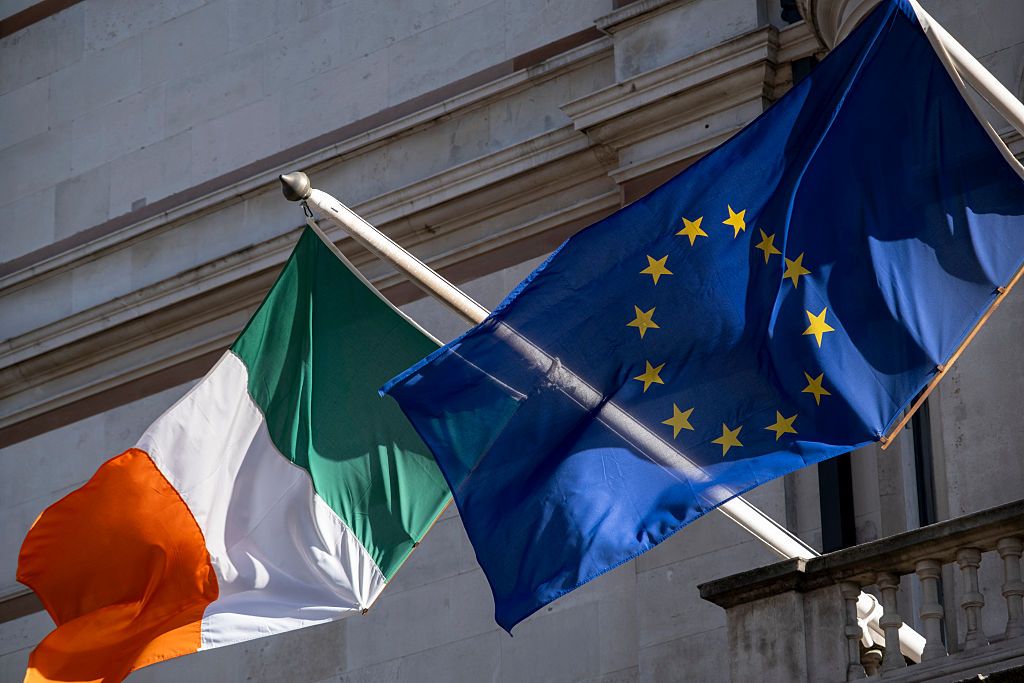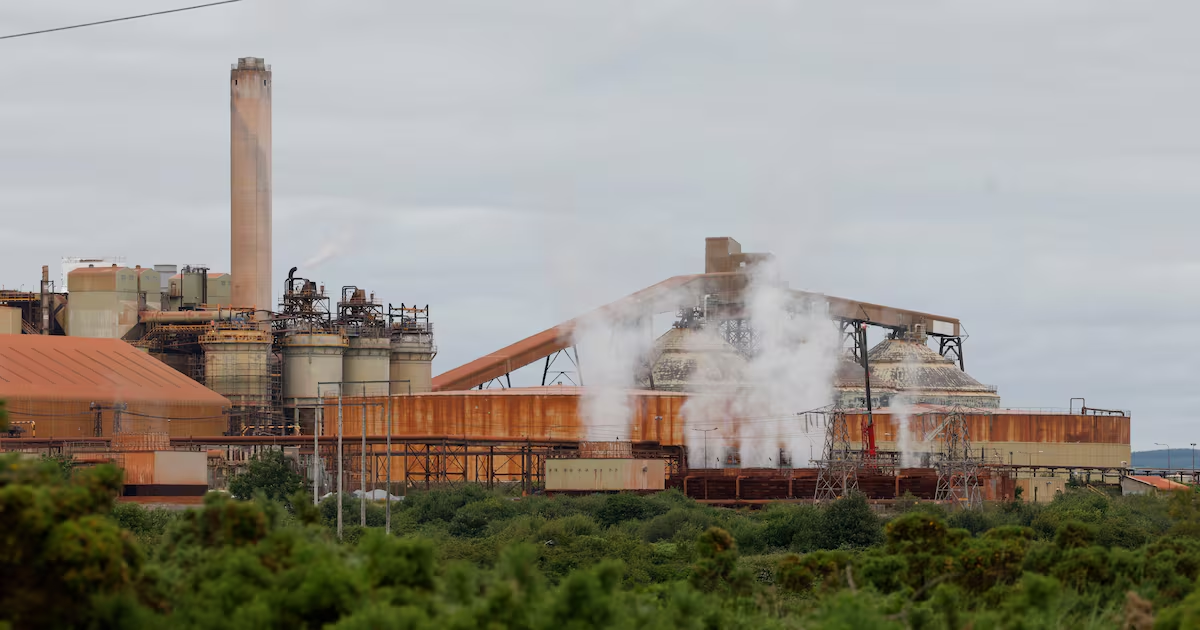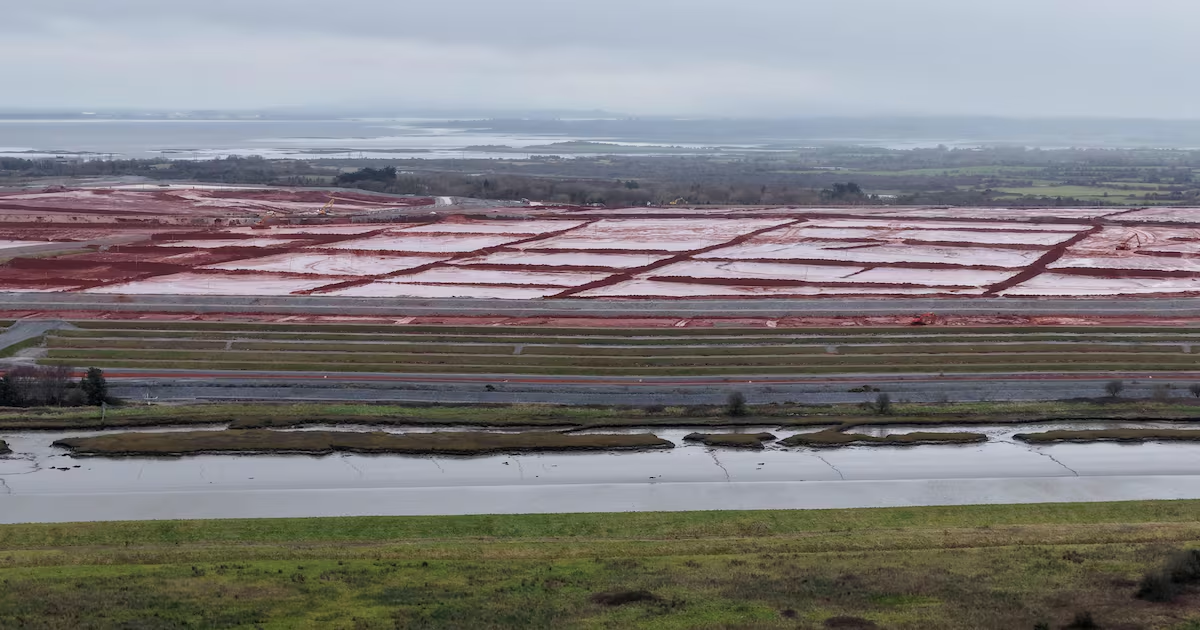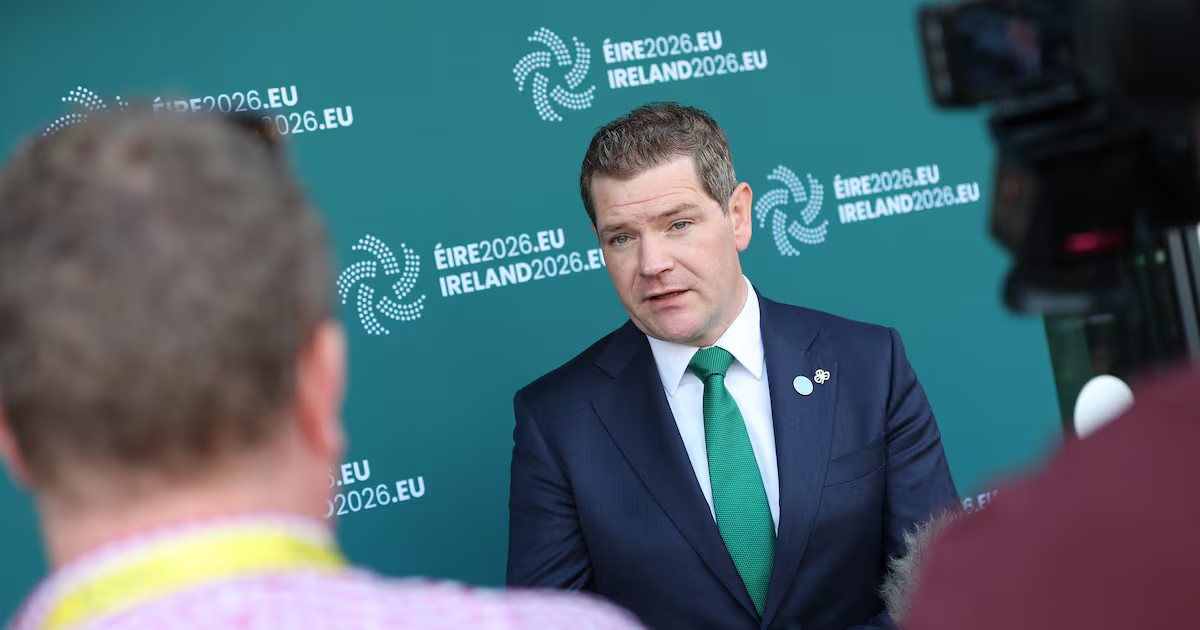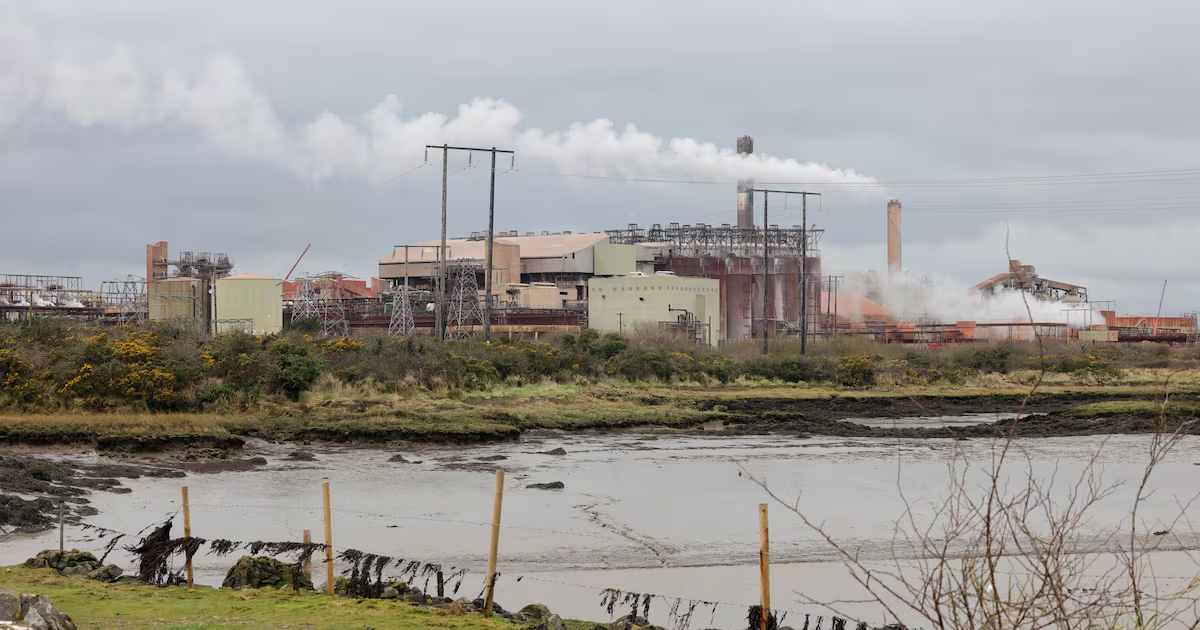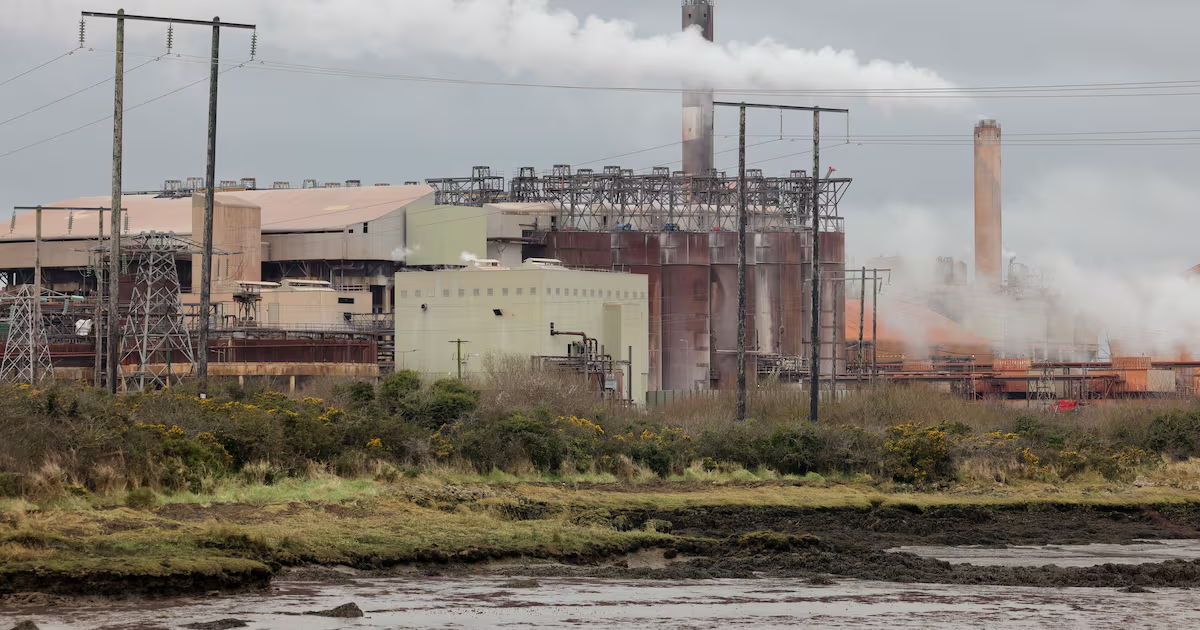
It is now almost three months since The Irish Times’s investigation raised serious questions about Aughinish Alumina’s relationship with Russia. The project, done in collaboration with the Organised Crime and Corruption Reporting Project (OCCRP), revealed that alumina produced at the Co Limerick plant is shipped to Russian smelters, where it is turned into aluminium and sold to a trading company that supplies Russian arms manufacturers. The political implications were significant. Ireland’s current Coalition, like its predecessors, has maintained that, despite being owned by a Russian company that ships large amounts of alumina to that country, Aughinish does not supply Moscow’s military industry. The plant is “not in any way connected to a war machine”, said Patrick O’Donovan, a Limerick TD and Minister for Culture, in April 2022. Irish governments have lobbied intensively in Brussels and Washington to keep Rusal, which owns the Limerick site and has deep connections to the Kremlin, off the Russian sanctions list. The revelations raised two big questions. Did this and previous Irish governments know about these links between Aughinish and the Russian war industry supply chain before we revealed them publicly? And what would Merrion Street do about Aughinish now that we had shown what was occurring? On the first, ministers say they did not know – but they have refused to publish briefing documents they used while lobbying foreign governments over the sanctions carve-outs. On the second, the Government’s response was to set up an investigation within the Department of Enterprise while weighing its words so as to express concern while stressing Aughinish’s role as an important local employer. The pressure on Ireland increased this week when The Irish Times revealed that a confidential report by Swedish tax authorities had concluded that Rusal continues to be controlled by sanctioned Russian oligarch Oleg Deripaska. And when last week we cited official State figures showing that more than 80 per cent of the alumina produced in Limerick so far this year was shipped to Russia, the company came out and said the numbers it had given the Central Statistics Office were wrong; now it says 51 per cent of its exports go to Russia. “Wilful ignorance is a standard dodge of Irish neutrality,” columnist Justine McCarthy argues in her piece on the controversy. Irish ministers’ defence of the plant has rested on two propositions: that alumina is not an EU-sanctioned product, and that restricting its export would damage European industry more than it would hurt Russia.Our main editorial this weekend suggests that these arguments only go so far. “The ‘self-defeating sanctions’ case depends on alumina’s civilian importance to European supply chains,” the leader states. “It says rather less about a product of which Russia’s share of Aughinish’s output has grown from 23 per cent in 2020 to over half today, a shift that accelerated in lockstep with Russia’s invasion [of Ukraine] rather than with any growth in civilian need. And the legal compliance argument, always the weakest form of moral reasoning, is further undermined if the ownership structure underpinning the exemption was itself a fiction.”We’ll have more on Aughinish over the coming weeks. One of the stories of the week was an ongoing dispute between Government and the biggest maternity hospital in the country, the Rotunda, which is defying an order to stop public-only consultants treating private patients. The Government is threatening to withdraw funding from the Dublin hospital. In her useful review of the week’s events, Ellen Coyne writes that the Rotunda has picked a fight with the State “for reasons that are far more academic than obstetric”. Ellen also has a fascinating in-depth examination of “free births”, a term advocates use to describe the choice to give birth without a doctor or other medic present. Midwives and other medical professionals are concerned by the rising number of cases. Coyne speaks to the brother of Louth woman Naomi James, who died in 2024 after a “free birth” at home. Qayyum Balogun, a 21-year-old from a Nigerian family based in Dundalk, was stabbed to death after attending a gig in Bewley’s Café on Grafton Street in Dublin in the early hours of Monday. Kitty Holland spoke to the young man’s family and heard of a “gentle soul” who wanted to be a computer engineer. Elsewhere, Sarah Burns looks at the soon-to-be-outlawed practice of demanding sex for rent; Martin Wall asks how Irish Rail spent €50 million on a computer system it will never use. And in our World section, Keith Duggan reflects on Donald Trump’s waning vigour while Derek Scally previews a Swiss referendum to cap the country’s population at 10 million. The World Cup starts in Mexico City on Thursday, and we go big on it this weekend with some superb writing from our soccer writers. It’s hard to retain a sense of romance about a tournament being run by Gianna Infantino’s Fifa in Donald Trump’s America, but Paul Howard holds out some hope, reminding us that you spend your life chasing the way the World Cup made you feel when you were 11. It will be the longest, the biggest and probably the lowest-quality World Cup ever. For TV viewers in Ireland, it will also be one of the most inconvenient. “It’s a deathless carnival of garbage, a delusional triumph of rapacious capitalism over the sport’s idealistic roots,” writes Malachy Clerkin. “It’s a dictators’ masquerade ball, a karaoke session for the petropowers and military ravers who are burning the last of the planet’s embers and rifling through our pockets all the while. It’s a rat-trap, baby, and we’ve all been caught. Can’t wait for it to start.”When you’re planning your summer reading, use our newly-published guide to the best novels and non-fiction. Finally, you’ll notice two new bylines in The Irish Times from this week. Killian Woods, who previously worked for the Business Post and was named Business Journalist of the Year at the Irish Journalism Awards for the past two years, is joining us as Business Correspondent. And Gavin Cooney, formerly of The 42 and co-author, with Conor Niland, of the critically acclaimed book The Racket, is coming aboard as Sports Correspondent. We value your views. Please feel free to send comments, feedback or suggestions for topics you would like to see covered to feedback@irishtimes.com.
Message from the Editor: Big questions on Ireland’s role in the Russian war effort
Pressure is increasing on the Irish Government over the role of a Russian-owned metals plant Co Limerick
1,042 words~5 min read