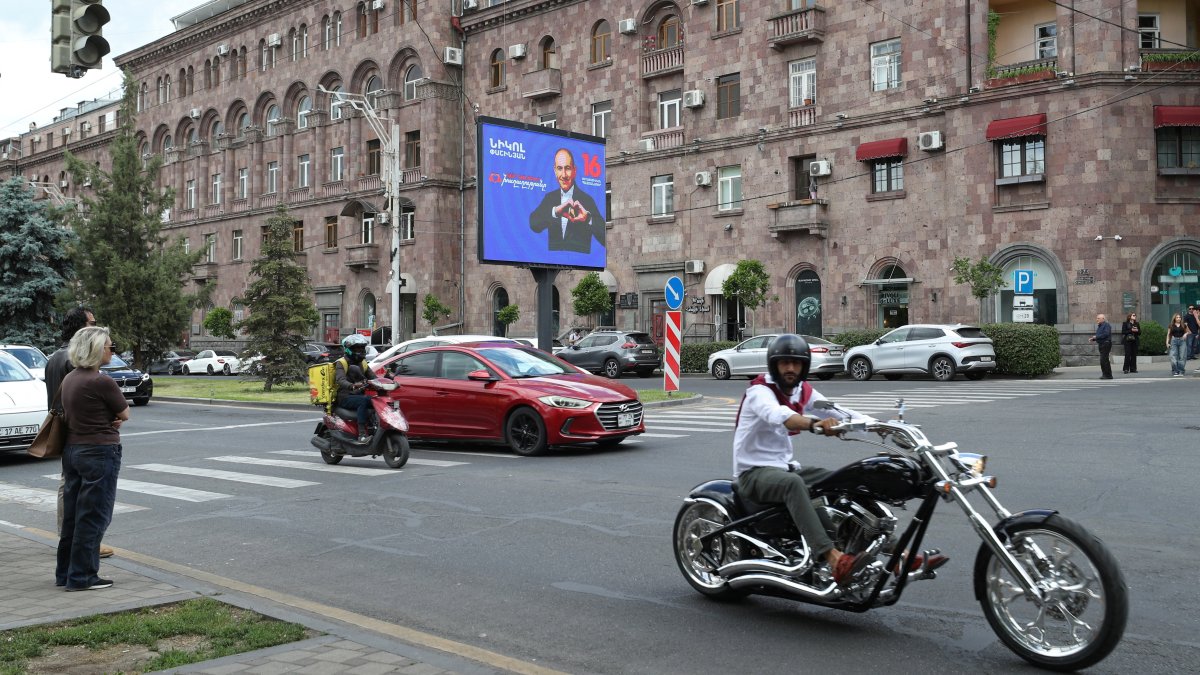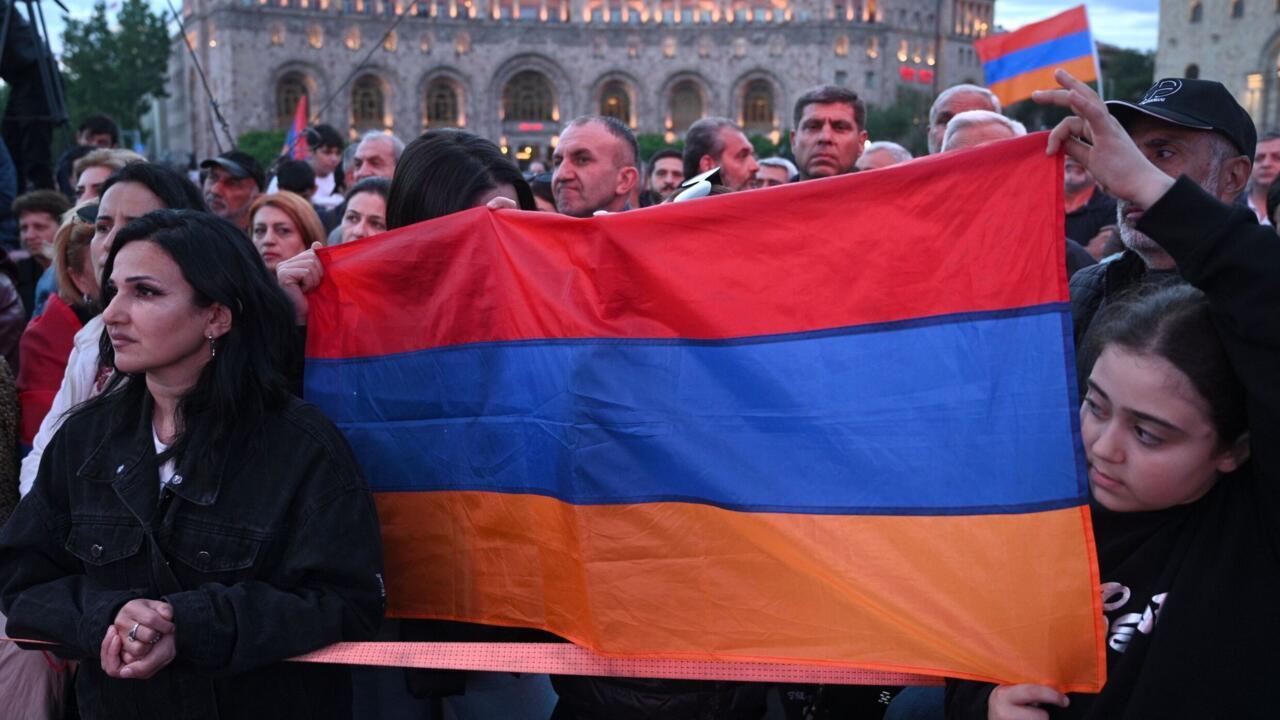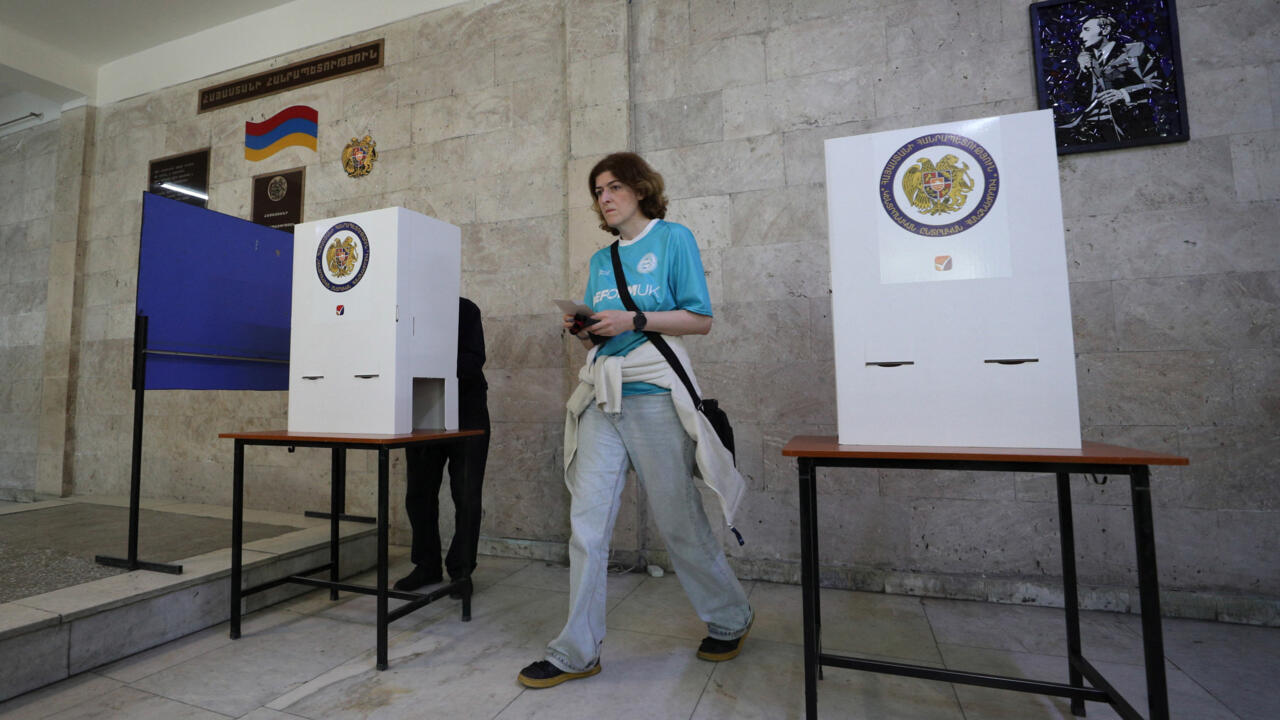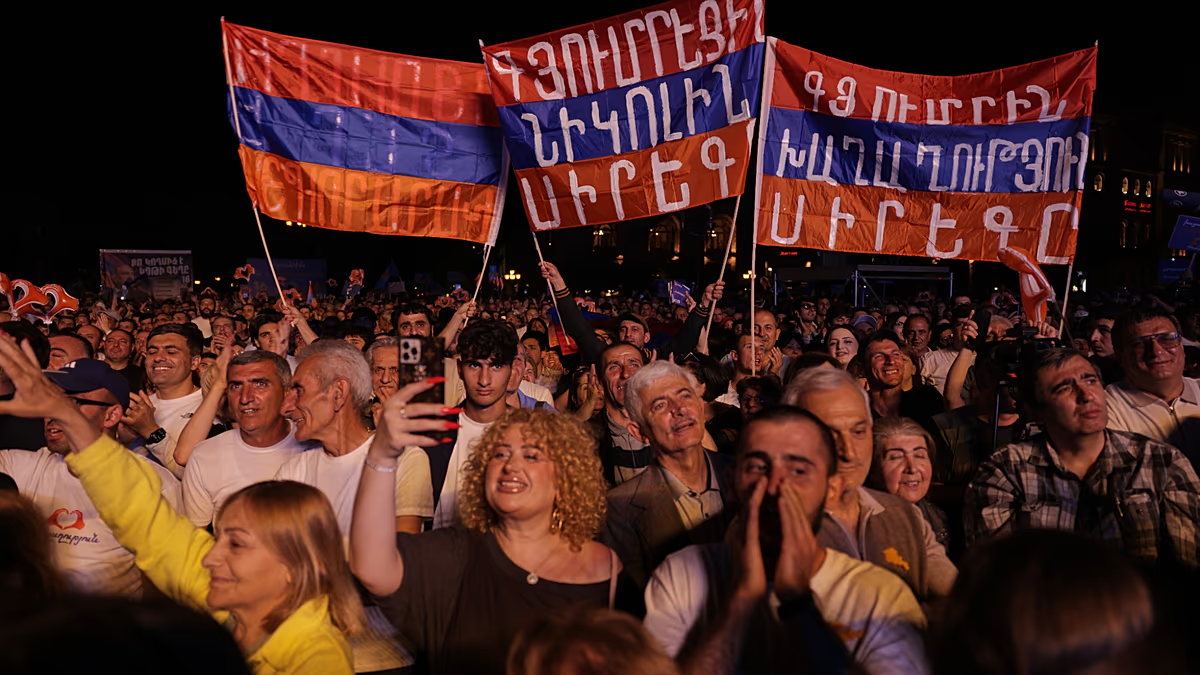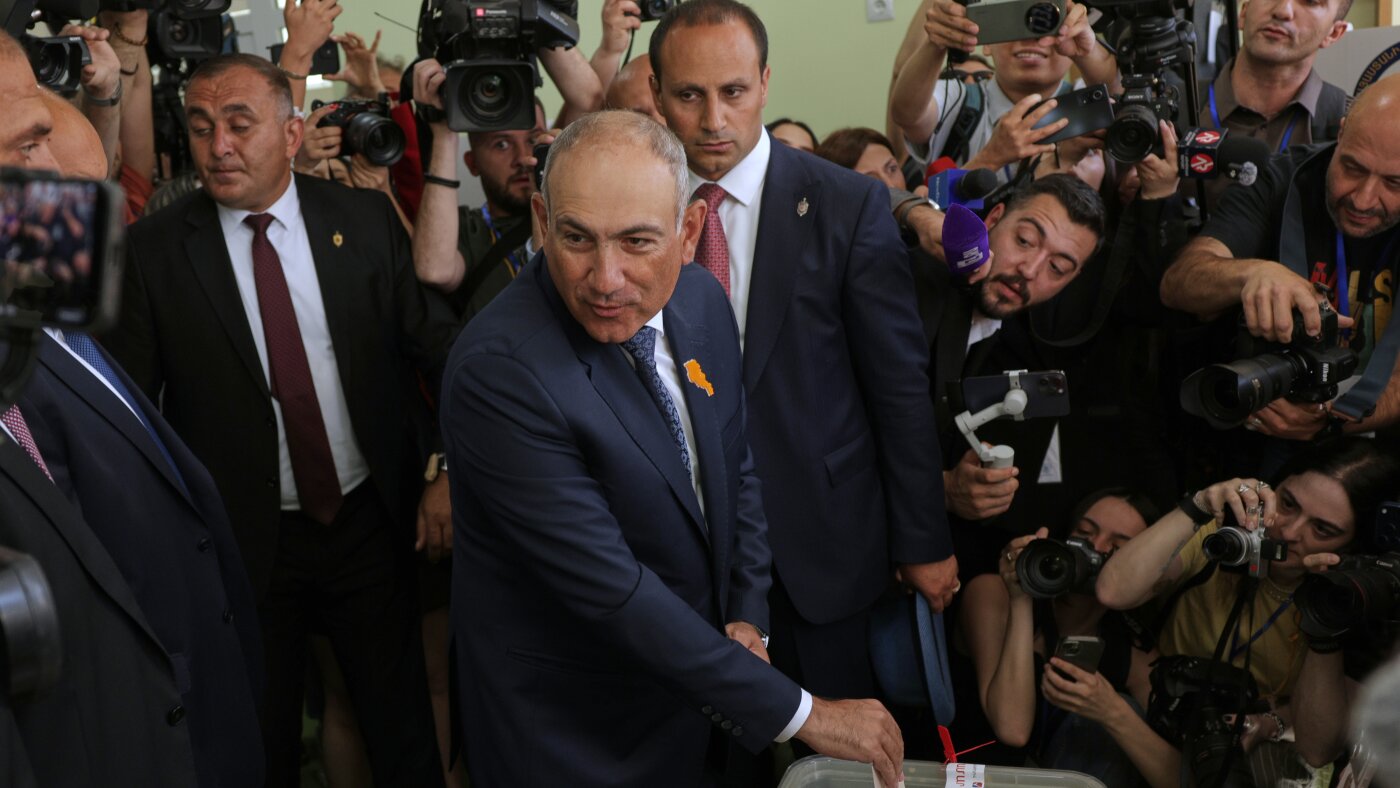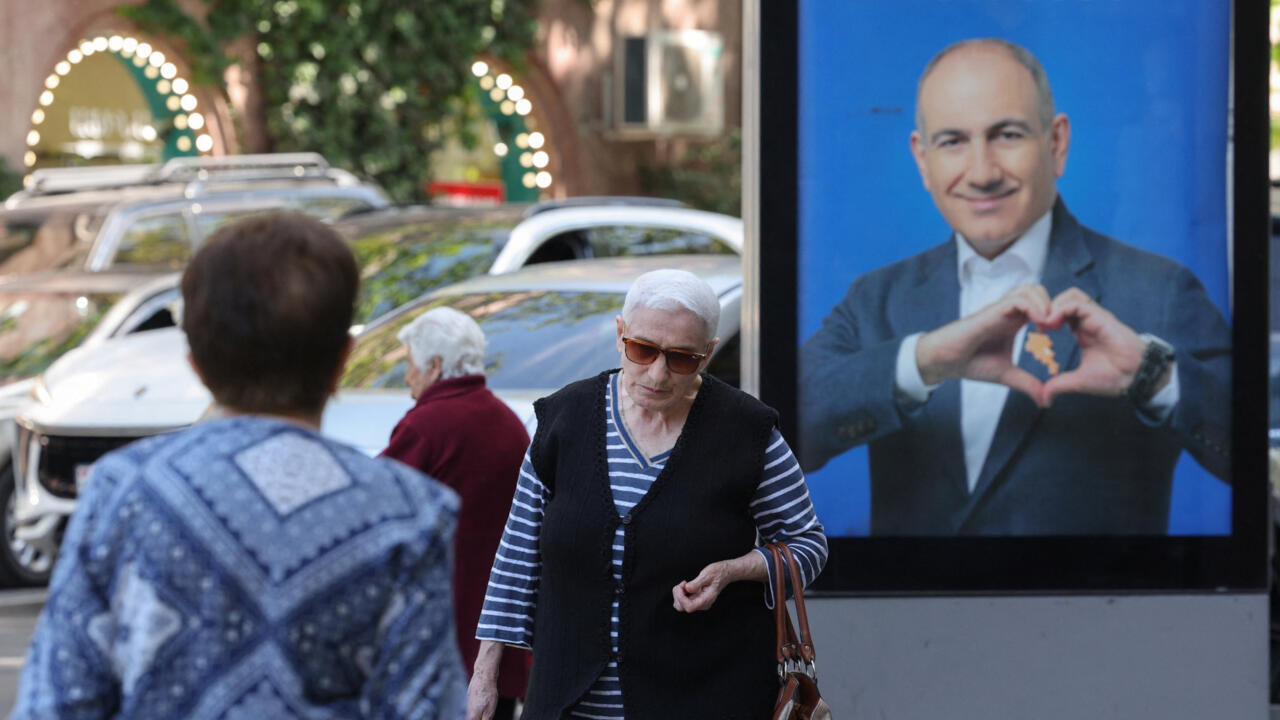
Armenia votes on Sunday in a parliamentary election seen as a referendum on Prime Minister Nikol Pashinyan's drive to loosen his country's historical dependence on Russia and turn towards the West.
Issued on: 07/06/2026 - 07:15
4 min Reading time
Pashinyan, who was propelled to power in a 2018 street revolution, is running under the slogan of "peace" – pointing to the prospect of finally resolving Armenia's more than three-decade conflict with Azerbaijan and normalising relations with Turkey. Joshua Kucera, senior South Caucasus analyst at the International Crisis Group, summarises the prime minister's pitch thus: "We've brought peace and this is what I will do." Pashinyan's rivals accuse him of mishandling foreign affairs, making too many concessions to Baku and Ankara, and wrecking ties with Moscow. But against him, the field is weak and divided. "The opposition largely has fragmented," Richard Giragossian, director of the Regional Studies Center, a think tank in Yerevan, told RFI. "All are generally pro-Russian or close to Russia and are much more discredited and deeply unpopular." Strikingly, there is little difference between the platforms. "There is no real policy debate," Giragossian says. "It's very much personal politics here." Opposition parties include Strong Armenia, led by Russian-Armenian businessman Samvel Karapetyan and currently the most popular opposition party. It is followed by the Armenia Alliance of Robert Kocharyan, a former president of the Nagorno-Karabakh region – which Armenia lost to Azerbaijan after decades of control in a brief and bloody war in 2020 before it was finally dissolved as an Armenian enclave in 2023, under Pashinyan's rule. But even though the opposition attacks Pashinyan over Nagorno-Karabakh, says Kucera, "they haven't really provided any kind of alternative vision for what they would do". Life after ruin: Aghdam's fragile rebirth after the Nagorno-Karabakh conflict Disillusionment with Russia In former Soviet republic Armenia, Russia casts a long shadow over the campaign. Moscow, historically Armenia's patron, has banned a string of Armenian imports and hinted at withdrawing cheap gas supplies, while Kremlin-friendly narratives circulate online. But analysts say interference limited. "Its efficacy is much less than expected," Giragossian said. "It's falling flat." Observers report public sympathy for Russia has plummeted. "A lot of people now are very disillusioned with Russia," says Kucera, adding that Yerevan's aim was to "not have this full dependence on Russia that we used to have, and try to diversify". That disillusionment is rooted in the loss of Nagorno-Karabakh, which triggered the exodus of some 100,000 ethnic Armenians. Nagorno-Karabakh will 'cease to exist' as half of population flees