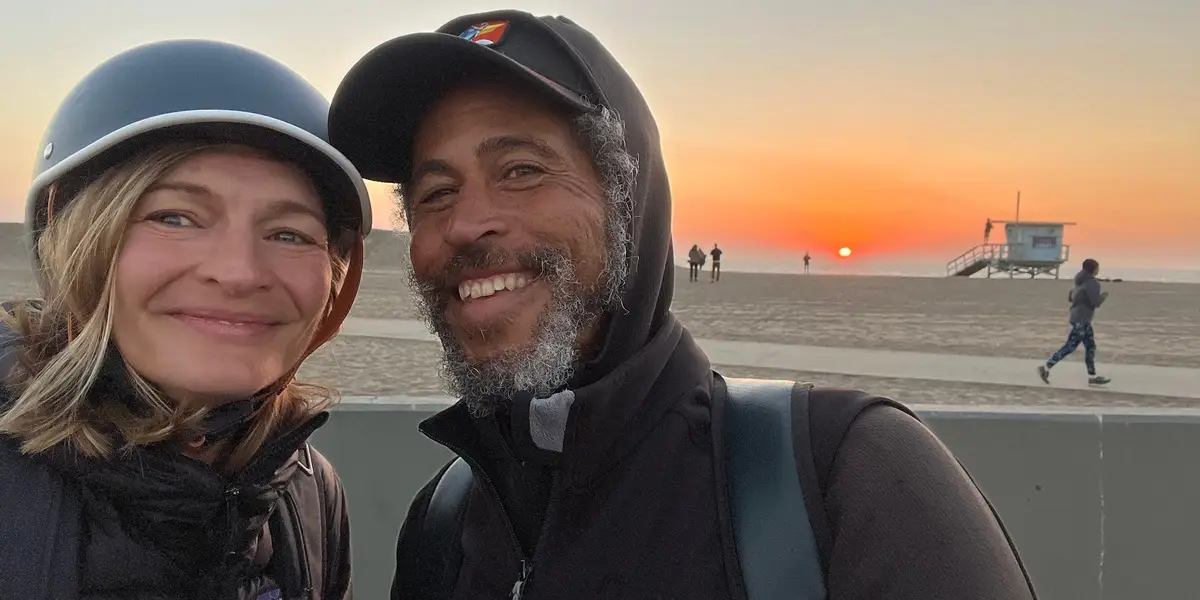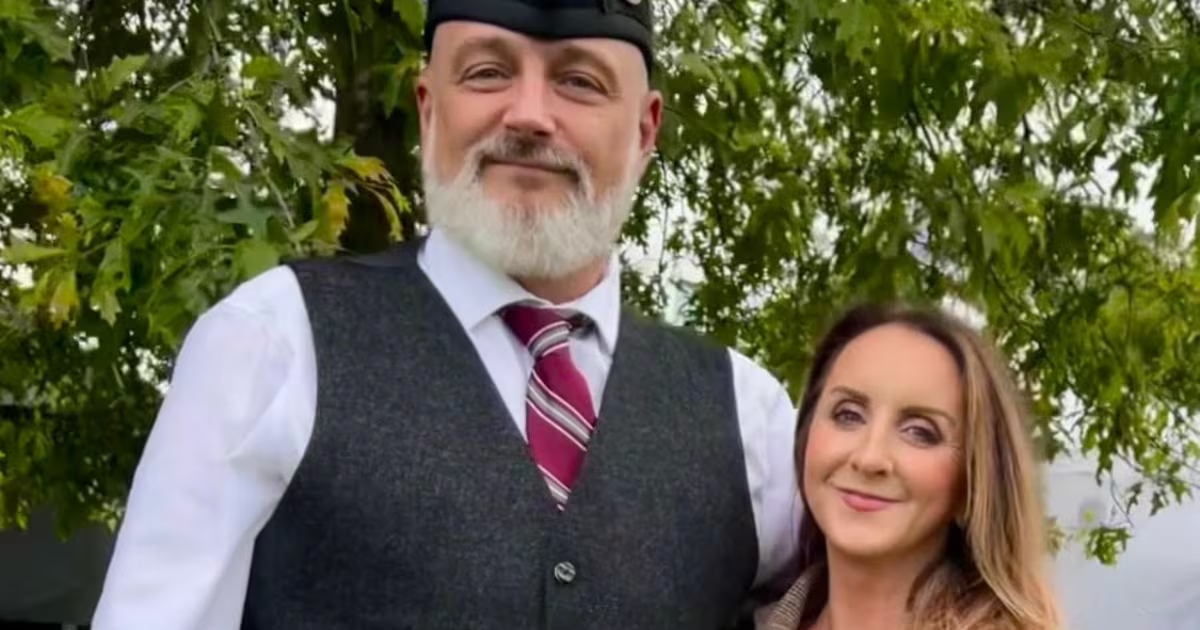
Making friends can be hard: ‘When I first came, I’d meet people who then went home after two years to have children’Katriona Masters and her husband Colin: 'We thought we need to make a jump' Sun Jun 07 2026 - 06:00 • 5 MIN READKatrina Masters from Co Down offers her perspective on moving to Canada with a family. You can read our Everything You Need to know guide here.Why Canada?When Katrina Masters and her Scottish husband were thinking of moving to the US 10 years ago with their three children, global events conspired to change their decisions. Her husband had been working in financial services in New York, and on one of their many trips over to visit him, in 2015, Masters “fell in love” with nearby Connecticut. Despite having concerns about leaving her supportive family in her native Co Down and the coffee shop she had opened there, she decided: “Let’s do it.” But the process for emigrating to the US was “long and complicated” and when Donald Trump was elected in 2016, Masters had second thoughts. The other big shock to the world that year was the Brexit vote. The economic impact soon began to hit her coffee shop. “We thought we needed to make a jump,” says Masters. Her husband Colin was offered a job in Dublin and they considered a move with their children, then aged 16, 10 and five. But in the background, talk about future checks on the Border swirled and childhood memories of her father being searched came back. “I didn’t want that for my children,” says Masters.“Then Colin said: ‘What about going to Canada?’ I’d never been but he was deployed [there] with the army before I met him. He said: ‘You’ll like it; it’s really clean’.”Masters tells how the decision turned on a moment, in the garden of a house the couple were viewing in Portmarnock, with a job-acceptance deadline looming. “I said: ‘If we do this we need to forget about Canada. What if we end up sitting here wishing we were on a plane out of here’?” So they put in an application. Colin was about to turn 36, and just made the age cut-off for a working-holiday visa. “By Tuesday morning we had our visa offer.” [ Moving to Canada: Here is what Irish people need to knowOpens in new window ]People from the Republic and the UK can each get a two-year International Experience Canada working-holiday visa if they are aged 18-35. UK citizens may also get an additional 12-month visa. So, people from Northern Ireland can, if they have dual Irish and UK citizenship, get up to five years in Canada on working-holiday visas. It’s possible to bring a spouse and dependants for two years; however, they may need to apply for different visas as visitors or students.Thanks to Colin’s skill set they got into Canada’s Provincial Nominee Program. This allows provinces to nominate people who have specific sets of skills to enter the country. It set him on a pathway for permanent residency. So in 2017, the family moved to try it for two years. Finding a home False Creek in Vancouver, Canada. Photoraph: Getty Images Colin travelled to Canada first and found a house in Coquitlam, a large suburb of Vancouver, and schools for the children before the rest of the family joined him.Moving to British Columbia – the province in which Vancouver is located – is expensive and anyone thinking of going should “bring cash” says Masters. Rent is “very high” and buying a house took a while. “What they don’t tell you before getting here is that to get a house you have to go through an interview, show them pictures of the family. You need a credit check and bank statements. A lot of the houses, you don’t have the whole house; you’ve a family in the basement underneath you. That blew my mind,” says Masters. When the couple finally got their permanent residency, they started the process of buying a house. They have just moved house again, to a condo in Port Moody, also on the outskirts of Vancouver, with watersports and wilderness. “I’m loving it,” she says. Meeting people David Lam Park in Vancouver, Canada. Photograph: iStock Moving to a country where she knew no one and trying to make new friends was one of the biggest challenges experienced by Masters. She was used to going to the park back home and chatting to other mothers, letting their children play. But in the park near her new home “everyone stood over their children”. There were many immigrants from other parts of the world in her area, she says, describing Canada as “a big melting pot”. At first she found it harder to integrate. But on a Facebook parenting page, she got chatting to a teacher from Limerick planning to move to Vancouver. Her child was seven, the same age as Masters’s youngest. “I said: ‘You’ll love Coquitlam‘.” Masters convinced her new friend to move to the area, viewing houses on her behalf and sending her videos of them to help her choose. Her husband collected the woman from the airport. “She’s now my best pal.” Masters developed a mothers’ group and has since made many friends. “We built up a community out of that,” she says.Many Irish people go to Canada on working-holiday visas and stay for the two years the schemes allow. Masters says this adds an element of transience to life there; she sometimes finds it difficult when people move away. “When I first came I’d meet people who then went home after two years to have children.” While she has Canadian friends, she says “it’s harder to make them” and they are “not as forthcoming” as in the United States. “In America when you are Irish, they love it. Here it’s not as much like that; they are like, ‘Oh, very good’,” she says Her husband, a Celtic supporter, found a club and made friends with others in the Scottish community.However, her children are loving life in Canada and have adapted well: “My daughter was amazing. She threw herself into everything, found a volunteer programme, made friends. She found the bus route quicker than I did.” The positives and the negatives One of the shocks Masters recalls was when her daughter phoned to say there was a bear in the park. “We thought, this is crazy. Nobody prepared me for bears; they just walk about.” Canada has an estimated 380,000 black bears. According to wildlife safety advice from British Columbia Parks, the province is “bear country”. Black bears can be found “almost anywhere”, including in the suburbs and city outskirts. It says bears tend to be wary of humans, but anyone who encounter them shouldn’t run away. Masters says the quality of life in Canada is “really good” overall, with “clean living” and “everything outdoors”, “lots of activities [such as] skiing and hiking” and a very peaceful life. “We’ve a great circle of friends and a great way of living. It’s very peaceful”. Irish in Canada by numbers (Todd Korol/The New York Times) How many people move from the Republic of Ireland to Canada every year? 5,100 in the year to April 2025 How many Irish-born people people live in Canada?29,300 Where do the Irish-born people live?49% live in Ontario 25% in British Colombia 14% in AlbertaWhere do more recent Irish-born arrivals live (2016-2021)Ontario: 25%British Colombia: 38% Alberta: 16% How many Canadians have Irish ancestry?4.5 million, or 15% of the populationIs Mark Carney an Irish citizen?The Canadian prime minister was born in Canada but obtained Irish citizenship in the 1980s through his Mayo grandparents. Shortly before becoming prime minister in 2025 he began the process of rescinding his Irish passport. Sources: CSO , 2021 Canadian census, DFA/Ireland.ie Are you Irish and living in another country? Would you like to share your experience in writing or by interview? You can use the form below, or email abroad@irishtimes.com. Irish Times Abroad submission guidelines here. Follow us on Instagram to keep up with the latestSign up to The Irish Times Abroad newsletter for Irish-connected people around the world. IN THIS SECTION
Moving to Canada with a family: ‘My daughter phoned to say there was a bear in the park’
Making friends can be hard: ‘When I first came I’d meet people who then went home after two years to have children’
1,363 words~6 min read