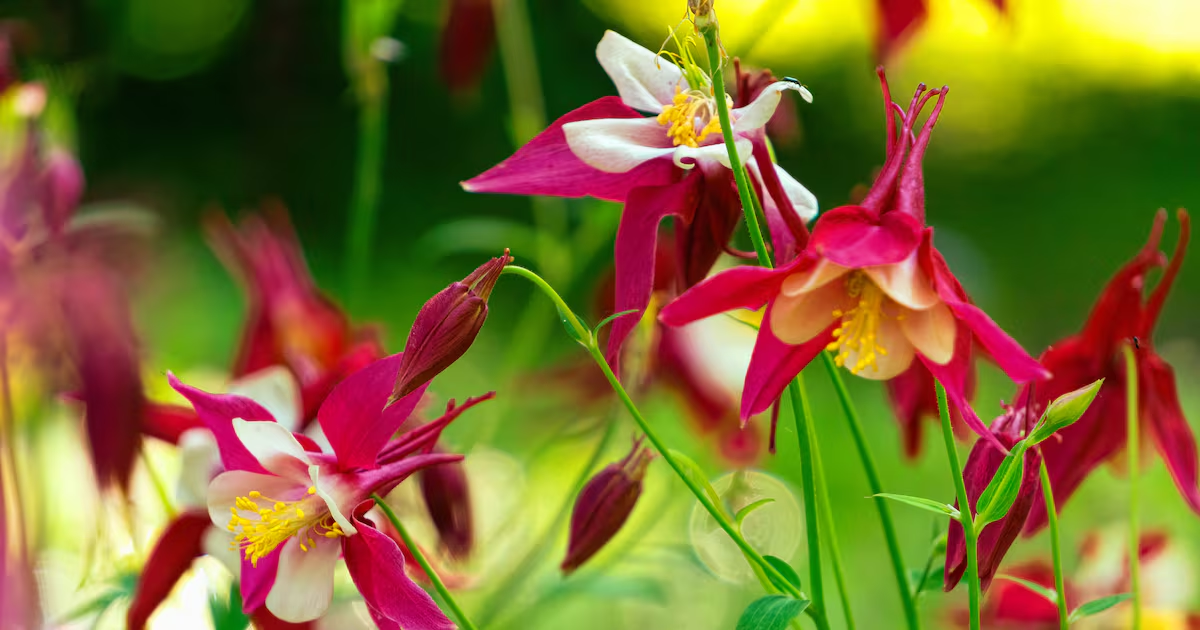
A gardening friend has kindly given me fresh seed from the columbine plants growing in her garden that I’ve long admired. What would you recommend as the best way to sow them? She’s suggested just broadcasting them through my flower beds, but I’m worried that I might accidentally weed out or hoe away the baby seedlings without realising. Maura M, DublinAlso known as granny’s bonnet on account of its distinctively shaped flowers, columbine (Aquilegia) is a very pretty, late spring-flowering perennial. Depending on the variety, its flowers come in a very wide range of different colours from plum, burgundy and pink to purple, blue, white and yellow, and even bicoloured. Some, such as the supremely elegant Aquilegia chrysantha ‘Yellow Queen’, feature distinctive, swept-back spurs, while others such as Aquilegia vulgaris ‘Ruby Port’ are spurless but double-flowered.These shade-loving cottage-garden favourites like a cool, moist but free-draining soil, which is why you often see them self-seeding liberally into damp gravel paths. Named varieties will often produce progeny with flowers in shades of pink, blue and purple, with these offspring generally proving to be longer-lived than their parent plants.I would recommend using a combination of sowing techniques in order to increase your chances of success with the seed your friend has given you. The first of these is to do as she suggests, although I’d recommend also broadcasting some seed on to a shady, gravelled area if you have one, for the reason outlined above. The second is to sow seed into pots, pre-chilling it first to break dormancy by placing it between a few layers of damp kitchen paper in a sealed freezer bag and then putting it in the bottom drawer of your fridge for about a week.Bear in mind that columbine seed needs to be surface-sown to allow exposure to light, and takes four to five 5 weeks to germinate, so be patient. The seed compost also needs to be kept moist for germination to be successful, for which reason I suggest sowing into a two-litre pot and then capping with an upturned clear freezer bag sealed with an elastic band until you see the seedlings begin to emerge. Once their first true leaves appear, these can be pricked out into modules or individual small pots, then grown on until large enough to plant out into their permanent growing spots in your garden.To encourage them to self-seed, continue to gather ripe seed in summer and broadcast it generously around your garden. It’s also a good idea to occasionally buy fresh plants to add to the genetic mix as well as to up the chances of them producing some especially pretty offspring.Please add Gardening question form
‘How can I grow columbine plants in my flower beds?’
Use a combination of sowing techniques to increase your chances of success
445 words~2 min read