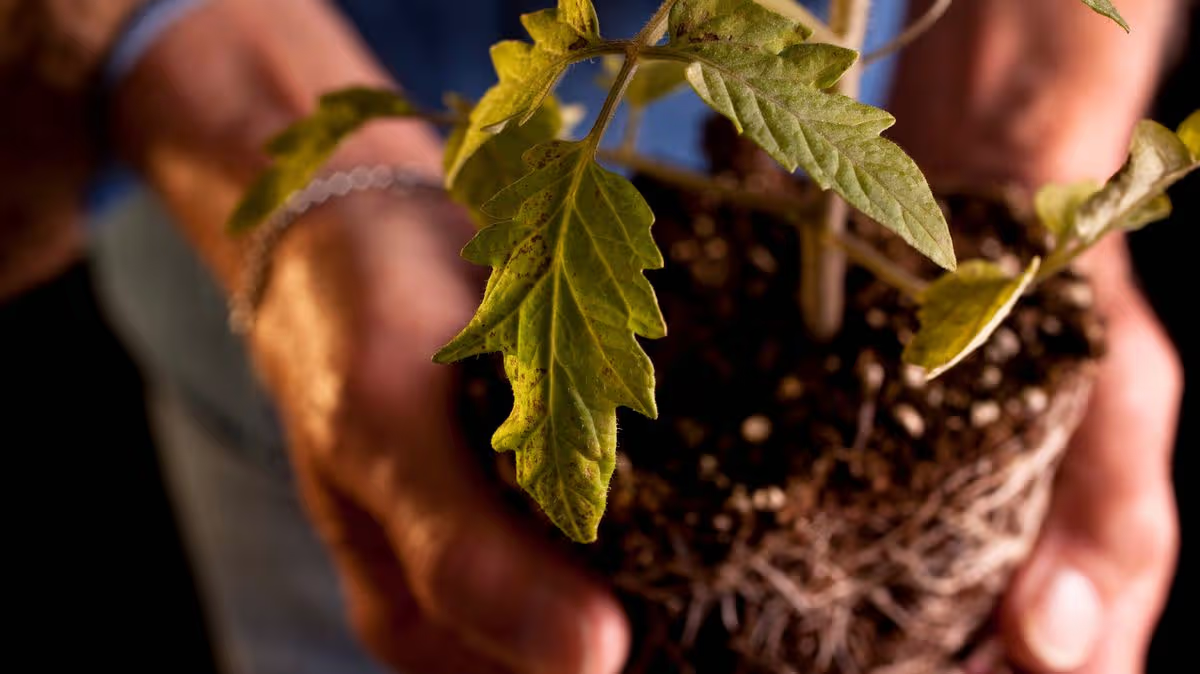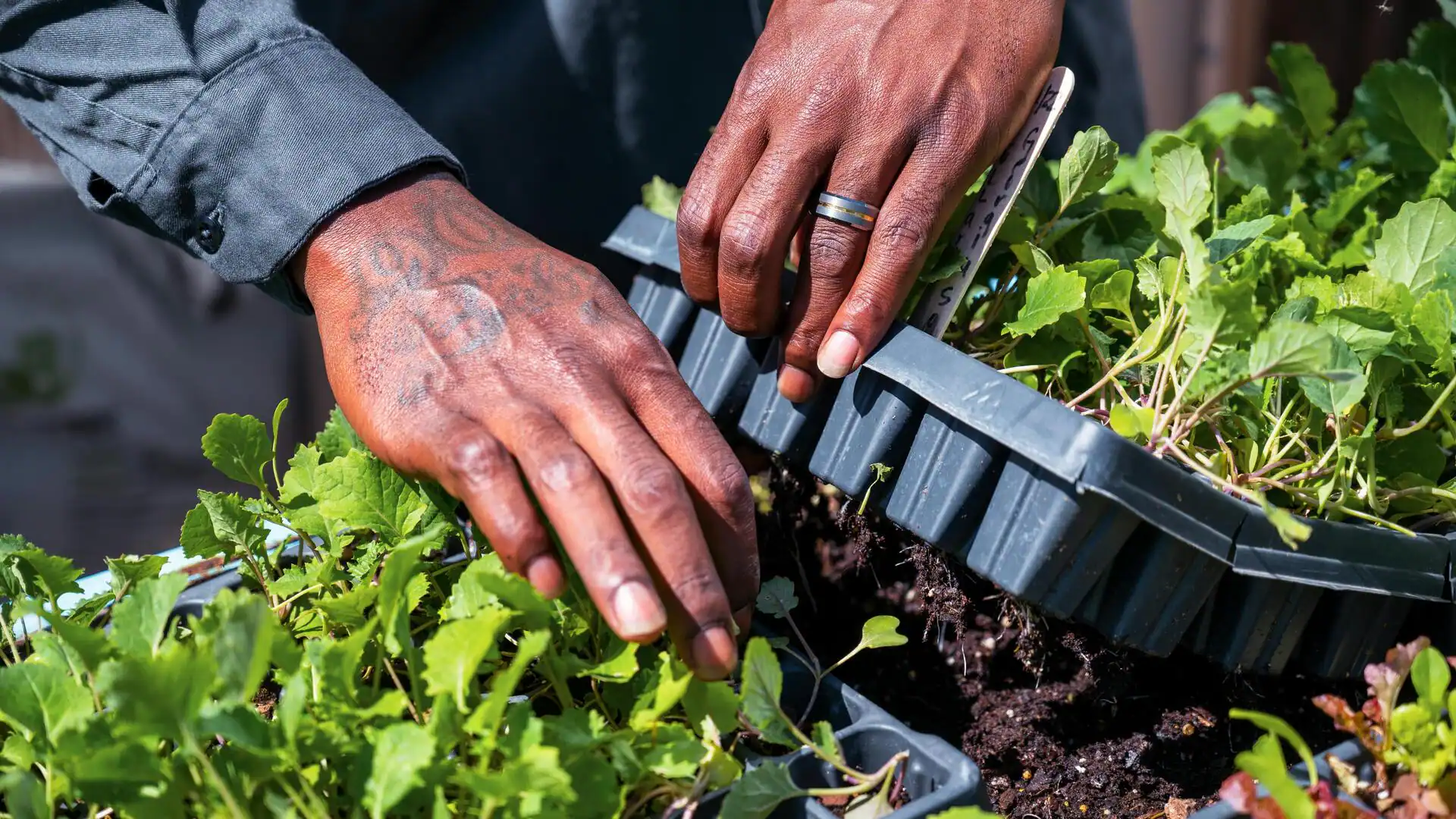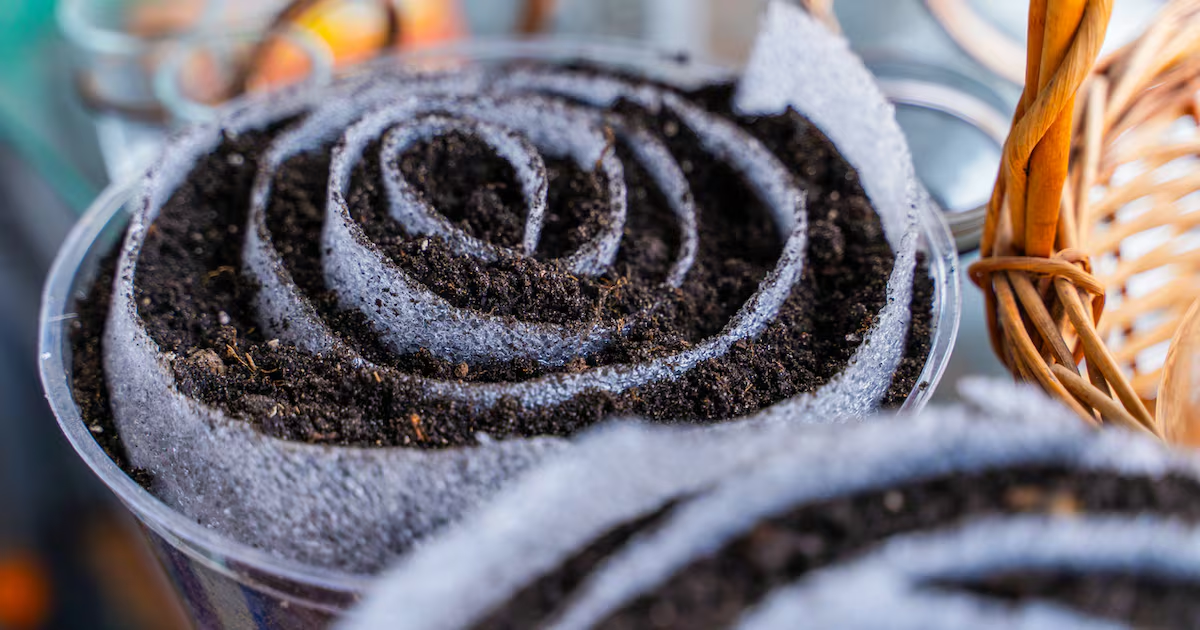
Q: I’m very curious to know your thoughts on the ‘seed snail’ method for growing plants. Have you used it? I’ve yet to try it as I worry that it won’t be as effective as it looks on Instagram. Emma H, DublinA: The seed snail method has taken Instagram by storm this year, with countless videos of gardeners demonstrating how to use it to raise plants from seed in a space-efficient, planet-friendly way that’s relatively light on expensive seed compost and also doesn’t require the use of seed trays, root trainers, or modules. While recently popularised by the UK-based gardener Farida Sober (@faridasober), variations of it have apparently been used for centuries by gardeners in eastern Europe and Russia.Part of its great charm is its simplicity as well as the fact that it allows gardeners to usefully repurpose various kinds of plastic, from empty compost bags and old shopping bags to plastic mulch sheeting, or even bubble wrap. To make one, cut out a longish strip of plastic, cover it with a 5cm layer of good quality, damp compost, then curl this length of compost-covered plastic sheeting tightly over on itself to form an overlapping spiral reminiscent of a snail shell. This needs to be quickly secured with plastic bands or string around the top, middle and bottom.You can alternate the final height of the roll depending on the variety that you’re growing (make it taller for deep-rooted plants), but typically it should be between 15cm-25cm. The seed can then be sown directly at intervals into the compost. Alternatively, it also works very well for pricking out young seedlings, the only modification required being that you lay these out along the compost and then lightly cover them with more compost before rolling it into the snail shell shape.I used this method for the first time this spring to prick out various vegetables, flowering annuals and perennial seedlings and have been really impressed with the results. It’s particularly brilliant for naturally deep-rooted species such as ammi, mollucella and scabious that would quickly run out of growing space. Placing the ‘snails’ into a 2-3 litre pot with a little additional compost at the base also helps to keep them stable and gives any probing roots some extra space. All that aside, I’ve found the seed snail method vastly preferable to traditional modules and root trainers when it comes to ease of planting. Unlike the latter, where removing the young transplants from the tray can be a torturous, time-consuming job involving lots of poking and squeezing of the root ball (a steel landscape pin helps), the seed snail can be simply unrolled and then each individual transplant gently teased away with its own root system before being quickly planted into its final growing spot. Game-changing.
Gardening Q&A: Is the ‘seed snail’ method of planting as effective as Instagram suggests?
This sustainable approach to planting has taken the Internet by storm this year
462 words~2 min read