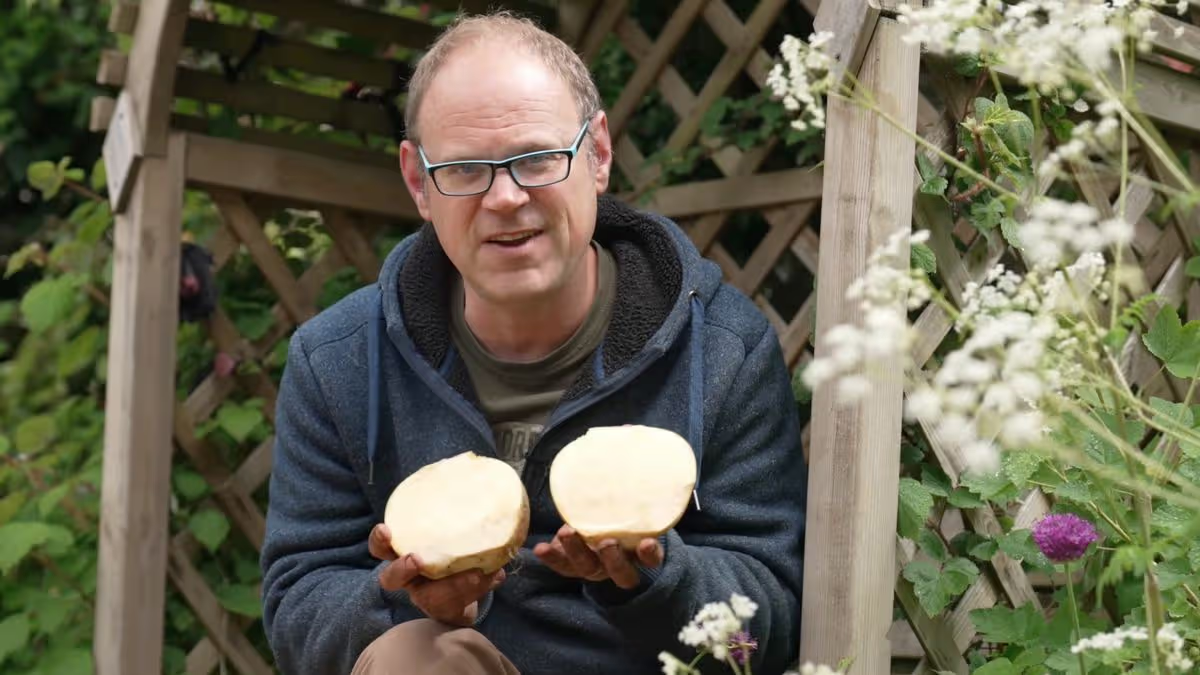
Gardening expert Benedict Vanheems has shared eight kitchen garden crops to sow right now, warning there's only a short window left in June to get planting for a successful harvest11:30, 02 Jun 2026Updated 07:06, 03 Jun 2026With an unseasonably warm spring blending into summer, novice gardeners might be wondering whether it’s too late to get their kitchen garden underway. However, gardening expert Benedict Vanheems insists there’s still a chance — though you’ll need to act fast.“Right now there’s a short window to get ahead,” he says, listing eight crops to plant right now. “They get off fast and they could be giving you a harvest in as little as six weeks, but only if you sow them before it’s too late.”BROCCOLIBenedict’s top pick is purple sprouting broccoli. It’s the slowest of all his selections to reach maturity — taking anywhere from eight to 10 months before it’s ready to harvest — but it’s absolutely worth the wait, he explains on his GrowVeg channel.He begins the seeds in plug trays: “The reason for this is that I can keep them better protected from the likes of slugs and pigeons, but perhaps most importantly is that I can sow them and get them started while the ground they are eventually going to go into is still occupied.”Once the plants eventually reach full maturity, he says it’ll “make you feel a bit like a gardening genius.”As with most plants of this variety, you should begin the seeds in some all-purpose potting mix. Create a small hollow and place the seeds inside. “I’m going to go in with two seeds per cell, and if both germinate, I’ll just remove the weakest to leave the strongest in each cell,” Benedict says.Water thoroughly, protect the plants from frost and pests, and simply allow nature to do its thing. When you do plant them out, bear in mind that each plant needs plenty of space — roughly two feet apart is ideal — as sprouting broccoli can be quite a demanding crop in terms of room.SWEDEBenedict’s second vegetable pick is the somewhat underrated swede — known as rutabaga across the pond, or neeps if you happen to be Scottish.Benedict says: “My absolute best way to serve this is to boil this up with some potatoes and then mash it all up with plenty of cream and butter and lots and lots of spicy white pepper — that’s the important thing, white pepper, not black.”Referring to swede as the “king” of root vegetables, Benedict explains that it actually thrives when sown at precisely this time of year: sow it too early and it risks bolting, but sow it now and it will grow steadily through the warmth of summer and then as autumn arrives, those roots will get their sugars really concentrated.KALEAnother indispensable addition to any kitchen garden, Benedict argues, is kale: “Some leafy greens can also improve in taste with cold frosty weather,” he explains. “When you get cold temperatures with kale, what happens now is that the starches in the leaves are broken down and converted into sugars, giving your leaves a kind of sweeter and more tender edge to them.”Kale will also be ready to harvest precisely when the infamous “hungry gap” means there’s precious little else to pick from the garden: “Now is the time to start off kale for a long harvest window, that incorporates autumn, winter and indeed on into spring,” Benedict says.“I do love kale,” he adds, “it’s a kind of alpha vegetable... the way it’s just so hardy and also so beautiful as well.”SUMMER SAVOURY AND CHIVESTo bring a touch of extra flavour to a whole host of dishes, Benedict also suggests growing summer savoury and chives. Summer savoury, in particular, makes a wonderful companion to beans, he says, while chives are an absolute must for Spanish omelettes.He explains: “Summer savoury, if you have never tried it, has a slightly peppery flavour a bit like thyme perhaps, and unlike winter savoury, it is actually a lot milder and more delicate and it’s fast growing, which really does make it perfect for sowing right now.”The brilliant thing about cultivating chives, he adds, is that once established, the plant will return year after year. They do require a little patience to get started though: “Chives are a little bit slower to germinate, they can take up sort of 3 or 4 weeks, so do be patient with them,” he says.Chives are “one of the most useful herbs of all,” he says, “pairs so well with eggs, potatoes, snipped into soups, just about anything.” The flowers are also edible, he points out: “They look so beautiful scattered into an early summer salad, they’re really beautiful.”“They’re great companion plants too,” he says. “They go well with so many vegetables, including rutabaga or swede, coincidentally.”Benedict adds that he has an online garden planner on his site that makes it easier to lay out your veg patch with compatible companion plants close to each other.“If you are looking for an even quicker and easier thing to grow,” Benedict says, “then bush or dwarf beans are your answer. They don’t need any supports and sown into warm soil, they will quickly get up and away. And they are quick, they could be ready within about 8 weeks of sowing, which is pretty remarkable.”DWARF BEANSBenedict sowed some borlotti beans, which can either be used as fresh green pods, or dried and stored for the winter: “I’ll keep my beans well watered and I will pick often to keep them coming.”Most will be harvested once they’re fully dried up, to shell for those delicious beans for casseroles, but some will also be enjoyed fresh.BEETROOTEarly summer is equally the perfect time to sow beetroot for a main crop, he adds: “The soil is warmer at this time of year, which means quicker germination and faster growth, and you avoid the slight risk of bolting, which can sometimes impact beets that are sown earlier in the season, while it’s still quite cold.” However, they do require plenty of water: “The trick with beets is to keep them well watered, because if they do dry out the roots can turn a bit woody and tough, and obviously we don’t want that.”SPINACHWhile cultivating spinach during the summer heat can be “asking for trouble,” Benedict explains that although this earthy green vegetable can be somewhat temperamental and bolt in hot, dry conditions, the key is to opt for a bolt-resistant variety and pick a relatively shaded spot. And, once again, ensuring your spinach receives adequate water is essential.“The secret with summer spinach, and indeed pretty much any spinach,” Benedict adds, “is to pick the leaves while they’re not too big.”It’s worth mulching the soil between your spinach plants with grass clippings to stop the ground from drying out.Article continues belowThis selection of vegetables should offer a fantastic range of colour and flavour to both your garden and your plate for months ahead. But only, Benedict stresses, if you’re quick.
Gardeners told to act in June — eight seeds could make all the difference
Gardening expert Benedict Vanheems has shared eight kitchen garden crops to sow right now, warning there's only a short window left in June to get planting for a successful harvest
1,165 words~5 min read