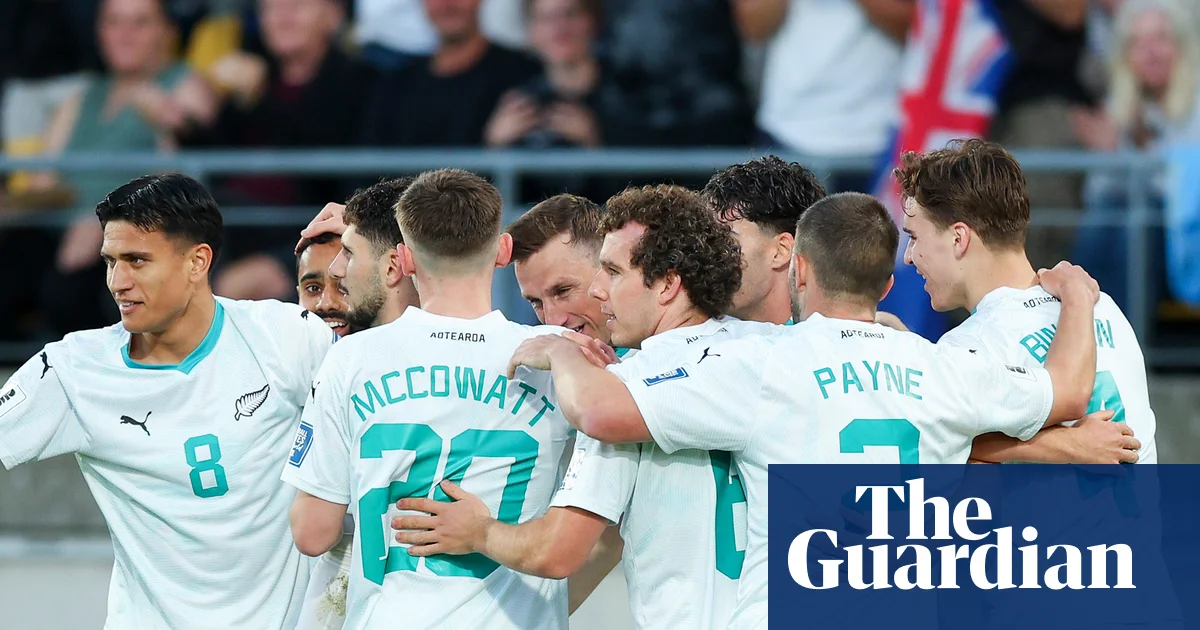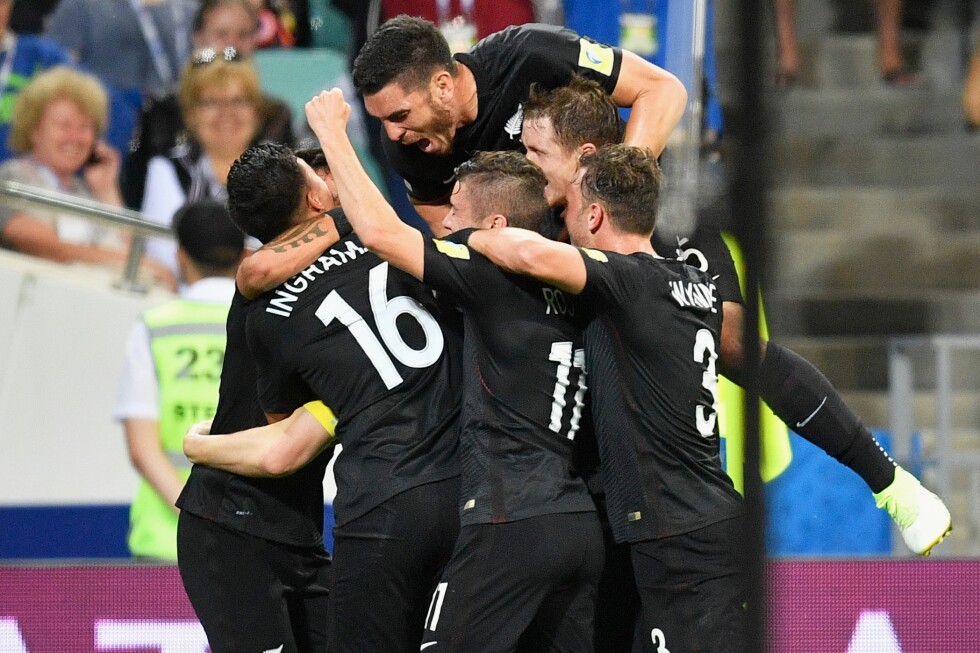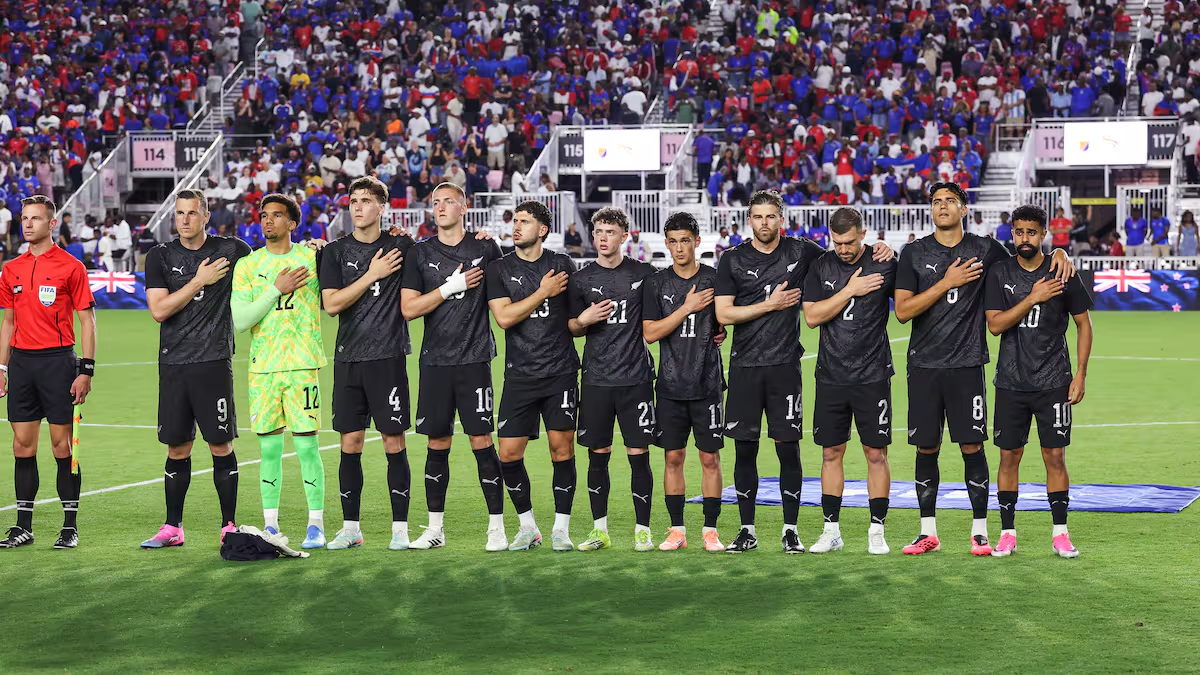
As part of our Language of Soccer World Cup series, The Athletic is speaking to supporters of all 48 nations competing at the 2026 edition to capture their unique football culture, distilled into a single phrase. You can read the articles in one place here.Kiwis can flyThey are three words woven into the fabric of being a supporter of New Zealand’s national soccer teams.There is a beautiful sentiment behind the paradox: that the flightless bird, a native icon, can defy its limitations as well as the expectations of everybody else.After all, New Zealand will be the lowest-ranked team — 85th according to FIFA’s latest list — at the 2026 World Cup finals, two places behind Haiti and three off Curacao.But what it really means to be a New Zealand supporter lies in the contradictions. It’s the football family that can be a lonely experience, flipping from a dominant force in Oceania to the pitied minnows in the global soccer ocean.The country renowned for its All Blacks, being represented by the All Whites. A rugby hotbed where soccer has become the country’s biggest team participation sport — but attendances and support for its national side are well short of matching those levels.Soccer’s blossoming popularity is bringing its own challenges, as strengthening club rivalries impinge on a tightly knit national support base.Despite those knots needing to be unpicked, the experience remains unburdened by heightened expectations and laced with enough self-deprecation to laugh at their unbeaten 2010 World Cup finals appearance in South Africa — the only country to avoid defeat at the tournament — that still saw New Zealand exit at the group stage.Sixteen years later, New Zealand will take that unbeaten record with them this summer, their third appearance at the World Cup after a pointless debut at Spain 1982.New Zealand fans are hoping to win a World Cup match for the first time (Joe Allison/FIFA via Getty Images)“It’s actually quite tough being an All Whites fan,” Wellington-based supporter Dale Warburton told The Athletic. “Being in Oceania, you don’t get a lot of games. I’ve seen every home game since 2007 and that is 22 games in 19 years, usually against relative minnows of the Pacific Islands. It’s slim pickings.“Then when we do play away or in Europe against the bigger nations, it’s two in the morning so you need a good alarm and strong coffee. It can be pretty lonely because it doesn’t get a lot of air time. But perhaps things are changing…”Fellow longstanding New Zealand and Wellington Phoenix fan Tracey Hodge added: “The World Cup in South Africa, there were such low expectations. It’s not as stressful as countries where if you go to a World Cup, you must win. We drew every game in that tournament and it was like we’d won the thing.“Our attitude is evolving. We’re getting better. Our player quality is better; they’re playing in better leagues overseas and then representing the country. But historically, it’s been relatively chill… because you go to a game, you draw against Italy, and you’re going crazy.”New Zealand’s international landscape has improved thanks to the World Cup finals expanding to 48 teams. The creation of a guaranteed berth from the Oceania Football Confederation (OFC) comes with a $9million ($15m NZ, £6.7m) payout every four years, which is good news for a team that was a goal away from averaging 6-0 victories through its five qualifying games in reaching the 2026 finals.All too often, New Zealand’s World Cup dreams would end against opposition from other confederations at the final qualification play-off hurdle — a fate the All Whites avoided against Bahrain to make the 2010 finals in South Africa.“Football is not even in our top three sports in New Zealand, so to create a fan culture for the national team is difficult because you’re fighting for space in the same air,” said 21-year-old Auckland videographer Dominic Johnson. “It’s only moments like Bahrain or back in 2023 (co-hosting) the Women’s World Cup when football gets the media spotlight. Hopefully, it will also be in June when the World Cup unites the country.“The rest of the time, you’re doing it by yourself. The odd-one-out friend who is a fan of football compared to rugby, cricket or netball.”One supporter who could be forgiven for feeling the burden of growing New Zealand’s fan culture is Matt Fejos. The futsal and youth football coach is back in Auckland after spells at the English Football Association and Manchester United Foundation.His return to Aotearoa is good news for The Flying Kiwis, the New Zealand supporters’ club he founded that will help more than 10,000 fans turn keen interest into a ticket at this summer’s tournament in the United States, Canada and Mexico.“I’ve counted 43 countries where football is not the number one sport, so roughly 20 per cent of the world’s countries,” Fejos told The Athletic. “The back pages here are dominated by rugby. I asked those I coached in Auckland this week how many All Whites players they know, and it’s between one and three. Some don’t even know who Chris Wood is.“It’s tough but you do it because you love it, and then it means so much more when you gather with others who care that much. Especially travelling overseas.“There’s a real purpose to share it and write a bit of history as fans together, to grow a supporters’ culture of our own because we don’t have 150 years of tradition like in England.“I just had 10 years there and it was amazing. We’re quite young at a lot of things here so there’s a real chance for us to shape it and do it our own, Kiwi way.”Fejos is doing his bit. Seeing him bounce about in the uncovered East Stand of Eden Park as the Auckland rain fell during New Zealand’s eye-catching 4-1 friendly win over 10-man Chile at the end of March was something to behold.The only interruption to his constant stream of chants and cajoling of the huddling hundreds around him was to collect a pack of batteries he had ambitiously ordered to the stadium after kick-off, in a bid to bring his colleague’s megaphone back to life.The drop-off was successful, until the realisation they were the wrong type of batteries. You imagine Brazil’s Torcidas Organizadas or the England supporters’ band have help to avoid such issues.New Zealand played matches against Finland and Chile on home soil in March (Joe Allison/FIFA via Getty Images)Borrowing from soccer’s powerhouses has become a tool for New Zealand to create its fan identity. Some resulting issues are also familiar.“The interesting thing, particularly with Auckland FC entering the A-League (Australia and New Zealand’s shared domestic top flight), is there’s more rivalry between Auckland and Wellington than ever before,” said Hodge.“My experience of recent New Zealand games and the fan zone was different because Auckland and Wellington fans are in a phase where they don’t necessarily like each other. It then proves difficult to become a united group; more about where you’ve come from and less about supporting the New Zealand team, which is super important.”Johnson, who was born in the United Kingdom, added: “That rivalry in its modern format is only two years old. There are so many people who’ve been introduced to the game through that.“It’s only in the past 20 years or so where England’s club fans felt they could actually come together in the stands, so it makes sense it’s not there yet where you put away your club badge to support the All Whites — but it doesn’t feel like it’s going to be long.”Enter the chat, Julian Albright: “In the German Bundesliga, you’ve got 18 teams and when there’s a Germany national game, all the supporters are together. New Zealand has to go through this process to be one nation in the stands.”Albright’s experience is first-hand. The 34-year-old German lives in Munich and is on our video call at 9:30pm in Auckland — 9:30am in Bavaria — and happy to flaunt the beer in his hand.“I’m in the beer capital… it depends if you have to work or not and today I’ve got the day off, so it’s decent.”A German citizen, Albright began his journey supporting New Zealand in the year leading up to the 2010 World Cup, became a fan of Wellington Phoenix and had a chance meeting with former All Whites international Ben Sigmund — and now Albright reserves his use of the word “we” for New Zealand over Germany.“It’s pretty cool because I’ve been to more New Zealand games, five or six, and zero German national team games. You just get involved and it’s like family.”Some of New Zealand’s fan experience is as you would expect. Australia remain their fiercest rivals despite Australia’s 2006 switch from OFC to the Asian Football Confederation in search of a more competitive schedule.It was 2002 when the All Whites last beat the Socceroos. There is an opportunity for the two sides to meet this summer in the first knockout round, if they finish second in their respective groups.Alongside the expected is the idiosyncratic, such as the laser kiwi banner that caught attention in 2017 as New Zealand attempted to make the following summer’s World Cup in Russia.Showing the curious silhouette of a kiwi bird firing a luminous green laser from its eyes, some excited supporters credited the banner with helping fire up a record 37,000 crowd in Wellington as New Zealand held Peru to a goalless draw in the first leg of their qualifying play-off.
New Zealand are the World Cup’s lowest-ranked team. But their fans believe the Kiwis can fly
As part of a special World Cup series, The Athletic is speaking to fans of all 48 competing nations to capture their unique football culture
2,078 words~9 min read