By Kate Bartlett / Reuters, JOHANNESBURG
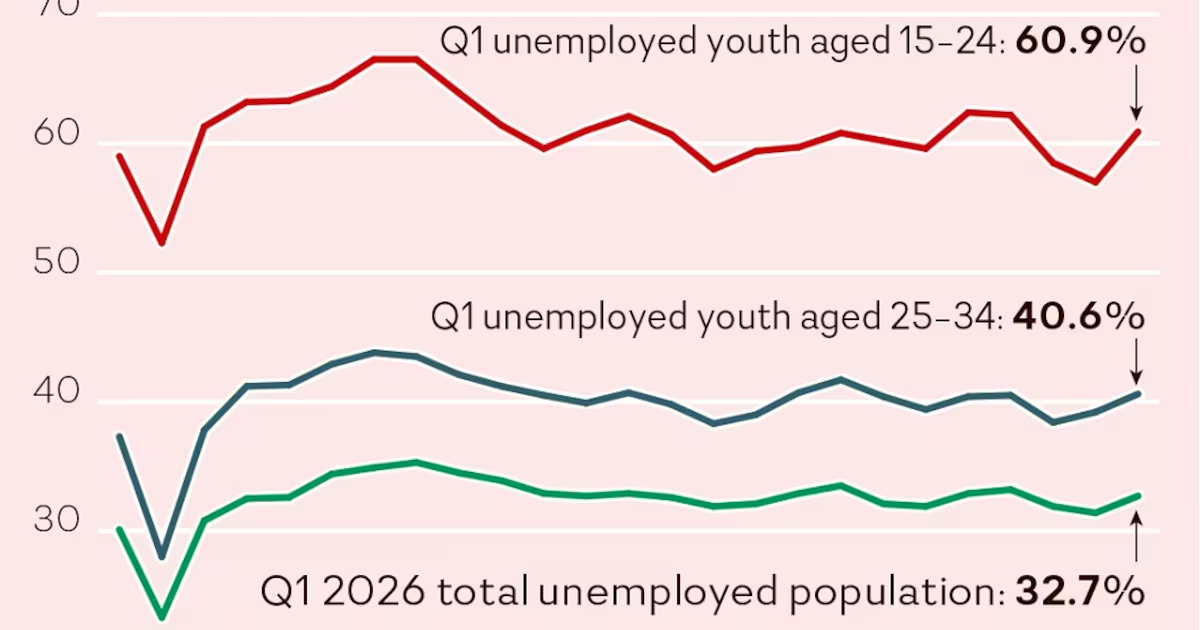
South Africa cannot create nearly enough green jobs to make up for the many thousands it would lose as it closes polluting coal mines and power stations, experts said, adding to the country’s burden of massive and rising unemployment.Nearly one-in-three South Africans are unemployed, latest government figures showed, and the numbers are rising. However, experts said the real level is probably about 10 percent higher, with youth unemployment at about 60 percent.
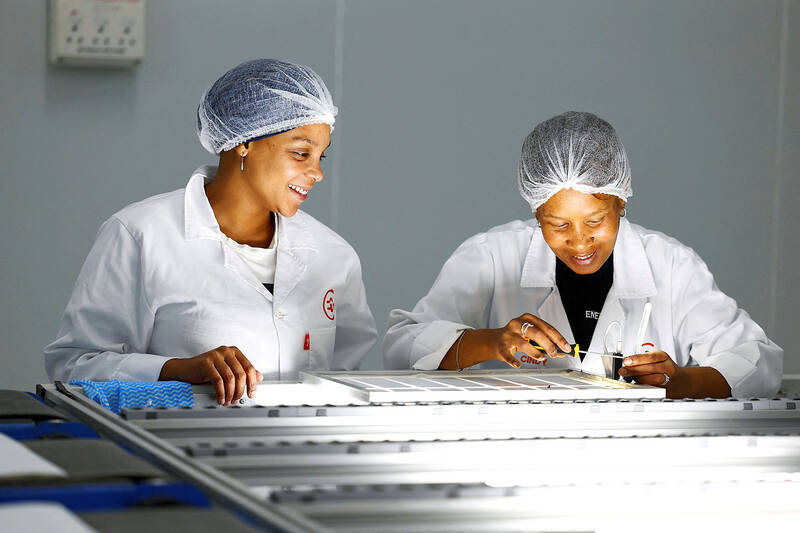
Workers test LED lights on solar panels in Cape Town, South Africa, on Feb. 9, 2023.
South Africa has so far phased out just one coal-fired power station, Komati in Mpumalanga Province, as part of its Just Energy Transition Investment Plan. The closure led to the loss of thousands of jobs and few new opportunities opened up.The government plans to decommission three more coal-fired power plants by 2030 and more after. Together, the power utility Eskom and the coal mining industry employ tens of thousands of people and many thousands more are dependent on those workers.
“The long-term Just Energy Transition faces a significant jobs gap in which the decommissioning of coal-fired plants currently outpaces the creation of localized, high-quality green industrial jobs,” University of Pretoria researcher Jessika Bohlmann said.In a study published in March, Bohlmann and her colleagues found that the share of green jobs had increased from 12.4 percent of all jobs in 2022, to 14.8 percent in 2024.However, there was a shortage of the necessary skilled labor for emerging green industries and green employment was concentrated in a just few industries — mining, utilities and construction, they said.“In South Africa, the green economy holds significant potential for job creation, notably in renewable energy, yet it faces challenges such as low economic growth, skills shortages, limited technological capacity, outdated energy infrastructure, political constraints and weak institutions,” the report said.The section of the population getting green jobs is also uneven, it said, adding that most jobs in the sector are held by younger men with moderate education levels, while women and informal sector workers were often left out.Official statistics do not give a clear breakdown of green jobs. Mining and agriculture were two of a few areas that saw jobs growth, the data showed, but did not specify what kind of jobs, or what type of mining.GroundWork researcher David Hallowes said that while there was no breakdown of mining jobs in government statistics, “I’d be surprised if that increase actually pertains to coal.”The government has appeared to row back from its pledge to clean up the energy sector. South African Minister of Mineral and Petroleum Resources Gwede Mantashe had declared at the opening of a new mine operation in Mpumalanga Province last month that “king coal is back.”Nevertheless, South Africa’s dependence on coal has decreased somewhat — coal generated about 90 percent of the country’s energy a decade ago, compared with 83 percent today, and there are currently no plans to halt the planned mine closures.As coal plants close down, “major jobs should come from mine closures and the rehabilitation of catchments. A lot of those jobs would actually be jobs appropriate to miners,” Hallowes said.There would also be jobs constructing renewable energy facilities.“So, although a particular construction job might only last for 18 months, there should be new projects on the way. Whether or not that will be the case, of course, is completely a different matter,” he said.Even so, it is too much to expect green jobs to make a significant dent in unemployment.