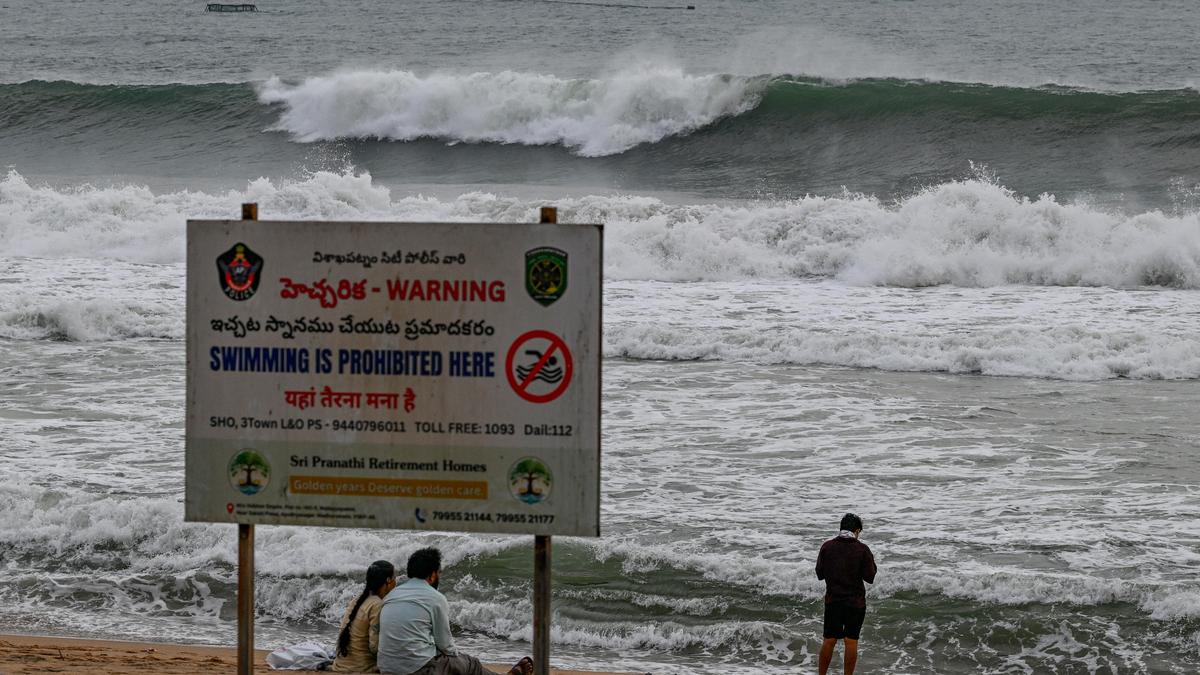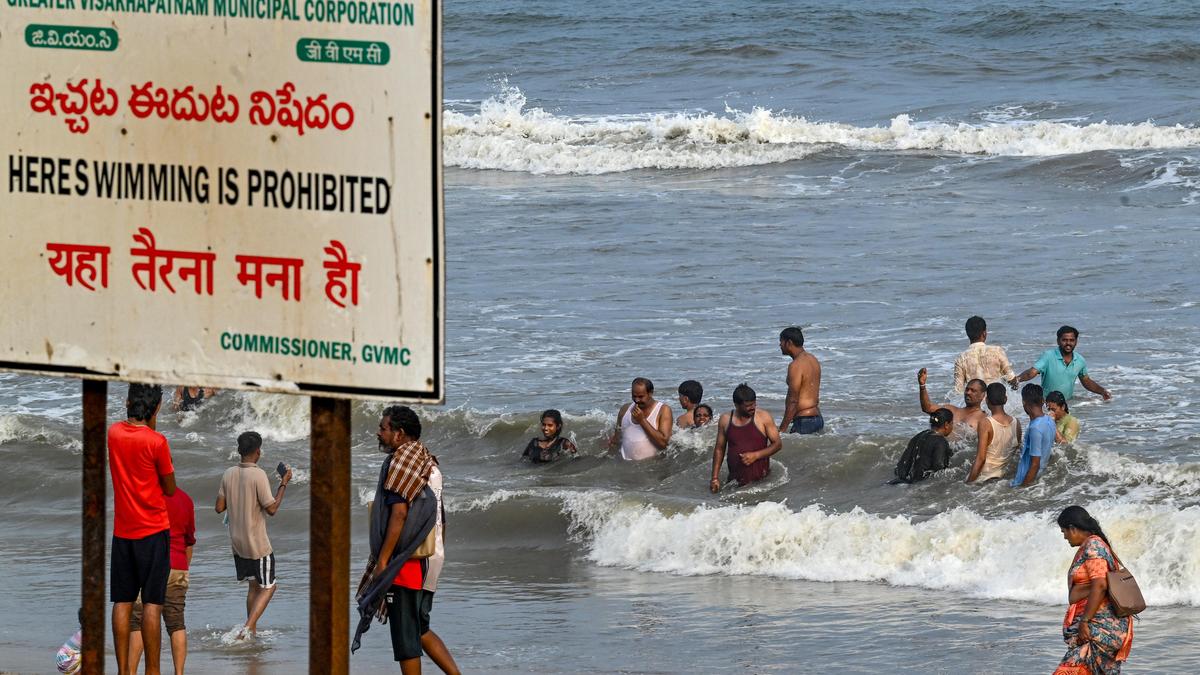
A caution board warning visitors against swimming at RK Beach in Visakhapatnam. A recent study has identified 122 high-risk days per annum when rip currents are most likely to occur.
| Photo Credit: File Photo
A comprehensive study done by the Department of Meteorology and Oceanography of Andhra University, in collaboration with Indian Space Research Organisation (ISRO) and National Centre for Earth Science Studies (NCESS), has highlighted the urgent need for robust, scientific and data-driven hazard mitigation strategies to safeguard the beachgoers in Visakhapatnam from the rip current hazards.The study was conducted by Chintam Venkateswarlu of the Department of Meteorology and Oceanography, AU, under the guidance of Prof. C.V. Naidu.For tourists and citizens who visit the scenic coastlines of Visakhapatnam, the waters of RK Beach and Rushikonda Beach may conceal a dangerous and often overlooked hazard: rip currents. These are strong, narrow channels of water that flow rapidly seaward through the surf zone, carrying water from the shoreline back into deeper offshore regions.One of the greatest challenges in preventing rip-current-related accidents is that these currents are often difficult for the public to identify.How to identify rip currentIn many cases, rip currents appear as darker patches of water where waves break less frequently or not at all, creating seemingly calmer areas between lines of breaking waves. Such deceptively calm patches can attract swimmers who are unaware that they are actually locations of powerful offshore-flowing currents.This recent research has brought this hidden danger into focus, identifying 122 high-risk days annually when these currents are most likely to occur.