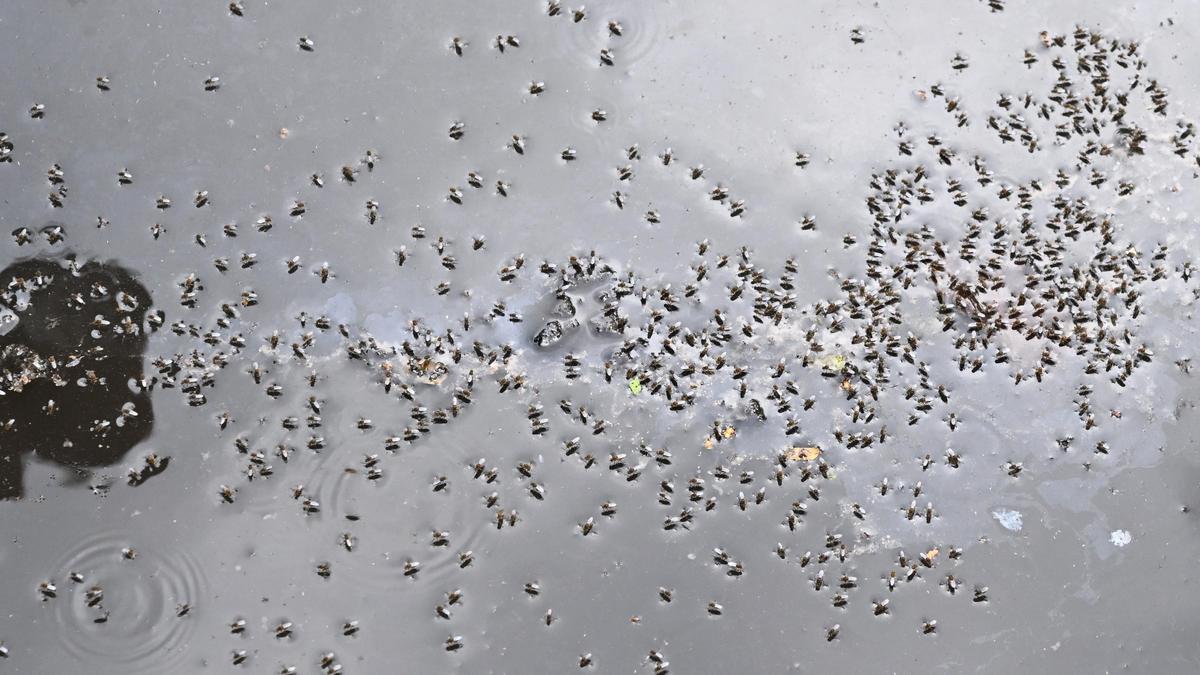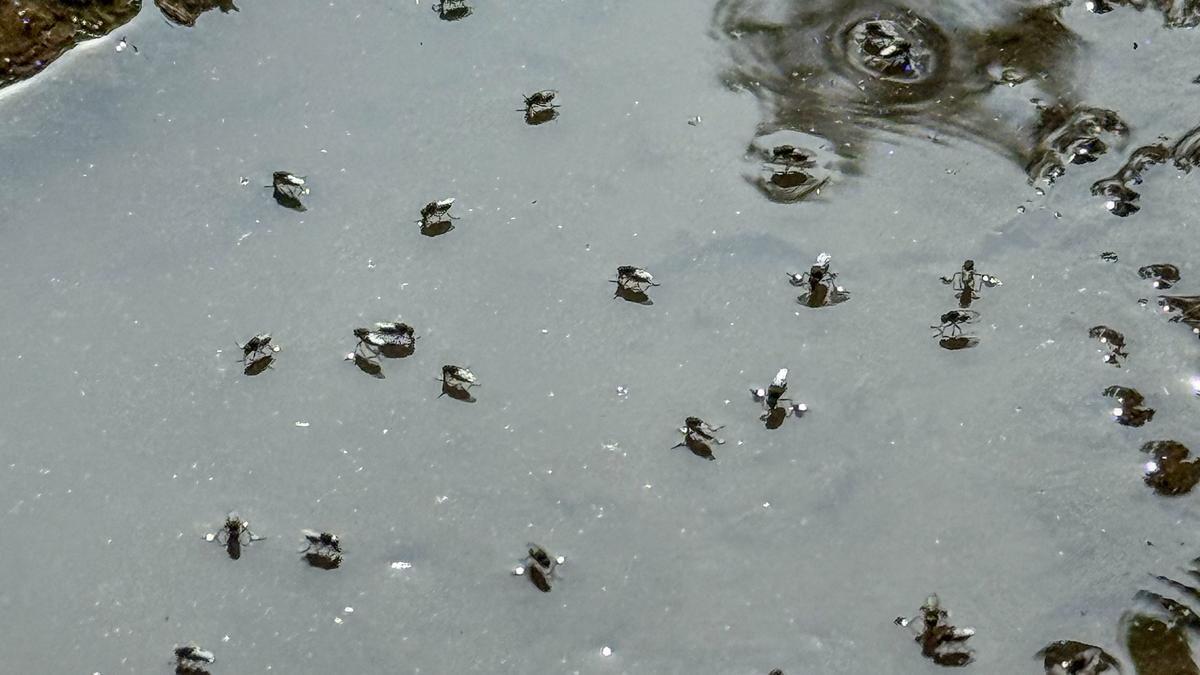
A swarm of mosquitoes breed in a pool of stagnant water near MVP Rythu Bazaar in Visakhapatnam on Thursday.
| Photo Credit: K.R. Deepak
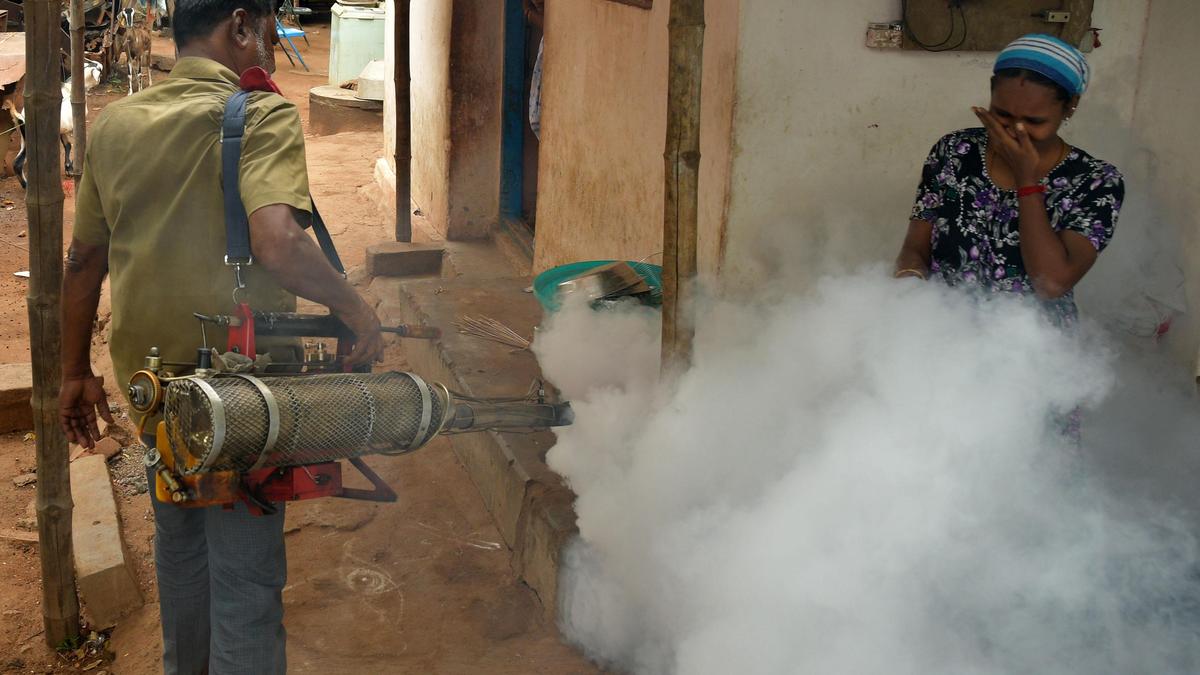
Following the recent rains, the Greater Visakhapatnam Municipal Corporation (GVMC) is focusing on preventing the spread of seasonal diseases caused by stagnant water and mosquito breeding.The GVMC has identified 14 hotspots and issued caution notices regarding the possible increase in malaria and dengue cases. Heavy rain caused by a depression over the Bay of Bengal lashed the city recently. The rainfall recorded from June 1 to August 21 was 433.96 mm, when compared to the average of 382.58 mm (13.43% more).Eight of the 14 locations have been identified as high-risk areas for dengue and those are Arilova, MVP Colony Sector-9, Kodipandala Veedhi, Town Kotha Road, Ragireju Veedhi, Pydorapeta, Kapparada and Nathayyapalem.The remaining six areas have been identified as high-risk areas for malaria and those are Bheemunipatnam, K. Gollapalem, Durga Bazaar, Reddy Resavanipalem, Reddy Tungalam and Gopalapatnam.An advisory has been issued for the people living in these areas. The denizens have been advised not to dump waste in open areas, remove used coconut shells from open places, ensure cleanliness at scrap shops, tyre shops, residential areas, streets and ensure participation in the dry day activities such as removing stagnant water and cleaning water plants.Before the recent rains, the GVMC identified 106 water stagnation spots.“More than 150 dengue and 75 malaria cases have been reported in the GVMC limits since January. Dengue cases are high, while only two Chikungunya cases have been reported this year. We have identified high-risk areas for seasonal diseases and are monitoring them closely. We are using AI technology to identify the type of mosquitoes in high-risk areas. However, public cooperation is essential to check the diseases,” GVMC Chief Medical Officer Dr. Naresh Kumar told The Hindu.He said that key strategies such as identifying fever spots based on history, intensifying anti-larvae activities and initiating extensive fogging and spraying operations have been initiated.“We are sending sanitation teams to stagnant water points to monitor such places and clear stagnant water. Spraying operations are being carried out in canals. Oil balls are thrown into the selected water bodies to check mosquito breeding. The GVMC is using drones to spray insecticides in some water bodies,” he said.A senior health worker said the corporation is short of health workers to participate in anti-larvae operations. It currently has 230 workers, while around 700-1000 workers are required to cover the entire city. Published - August 22, 2025 07:24 am IST