Solving a problem and explaining it are completely different.
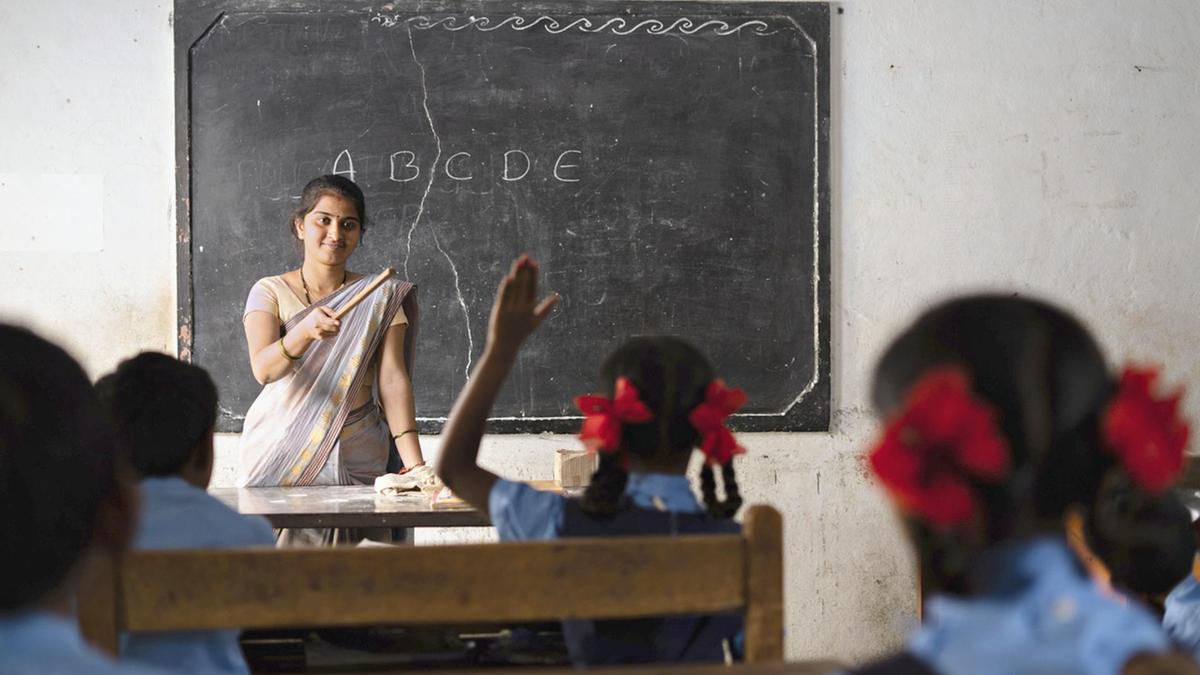
| Photo Credit: Getty Images/iStockphoto
Picture this situation: a student who has scored high marks all year. The teacher asks a simple, straightforward question — not a trick, not a challenge. But the student stares at the desk. Says nothing. Everyone in the room assumes he/she doesn’t know. But that is not so; the student just couldn’t find the words in time. This moment plays out in classrooms every single day. Almost nobody talks about it.The real problem is not intelligence. We are quick to measure how much students know. We rarely ask whether they can actually use that knowledge when it counts. Think about how most students study. They memorise. They drill. They learn exactly what a question looks like and exactly how the answer should be written. This works until the question looks slightly different or someone asks them to explain it out loud. Suddenly, the answer that felt solid on paper doesn’t feel so solid anymore. It’s not that they don’t know it, but that they only know it one way. Nobody ever taught them to know it any other way.Being wrong feels riskyHere is a sentiment students seldom articulate openly, yet consistently experience: remaining silent is perceived as safer than risking being incorrect. Wrong answers invite looks. Sometimes comments. So students learn to opt out. They sit on answers they’re fairly sure about because “fairly sure” doesn’t feel like enough. They wait for the next time, not because they got less smart but because the habit of silence quietly takes root. This isn’t a flaw students brought into the classroom. It’s something the classroom quietly built into them.There’s a skill sitting right at the centre of all of this that most schools never directly teach: the ability to take a thought and turn it into words in real time in front of other people. It may sound simple, but is not.Solving a problem and explaining it are completely different. One happens in your head. The other happens between you and another person. It requires organising your thinking, choosing the right words, and trusting yourself enough to say them. That’s not automatic. It has to be practised.What can be doneThe good news is that this is fixable and it doesn’t require a complete overhaul of how someone studies. It begins with the simple habit of asking yourself, “Why does this actually work?”Not just accepting the formula or the rule, but genuinely trying to understand it. Because once you understand something, you can talk about it.From there: Explain things out loud. To yourself, to a friend, to anyone willing to listen. Discuss problems rather than just solving them quietly. When you get something wrong — and you will — try to get curious about it instead of embarrassed by it. Confidence doesn’t come from always getting it right but from learning that being wrong isn’t the end of the world.This is where it gets uncomfortable. Schools have the power to change this and most are not. This is not due to bad intentions but because the system continues to measure what is easiest to measure: recall, remember and reproduce. Which means the ability to think out loud, to reason through uncertainty, to communicate clearly under pressure, goes untrained.Classrooms that make room for open questions, for wrong turns, for students to explain their thinking rather than just demonstrate the answer produce students who can actually handle a question they didn’t prepare for. A student being silent isn’t proof they know, but of how they were taught to know. We’ve built an education system that fills students with knowledge and never gives them a real chance to practise using it messily, imperfectly, or out loud. Then we’re surprised when they struggle to answer a simple question.The knowledge was always there. What was missing was the practise, and the belief that their voice was worth using. That’s what needs to change.The writer is co-founder and Chief Business Officer, Oratrics: The Future Human School. Published - June 06, 2026 06:30 pm IST