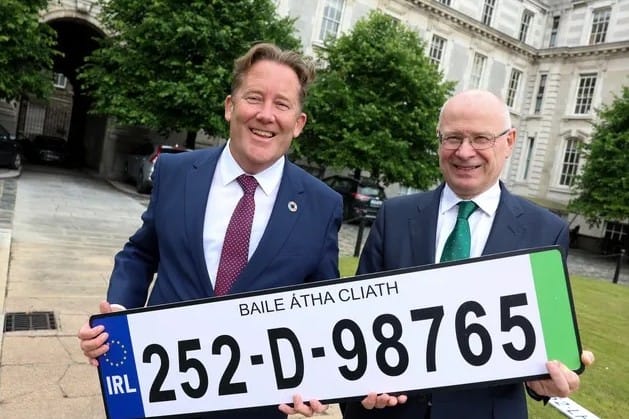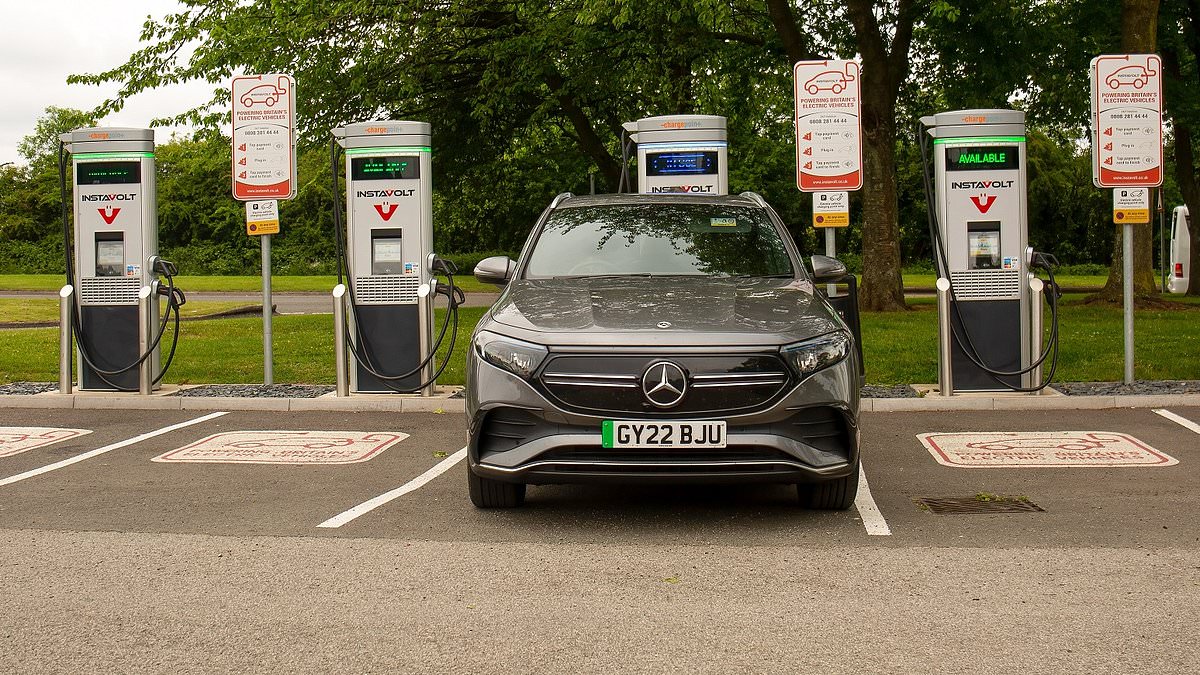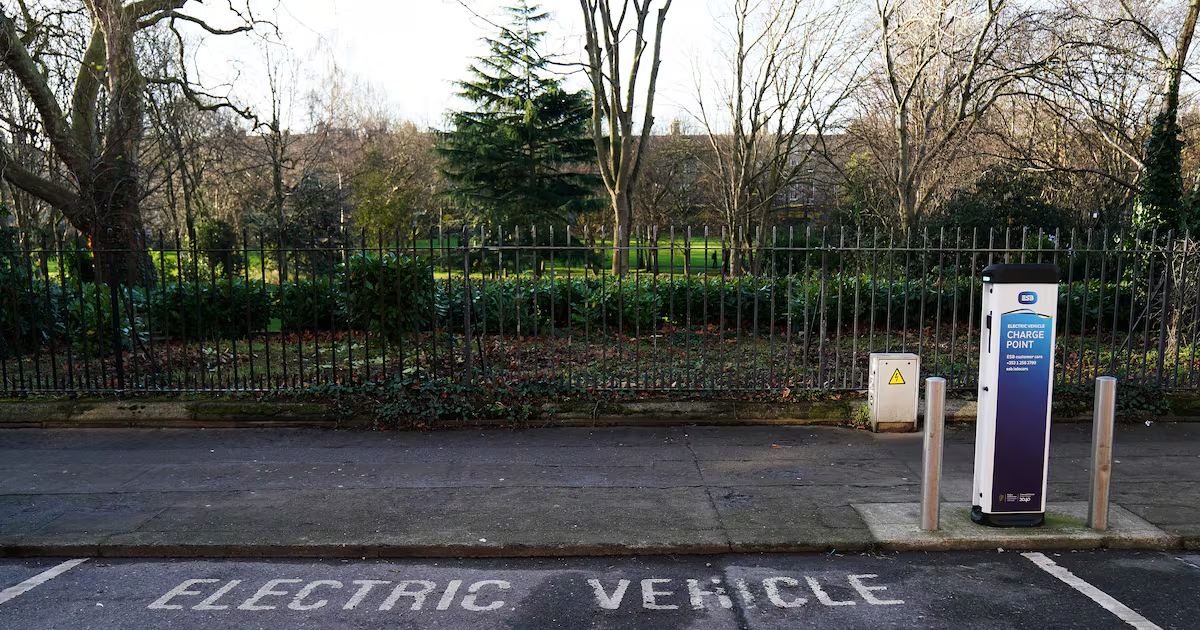
The Government is certainly getting value for money from coverage of a proposed scheme to support the scrapping of older petrol and diesel cars in favour of new electric vehicles.The first-come, first-served offer will see owners of cars more than 13 years old offered an €8,500 grant if they opt for a new EV (aside from the separate tax relief), rather than the €3,500 currently on offer.The fund for this new scheme is €10 million . A spokesperson from the Department of Transport confirmed the €10 million allocated to the scheme is expected to support approximately 1,177 vehicles. For successful applicants, both the €5,000 scrappage allowance and the existing SEAI EV grant of €3,500 will be funded from the allocation. It is unlikely to save the planet, though reports say the Government will consider a broader scheme next year. Extending the grant to even 10 per cent of qualifying car owners would cost about €627 million.The scheme may get people thinking about EVs. The problem is what happens when they do.Tackling the thorny issue of price is the first big hurdle facing motorists making the move to electric. Car price inflation has impacted every type of car. A decade ago, a basic BMW 5 Series or a Mercedes E-Class – stalwart executive cars – would cost you just shy of €50,000. Now, neither car can be bought for less than €70,000. It’s the same story at the other end of the market. The inflationary squeeze has spilled into the used car market as well. In March, vehicle history checking service website Cartell.ie reported used car prices remain 36 per cent higher than pre-pandemic levels.[ ‘Punished for being a good citizen’: The EV charging battle facing some Dublin homeownersOpens in new window ]So while EVs are expensive, petrol or diesel alternatives are hardly cheap.A scrappage scheme proposal is a useful support in the move to EVs, but car firms already offer incentives and discounts, while there is now a growing fleet of EVs priced on a par with their petrol or diesel equivalents. By early next year, several small family hatchbacks will be on sale here for €25,000 or less.Surveys show price is still the biggest barrier to moving from diesel or petrol to electric, but access to local charging remains a big deterrent, particularly for rural motorists.Ireland has 3,956 public charging points, of which 1,255 are faster DC chargers, according to data for April from the European Commission’s European Alternative Fuels Observatory. Denmark, with a similar population to Ireland, has 53,249 public chargers, 9,264 of which are DCs, while Lithuania – with a population half that of Ireland – has 7,102, of which 2,557 are DC chargers.In Denmark, new car prices have always been punitive, but widespread access to public charging has helped drive the market for all-electric cars to 77 per cent of new sales. In Ireland, we are celebrating the fact EVs make up 23 per cent of new car sales.[ EV Q&A: Why are charging prices not displayed up front?Opens in new window ]According to Ilyas Dogru, chief analyst at the Federation of Danish Motorists (FDM), Denmark will have 1 million all-electric cars – not counting plug-in hybrids – by 2028, and half of the entire passenger car fleet could be fully electric by 2030. The reasons are favourable taxation, low total cost of ownership, strong home-charging opportunities and one of the most developed charging infrastructures in Europe.One issue common to all countries is planning delays for public charging stations. Oliver Dodd, Tesla’s senior regional manager for the firm’s northern Europe supercharger network, told The Irish Times in April that the average build time on an Irish site “is typically taking between two and three years”.“It’s taking a lot longer than other locations. I think there are certain setbacks,” he says.“Power can be hard to come by just to get an understanding of what is available, and that can set us back a couple of months.” However, he says Tesla has “a great working relationship with ESB”. Planning reform for public charging should be the priority for any government wishing to push forward the EV transition.Many countries encounter similar bureaucratic hurdles, but Denmark and Norway show what an early start can deliver. Dogru says Denmark opted to focus on infrastructure, and not have it dictated by car sales figures.Similarly in Norway, where EVs make up 98 per cent of new car sales, getting access to the grid for new charging stations remains an issue, yet it still managed to have 13,823 public chargers in place in 2020. That rose to 30,224 by 2024 before falling back to 26,767 this year, as older low-power AC chargers were disconnected. [ We may have longer night-rate tariffs, but Ireland’s EV charging costs remain stubbornly highOpens in new window ]For both the Danes and the Norwegians, the focus now is on providing access to those without off-street parking. Changes in the planning laws require new builds to provide charging points.Motorists need firm commitments on tax policies towards EVs, reassurance on electricity prices and access to a reliable public charging networkFor many people in Ireland who do not have the option of private charging at home, both access to and the cost of public charging are issues. One practical answer is neighbourhood charging in public car parks, which could be offered to residents at prices below today’s rapid-charging tariffs.Short-term incentives on new car prices are welcome, but they will not significantly move the dial on our carbon emissions targets, particularly with a limited fund such as the proposed scrappage scheme.It is worth noting that the scrappage scheme was announced at the same time as the Government confirmed that from July 31st it was lowering the price cap for grants on new cars from €60,000 to €50,000, thereby cutting supports for 20 per cent of the current new EV market. So, while we increase the subsidy on 1,177 new car sales, it’s likely more will lose out on the lower price cap for the grant.The scrappage scheme’s role is to prompt buyers to think seriously about moving to an EV. Given the coverage it has got to date, job done. But if those motorists then dismiss EV ownership as impractical because of a charging infrastructure seen as sparse, expensive and unreliable, then the opportunity is wasted. And how long before those motorists are in the market for an EV again?Motorists need firm commitments on tax policies towards EVs, reassurance on electricity prices and access to a reliable public charging network. Less headline-grabbing, but potentially more important, is an agreement signed on Thursday with the European Investment Bank to support Zero Emission Vehicles Ireland (ZEVI) with best practice templates for contracts, financial models and guidance on building out our charging infrastructure.This is the kind of measure likely to have a longer-term impact on EV uptake than a short-term scrappage scheme. Price supports may generate interest in EVs. Infrastructure is what will persuade people to buy one.
Michael McAleer: Ireland’s range anxiety - Denmark has a similar population but 50,000 more EV chargers
Average build time for an EV charging point on an Irish site ‘is typically taking between two and three years’, says Tesla
1,162 words~5 min read