Even Silicon Valley EV owners mostly say no to letting the utility schedule their charging.
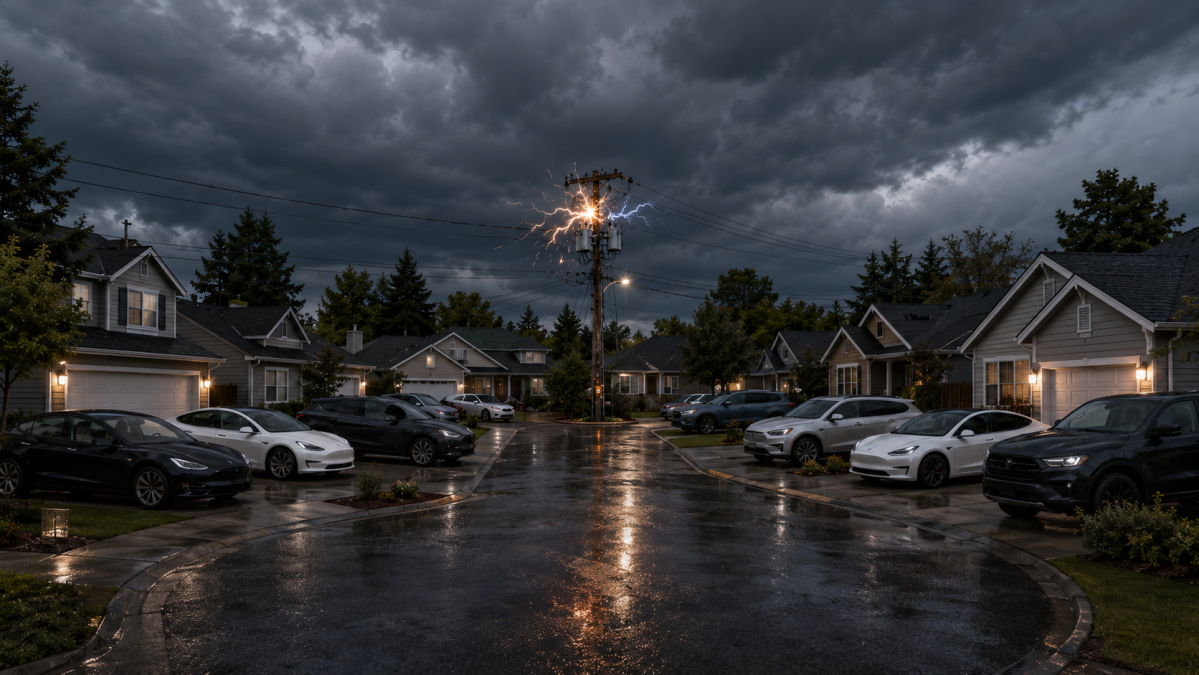
Most of the public attention paid to electric vehicle (EV) policy has focused on getting them on the road — the subsidies, the chargers, the model line-ups. Only the EI blog-reading demographic tends to think about what happens when a critical mass of EVs actually arrives in a neighborhood. EVs with high voltage, level-2 home charging can temporarily more than triple household electricity consumption. When a bunch of EV owners on the same residential circuit all start auto-charging at midnight, the local transformer notices. Engineering estimates of the distribution-grid upgrades the U.S. would need to accommodate high levels of vehicle electrification run into the hundreds of billions of dollars.
There are basically three ways to deal with this. (1) Just build the grid out to serve the new, unpredictable, peaks. (2) Use pricing to discourage charging at the worst times. (3) Have the utility directly manage when EVs charge to reduce the impact on the grid. The first can be really expensive, and the whole point of options 2 and 3 is to avoid unnecessary infrastructure investment in a time of rising electric bills.