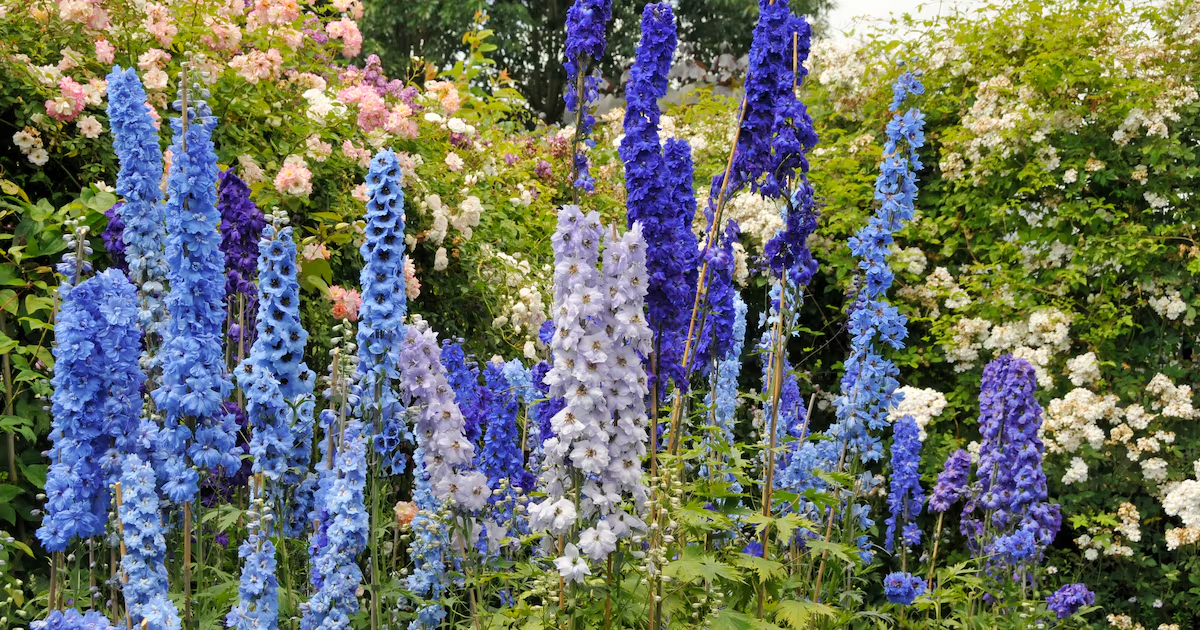
In the turning of any gardening year, summer is the great reveal when it comes to the flower border. The best are designed to be big, billowy and full of oomph, with a lushness perched perfectly between abundance and excess. Crucially, they also almost always feature what florists like to refer to as spires, a shape of flower that’s unbeatable when it comes to adding height, scale, vertical interest and drama to any planting scheme, as well as offering an essential counterpoint to lower-growing, mound and clump-forming plants.Delphiniums are the classic example, with towering, brittle stems liberally studded with flowers in endless shades of blue or, depending on the variety, white, pink, violet, mauve and lilac. Famously challenging to grow well, no other perennial comes close to them in terms of their statuesque, eye-catching beauty.Innumerable varieties are available, but sadly most of the older Pacific Hybrid types have declined in vigour since their heyday of the 1950s. Instead, seek out vegetatively propagated clones of modern named cultivars bred for resilience, floriferousness, weather-resistance and a longer flowering season. Examples include the white flowering Delphinium ‘Jill Curley’, whose giant flower spikes can reach a height of more than 2.4m; sky-blue Delphinium ‘Clifford Sky’; the relatively compact, deep lavender-blue Delphinium ‘Mighty Atom’ which reaches a height of 1.2m; and varieties from the excellent Magic Fountains, New Millennium, Centurion and Guardian series. Bear in mind also that delphiniums need a deep, fertile, humus-rich, moisture retentive but free-draining soil and a sunny, sheltered site to thrive. Slugs and snails love to feed on their emerging shoots in spring so it’s vital to take suitable precautions, while some form of staking is necessary in all but the most protected spots. Careful deadheading will also help to extend the plants’ flowering period, while liquid feeds will encourage a second, later flush.Delphinium Sweet Sensation Purple lupine in a flower bed While not as imposing in height as delphiniums or quite as refined, lupins are also excellent for adding vertical interest to the flower garden in early summer. Their plump, tall flower spikes come in countless colour permutations, from shades of pink, yellow, white, orange, red and purple to bicoloured varieties such as the yellow-and-mauve Lupinus ‘Manhattan Lights’. The latter belongs to what’s known as the West Country series of lupins. Directly descended from the famous Russell hybrid lupins of the 1930s, these award-winning varieties are the work of the British plant breeder Sarah Conibear and are prized for their vigour, disease-resistance, floriferousness and vibrant colours.Verbascum, or mullein as it’s commonly known, performs a similarly invaluable role in the summer flower border. My favourite is V. ‘Southern Charm’, a very handsome plant with large rosettes of crinkled leaves and apricot-pink flower spikes that unfurl in June. Easily grown from seed, it’s reliably perennial so long as it’s given a sunny, free-draining, not overly fertile soil, often self-seeding when it’s especially happy. More compact in height, the pretty Ver-ascum phoeniceum also gently self-seeds in my garden’s sunny, south facing flower borders, producing generous sprinkles of plants with pollinator-friendly summer flower spikes to a height of 40cm-50cm in shades of white, pink, violet, burgundy and purple.Equally welcome as a self-seeder is the altogether more statuesque Verbascum bombyciferum. This stately biennial species, commonly known as giant mullein, forms large rosettes of silver-grey, felty leaves in its first year, from which huge, branching spikes of yellow flowers emerge the following summer. Reaching an average height of 2m plus, if ever there was a plant deserving of the description of “punctuation mark”, then this is it. Its faded flower stems are also sturdy enough to remain throughout winter, their skeletal seedheads providing interest as well as food for foraging goldfinches.Foxgloves are yet another stately star of the early summer flower garden. Easily raised from seed sown around this time of year, my favourites include the biennial Digitalis purpurea albiflora (white flowering) and the wonderful Digitalis ‘Sutton’s Apricot’. Just like the aforementioned giant mullein, both form dense rosettes of foliage in their first year, with their tall spikes of bell-shaped flowers emerging in very early summer. Again, they’ll self-seed when happy, although you’ll need to weed out any purple-flowering plants (the native Digitalis purpurea) that appear in the mix if you want to keep them true to form.Digitalis purpurea Foxglove (Digitalis) Liatris spicata, button snakewort 'Floristan Violett' Bugbane (Actaea simplex) in late summer Other garden-worthy foxgloves include the purple and white Digitalis ‘Pam’s Choice’, the delightful, pale-yellow flowering perennial Digitalis lutea; the exceptionally long-flowering, gold-and-peach Digitalis ‘Goldcrest’ (a sterile variety, this doesn’t set seed); the copper-flowered Digitalis ferruginea; and for mild gardens, the strawberry-pink, short-lived perennial, Digitalis mertonensis. All need a humus rich, moisture retentive soil and do best in dappled shade but will tolerate full sun happily so long as the ground doesn’t dry out in summer.Other garden-worthy, spire-flowering perennials well worth considering include the late-flowering, shade-loving Actaea simplex (bugbane); yellow-flowering Ligularia ‘The Rocket’ (great for damp gardens with heavy soil); scarlet flowered Lobelia cardinalis (another good choice for gardens with damp soil; sun-loving, drought-resistant, violet-blue flowered Salvia nemorosa ‘Caradonna’, also known as Balkan clary; and Liatris spicata, whose magenta-coloured, long-lasting bottlebrush flowers appear in very late summer-early autumn.Work even a few of the above into your garden and you’ll soon see how they’ll give a valuable sense of scale, impact and drama, all essential qualities of the very best flower borders.This week in the gardenFrost-tender flowering and vegetable plants can be safely moved outdoors, but make sure to harden them off properly before doing so and to offer large-leaved varieties such as begonias, coleus, courgettes and squash some sort of temporary protection (Bionet or fleece) against drying winds for the first few weeks.The root-balls of young transplants and bedding plants are very vulnerable to quickly drying out in hot, sunny weather so take great care to keep them well watered, ideally in the evening to optimise its benefits and allow the plants to properly rehydrate overnight.Dates for your diaryLaois Garden Festival, Buds and Blossoms: Spink Community Grounds, Abbeyleix, Co Laois; Sunday, June 7th (noon-6pm). With specialist plant nurseries and expert talks by chef and food writer Edward Hayden, broadcaster and flower farmer Darragh McCullough, and Ciarán Fitzgerald, head gardener of the newly-restored gardens of Johnstown Castle Estate in Co Wexford. laoisgardenfestival.comRathmines Open Gardens: Sunday, June 7th (2pm-6pm). Six gardens in Rathmines in Dublin open their doors to the public in Aid of LauraLynn Children’s Hospice. For information call Michael Kelly on 087 6607722 and see therathminesinitiative.com.
How to add oomph to your summer garden borders? Think flower ‘spires’
Delphiniums, lupins and foxgloves will add height, scale and drama to any planting scheme
1,083 words~5 min read