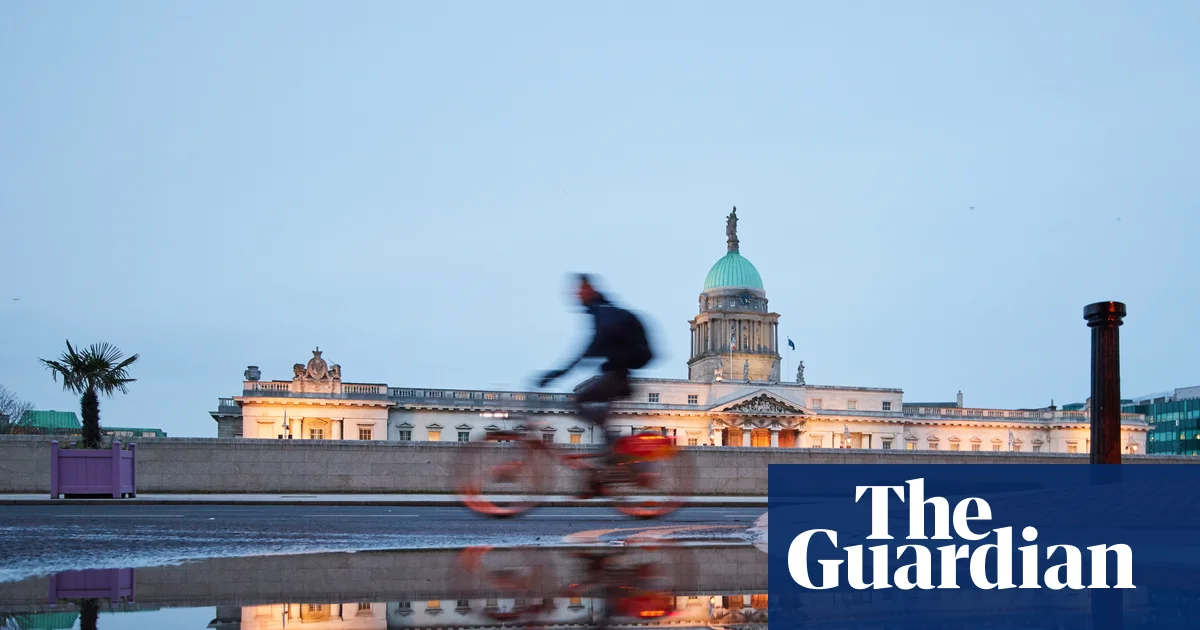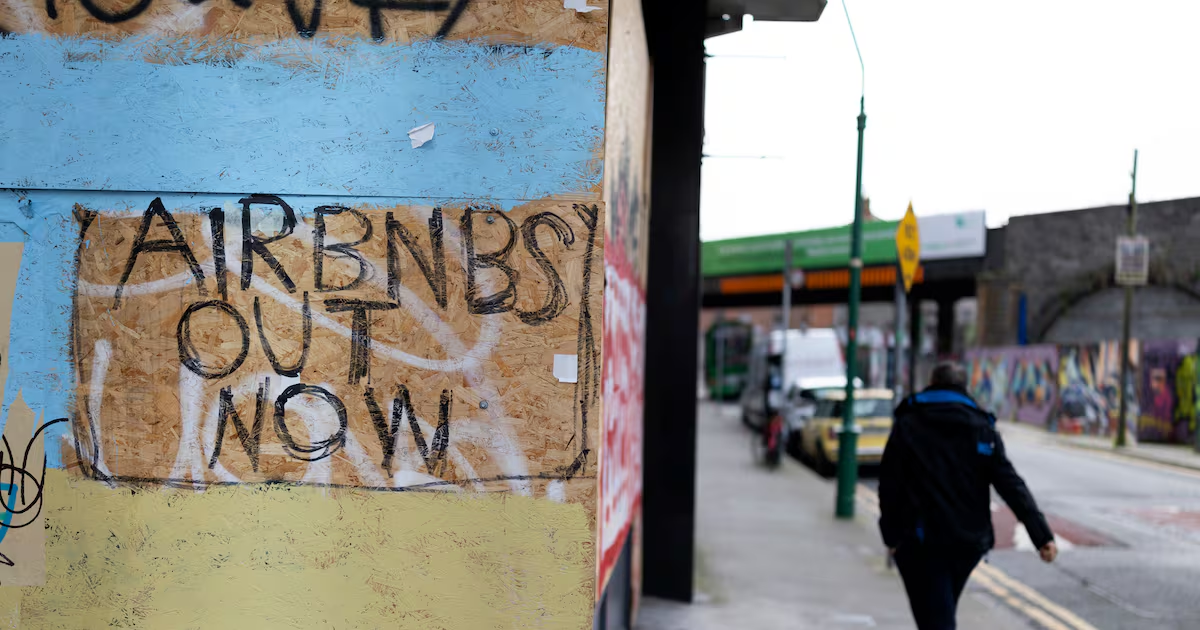
Dooneen Author: Keith RidgwayISBN-13: 9781804272459Publisher: Fitzcarraldo EditionsGuideline Price: £14.99Evictions are at a record high. Rents keep climbing. Homelessness is endemic. It eventually becomes too much. No more opinion columns or pointless hand-wringing on the airwaves.The tenants decide to organise a rent strike. There are mass demonstrations. Buildings are occupied. Defence committees are formed. And Bartholomew Port, a Dubliner on a visit from London to a literary festival at Dublin Castle, watches his native city descend into armed chaos. Keith Ridgway’s compelling new novel about hope and dereliction and the unmercifulness of privilege is set in a Dublin that is both recognisable and weirdly unfamiliar. There are no more private cars. Everyone gets around on public transport. Alongside footpaths, you have “clickers,” moving walkways, and Port gets instantly from London to Dublin on a “spinner”, a kind of low-tech teletransportation device. Greene’s bookshop is still there on Clare Street. People read the Evening Press and relish Marietta biscuits. In this retrofuturistic metropolis, contemporary conflicts play out with deadly consequences. Property and its exploitation become the key dividing factor as Dish, aka Dublin Initiative for Social Housing, and its more militant wing, Jahfa, which stands for Justice and Housing for All, are ranged against the property owners of the RDC – Rathúnas do Chách, or Prosperity for All – and their radical vigilante group, Ipro, aka Ireland Protected. In Dooneen the state is not a neutral agent in the conflict but repeatedly uses its intelligence assets and lethal force to protect the interests of landlords and corporate miscreants. Part of the persuasiveness of the novel is that the unlikely band of insurgents Port happens upon are not mere ciphers – lifeless puppets acting out ideological set pieces – but the all-too-real victims of economic neglect and official disdain. The rebels are desperate, articulate, often funny, but rarely hostage to the forms of purity that forge in their wake new generations of tyrants. Port, who pines throughout for his lover, Mahmoud Habib, or Mootie, left behind in London, is fretful and indecisive, a largely unwilling accomplice in the mayhem that descends upon Dublin. [ Keith Ridgway: ‘I was completely content with the idea I would not write again’Opens in new window ]One of the most deftly realised episodes in the novel is when, after a long absence, Port goes back to the family home, in Cabra. Here the return of the prodigal son is feted with a pot of strong tea and crisp sandwiches. In this setting, Ridgway captures the chaotic intimacy of family life, the joshing, the sudden concern and the long tail of remembered slights. Port observes of his father, “He speaks very beautifully at times, my father. You can hear the disappointment in every phrase.” When Port goes into his childhood bedroom, he describes it as a “holy place, a boy’s room. The embassy of his future, inviolable, protected by various fragile immunities, refuge and bolt-hole and lonely little altar.” These quiet intimacies contrast in the reader’s mind with the later, ruthless invasion of domestic spaces by vigilante groups, police and military, let off the leash by cynical political calculation. Unlike the more abstracted sense of totalitarian state menace in Paul Lynch’s novel Prophet Song, from 2023, the intimidation and aggression deployed against activists in Dooneen are visceral and unvarnished. [ Paul Lynch wins Booker Prize for Prophet SongOpens in new window ]The song The Cliffs of Dooneen gives the novel its title, and there is a sense of regret, of unrequited loss in the lyrics of some songs that pepper the text, but mostly these songs have the savage, explosive bitterness of Berlin cabaret numbers, eschewing sentimentality for a brutal reckoning with barbarity.A speaker at a public meeting reminds the migrant members of the audience that they all belong: “You are of this city, and this city is of you. Dublin is yours. You are Dubliners. Every last blessed one of you is a Dubliner!” The city of Dublin envelops the book, as street after street and landmark after landmark are identified as characters fan across the city – a city that was last centre stage in Ridgway’s 2003 novel, The Parts. From the opening section’s slow recovery of urban memory to the closing paragraphs detailing Dublin’s uncertain affair with the sea, Dooneen tracks the “tiny city” that keeps expanding in the pages of a novelist who is scrupulously attentive to the shifting imaginary geographies of the city of his birth. The scrambled timelines of the fiction where data centres exist alongside carters, and parking spaces transform into wild gardens, create a degree of disorientation that is, in unsettling ways, wholly appropriate to the present moment. In a country witnessing evictions on a scale not seen since the Great Famine, and where unprecedented levels of wealth result in more rather than less homelessness, fiction alone seems capable of capturing the grotesquely real aspects of the Irish everyday. The powerfully imagined world of Dooneen is a telling testimony not only to Ridgway’s compulsive interest in the possibilities of creative prose but also to the capacity of great writing to bear witness to the corrosive cant of the entitled and the subversive decencies of the maligned.
Dooneen: In Keith Ridgway’s retrofuturistic Dublin, the housing crisis plays out with deadly consequences
Compelling novel about hope, dereliction and the unmercifulness of privilege is set in a city that is both recognisable and weirdly unfamiliar
865 words~4 min read