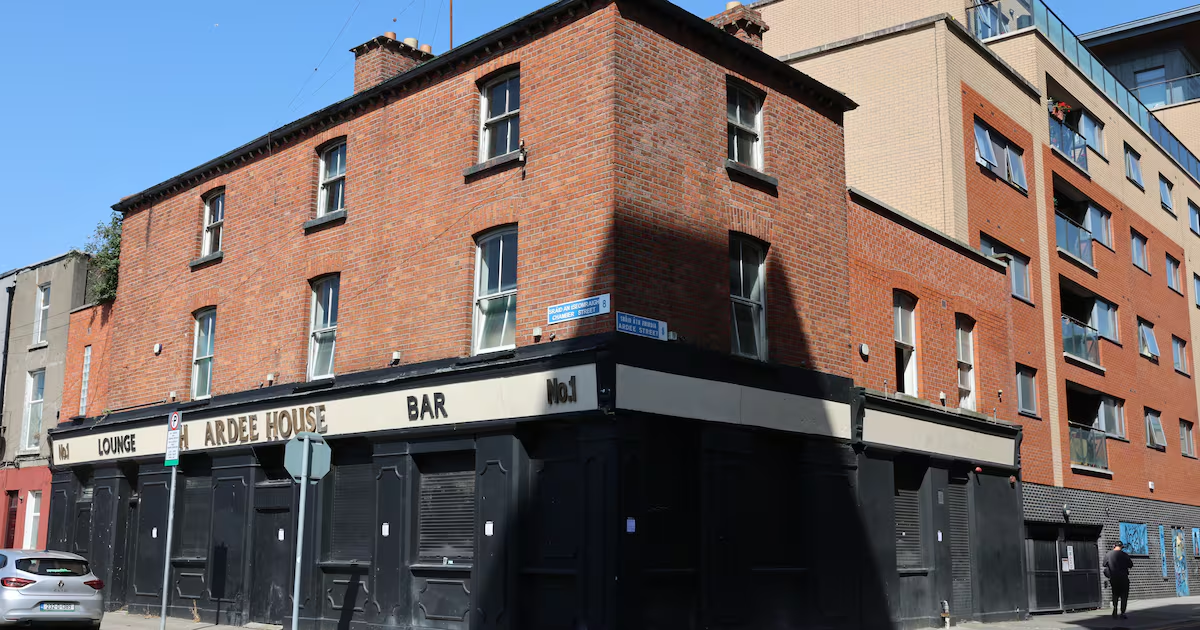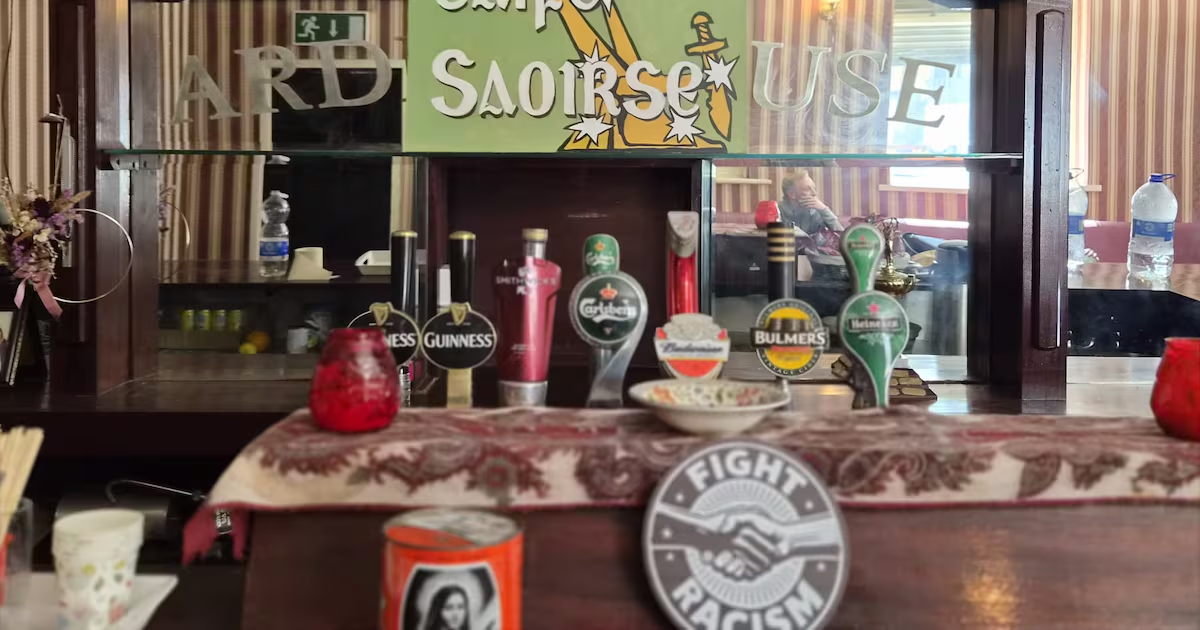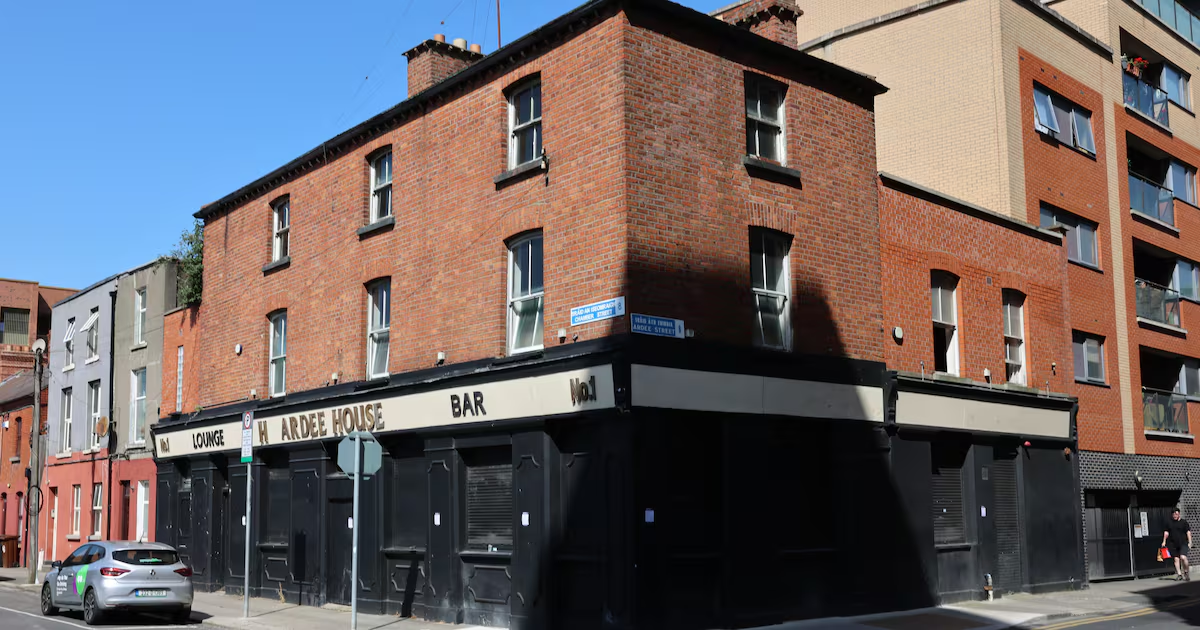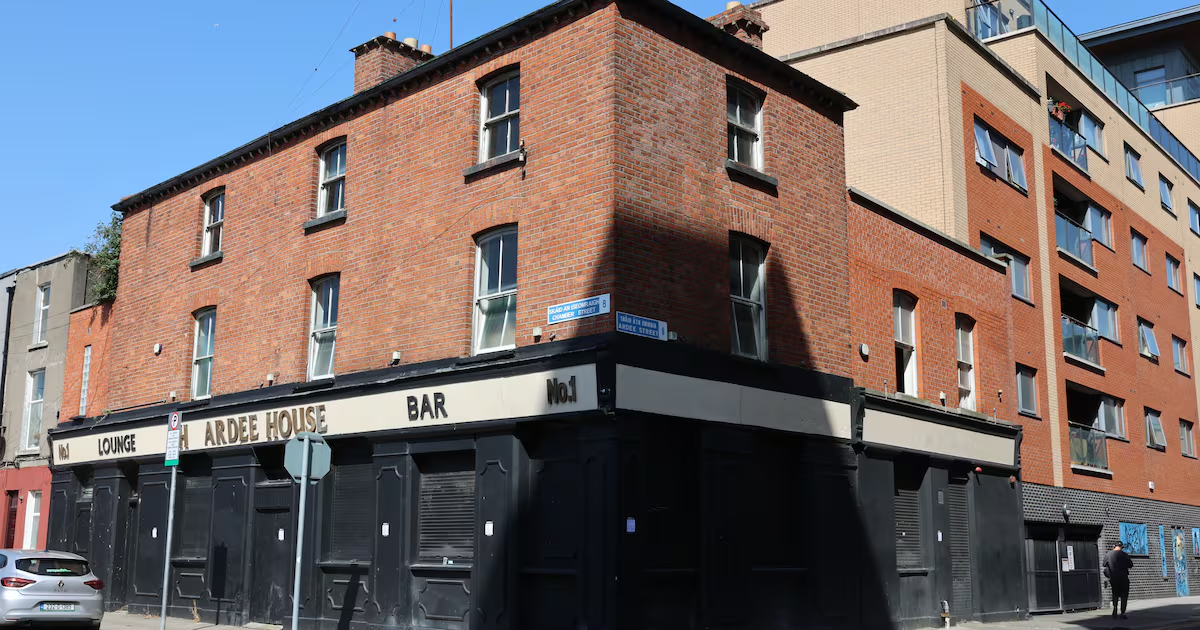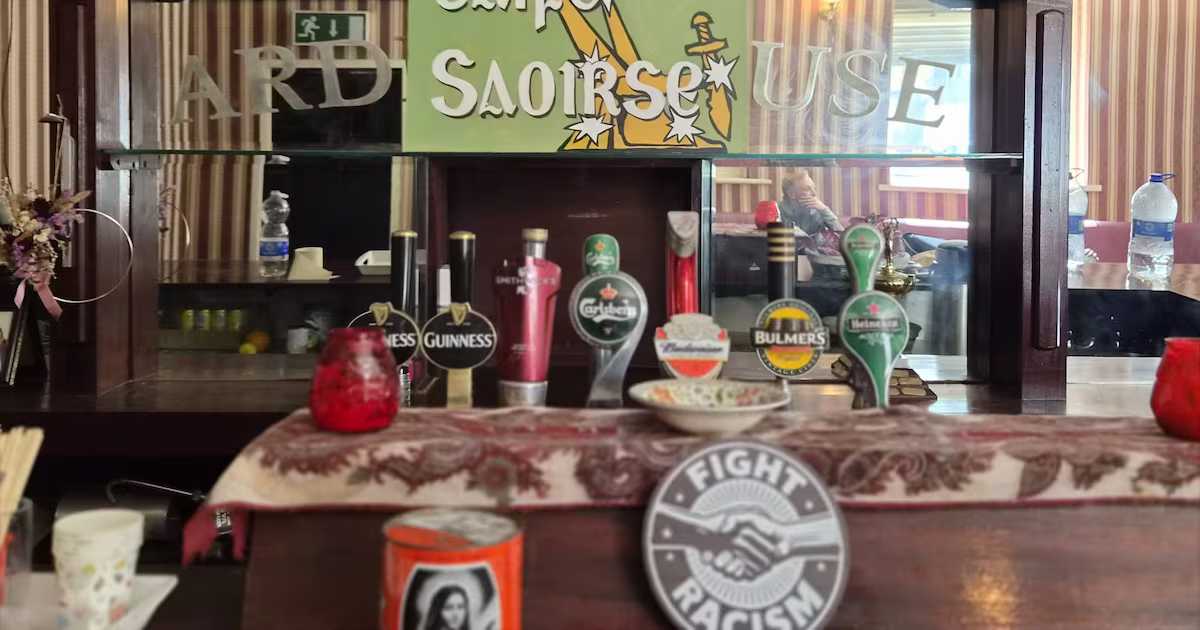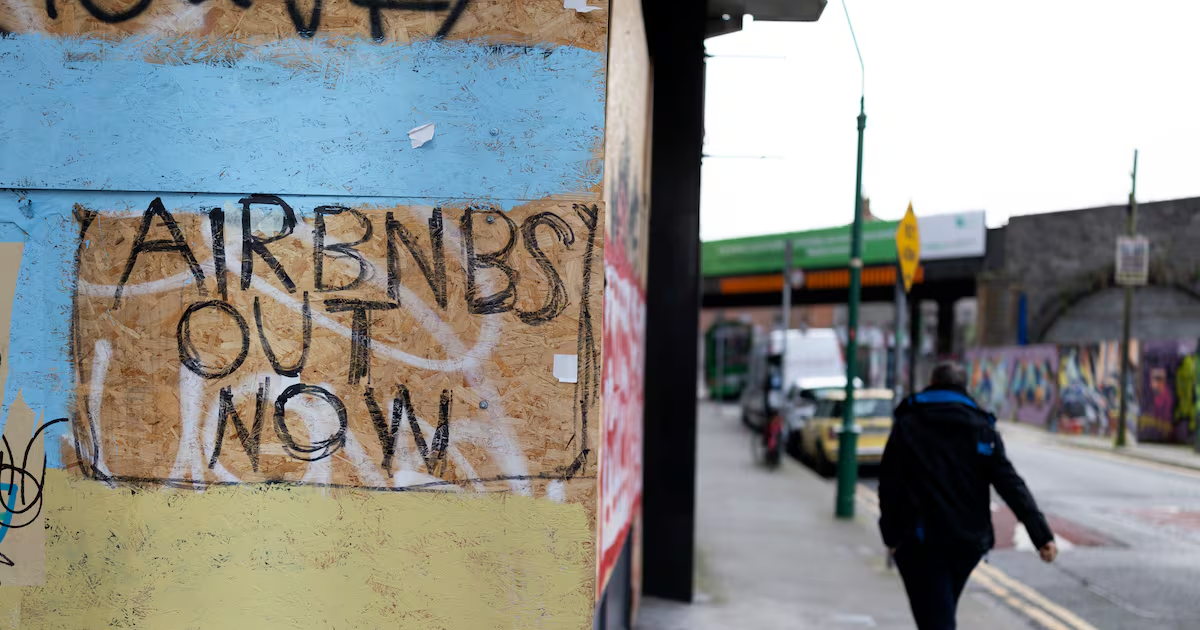
By the time the owner of the former Ardee House pub in Dublin’s Liberties found out a group called the Revolutionary Housing League had entered his building, the pub already had a new name: Anne Devlin Community Centre. Squatting, if that’s what you want to call it, has become rarer in Dublin. During the recession there were several squats across the city that provided housing, as well as a rich cultural offering that enlivened creative subcultures in the capital – Squat City in Grangegorman and the Barricade Inn on Parnell Street being notable examples. In a direct response to homelessness, there was also the Bolt Hostel on Bolton Street and Apollo House. More recently, such actions have been sporadic and often abruptly ended with those taking part evicted.But Ardee House in the Liberties is an interesting case, not least because those involved, whom the High Court restrained from continuing their alleged trespass of the building last Wednesday, made their intentions of opening a community centre immediately explicit. They did not do so quietly. Making a point chimes with the Liberties’ context, and especially this specific area – Newmarket Square and its surroundings – which in recent years has seen an astonishing wave of development. Most of that development is expensive build-to-rent apartments, student accommodation and hotels. Concurrent with this action is a wave of local activism, separate but connected. A protest demanding an end to hotel development in Dublin 8 organised by the Bridgefoot Street Residents Association was held last Thursday. Liberties SOS, which documents gentrification and fading working-class infrastructure in the area, characterised the pub occupation as something that “feels like an important intervention”. The anthropologist David Graeber characterised Marxism as a theoretical discourse about revolutionary strategy, and anarchism an ethical discourse of revolutionary practice. What the Revolutionary Housing League is involved in, as all those who occupy buildings for community use in this manner are, is revolutionary practice. This is not in and of itself unethical, although it may be unsafe depending on the state of a building – always a concern when long-vacant properties are occupied. Leaving aside issues of alleged trespass and potential safety concerns (which are important), there is also an ethical question as to why buildings remain derelict or vacant. As of 2025, there were 4,082 vacant and derelict properties in Dublin city centre, half of which were commercial. There is no dearth of space in the city but there is a tremendous lack of action in addressing this antisocial waste and vandalism, which is what dereliction is.Ardee House closed in 2010. The previous year, a plan to demolish it and build a six-storey over-basement building to include a bar, off-licence, bookmakers and nine apartments, was refused. The planning permission refusal said demolishing a late-19th century public house would not be justified and referred to the historic nature of the area. It was bought by Jack Teeling’s Black Sheep Investments in 2017. Here we are almost 10 years later. In 2025, the pub’s vacancy was highlighted by An Taisce. Two weeks ago, Black Sheep Investments submitted a planning application to part-demolish the building with “selective retention” of external facades, and build a six-storey apartment building. The application was declared invalid as it was missing some elements. Another planning application was submitted three days later. Down the road, it is now five years since a fire damaged a community centre on Donore Avenue in the Liberties. For half a decade, that part of the Liberties has been bereft of such a space for the community. In the meantime hundreds more apartments are being built. Where will their community centres be? This is the context in the Liberties, and context is important. Occupying a pub doesn’t happen out of nowhere.A sign on a wall at Ardee House renaming the former pub the Anne Devlin Community Centre. Photograph: Dara Mac Dónaill A recent report by the Trinity College economist Barra Roantree titled A Socioeconomic Analysis of Dublin’s South West Inner City, also lays out a context that demands an immediate response from Government. The issues the area faces around amenities, safety and housing go beyond the capacity of the local council, although it certainly has a role to play. Some of the detail in the report is simply unacceptable in an apparently wealthy city. For years, people in the area have been fighting for a full-size public playing pitch. The provision of pitches in the southwest inner city represents one pitch per 22,427 people, almost 10 times higher than the average for Dublin city as a whole. Half of primary school students surveyed who rarely or never participate in sport outside of school say it’s because their area doesn’t have the facilities. The crime rate in the southwest inner city is more than twice the national average. The area contains almost 60 per cent more drug addiction services per capita than the Dublin city average. The southwest inner city makes up a quarter of the inner city population, and yet half of all people living in a deprived part of the inner city live in this area. You have to give people something to do, places to go, and facilitate opportunities to play, gather, relax and engage in pro-social behaviour if you want to maintain social cohesion and a decent collective quality of life.It is hardly a surprise, given this context, given corporate gentrification, given the level of dereliction in the city, given the lack of amenities in working-class areas, that people inclined towards radical direct action will take it, even if simply to make a point. This is not about condoning or condemning their tactics and outcomes, it is about facing the reality of the context.
It is no surprise people are inclined towards radical direct action given the level of dereliction in Dublin
Leaving aside issues of trespass and safety, there is an ethical question as to why buildings remain derelict or vacant
950 words~4 min read