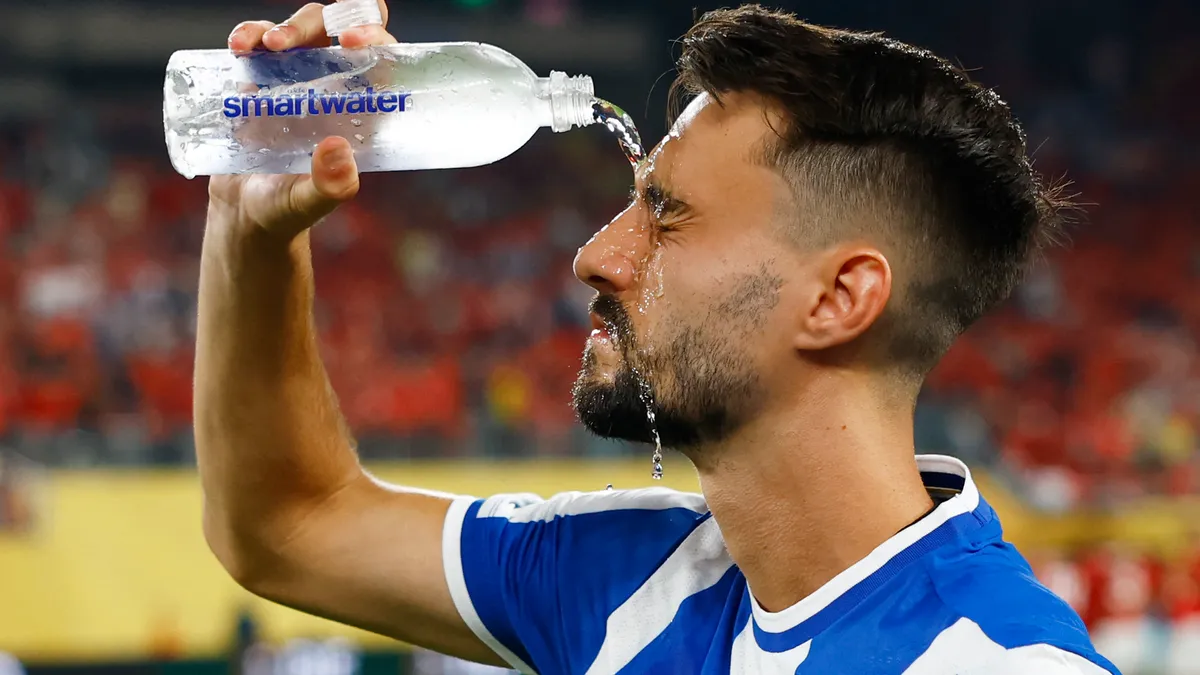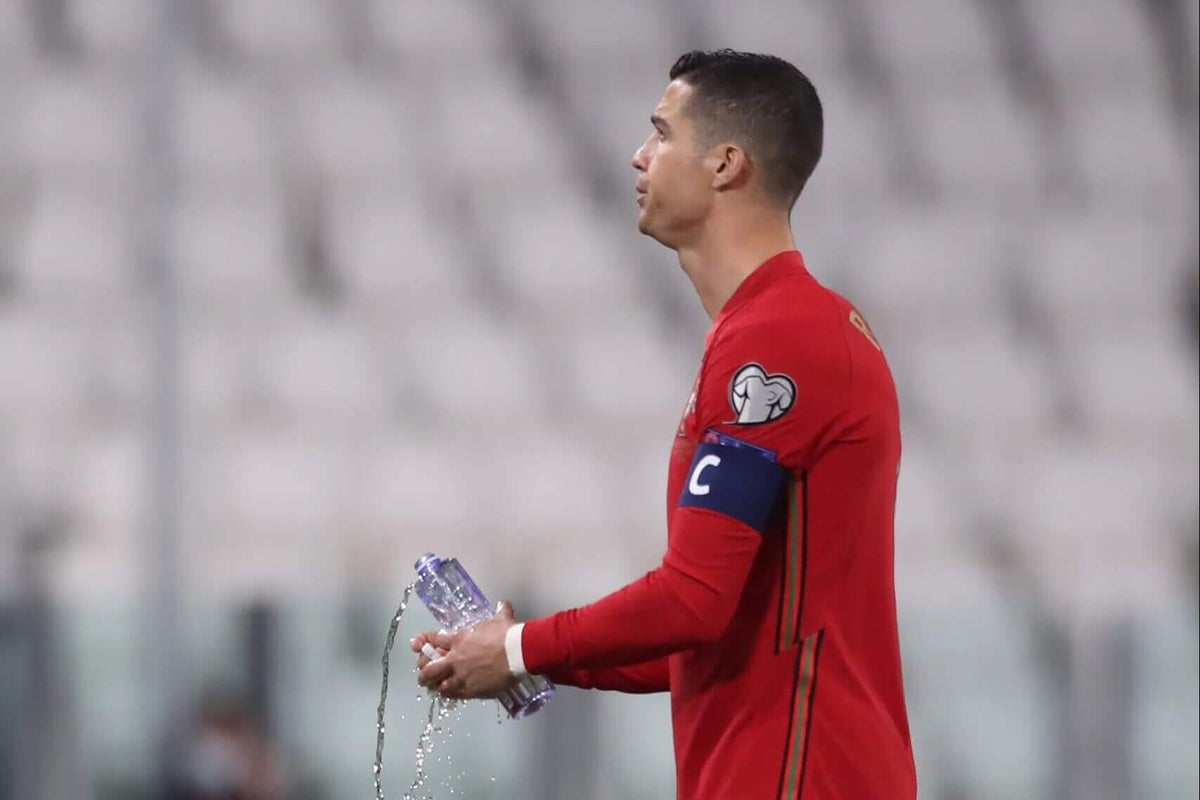
FIFA has u-turned on a u-turn, declaring that water bottles will be allowed at World Cup stadiums this summer – but the new rule does not yet apply to venues in Mexico.FIFA’s initial policy, as of last week, was to permit fans at World Cup venues to bring an empty, transparent plastic bottle, up to 1 liter in capacity into venues, enabling supporters to refill their containers at fountains within stadiums.However, The Athletic then exclusively reported on Wednesday night that FIFA had radically changed its stadium code of conduct. The policy was updated on June 2 to remove the prior guidance permitting an empty plastic bottle. It instead read: “For the avoidance of doubt, reusable water bottles may not be brought into the stadium.”This meant fans would only be able to buy soft drinks from concessions stands in stadiums. FIFA take the bulk of the revenue from concessions sales in venues and their soft-drink partner, Coca-Cola, will be selling its sodas and its water product Dasani in stadiums.FIFA then received criticism on a global scale from politicians, fans groups, health experts and media. Toronto Mayor Olivia Chow said FIFA’s decision is a “pure money grab”. Her city will host six games. In an interview with The Athletic, published Friday morning, New York City mayor Zohran Mamdani said he was “concerned” by the policy change and intended to “follow up” the matter with FIFA. In a statement to The Athletic, New York City mayor Mamdani welcomed FIFA’s latest u-turn.“I’m glad that FIFA decided to reverse this policy and allow water bottles to be brought into World Cup games.“No one should have to fear being priced out of being hydrated, especially fans who are often waiting for hours before a game in extreme heat.”FIFA had doubled down on its decision to ban plastic bottles on Thursday evening, sending a statement to The Athletic which claimed the decision was based on “a number of factors related to safety and security, including mitigating risks to players and spectators.” They also claimed the ban would bring the policy into line with usual stadium regulations at some of their World Cup venues, but 10 of the 16 World Cup stadiums usually permit fans to bring an empty bottle.Also on Thursday night, The Athletic reported that, despite FIFA’s claim the decision had been made for safety and security reasons, members of FIFA’s safety and security teams had expressed concerns internally over the ban on plastic bottles, amid fears about how fans will cope in the summer heat in North America.The Athletic was told by a source within FIFA with knowledge of the planning that they believed the decision to reverse that policy was highly influenced by commercial considerations. Coca-Cola sources denied being involved in the decision.Throughout Friday, the pressure on FIFA ramped up. The United Kingdom Prime Minister Keir Starmer said FIFA’s decision was “wrong” and “about making money.”Then, at 6.18pm ET, FIFA suddenly released a video on social media. The FIFA World Cup 2026 Chief Operating Officer, Heimo Schirgi explained that “fans would, in fact, now be allowed to bring in one, soft, plastic 20oz (590ml), factory sealed disposable water bottle” into any FIFA World Cup match in the U.S. or Canada.He did not mention Mexico, which would suggest that fans attending venues in Mexico City, Monterrey and Guadalajara will not be permitted to bring a bottle. The Athletic has asked FIFA to clarify if Mexico is exempted from the new policy.Meanwhile, in the U.S., the new rules would appear to allow fans to not bring an empty bottle, but to instead bring a full, sealed bottle of water into venues.Schirgi warned that fans could not bring a hard-sided reusable bottle “due to safety and security concerns.” In the video Schirgi held up a bottle of Smart water, a brand owned by Coca-Cola. Schirgi stated fans could bring a 20oz (590ml) bottle, but did not state whether bottles of smaller sizes would be allowed. A FIFA spokesperson confirmed to The Athletic bottles up to 590ml would be permitted.Schirgi did not say FIFA had changed its policy — he claimed he was providing “clarity” on the matter.Yet it is, materially and demonstrably, a change. Until this announcement, the code of conduct prohibited “any other liquids exceeding 100ml/3.38 oz. unless such liquids are purchased inside the Stadium, with the exception of baby milk, or liquids… required for medical reasons but only if presented with a medical certificate.”In a 52-page report published in May, World Weather Attribution’s scientists claimed that approximately 26 of the 104 World Cup games are likely to be played when the host city’s Wet Bulb Global Temperature (WBGT) exceeds 26 degrees Celsius (78.8°F), with five games at the six-week tournament likely to be played in conditions with a WBGT that exceeds 28°C (82.4°F).WBGT combines temperature, humidity, wind, and sunlight to provide a measure of heat stress, and it is used by the military, sports scientists, and safety experts to prevent heat-related illnesses.
FIFA will now allow water bottles in World Cup stadiums after backlash – but not yet in Mexico
Having faced heavy criticism for banning supporters bring water bottles to stadiums, FIFA has changed its policy again
843 words~4 min read